Prudential Life Insurance Rating with BBB: A Comprehensive 2026 Guide
Prudential Financial currently holds an A+ rating from the Better Business Bureau (BBB) as of 2026. While the company is not BBB-accredited, this high letter grade reflects its consistent history of responding to consumer complaints an...
Prudential Financial currently holds an A+ rating from the Better Business Bureau (BBB) as of 2026. While the company is not BBB-accredited, this high letter grade reflects its consistent history of responding to consumer complaints and adhering to transparent business practices. The BBB rating primarily measures administrative responsiveness rather than the company's long-term financial solvency or claim-paying ability.
Contents
When evaluating a life insurance provider, consumers often turn to the Better Business Bureau to gauge the quality of customer service and the frequency of disputes. For a titan like Prudential, which has been in operation since 1875, the BBB profile offers a window into how the company handles the inevitable friction that arises in the high-stakes world of life insurance, annuities, and investment management. However, understanding what an "A+" really means—and what it doesn't—is critical for any prospective policyholder.
Understanding the BBB Rating System for Life Insurance
The Better Business Bureau (BBB) assigns ratings from A+ (highest) to F (lowest) based on a proprietary algorithm that weighs multiple factors. For life insurance companies, these factors generally include the business's age, its transparency regarding its ownership and location, and, most importantly, its record of responding to and resolving customer complaints filed through the BBB platform.
It is vital to distinguish between a BBB Rating and BBB Accreditation. A rating is an evaluation performed by the BBB regardless of a company's participation. Accreditation, on the other hand, is a voluntary status where a company pays a fee and pledges to uphold specific standards of trust. Prudential Financial is currently not BBB-accredited, a common choice for massive financial institutions that rely on their own established brand equity and global regulatory oversight rather than third-party endorsements.
The BBB rating specifically evaluates:
- Complaint Volume: The number of complaints filed against the business relative to its size.
- Response Quality: Whether the business responds to complaints in a timely and substantive manner.
- Resolution Efficacy: Whether the complaints are resolved to the satisfaction of the BBB’s standards.
- Transparent Business Practices: Whether the company provides clear contact information and honest advertising.
Prudential’s BBB Profile and Consumer Feedback in 2026
Prudential’s A+ rating indicates that the company maintains a rigorous process for addressing formal grievances. Because Prudential serves millions of customers across term life, whole life, and universal life products, the absolute number of complaints can appear high. However, when normalized against its massive market share, the complaint volume is typically in line with industry averages.
In the 2026 reporting period, common themes in consumer complaints include delays in death benefit processing, complexities regarding policy surrenders, and administrative errors during the transition of older policies to newer digital management platforms. Prudential’s high rating remains intact because the company demonstrates a high "closing rate" for these complaints, meaning they engage with the consumer to provide explanations or rectifications.
The Role of the NAIC Complaint Index
While the BBB focuses on general business ethics, the National Association of Insurance Commissioners (NAIC) provides a more specialized metric: the Complaint Index. A score of 1.00 represents the national average. If Prudential’s score is below 1.00, it indicates fewer complaints than expected for its size. Consumers should use the BBB rating as a measure of "customer service effort" and the NAIC index as a measure of "regulatory satisfaction."
Financial Strength vs. Customer Service Ratings
The BBB rating is a measure of customer service and administrative transparency, but it is not a measure of financial strength. In the life insurance industry, a company’s ability to pay out a claim 30 or 40 years from now is more important than how quickly they answer a phone call today. To assess this, one must look at credit rating agencies.
As of 2026, Prudential Financial maintains exceptionally strong ratings from the major financial agencies. These ratings reflect the company’s massive capital reserves, diversified revenue streams, and robust risk management strategies.
| Agency | Rating (2026) | Significance |
|---|---|---|
| AM Best | A+ (Superior) | Indicates an excellent ability to meet ongoing insurance obligations. |
| S&P Global | AA- (Very Strong) | Reflects a very strong capacity to meet financial commitments. |
| Moody’s | Aa3 (High Quality) | Indicates low credit risk and strong financial security. |
| Fitch Ratings | AA- (Very Strong) | Highlights a very low expectation of default and strong capacity for payment. |
| BBB | A+ | Measures responsiveness to customer complaints and business ethics. |
For a policyholder, the combination of an A+ from the BBB and an A+ from AM Best provides a dual layer of confidence: the company is both financially stable enough to pay the claim and administratively organized enough to handle the process.
Why Prudential Is Not BBB Accredited
Many consumers are surprised to find that a company as large as Prudential is not "Accredited" by the BBB. In the financial services sector, accreditation is often viewed as unnecessary for firms that are already heavily regulated by the Securities and Exchange Commission (SEC) and state insurance commissioners.
Accreditation requires the payment of annual dues and a commitment to a specific dispute resolution process mediated by the BBB. Prudential, like many of its peers such as MetLife or Northwestern Mutual, often prefers to handle disputes through its internal ombudsman or via formal regulatory channels. The lack of accreditation does not negatively impact their A+ rating, as the rating is based on performance, not membership fees.
Analyzing Consumer Complaints and Resolution Patterns
To truly understand Prudential’s standing, one must look at the nature of the "closed" complaints on their BBB profile. In the life insurance sector, disputes frequently arise from:
- Beneficiary Disputes: When multiple parties claim a death benefit, Prudential may hold funds until legal clarity is achieved. This often results in a BBB complaint, even if the company is following legal protocol.
- Policy Lapses: Consumers often complain when a policy lapses due to non-payment, particularly if they claim they did not receive notice. Prudential’s response typically involves providing proof of mailing and statutory compliance.
- Underwriting Delays: New applicants may experience frustration with the medical exam process or the time required to retrieve physician records.
Prudential’s 2026 resolution data shows that the company frequently provides detailed, evidence-based responses to these complaints. This proactive approach is exactly what keeps their BBB grade at the maximum level.
Comparing Prudential with Top Competitors
When shopping for life insurance, it is helpful to see how Prudential’s customer service reputation stacks up against other industry leaders. While most top-tier insurers maintain high grades, their accreditation status and complaint volumes vary.
- Northwestern Mutual: Frequently maintains an A+ rating and, unlike Prudential, often pursues BBB accreditation. They typically have a very low complaint-to-premium ratio.
- New York Life: Similarly holds an A+ rating. Their BBB profile often reflects a focus on mutual company values, with high marks for transparency.
- State Farm: Often has high BBB engagement because they handle multiple lines of insurance (auto, home, life), which naturally increases complaint frequency.
Prudential distinguishes itself by its global scale. Because it operates in dozens of countries, the BBB profile (which is primarily North American) represents only a fraction of its total customer interaction, focusing heavily on its U.S. life insurance and retirement segments.
How to Use BBB Ratings When Choosing a Policy
If you are considering a Prudential life insurance policy in 2026, use the BBB rating as one piece of a larger puzzle. Follow these steps to perform a thorough evaluation:
- Check the Specific Subsidiary: Prudential operates through various entities (e.g., The Prudential Insurance Company of America, Pruco Life Insurance Company). Ensure you are looking at the BBB profile for the specific entity issuing your policy.
- Read the "Details" of Complaints: Don't just look at the number of complaints. Read the descriptions. If 90% of complaints are about "aggressive sales tactics" from independent agents, that tells you more about the distribution network than the product quality.
- Verify the Response Time: A company that responds to a BBB complaint within 24–48 hours demonstrates that they have a dedicated "Executive Appeals" or "Consumer Affairs" team.
- Cross-Reference with the J.D. Power Life Insurance Study: This study measures overall customer satisfaction more holistically than the BBB, including factors like policy offerings and price.
Common Challenges and Troubleshooting Policy Issues
If you are an existing Prudential policyholder and encounter an issue, the BBB should not be your first stop. To resolve issues effectively:
- Internal Ombudsman: Prudential has internal departments dedicated to reviewing disputed claims or administrative errors.
- State Insurance Commissioner: If you believe a contract has been violated, filing a grievance with your state's insurance department carries more legal weight than a BBB complaint.
- Document Everything: In 2026, digital records are paramount. Ensure you have copies of all correspondence, premium payment receipts, and policy illustrations.
Summary of Prudential's Standing in 2026
Prudential remains a formidable player in the 2026 life insurance market. Its A+ BBB rating serves as a testament to its corporate governance and its willingness to engage with dissatisfied customers. While the absence of BBB accreditation might give some pause, it is a standard industry practice for firms of this magnitude.
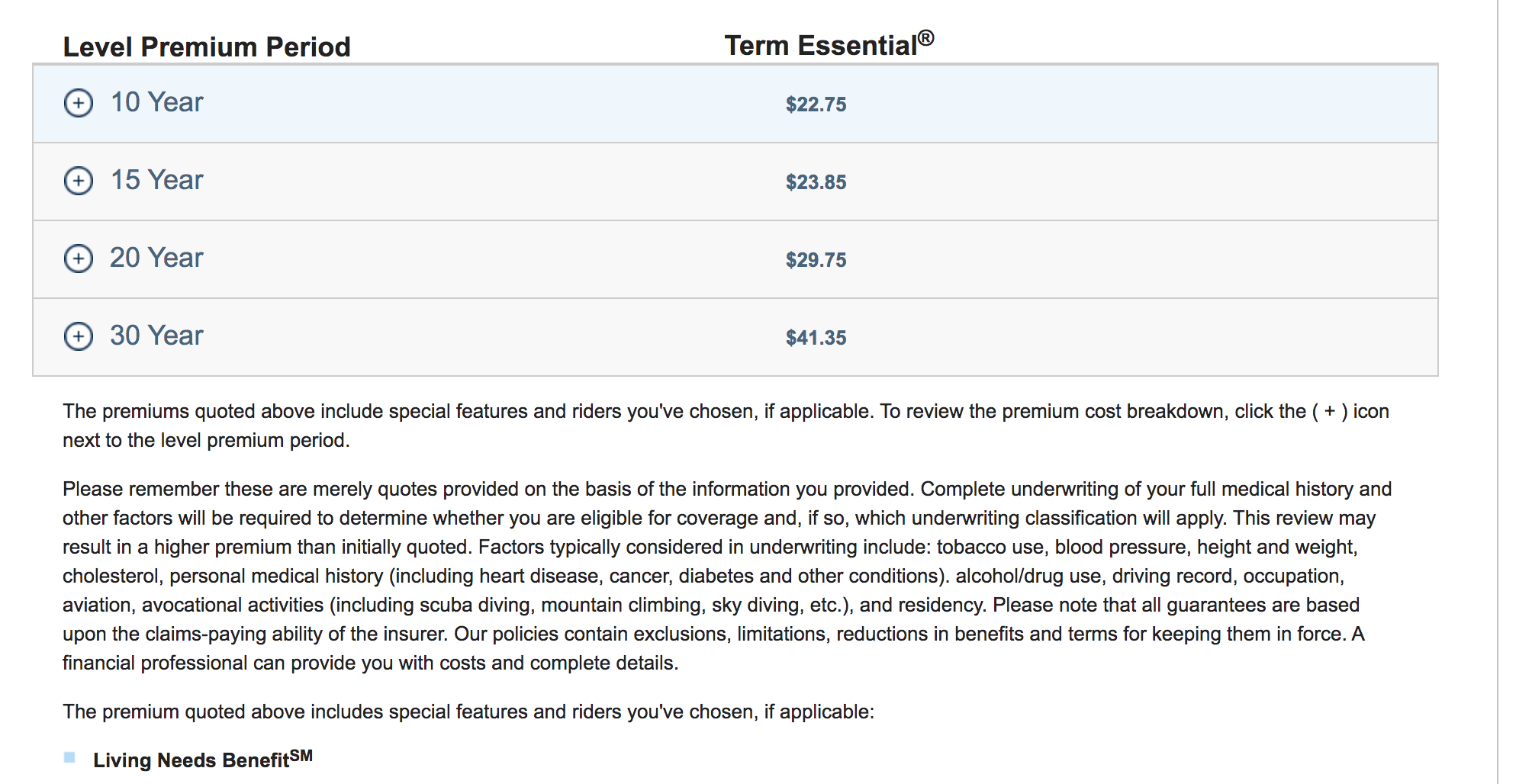
Prospective buyers should feel confident in Prudential's administrative reliability, provided they also verify that the specific insurance product—whether it be the Term Essential plan or a PruLife Variable Universal Life policy—aligns with their long-term financial goals and risk tolerance.
Frequently Asked Questions
Does a high BBB rating mean my claim will be paid?Not necessarily. A BBB rating measures customer service and complaint handling. To ensure your claim will be paid, you must look at financial strength ratings from AM Best or S&P, which measure the company’s capital reserves and ability to meet long-term obligations.
Why does Prudential have hundreds of complaints if they have an A+?BBB ratings are weighted by the volume of business. A company with millions of customers will naturally have more complaints than a small local firm. The A+ is awarded because Prudential responds to and resolves a high percentage of those complaints according to BBB standards.
Is it better to choose a BBB-accredited company?Accreditation is a voluntary marketing status. While it shows a commitment to BBB standards, many of the world’s largest and most reliable companies (including many in the Fortune 500) choose not to pay for accreditation, relying instead on their regulatory compliance and brand reputation.
How do I file a complaint against Prudential via the BBB?You can visit the Better Business Bureau website and search for "Prudential Financial" or "The Prudential Insurance Company of America." There is a clear "File a Complaint" button on their profile page.
What is the difference between Prudential and Prudential PLC?This is a common point of confusion. Prudential Financial (the subject of this rating) is a U.S.-based company headquartered in Newark, New Jersey. Prudential PLC is a separate, UK-based company. Their BBB ratings and financial standings are entirely independent of one another.
Final Recommendation
When assessing Prudential’s life insurance rating with the BBB, consider it a "green flag" for administrative responsiveness. However, for a complete picture, always pair this information with the company's AM Best rating and their NAIC Complaint Index score. If you prioritize a company that is easy to reach and proactive in resolving disputes, Prudential’s A+ standing suggests they meet that criterion effectively.
Image Gallery