What You Need to Know About Auto Insurance in Countryside, Illinois
Navigating auto insurance in Countryside, Illinois, requires understanding both state-mandated minimums and the unique risk factors of the Chicago metropolitan area. In 2026, drivers must carry liability coverage of $25,000 for injury...
Navigating auto insurance in Countryside, Illinois, requires understanding both state-mandated minimums and the unique risk factors of the Chicago metropolitan area. In 2026, drivers must carry liability coverage of $25,000 for injury to one person, $50,000 for total injuries per accident, and $20,000 for property damage, though higher limits are recommended for Cook County residents.
Contents
Countryside, Illinois, situated at the bustling intersection of La Grange Road and Joliet Road, presents a unique driving environment. While it offers a suburban feel, its proximity to major arteries like I-55 and the high-traffic commercial corridors of the "Countryside City Center" means local drivers face different risks than those in more rural parts of the state. Securing the right policy involves more than just meeting the legal minimums; it requires a strategy to protect assets in a high-litigation, high-density region.
Mandatory Auto Insurance Requirements in Illinois (2026)
The State of Illinois remains a "tort" state, meaning the driver found at fault in an accident is responsible for the damages. To ensure drivers can meet this financial responsibility, the Illinois Secretary of State enforces mandatory insurance laws. As of 2026, every motor vehicle operated or registered in Countryside must be covered by a liability policy.
Minimum Liability Limits
Liability insurance pays for injuries or damages you cause to others. The current mandatory minimums are often referred to as 25/50/20 coverage:
- $25,000 for injury or death of one person in an accident.
- $50,000 for injury or death of more than one person in an accident.
- $20,000 for damage to property of another person.
Uninsured and Underinsured Motorist Coverage
In addition to liability, Illinois law requires Uninsured Motorist (UM) Bodily Injury coverage. This protects you if you are hit by a driver who has no insurance. By law, this coverage must be included in your policy at limits equal to your bodily injury liability limits. You also have the option to purchase Underinsured Motorist (UIM) coverage, which bridges the gap if the at-fault driver has insurance, but their limits are too low to cover your medical expenses.
The Illinois Insurance Verification System (ILIVS)
By 2026, the Illinois Secretary of State’s Electronic Image Verification System (ILIVS) has become highly sophisticated. This system performs twice-monthly automated checks on all registered vehicles. If the system cannot verify coverage through the national database, the vehicle owner is sent a notice. Failure to respond or provide proof of coverage results in the suspension of vehicle registration, requiring a $100 reinstatement fee and proof of insurance.
Why Countryside Drivers Often Need More Than the Minimum
While the 25/50/20 limits are the legal baseline, they are often insufficient for the realities of driving in the Chicago suburbs. Countryside’s location in Cook County influences both the likelihood of an accident and the potential cost of a claim.
High-Traffic Corridors and Collision Risk
Countryside is a hub for retail and transit. The intersection of Route 45 (La Grange Road) and Route 66 (Joliet Road) is one of the busiest in the region. Increased traffic density naturally leads to a higher frequency of "fender benders" and multi-vehicle accidents. In a multi-vehicle pile-up, the $20,000 property damage minimum can be exhausted instantly, leaving the driver personally liable for the remaining costs.
Higher Medical and Repair Costs
In 2026, the cost of medical care in the Chicago metropolitan area continues to outpace the national average. A single night in a Cook County hospital, combined with emergency services and diagnostic imaging, can easily exceed $25,000. Similarly, modern vehicles equipped with advanced driver-assistance systems (ADAS)—such as cameras and radar sensors in bumpers—have made even minor repairs significantly more expensive.
Asset Protection
For many Countryside homeowners, their house and savings are their most significant assets. If you are at fault in an accident and your insurance limits are too low, the injured party can pursue your personal assets. Insurance experts typically recommend a 100/300/100 limit ($100,000 per person, $300,000 per accident, $100,000 property damage) for suburban drivers with moderate assets.
Evaluating Additional Coverage Options
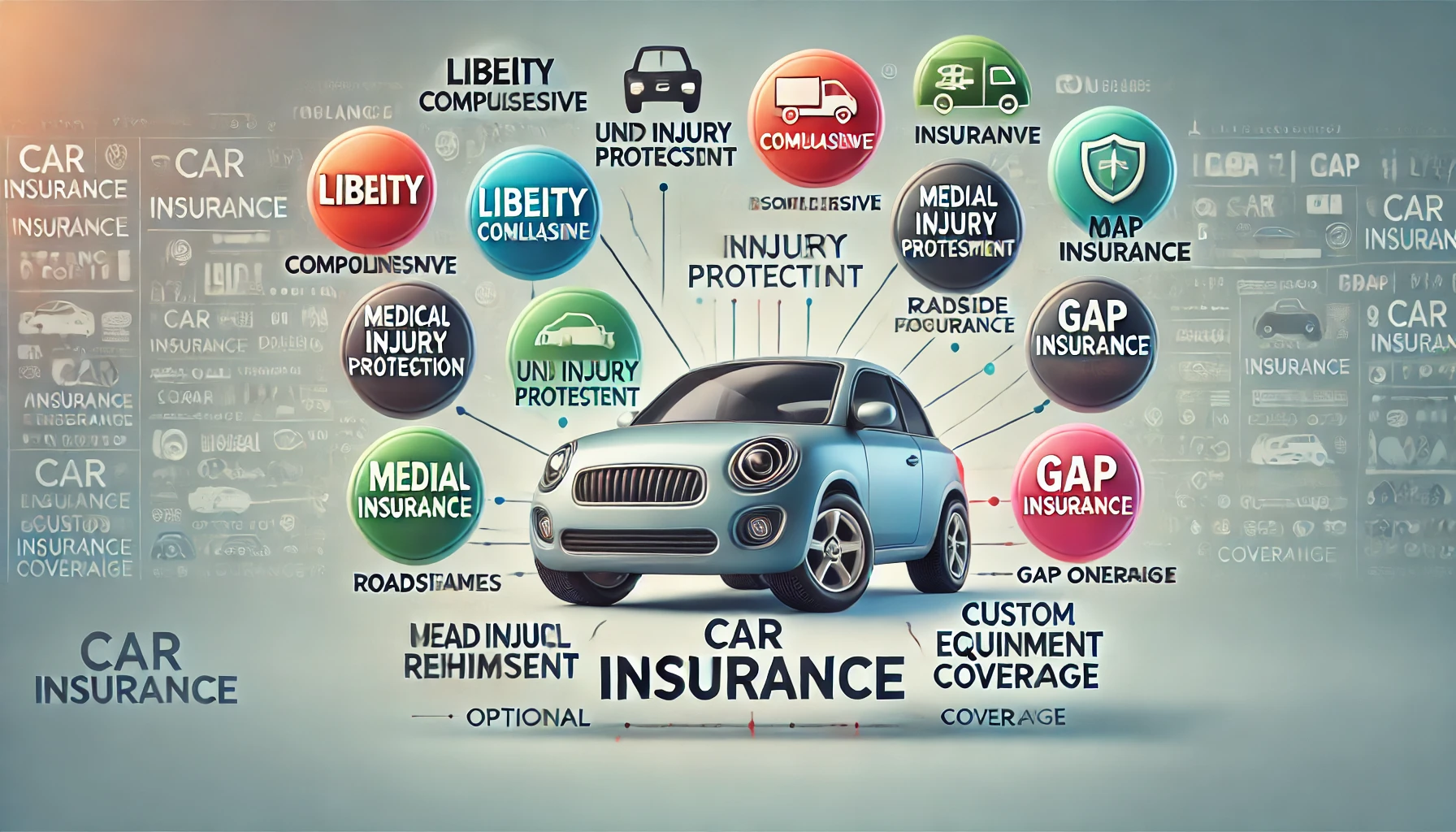
In the 2026 insurance market, standard liability is just one piece of a comprehensive protection plan. Drivers in Countryside should evaluate the following optional coverages based on their vehicle type and financial situation.
Collision and Comprehensive Coverage
If you are financing or leasing a vehicle near the Countryside automotive row, your lender will require these.
- Collision: Pays for damage to your vehicle resulting from an accident, regardless of fault.
- Comprehensive: Covers non-collision events, such as theft, vandalism, fire, or damage from Illinois' notorious hailstorms and falling tree limbs. Given the suburban tree canopy in nearby areas like La Grange Park and Western Springs, comprehensive coverage is a high-value addition.
Medical Payments (MedPay)
Unlike some states, Illinois does not require Personal Injury Protection (PIP). However, you can add Medical Payments coverage. MedPay covers medical or funeral expenses for you and your passengers after an accident, regardless of fault. This is particularly useful for covering health insurance deductibles or co-pays.
Gap Insurance
With vehicle prices remaining high in 2026, many drivers find themselves "underwater" on their car loans (owing more than the car is worth). If a vehicle is totaled, standard collision coverage only pays the Actual Cash Value (ACV). Gap insurance covers the difference between the ACV and the remaining balance on your loan.
Factors Influencing Auto Insurance Rates in Countryside
Insurance companies use complex algorithms to determine premiums, but several local factors are specific to the 60525 zip code and the surrounding Cook County area.
- Geography and Crime Rates: While Countryside is generally safer than the Chicago city center, being in Cook County generally results in higher premiums than neighboring DuPage County. Insurers look at local statistics for vehicle theft and catalytic converter larency.
- Commute Patterns: If you commute into the city via I-55 or take the Metra from the nearby La Grange or Stone Avenue stations, your "annual mileage" and "primary use" (commuting vs. pleasure) will impact your rate.
- Credit-Based Insurance Scores: Illinois continues to allow insurers to use credit history as a factor in setting premiums. Drivers with higher credit scores in Countryside typically see significantly lower rates.
- Telematics and Usage-Based Insurance (UBI): By 2026, most major carriers offer programs where a device or smartphone app monitors your driving habits (braking, speed, time of day). For the safe Countryside driver, these programs can offer discounts of 10% to 40%.
Comparing Coverage Tiers for Countryside Drivers
The following table illustrates the differences between coverage levels frequently chosen by Illinois drivers in 2026.
| Coverage Feature | State Minimum (Economy) | Recommended (Standard) | Comprehensive (Executive) |
|---|---|---|---|
| Bodily Injury Liability | $25k / $50k | $100k / $300k | $250k / $500k |
| Property Damage | $20,000 | $100,000 | $250,000 |
| UM/UIM Coverage | Included (at $25k/$50k) | Included (at $100k/$300k) | Included (at $250k/$500k) |
| Collision/Comp | Not Included | Included ($500 Deductible) | Included ($250 Deductible) |
| Rental Reimbursement | No | Optional | Included |
| Roadside Assistance | No | Optional | Included |
How to Save on Auto Insurance in 60525
Residents of Countryside have several avenues for reducing their insurance costs without sacrificing necessary protection.
Bundle Home and Auto
The "Multi-Policy Discount" remains the most effective way to save. Most carriers that provide homeowners insurance in the suburban Chicago market offer substantial discounts (often 15-20%) if you also insure your vehicles with them.
Professional and Academic Discounts
Insurers often provide lower rates for members of certain professions common in the Countryside area, including educators, healthcare workers, and first responders. Additionally, if you have a student on your policy attending a school like Lyons Township High School, ensure they are utilizing the "Good Student Discount" by maintaining a B average or higher.
Defensive Driving Courses
Drivers over the age of 55 in Illinois may be eligible for a mandatory discount on their auto insurance if they complete an accident prevention course approved by the Secretary of State.
Common Mistakes to Avoid
- Allowing a Lapse in Coverage: Even a one-day lapse can move you into a "high-risk" pool, significantly increasing your premiums for the next three years.
- Inaccurate Annual Mileage: Many drivers estimate 12,000 miles, but if you have shifted to a remote work model and only drive 5,000 miles, you are overpaying.
- Ignoring the SR-22 Requirement: If your license was suspended for a DUI or multiple no-insurance violations, you will need an SR-22 filing. This is not a type of insurance, but a certificate filed by your insurer with the state to prove you have coverage.
Frequently Asked Questions
Does auto insurance follow the car or the driver in Illinois? In Illinois, auto insurance generally follows the car. If you lend your vehicle to a friend and they cause an accident, your insurance is usually the primary coverage. However, the driver’s own insurance may act as secondary coverage if your limits are exceeded.
What is the penalty for driving without insurance in Countryside? A first offense typically results in a minimum $500 fine and a suspended registration. Subsequent offenses carry steeper fines and a mandatory four-month registration suspension. If you are involved in an accident while uninsured, you face the "No Pay, No Play" rule, which limits your ability to sue for non-economic damages (like pain and suffering), even if the other driver was at fault.
How does a "Total Loss" work in Illinois? Illinois uses a specific formula to determine if a car is "totaled." Generally, if the cost of repairs plus the salvage value exceeds the Actual Cash Value (ACV) of the vehicle, the insurer will declare it a total loss. In 2026, many insurers are totaling cars sooner because the complexity of electronics makes repairs prohibitively expensive.
Are there local agents in Countryside, or should I buy online? Countryside hosts several local independent agencies and captive agents (representing one brand) along La Grange Road. A local agent understands the specific risks of the Chicago suburbs and can often provide personalized service during a claim that an online-only portal cannot match.
Does my insurance cover me if I’m driving for a delivery app? Standard personal auto policies typically exclude coverage for business use, including "TNC" (Transportation Network Company) work like Uber/Lyft or delivery services like DoorDash. If you are working in the gig economy around Countryside, you must add a "rideshare endorsement" to your policy.
Final Recommendation for Countryside Residents
For those living or working in Countryside, the goal of auto insurance should be financial resilience. Given the high density of Cook County and the rising costs of litigation and vehicle repair in 2026, relying on state minimums is a significant financial risk.
Your next step should be to request a "comprehensive review" from an agent, focusing specifically on increasing your property damage liability to at least $100,000 and verifying that your Uninsured Motorist limits match your Liability limits. By leveraging telematics and bundling discounts, most Countryside drivers can achieve these higher protection levels with a minimal increase in monthly premiums.
Disclaimer: This information is for educational purposes and does not constitute legal or financial advice. Insurance laws and rates are subject to change; consult with a licensed Illinois insurance professional for specific policy recommendations.
Image Gallery