Comprehensive Guide to the 1953 $2 Red Seal Note: Value, Varieties, and 2026 Market Analysis
A 1953 $2 red seal note is generally valued between $5 and $20 in circulated condition, while pristine, uncirculated examples can fetch $50 to $90 or more as of 2026. The specific value depends heavily on the series letter (None, A, B,...
A 1953 $2 red seal note is generally valued between $5 and $20 in circulated condition, while pristine, uncirculated examples can fetch $50 to $90 or more as of 2026. The specific value depends heavily on the series letter (None, A, B, or C), the presence of a "star" in the serial number, and the note's physical preservation. While these notes remain legal tender, their numismatic value far exceeds their face value, making them a staple for both novice and seasoned currency collectors.
Contents
Understanding the Series 1953 $2 United States Note
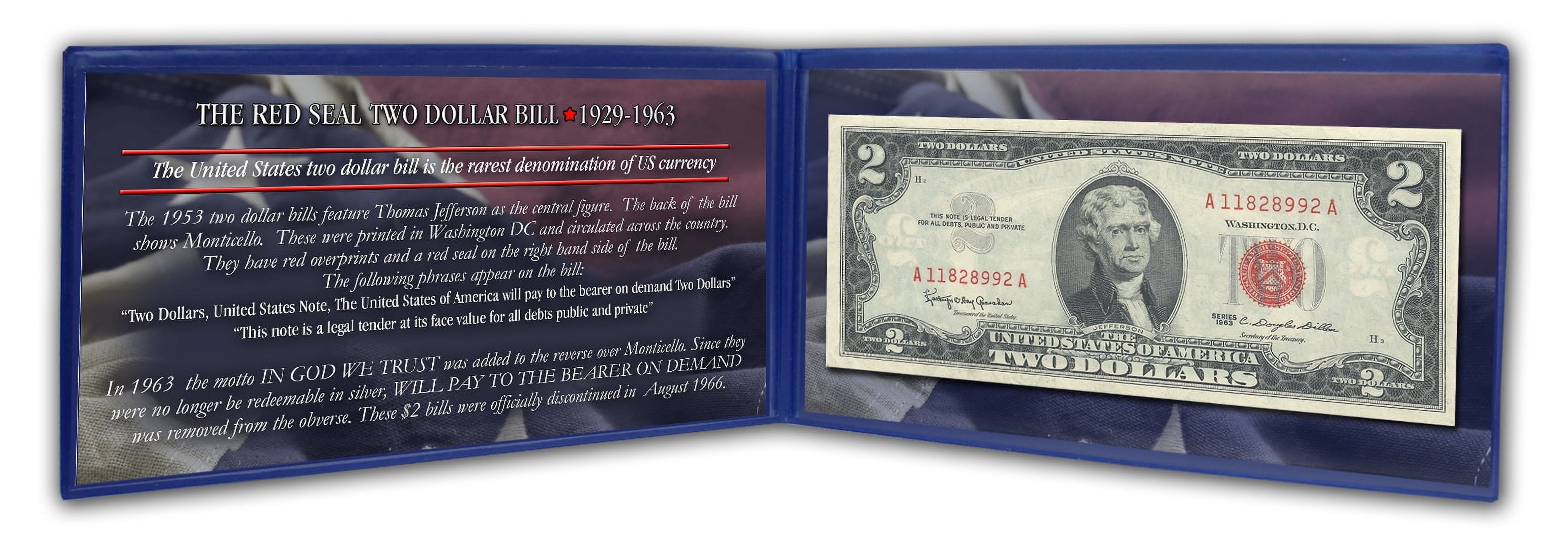
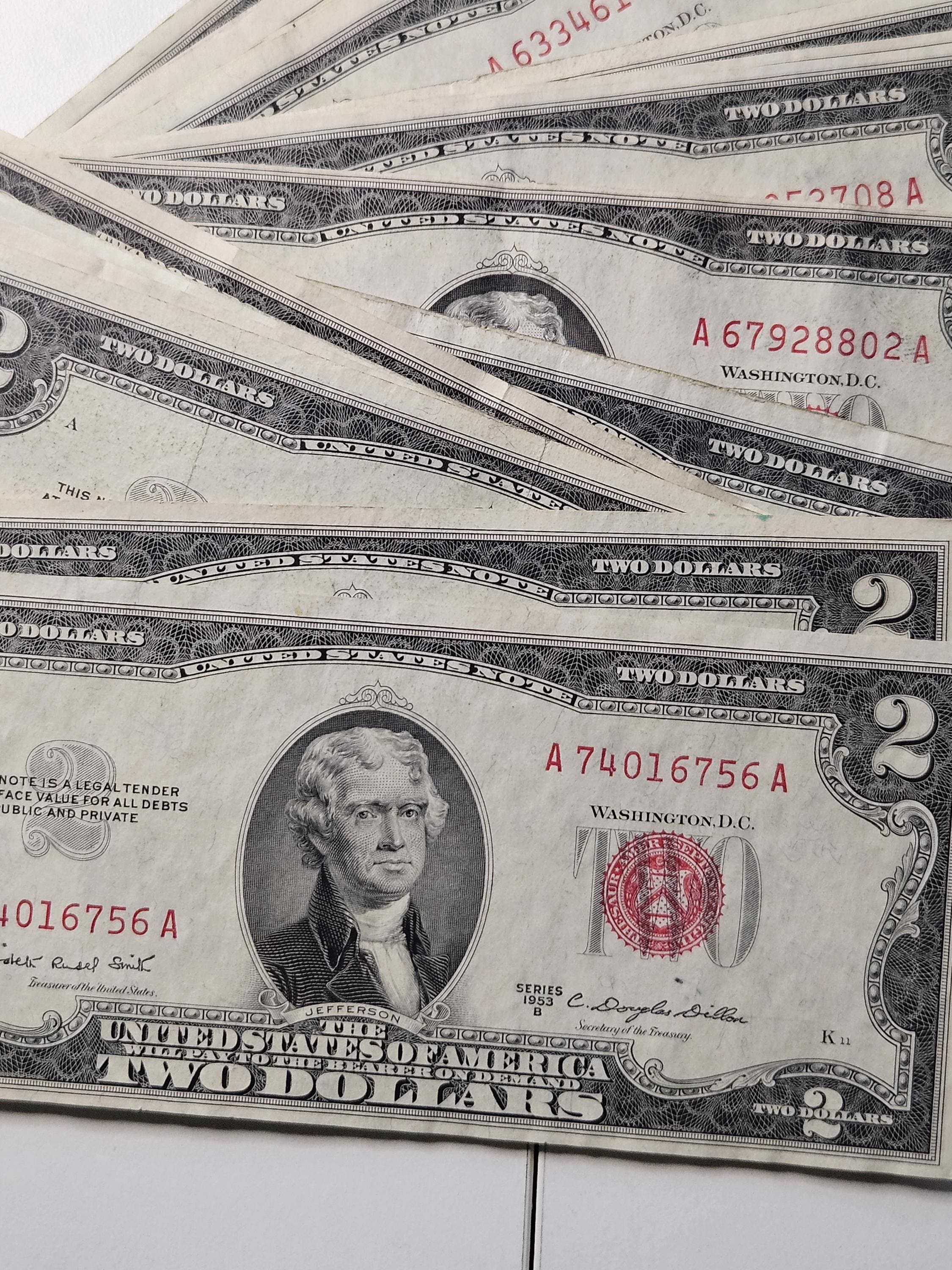
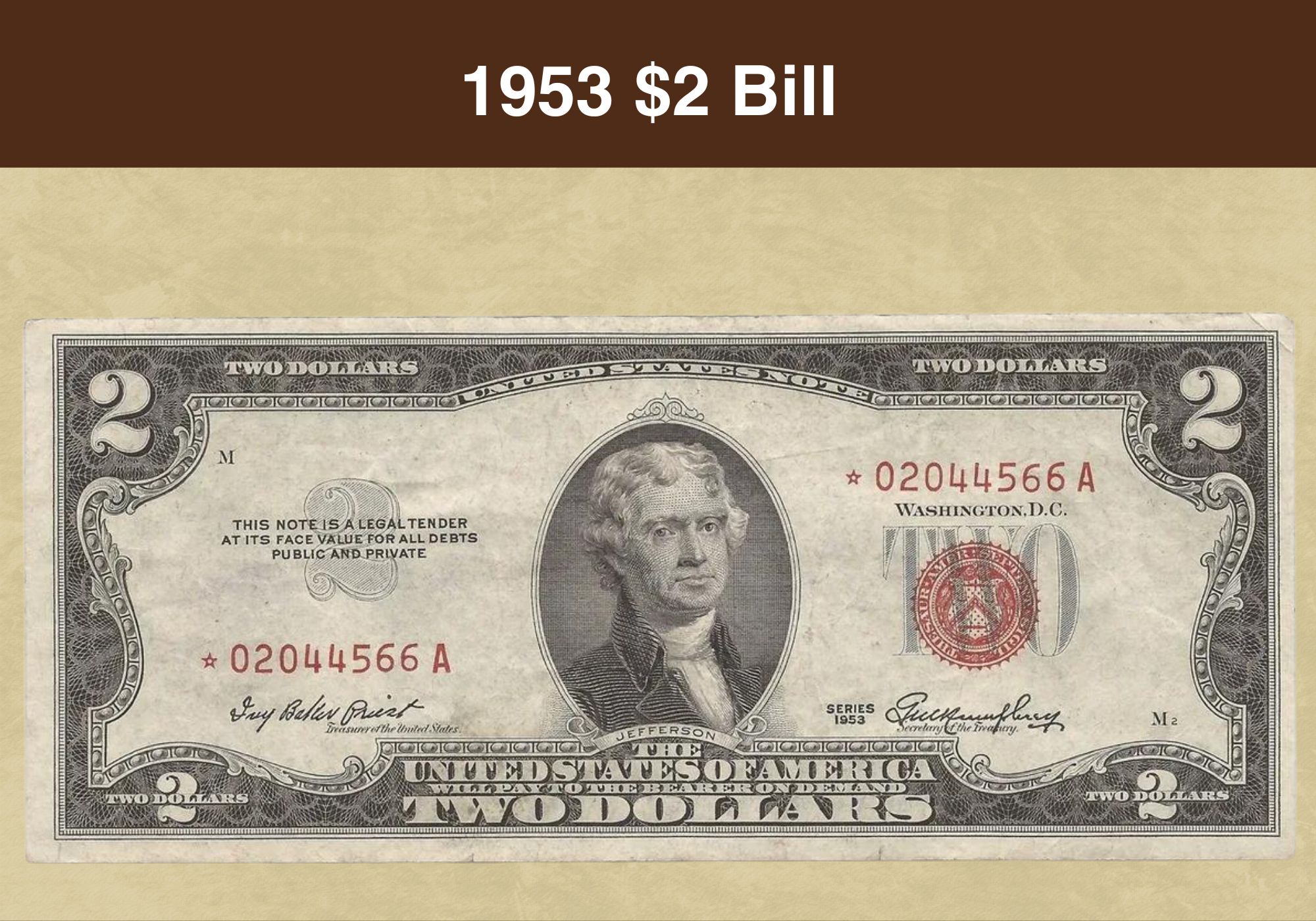
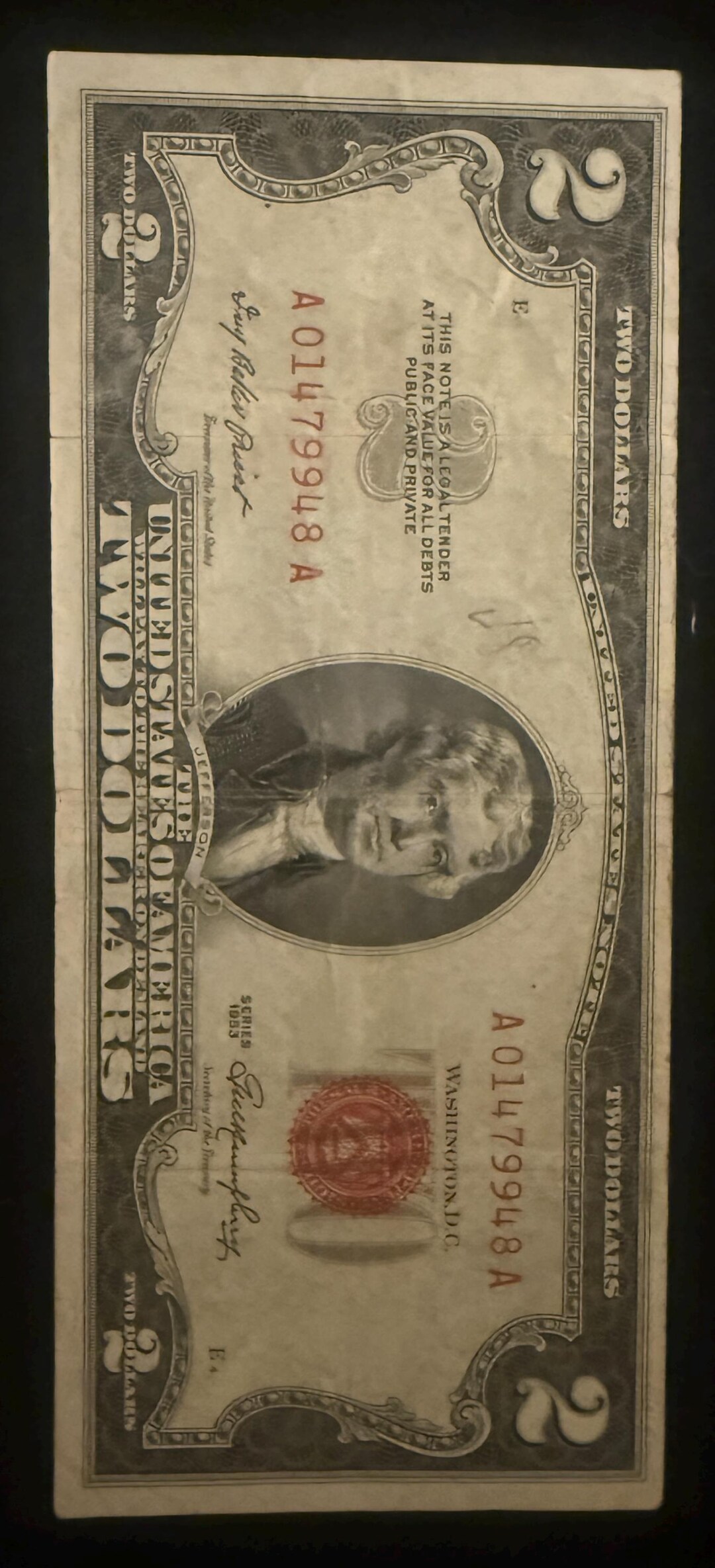
The 1953 $2 bill is a "United States Note," a type of currency issued directly by the U.S. Treasury rather than the Federal Reserve. These are easily identified by their distinct red treasury seals and red serial numbers. In the mid-20th century, these notes circulated alongside Silver Certificates (blue seals) and Federal Reserve Notes (green seals).
The 1953 series represents a significant era in American numismatics. It features the portrait of Thomas Jefferson on the obverse and his Virginia estate, Monticello, on the reverse. Unlike modern $2 bills (Series 1976 and later), which feature the signing of the Declaration of Independence, the 1953 series maintains the classic "Small Size" design that was first established in 1928. By 2026, these notes have become increasingly scarce in general circulation, moving almost exclusively into the hands of private collectors and estate holdings.
The Significance of the Red Seal and Serial Numbers
The red seal on the 1953 series indicates that the note was backed by the credit of the United States government under the Legal Tender Act of 1862. At the time of issue, the law required a certain amount of these notes to remain in circulation.
Legal Tender Obligations
Unlike modern Federal Reserve Notes, which are liabilities of the Federal Reserve Banks, United States Notes were direct obligations of the U.S. Treasury. The red ink served as a visual indicator to bankers and the public that these notes were part of the fixed statutory limit of currency mandated by Congress.
In 2026, collectors look specifically for the vibrancy of this red ink. Notes that have been exposed to sunlight or harsh chemicals may show "faded seals," which significantly detracts from the market value. A deep, blood-red seal with sharp edges is the hallmark of a high-grade specimen.
Identifying the Four Major Varieties (1953–1953C)
The 1953 series is divided into four distinct sub-series based on the signatures of the Treasurer of the United States and the Secretary of the Treasury. Identifying which variety you own is crucial for accurate valuation.
- Series 1953 (Plain): Features the signatures of Ivy Baker Priest and George M. Humphrey. This is the "base" series and is quite common in circulated grades.
- Series 1953A: Carries the signatures of Ivy Baker Priest and Robert B. Anderson. Large quantities were printed, making this variety very accessible.
- Series 1953B: Signed by Elizabeth Rudel Smith and C. Douglas Dillon. This series is slightly less common than the A variety but still widely available.
- Series 1953C: Features Kathryn O'Hay Granahan and C. Douglas Dillon. This was the final sub-series for the 1953 date before the transition to the 1963 series.
2026 Valuation and Market Price Table
The following table provides estimated market values for the 1953 $2 Red Seal Note based on current 2026 auction data and retail price guides. Prices assume the note has no major damage such as tears, heavy stains, or ink writing.
| Series Variety | Friedberg Number | Circulated (VF-XF) | Uncirculated (MS-63) | Star Note (Unc) |
|---|---|---|---|---|
| Series 1953 | F-1509 | $5.50 – $12.00 | $35.00 – $55.00 | $110.00+ |
| Series 1953A | F-1510 | $5.50 – $10.00 | $30.00 – $50.00 | $95.00+ |
| Series 1953B | F-1511 | $6.00 – $15.00 | $40.00 – $65.00 | $135.00+ |
| Series 1953C | F-1512 | $6.50 – $18.00 | $45.00 – $75.00 | $150.00+ |
Grading and Condition: The Primary Driver of Value
In the 2026 numismatic market, the "grade" of a banknote is more important than its age. Professional grading services like Paper Money Guaranty (PMG) or PCGS Banknote use a 70-point scale to determine condition.
- Good to Fine (G-F): Heavily circulated with multiple folds, wrinkles, and perhaps some dirt or light staining. These notes generally sell for near-minimum premiums.
- Very Fine to Extremely Fine (VF-XF): Notes that show some circulation but still have "snap" to the paper. They might have three to five vertical folds but no major tears.
- Choice Uncirculated (MS-63 and above): A note that has never been in circulation. It is perfectly crisp, with sharp corners and no folds. These notes command the highest prices.
The EPQ Designation
When reviewing 1953 $2 bills in 2026, look for the "Exceptional Paper Quality" (EPQ) designation on graded holders. This indicates that the paper is original and has not been physically, chemically, or mechanically altered to mask defects. Notes with EPQ designations often trade at a 20% to 30% premium over non-EPQ notes of the same numerical grade.
The Allure of Star Notes and Low Serial Numbers
If the serial number on your 1953 $2 bill is preceded or followed by a small star symbol (★) instead of a letter, you have a replacement note. Star notes were printed to replace sheets that were damaged during the printing process. Because they were printed in much smaller quantities, they are significantly more valuable.
- Rarity: Some 1953 star note runs were limited to only a few hundred thousand, compared to millions of standard notes.
- Valuation: Even a circulated 1953 star note can be worth $25 to $40, while a high-grade uncirculated specimen can exceed $200 in 2026 auctions.
Furthermore, "Fancy" serial numbers can skyrocket the value. In 2026, collectors pay high premiums for:
- Low Digits: Serial numbers below 00001000.
- Radars: Numbers that read the same forward and backward (e.g., 12344321).
- Repeaters: Numbers that repeat a sequence (e.g., 45454545).
- Solid Numbers: All digits are the same (e.g., 22222222).
Technical Specifications of the 1953 $2 Note
For technical identification, the 1953 $2 bill adheres to the standard "small size" dimensions established for U.S. currency since 1928.
- Dimensions: 6.1402 inches wide by 2.6094 inches high.
- Paper Composition: 75% cotton and 25% linen, with small red and blue synthetic fibers embedded throughout as an anti-counterfeiting measure.
- Face Plate Numbers: Small numbers found in the lower-right corner of the obverse, indicating the specific plate used for printing.
- Back Plate Numbers: Found in the lower-right corner of the reverse.
1953 vs. 1928 and 1963 Red Seals
Collectors often confuse the 1953 series with its predecessors and successors. It is vital to distinguish between them as their values differ.
- 1928 Series: These are generally more valuable than 1953 notes. The 1928 notes have the treasury seal on the left side of the note, whereas the 1953 notes moved the seal to the right side.
- 1963 Series: These are the last red seal $2 notes ever produced. They are very similar to the 1953 series but are generally the least valuable because they were printed most recently and in large quantities. The 1963 notes also added the motto "In God We Trust" to the reverse above Monticello, which is absent on the 1953 series.
Preservation and Storage Best Practices
As we move through 2026, the preservation of paper currency has become a specialized field. Improper storage is the leading cause of value loss for the 1953 $2 red seal.
Archival Storage Standards
Always use PVC-free, archival-quality Mylar sleeves. PVC (polyvinyl chloride) can leach chemicals into the paper over time, causing it to turn yellow or become brittle. Additionally, store your notes in a cool, dry place. High humidity can lead to "foxing"—the appearance of brown spots caused by mold or fungal growth on the paper fibers.
Never use tape to repair a tear in a 1953 note. The adhesive will permanently stain the paper and reduce its numismatic value to nearly zero. If you have a high-value star note or an uncirculated specimen, consider having it professionally "slabbed" (encapsulated) by a grading service to lock in its condition and authenticity.
Common Myths About the 1953 $2 Red Seal
There are several misconceptions that often lead to disappointment when selling these notes in 2026.
- Myth: They are illegal to own. False. They are 100% legal to own and spend, though spending them at face value is a waste of their market premium.
- Myth: All $2 bills are rare. False. While red seals are scarcer than modern green seals, millions of 1953 notes were printed. They are "uncommon," but not "rare" in the world of professional numismatics.
- Myth: A "1953" date means it was printed in 1953. Not necessarily. The "Series 1953" designation refers to the design year. A "1953C" note was actually printed in the early 1960s during the Granahan-Dillon tenure.
Where to Buy and Sell in 2026
If you are looking to liquidate a collection or acquire a high-grade 1953 $2 red seal, several avenues are available:
- Professional Currency Auctions: Best for high-grade (MS-65+) or rare star notes. These venues attract serious investors.
- Local Coin Shops: Good for quick liquidations of circulated notes, though expect to receive wholesale prices (usually 50-70% of retail).
- Online Marketplaces: Platforms like eBay remain popular in 2026, but be wary of "raw" (ungraded) notes that may have hidden flaws like pressing or cleaning.
- Numismatic Shows: Attending a regional coin show allows you to compare multiple specimens and negotiate directly with experts.
Frequently Asked Questions
Is a 1953 $2 red seal note worth more than a 1963 one?
Generally, yes. While condition is the main factor, 1953 notes usually command a slightly higher premium than 1963 notes because they are older and lack the "In God We Trust" motto, which some collectors find more aesthetically pleasing for the classic design.
What does it mean if my 1953 bill is "pressed"?
Pressing is a deceptive practice where a note is flattened to remove folds and make it look uncirculated. Professional grading services in 2026 use advanced lighting to detect "broken" paper fibers, and a pressed note will be denied an Uncirculated or EPQ grade, significantly lowering its value.
Can I find a 1953 red seal in my pocket change today?
It is extremely unlikely. While it can happen if someone spends an old collection, most banks immediately pull red seal notes from circulation to be sent to the Treasury for destruction, or they are snatched up by savvy bank tellers.
Are there any specific 1953 errors to look for?
Common errors include "ink smears," where the red ink from the seal or serial number is smudged across the face, and "misalignments," where the printing is off-center. In 2026, a major "cutting error" where part of another bill is visible can make a 1953 $2 note worth several hundred dollars.
Is the 1953 $2 bill considered "Large Size" currency?
No. The 1953 series is "Small Size" currency. "Large Size" U.S. currency refers to notes printed prior to 1928, which are roughly 40% larger than the bills we use today.
Should I get my 1953 $2 bill professionally graded?
Only if you believe it is in "Uncirculated" condition or if it is a "Star Note." The cost of grading (typically $25-$50 per note) often exceeds the value of a standard circulated 1953 bill. Only grade notes where the potential value increase justifies the expense.
Final Expert Recommendation
For the average holder of a 1953 $2 red seal note in 2026, the best course of action is to carefully inspect the note for a star symbol or a series letter. If the note is crisp and appears never-to-have-been-folded, place it in a PVC-free sleeve immediately. While these notes aren't going to fund a retirement, they are a fascinating piece of American financial history that continues to appreciate slowly as the supply of high-grade specimens dwindles.
Image Gallery