How Cisco Defines Its Innovation Roadmap for Enterprise Networking and Security
Cisco defines its innovation roadmap through a strategic convergence of cloud-managed platforms, silicon architecture advancements, and software-defined automation. By aligning R&D investments with long-term architectural shifts like S...
Cisco defines its innovation roadmap through a strategic convergence of cloud-managed platforms, silicon architecture advancements, and software-defined automation. By aligning R&D investments with long-term architectural shifts like Secure Access Service Edge (SASE), full-stack observability, and artificial intelligence, Cisco structures its development cycle to transition emerging networking paradigms into scalable enterprise-grade solutions.
Contents
The Foundations of Cisco Research and Development
Understanding how Cisco structures its roadmap requires examining the foundational mechanics of its research and development lifecycle. The engine driving this process relies on a balanced portfolio model that splits engineering focus between sustaining current enterprise architectures and pioneering disruptive technology. Cisco heavily utilizes internal venture groups, strategic acquisitions, and foundational research labs to populate its engineering pipeline.
The lifecycle of any core feature or platform begins years before commercial deployment. Product managers, systems architects, and customer advisory boards collaborate to identify structural pain points in modern IT environments. These pain points are then mapped against macro trends, such as the decentralization of applications, the exponential growth of Internet of Things (IoT) endpoints, and escalating cyber threats.
- Core Engineering: Focused on hardware reliability, ASICs (Application-Specific Integrated Circuits), and foundational routing and switching protocols.
- Emerging Technologies and Incubation (ETI): Explores nascent fields like quantum networking, advanced machine learning models, and decentralized identity.
- Customer-Driven Feedback Loops: Integrates telemetry data from millions of deployed devices to isolate recurring bottlenecks in real-world deployments.
Core Pillars Governing the 2026 Strategy
In 2026, Cisco's innovation roadmap is anchored by three mandatory pillars that dictate hardware releases, software licensing models, and platform integrations. These pillars ensure that enterprise infrastructure can natively support advanced automation and zero-trust security postures without requiring wholesale rip-and-replace cycles.
Artificial Intelligence and Machine Learning Integration
AI is no longer treated as a standalone feature within Cisco portfolios; it operates as an operational fabric across the entire ecosystem. The roadmap prioritizes predictive remediation, automated anomaly detection, and natural language interfaces for network administrators. Rather than relying solely on reactive troubleshooting, Cisco platforms leverage machine learning models trained on global telemetry to preemptively isolate performance degradation.
Unified Networking and Security (SASE and Zero Trust)
The historical division between network connectivity and cybersecurity has been dismantled in Cisco's strategic planning. The innovation roadmap mandates that every hardware device and software controller natively supports integrated security telemetry. This convergence manifests through platforms like Cisco Secure Service Edge (SSE) and Catalyst SD-WAN, ensuring unified policy enforcement from the campus edge to multi-cloud environments.
Full-Stack Observability (FSO)
Modern applications span hybrid environments, making traditional monitoring obsolete. Cisco's roadmap emphasizes deep business-context visibility through continuous monitoring of user experience, application performance, and underlying infrastructure health. By consolidating acquisitions like AppDynamics and ThousandEyes, the roadmap dictates that every operational layer must provide correlated, real-time diagnostic data.
The Technology Lifecycle Model: From Incubator to Enterprise Scale
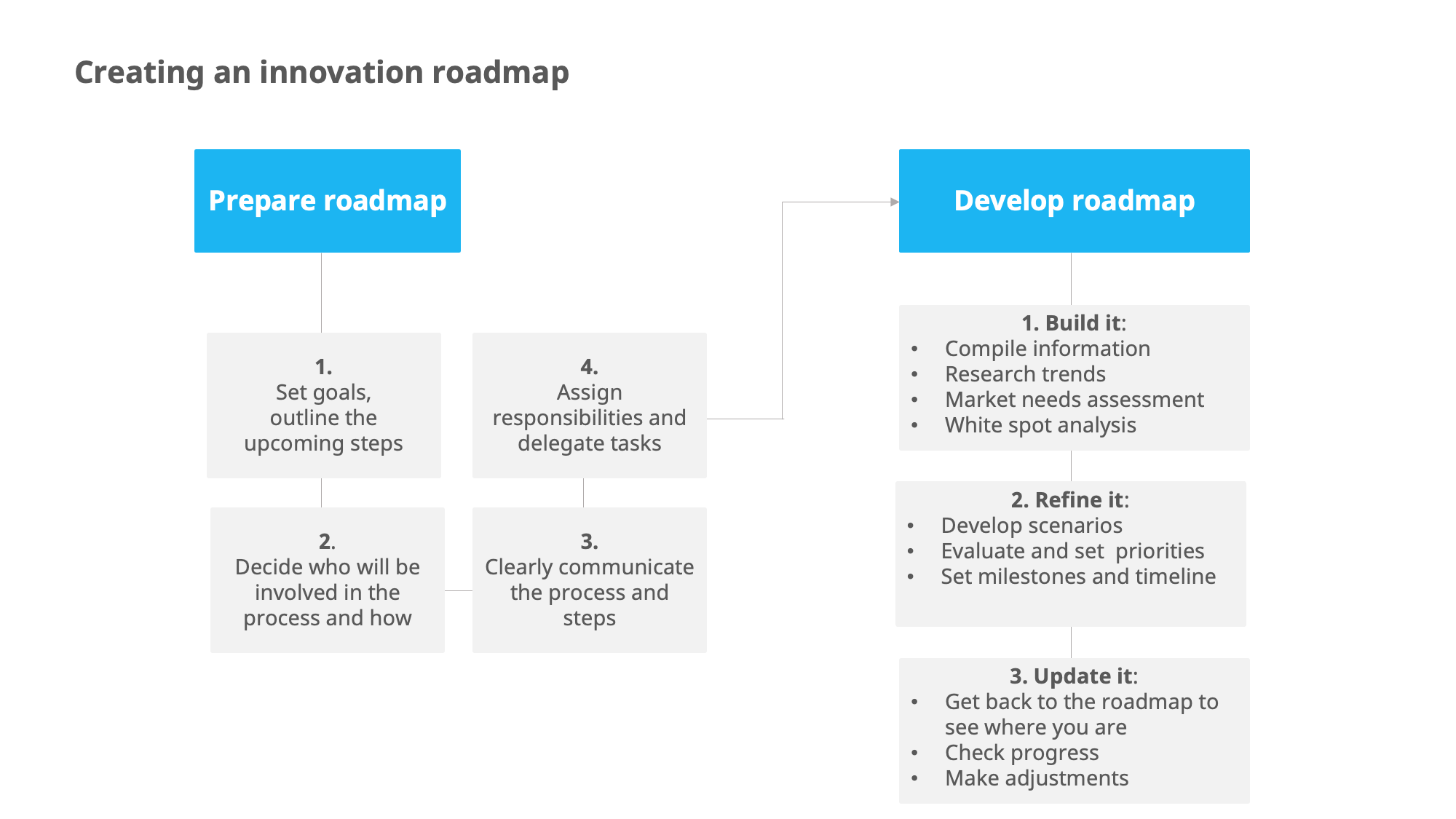
Cisco employs a disciplined phased framework to move innovations from initial concept to general availability (GA). This structured pathway mitigates deployment risks for enterprise clients who rely on mission-critical uptime.
| Development Phase | Primary Objective | Key Validation Metrics | Target Audience / Deployment |
|---|---|---|---|
| Phase 1: Incubation | Proof-of-concept testing, early algorithmic design, and patent acquisition. | Code stability, algorithmic efficiency, academic/industry peer review. | Internal research labs and closed developer groups. |
| Phase 2: Alpha/Beta | Integration with existing Cisco operating systems (e.g., IOS XE, NX-OS). | Interoperability testing, preliminary security auditing, scale benchmarks. | Selected Customer Advisory Boards (CABs) and early adopters. |
| Phase 3: General Availability | Commercial release, global supply chain alignment, and partner training. | TAC (Technical Assistance Center) readiness, documentation completeness, automated provisioning. | Global enterprise customers, service providers, and channel partners. |
| Phase 4: Lifecycle Maintenance | Continuous feature enhancement via software updates and security patching. | Bug resolution velocity, vulnerability response times (PSIRT), compliance certifications. | All installed enterprise base under active service contracts. |
Silicon Architecture and Hardware Innovation
Software-defined architectures require underlying hardware capable of handling massive throughput without compromising telemetry collection or cryptographic processing. Cisco's innovation roadmap explicitly accounts for silicon-level development, exemplified by the Cisco Silicon One architecture.
By designing unified programmable ASICs that can scale from web-scale data centers to enterprise campus switches, Cisco decouples hardware lifecycles from software feature velocity. This approach allows organizations to deploy new protocols, slicing capabilities, and advanced telemetry features through simple software configuration updates rather than physical hardware replacements.
- Programmability: Dynamic pipeline allocation allows ASICs to adapt to emerging protocols without performance penalties.
- Energy Efficiency: Next-generation silicon geometries significantly reduce power consumption per gigabit, addressing corporate sustainability mandates.
- Embedded Security: Hardware-level cryptographic anchors establish trusted boot sequences and line-rate encryption.
Balancing Proprietary Ecosystems with Open Standards
A critical challenge in enterprise technology strategy is balancing proprietary ecosystem value with open industry standards. Cisco's roadmap navigation addresses this tension through API-first architectures and active participation in open-source standards bodies.
Pros and Cons of Cisco's Roadmap Strategy
- Pros:
- High architectural consistency across disparate enterprise domains (campus, data center, WAN).
- Rigorous enterprise-grade security hardening and compliance alignment (FIPS, Common Criteria).
- Predictable hardware and software lifecycles supported by extensive global technical assistance.
- Cons:
- Higher total cost of ownership compared to commodity hardware or pure white-box alternatives.
- Steeper learning curve for engineering teams unfamiliar with Cisco-specific operating systems and management suites.
- Potential vendor lock-in when leveraging proprietary automation and telemetry protocols.
Strategic Execution and Enterprise Adoption Guidelines
Organizations attempting to align their internal IT procurement and architectural roadmaps with Cisco's development cadence should adopt a structured evaluation process. Rushing to adopt bleeding-edge features without validating operational dependencies can introduce instability.
- Audit Existing Infrastructure: Map out current hardware versions, operating system releases, and active service contracts to identify end-of-life vulnerabilities.
- Review the Cisco Feature Navigator: Cross-reference target software features against specific ASIC capabilities and platform models to ensure hardware compatibility before purchasing licenses.
- Leverage Sandbox Environments: Utilize Cisco DevNet sandboxes and virtual developer environments to test automation scripts, APIs, and zero-trust policies prior to production implementation.
- Establish a Patch and Upgrade Cadence: Align internal maintenance windows with Cisco's recommended software trains (e.g., Extended Maintenance Releases) to balance stability with access to new roadmap features.
Frequently Asked Questions
How far in advance does Cisco plan its innovation roadmap?
Cisco typically operates on a three-to-five-year horizon for architectural shifts and silicon development, with tactical product releases planned on an annual or bi-annual cadence. This multi-year view allows enterprise clients to plan large-scale capital expenditures with confidence in long-term platform support.
How does Cisco incorporate customer feedback into its product roadmap?
Cisco gathers customer input through formal Customer Advisory Boards (CABs), direct interactions with enterprise architectural teams, and telemetry data collected through cloud management platforms. This feedback directly influences feature prioritization in subsequent software releases and hardware revisions.
What role do acquisitions play in Cisco's innovation strategy?
Acquisitions serve as a core accelerator for Cisco's roadmap, allowing the company to rapidly integrate mature technologies into its portfolio. Notable examples include AppDynamics for observability and ThousandEyes for digital experience monitoring, which were seamlessly woven into Cisco's overarching enterprise architecture.
How does Cisco ensure backward compatibility in its hardware and software roadmap?
Cisco utilizes modular operating systems, programmable silicon architectures, and rigorous API versioning to ensure legacy devices can interoperate with newly introduced platforms. This minimizes disruption during incremental network modernization projects.
Where can enterprise architects view official Cisco product roadmaps?
Official, high-level product roadmaps and strategic direction documents are typically shared through direct engagement with Cisco account teams, executive briefing centers, and specialized partner portals like Cisco DevNet.
Conclusion
Cisco's innovation roadmap is not merely a collection of disparate product updates, but a cohesive strategy designed to unify networking, security, and observability. By aligning foundational silicon engineering with cloud-managed software platforms and AI-driven automation, Cisco provides a predictable trajectory for enterprise digital transformation. Organizations that align their internal technology strategies with this structured development lifecycle can successfully future-proof their network infrastructure against emerging operational and security demands.
Image Gallery