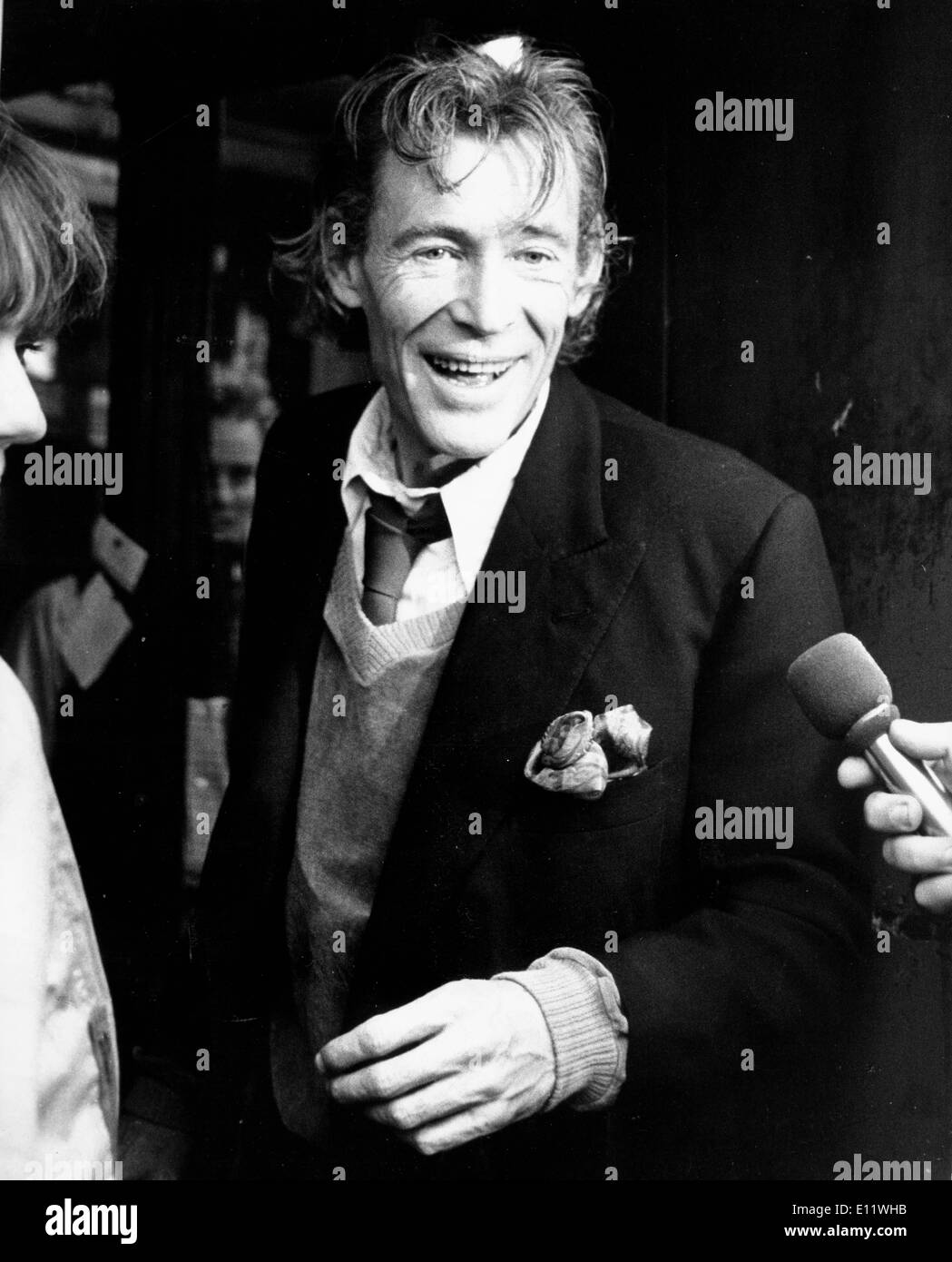
The Legacy of Peter O’Toole and the Academy Awards: A Record of Excellence
Peter O’Toole holds one of the most bittersweet records in Hollywood history: the most Academy Award nominations for acting without a single competitive win. Across a career spanning half a century, O'Toole received eight nominations f...
Peter O’Toole holds one of the most bittersweet records in Hollywood history: the most Academy Award nominations for acting without a single competitive win. Across a career spanning half a century, O'Toole received eight nominations for Best Actor, eventually accepting an Honorary Oscar in 2003 after initially declining the gesture.
Contents
For cinephiles and historians in 2026, the name Peter O’Toole remains synonymous with a specific type of cinematic gravitas—a blend of Shakespearean training, "hell-raiser" charisma, and an ethereal screen presence that the Academy of Motion Picture Arts and Sciences (AMPAS) frequently recognized but never quite crowned. To understand his relationship with the Oscars is to understand the history of 20th-century prestige cinema and the often-fickle nature of industry accolades.
The Eight Competitive Nominations: A Chronology of Near-Misses
O'Toole’s Oscar journey began with what is arguably the greatest breakout performance in film history. Between 1962 and 2006, he was nominated for eight different roles, losing to some of the most iconic figures in the industry, often during years where the competition was historically "stacked."
1. Lawrence of Arabia (1962)
In his first leading role, O’Toole portrayed T.E. Lawrence in David Lean’s desert epic. His performance is widely considered one of the finest in the history of the medium. However, he lost the Best Actor trophy to Gregory Peck, who won for his definitive portrayal of Atticus Finch in To Kill a Mockingbird. While Peck’s win was culturally significant, many historians now view O’Toole’s loss as the first of several instances where the Academy favored traditional American heroism over O’Toole’s complex, mercurial intensity.
2. Becket (1964)
Playing King Henry II for the first of two times, O'Toole starred alongside Richard Burton. Both men were nominated for Best Actor, potentially splitting the vote. They both lost to Rex Harrison for My Fair Lady. This marked a pattern where O'Toole would be nominated for high-pedigree historical dramas that were occasionally overshadowed by massive musical productions or sentimental favorites.
3. The Lion in Winter (1968)
O'Toole reprised his role as King Henry II, this time starring opposite Katharine Hepburn. While Hepburn won Best Actress (in a famous tie with Barbra Streisand), O'Toole lost the Best Actor prize to Cliff Robertson for Charly. This is often cited by critics as one of the most surprising losses of O'Toole’s career, as Robertson’s performance, while respected, lacked the enduring cultural footprint of O'Toole’s fierce, aging monarch.
4. Goodbye, Mr. Chips (1969)
In a departure from his more aggressive roles, O'Toole played the shy schoolmaster Arthur Chipping. He was the frontrunner for much of the season, but the Academy ultimately chose to honor John Wayne for True Grit. Wayne’s win was widely seen as a "career achievement" award rather than a vote for that specific performance, a trend that would ironically come to define O'Toole’s own later interactions with the Academy.
5. The Ruling Class (1972)
In this avant-garde satirical comedy, O'Toole played Jack Gurney, an Earl who believes he is Jesus Christ. It remains his most experimental nominated performance. He lost to Marlon Brando for The Godfather. Given the seismic impact of Brando’s performance on the craft of acting, O'Toole’s loss in 1972 is generally regarded as unavoidable.
6. The Stunt Man (1980)
After a period of personal and health struggles, O'Toole returned to form as Eli Cross, a megalomaniacal film director. He lost to Robert De Niro for Raging Bull. Much like his loss to Brando, this was a year where O'Toole ran into a performance that redefined the "method" and became an instant cornerstone of American cinema.
7. My Favorite Year (1982)
Playing Alan Swann, a washed-up, alcoholic swashbuckler (a role that drew heavily on his own reputation), O'Toole delivered a masterclass in comedic timing and pathos. He lost to Ben Kingsley for Gandhi. The Academy’s preference for "Great Man" biopics once again sidelined O'Toole’s more character-driven work.
8. Venus (2006)
His final nomination came for his role as Maurice, an elderly actor facing his own mortality. At age 74, many expected a "legacy win," but the award went to Forest Whitaker for his powerhouse turn as Idi Amin in The Last King of Scotland.
Comparative Analysis of O'Toole's Nominations
The following table summarizes the competitive landscape of Peter O'Toole's Oscar history, illustrating the caliber of performances he was measured against.
| Year | Film | Role | Winner (Actor / Film) |
|---|---|---|---|
| 1962 | Lawrence of Arabia | T.E. Lawrence | Gregory Peck (To Kill a Mockingbird) |
| 1964 | Becket | King Henry II | Rex Harrison (My Fair Lady) |
| 1968 | The Lion in Winter | King Henry II | Cliff Robertson (Charly) |
| 1969 | Goodbye, Mr. Chips | Arthur Chipping | John Wayne (True Grit) |
| 1972 | The Ruling Class | Jack Gurney | Marlon Brando (The Godfather) |
| 1980 | The Stunt Man | Eli Cross | Robert De Niro (Raging Bull) |
| 1982 | My Favorite Year | Alan Swann | Ben Kingsley (Gandhi) |
| 2006 | Venus | Maurice | Forest Whitaker (The Last King of Scotland) |
The 2003 Honorary Oscar Controversy
By 2003, the Academy was keenly aware that one of the greatest living actors had never won a competitive Oscar. They voted to give him an Honorary Award for his "remarkable talents [which] have provided cinema history with some of its most memorable characters."
O’Toole’s reaction was famously recalcitrant. He wrote a letter to the Academy saying, "I am still in the game and might yet win the lovely bugger outright. Would the Academy please defer the honor until I am 80?" He truly believed that accepting a "consolation prize" would signal the end of his career and his chances of a competitive win.
It was only after the Academy informed him that they would award it regardless—and after his children urged him that it was a slight to the institution to refuse—that he relented. He was presented with the statuette by Meryl Streep at the 75th Academy Awards. His acceptance speech was gracious, noting that he now had his "very own [Oscar] to be with me until death do us part."
The "Overdue" Phenomenon and Industry Politics
The question of why O'Toole never won competitively is a common subject of study in film schools. Several factors contributed to his 0-for-8 record:
- Timing: O'Toole often delivered his best work in years when another actor delivered a "cultural phenomenon" performance (Peck, Brando, De Niro).
- The "Hell-Raiser" Reputation: In the 1960s and 70s, O'Toole was as famous for his drinking and off-screen antics as he was for his acting. During that era, the Academy was more conservative and often preferred actors who maintained a more "dignified" or "professional" public image.
- Genre Preferences: The Academy has historically favored transformative, biographical, or socially significant roles. While O'Toole did many of these, his performances often leaned into eccentricity or theatricality, which can be more polarizing than the "naturalism" favored by American voters.
Comparing the Record: O'Toole vs. The Field
As of 2026, O'Toole’s record of eight nominations without a win is shared (in terms of quantity) by Glenn Close, who also has eight nominations without a win (four for Lead, four for Supporting). Before his win for The Revenant, Leonardo DiCaprio was often compared to O'Toole, though DiCaprio’s "drought" ended much earlier in his career.
Other notable actors with high nomination counts and no competitive wins include Richard Burton (7 nominations) and Amy Adams (6 nominations). O'Toole remains the benchmark for this specific type of industry "injustice," largely because his nominations were all in the Lead Actor category, whereas others often have a mix of Lead and Supporting nods.
Essential Viewing: The "Oscar-Worthy" Performances
To truly appreciate O'Toole's relationship with the Academy, one must look beyond the statuettes to the films themselves. These four films represent the pillars of his Oscar-nominated career:
- Lawrence of Arabia (1962): Essential for understanding his physical acting and how he could command a 70mm frame.
- The Lion in Winter (1968): A masterclass in dialogue delivery and screen chemistry with Katharine Hepburn.
- The Stunt Man (1980): Displays his ability to play a "god-like" figure with a sinister, manipulative edge.
- My Favorite Year (1982): Shows his vulnerability and comedic range, proving he was more than just a dramatic heavyweight.
Practical Recommendation for Film Students and Historians
When researching Peter O'Toole’s Oscar history, it is vital to consult the official Academy Awards Database to verify specific years and categories. For a deeper understanding of the "why" behind his losses, reviewing the contemporary reviews from the British Film Institute (BFI) or the American Film Institute (AFI) provides context on what the critical consensus was during each voting cycle.
Ultimately, O'Toole’s career serves as a reminder that the Academy Award is a snapshot of industry sentiment at a specific moment in time, rather than a definitive measure of an actor's total contribution to the art form. His legacy is found not in a trophy case, but in the enduring power of his performances.
Frequently Asked Questions
Did Peter O’Toole ever win a competitive Oscar?
No. Despite being nominated eight times for Best Actor in a Leading Role, he never won a competitive Academy Award. He was, however, awarded an Honorary Oscar in 2003.
Who has the most Oscar nominations without a win?
As of 2026, Peter O'Toole and Glenn Close share the record for the most acting nominations without a win, both having eight. However, O'Toole is unique in that all eight of his nominations were for Best Actor in a Leading Role.
Why did Peter O’Toole initially refuse his Honorary Oscar?
O'Toole felt that accepting an Honorary Oscar was a sign that his career was over. He famously told the Academy he wanted to "win the lovely bugger outright" and asked them to wait until he was 80 years old.
How many times did Peter O'Toole play King Henry II?
He played King Henry II twice in Oscar-nominated roles: first in Becket (1964) and again in The Lion in Winter (1968). This is an extremely rare feat in Academy history.
What was Peter O’Toole’s last Oscar nomination?
His final nomination was for the 2006 film Venus, where he played an aging actor named Maurice. He lost the award to Forest Whitaker.
Image Gallery