The History of the Affordable Care Act: Legislative Origins, Legal Battles, and Policy Evolution
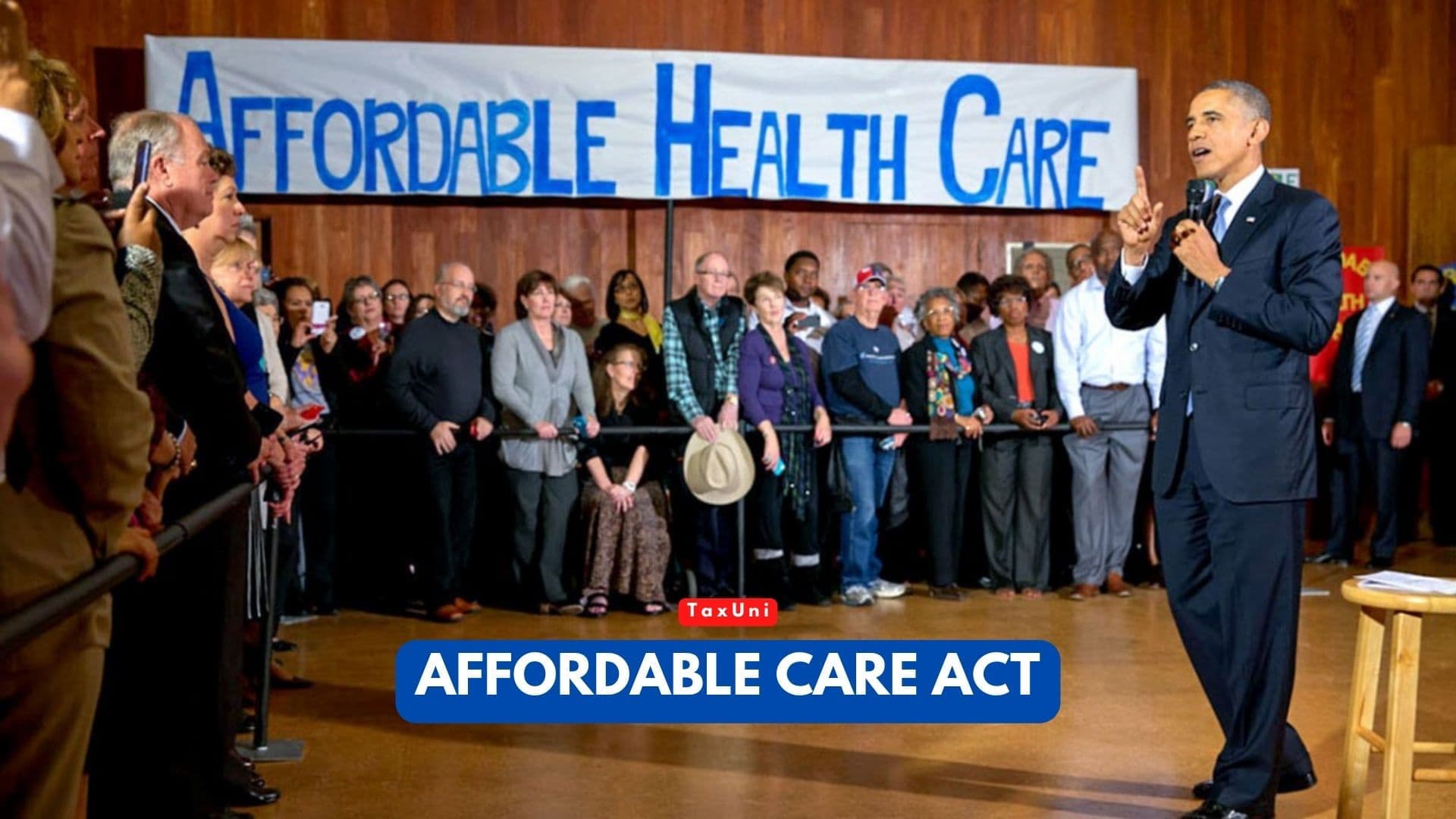
The history of the Affordable Care Act (ACA) spans decades of health reform debates, culminating in the landmark law signed by President Barack Obama on March 23, 2010. Designed to expand health insurance coverage, lower costs, and ref...
The history of the Affordable Care Act (ACA) spans decades of health reform debates, culminating in the landmark law signed by President Barack Obama on March 23, 2010. Designed to expand health insurance coverage, lower costs, and reform healthcare delivery, the law survived major Supreme Court challenges, congressional repeal attempts, and statutory revisions.
Contents
Disclaimer: This article provides historical, regulatory, and policy analysis for educational purposes and does not constitute formal legal, tax, or financial advice.
Legislative Origins and the Push for Comprehensive Healthcare Reform
The passage of the Patient Protection and Affordable Care Act (Pub. L. 111-148) in March 2010 marked the most significant regulatory overhaul of the United States healthcare system since the creation of Medicare and Medicaid in 1965. Prior to its enactment, the U.S. individual health insurance market suffered from widespread fragmentation, high uninsured rates, and persistent underwriting practices that denied coverage or charged unaffordable premiums to individuals with pre-existing conditions.
Efforts to achieve national health insurance reform date back to the early 20th century under President Theodore Roosevelt, with major legislative attempts occurring during the Truman, Nixon, and Clinton administrations. The immediate policy foundation for the ACA emerged from a combination of bipartisan proposals, including market-based ideas developed by conservative think tanks in the late 1980s and early 1990s, as well as the 2006 Massachusetts health reform law enacted under Governor Mitt Romney.
The legislative journey began in earnest following the 2008 presidential election. Between 2009 and early 2010, Congressional committees in both the House of Representatives and the Senate conducted extensive hearings to craft a viable reform strategy. The legislative drafting relied on a "three-legged stool" policy architecture designed to stabilize the individual insurance market:
- Guaranteed Issue and Community Rating: Insurance companies were barred from denying coverage or inflating premiums based on health status or medical history.
- The Individual Mandate: A requirement that most Americans maintain minimum essential coverage or pay a tax penalty, ensuring healthy individuals remained in the risk pool to offset the costs of sicker enrollees.
- Financial Subsidies: Income-based tax credits and cost-sharing reductions to make private plans affordable for low- and middle-income households.
The legislative process faced intense political friction and procedural challenges. Following the death of Senator Edward Kennedy in August 2009 and the subsequent special election in Massachusetts, Senate Democrats lost their 60-seat filibuster-proof majority. To pass the legislation without further Senate amendments, the House adopted the Senate’s version of the Patient Protection and Affordable Care Act on March 21, 2010. President Obama signed the bill into law on March 23, 2010, followed days later by the Health Care and Education Reconciliation Act of 2010 (Pub. L. 111-152) on March 30, which finalized budget-related amendments.
Core Architecture and Major Provisions of the ACA
The statutory framework of the ACA introduced comprehensive regulations across private insurance markets, public entitlement programs, and healthcare delivery systems. Key structural pillars include:
Consumer Protections and Market Rules
The ACA eliminated long-standing insurance industry practices that exposed consumers to financial vulnerability. It mandated guaranteed issue, prohibiting insurers from turning down applicants with pre-existing medical conditions. The law restricted premium variations to only four factors: age (capped at a 3:1 ratio between older and younger adults), geographic rating area, family size, and tobacco use. Furthermore, it prohibited annual and lifetime dollar limits on Essential Health Benefits (EHBs)—a set of ten core service categories including hospitalization, maternity care, mental health treatment, and prescription drugs.
Health Insurance Marketplaces and Subsidies
To facilitate shopping for individual plans, the ACA created state-based and federally facilitated Health Insurance Marketplaces (such as HealthCare.gov). Qualified Health Plans (QHPs) offered on these exchanges were standardized into actuarial value metal tiers: Bronze (60%), Silver (70%), Gold (80%), and Platinum (90%).
To make coverage affordable, the statutory design provided two types of federal financial assistance for eligible individuals between 100% and 400% of the Federal Poverty Level (FPL):
- Premium Tax Credits (PTC): Refundable tax credits that cap the percentage of household income an individual or family pays toward a benchmark plan.
- Cost-Sharing Reductions (CSR): Subsidies that lower out-of-pocket maximums, copayments, and deductibles for low-income enrollees purchasing Silver-level plans.
- Guaranteed Issue & Pre-Existing Protection: Insurers cannot deny coverage or inflate rates.
- Individual Coverage Requirement: Broad participation stabilizes the risk pool.
- Premium Subsidies & Financial Assistance: Income-based credits keep premiums affordable.
Medicaid Expansion and Preventive Care
The law sought to broaden public safety nets by expanding Medicaid eligibility to adults earning up to 138% of the FPL (including the statutory 5% income disregard), funded initially at 100% by the federal government and phasing down to a permanent 90% federal matching rate (FMAP). Additionally, the ACA required non-grandfathered health plans to cover recommended preventive services—such as annual wellness exams, immunizations, and cancer screenings—without consumer cost-sharing.
Constitutional Challenges and Supreme Court Landmark Rulings
The legislative breadth of the ACA triggered immediate constitutional legal actions across federal courts, resulting in several landmark rulings by the Supreme Court of the United States (SCOTUS) that reshaped federal power, administrative law, and healthcare administration.
National Federation of Independent Business (NFIB) v. Sebelius (2012)
In June 2012, the Supreme Court addressed two primary constitutional challenges: whether Congress had the authority under the Commerce Clause to enact the individual mandate, and whether forcing states to expand Medicaid under threat of losing all existing federal Medicaid funding violated federalism principles.
The Court upheld the individual mandate by a 5–4 vote, with Chief Justice John Roberts authoring the majority opinion. While the Court held that the Commerce Clause did not grant Congress authority to compel individuals to engage in commerce, it upheld the mandate under Congress's Taxing Clause powers, interpreting the penalty for non-compliance as a valid tax.
However, the Court ruled 7–2 that withholding existing Medicaid funds from non-expanding states was unconstitutionally coercive under the Spending Clause. This ruling effectively made Medicaid expansion optional for states, creating a coverage gap in states that chose not to expand, where low-income adults earned too much for traditional Medicaid but too little to qualify for Marketplace premium subsidies.
Burwell v. Hobby Lobby Stores, Inc. (2014)
In 2014, the Supreme Court evaluated the ACA’s preventive services mandate, specifically the requirement that employer-sponsored insurance plans cover FDA-approved contraceptives. In a 5–4 decision, the Court held that under the Religious Freedom Restoration Act of 1993 (RFRA), closely held, for-profit corporations with religious objections could not be compelled to provide contraceptive coverage, prompting the federal government to establish administrative accommodation mechanisms for eligible employers.
King v. Burwell (2015)
In 2015, statutory interpretation was tested in King v. Burwell. Challengers argued that the literal text of the statute authorized premium tax credits only for exchanges "established by the State," thereby disqualifying residents in states using the federally facilitated HealthCare.gov platform. In a 6–3 decision written by Chief Justice Roberts, the Court rejected this argument, ruling that Congress intended subsidies to apply nationwide across all exchanges, preserving market stability in over 30 states operating under federal exchanges.
California v. Texas (2021)
After Congress reduced the individual mandate financial penalty to $0 in late 2017, a coalition of Republican-led states argued that the mandate was no longer a valid tax under NFIB v. Sebelius and that the rest of the ACA must fall with it. In June 2021, the Supreme Court ruled 7–2 that the plaintiffs lacked legal standing to bring the suit because an un-enforced penalty inflicted no concrete injury, leaving the entirety of the statutory framework intact.
Statutory Modifications and Subsidy Expansion
Following its enactment, Congress enacted several legislative amendments to alter the administrative, financial, and regulatory mechanics of the ACA.
| Date | Chronology of Major ACA Amendments |
|---|---|
| March 2010 | ACA Signed into Law (Pub. L. 111-148 & Pub. L. 111-152) |
| June 2012 | NFIB v. Sebelius Makes Medicaid Expansion Optional |
| Oct 2013 | HealthCare.gov Launches for Public Enrollment |
| Dec 2017 | Tax Cuts and Jobs Act Sets Individual Mandate Tax to $0 |
| March 2021 | American Rescue Plan Act Temporarily Enhances PTCs |
| August 2022 | Inflation Reduction Act Extends ARPA PTCs Through 2025 |
The Tax Cuts and Jobs Act of 2017
Passage of the Tax Cuts and Jobs Act (TCJA) in December 2017 marked a major structural shift in federal policy. While repeated legislative efforts to repeal and replace the ACA failed in 2017, the TCJA reduced the shared responsibility payment (individual mandate penalty) to $0 effective January 1, 2019. Economic predictions warned that eliminating the penalty would cause collapse in the individual market, but expanded federal marketing, automatic re-enrollment features, and stable premium tax credit structures prevented significant market disruption.
The American Rescue Plan Act (ARPA) of 2021
In response to economic disruptions from the COVID-19 pandemic, Congress enacted the American Rescue Plan Act of 2021 (ARPA). ARPA significantly expanded federal subsidy availability by:
- Removing the income cap that previously prevented households earning above 400% of the FPL from receiving Premium Tax Credits.
- Lowering the maximum required income contribution for benchmark Silver plans across all income brackets, enabling low-income individuals (up to 150% FPL) to access zero-premium benchmark coverage with reduced out-of-pocket costs.
The Inflation Reduction Act (IRA) of 2022
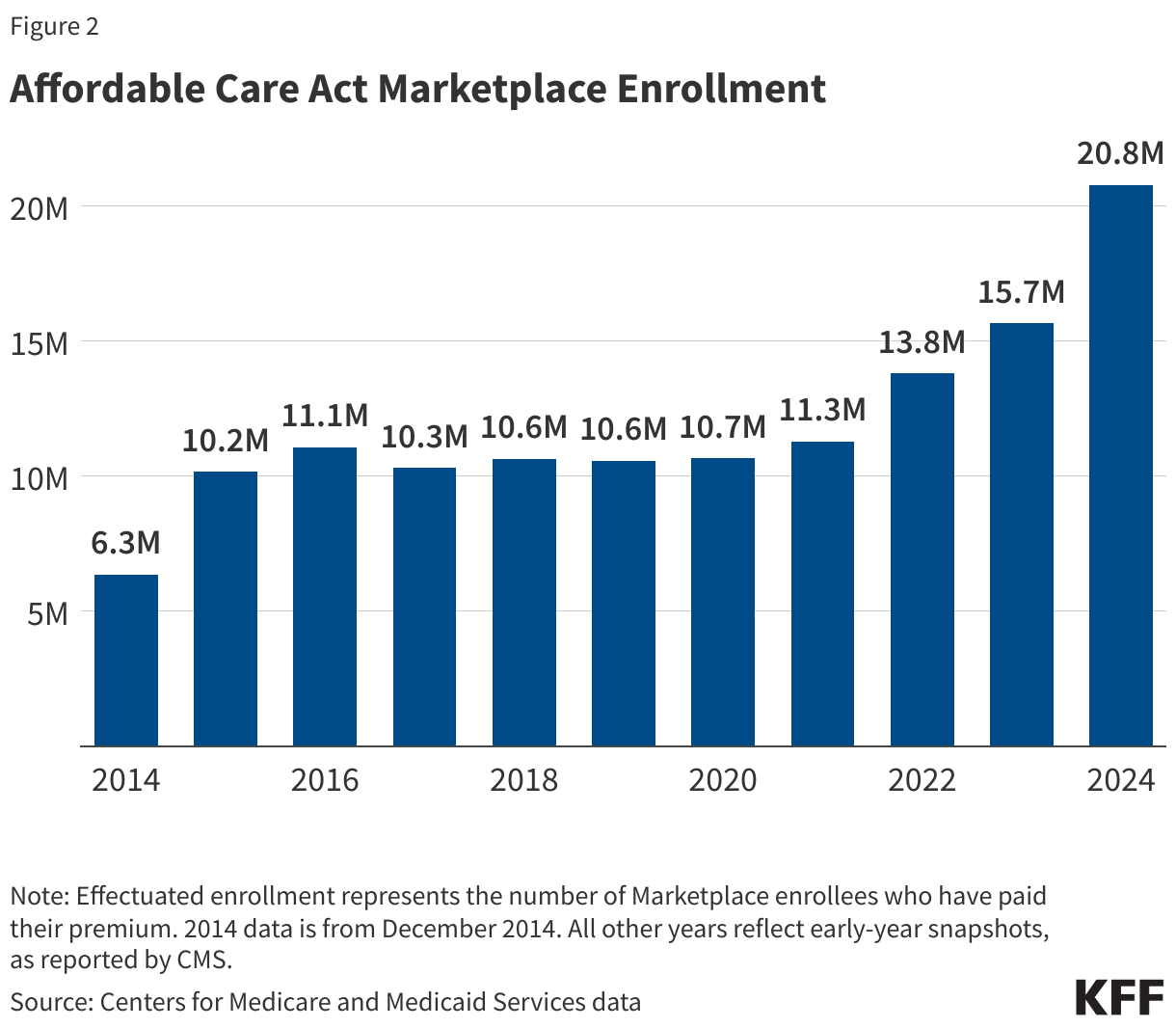
The subsidy enhancements enacted under ARPA were set to expire at the end of 2022. However, Congress passed the Inflation Reduction Act of 2022, extending the enhanced subsidy structures through December 31, 2025. This extension sustained record-high individual market enrollment, driving total enrollment across state and federal marketplaces past 21 million individuals during recent open enrollment cycles.
Summary of Key ACA Historical Milestones
The following table summarizes the key historical events, statutory changes, and legal milestones that shaped the Patient Protection and Affordable Care Act.
| Event / Milestone | Effective / Decision Date | Primary Focus / Mechanism | Impact on Coverage & Operations |
|---|---|---|---|
| ACA Enactment | March 23, 2010 | Statutory establishment of comprehensive national health reform | Established federal baseline protections, insurer rules, and marketplace structures |
| NFIB v. Sebelius | June 28, 2012 | Supreme Court challenge to individual mandate and Medicaid expansion | Upheld mandate under Taxing Clause; rendered Medicaid expansion voluntary for states |
| Marketplace Rollout | October 1, 2013 | Launch of HealthCare.gov and state-based exchanges | Initiated open enrollment for guaranteed-issue plans starting January 1, 2014 |
| King v. Burwell | June 25, 2015 | Supreme Court challenge to federal exchange subsidies | Upheld nationwide availability of Premium Tax Credits on federally run exchanges |
| Individual Mandate Penalty Zeroed | January 1, 2019 | Statutory change via Tax Cuts and Jobs Act of 2017 | Set tax penalty for uninsurance to $0 without invalidating statutory market protections |
| American Rescue Plan Act | March 11, 2021 | Emergency legislation enhancing ACA subsidies | Eliminated 400% FPL subsidy cap and reduced consumer premium contributions |
| California v. Texas | June 17, 2021 | Supreme Court challenge to ACA constitutionality post-TCJA | Dismissed challenge due to lack of standing, preserving the law intact |
| Inflation Reduction Act | August 16, 2022 | Statutory extension of enhanced subsidies | Extended enhanced premium tax credits through the end of 2025 |
Long-Term Impacts on Coverage, Market Stability, and Consumer Protections
Over more than a decade of implementation, the ACA reshaped health economics and care Delivery within the United States. Its long-term policy impacts manifest across several dimensions:
Uninsured Rates and Access to Care
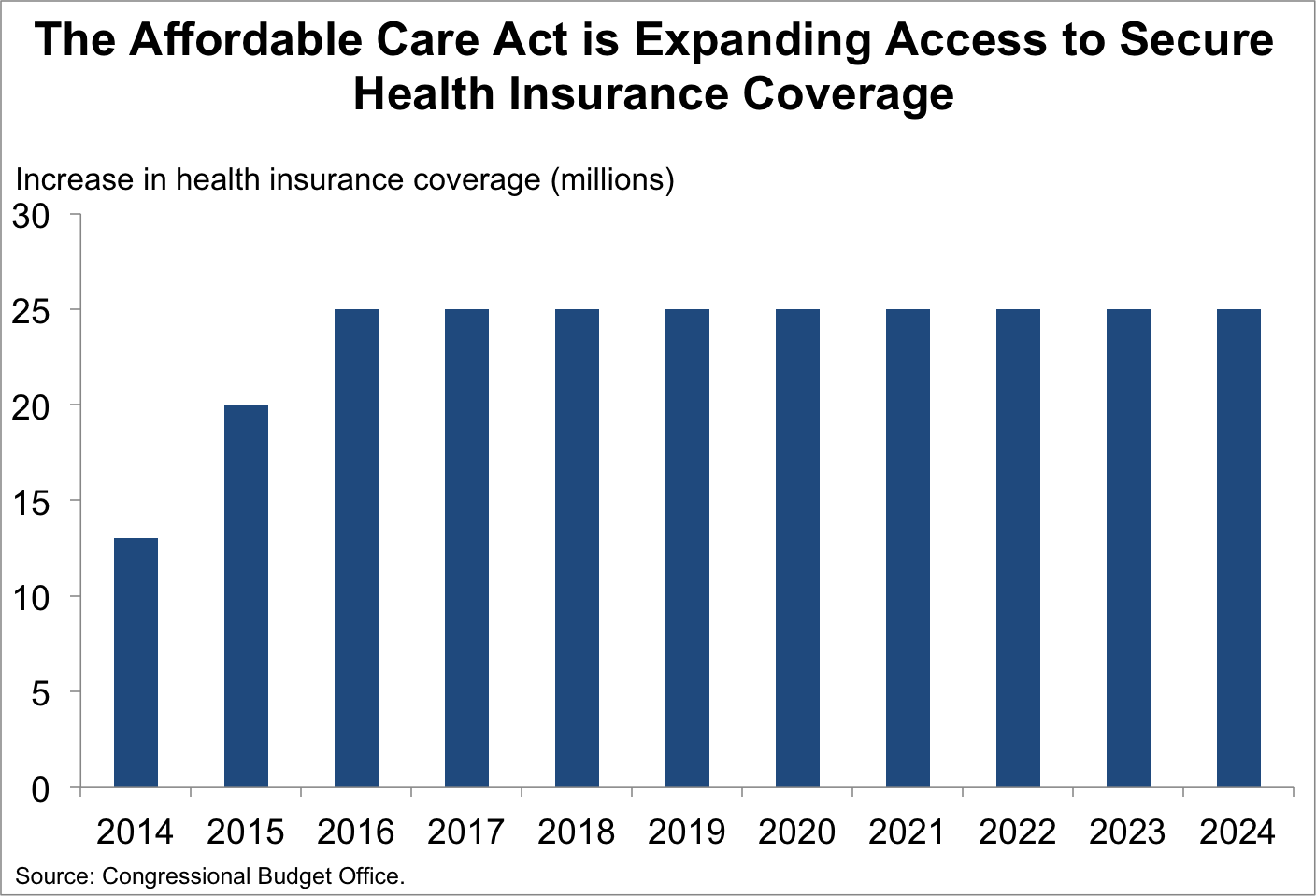
Federal health survey data from the Centers for Disease Control and Prevention (CDC) and the U.S. Census Bureau show that the national uninsured rate dropped significantly following implementation of the ACA's core provisions in 2014, reaching historical lows near 7.7% in recent years. More than 40 states plus the District of Columbia have adopted Medicaid expansion under the ACA framework, expanding public coverage to millions of low-income childless adults previously ineligible for benefits.
Structural Shift in Insurance Market Risk
The law shifted private insurance underwriting from medical risk selection to managed competition. Insurers can no longer maintain profitability by denying high-risk individuals or dropping sick policyholders through rescissions. Instead, market competition centers on provider network configuration, administrative efficiency, and quality care incentives overseen by statutory Medical Loss Ratio (MLR) rules, which require insurers to spend at least 80% to 85% of premium revenues directly on clinical care and quality improvement.
- 80/85 Medical Loss Ratio (MLR) Rule
- Medical Care & Quality Improvement: 80%–85% Min.
- Administrative Overhead & Profits: 15%–20% Max.
- Failure to meet threshold = Consumer Premium Rebates
Chronic Disease and Preventive Protections
By waiving patient cost-sharing for preventive care, the law increased rates of early diagnostic screenings, cardiovascular evaluations, and routine immunizations. Consumer safeguards—such as capping maximum out-of-pocket expenses for in-network care and allowing adult children to remain on parental insurance policies until age 26—have provided financial protection for millions of American households facing severe medical crises.
Frequently Asked Questions
What was the main purpose of the Affordable Care Act when passed in 2010?
The primary goal of the ACA was to achieve near-universal health coverage in the United States by reforming the individual health insurance market, expanding public programs like Medicaid, lowering out-of-pocket costs for low- and middle-income families, and establishing baseline federal protections that prevent insurers from denying coverage due to pre-existing conditions.
Is the individual mandate still active, and is there a tax penalty for being uninsured?
The statutory individual mandate requirement remains part of federal law, but the federal tax penalty for failing to maintain coverage was reduced to $0 under the Tax Cuts and Jobs Act of 2017, effective starting tax year 2019. However, several states—including California, Massachusetts, New Jersey, Rhode Island, and the District of Columbia—enact and enforce their own state-level individual health insurance mandates and associated tax penalties.
How did the Supreme Court's decision in NFIB v. Sebelius impact Medicaid?
In NFIB v. Sebelius (2012), the Supreme Court ruled that the federal government could not condition a state's existing Medicaid funding on whether it adopted the ACA’s Medicaid expansion. This made expansion voluntary for state governments. While initial implementation was mixed, the vast majority of states eventually chose to expand Medicaid to adults earning up to 138% of the Federal Poverty Level.
What are Essential Health Benefits (EHBs)?
Essential Health Benefits are ten statutory categories of healthcare services that all individual and small-group health insurance plans governed by the ACA must cover. These categories include ambulatory patient services, emergency services, hospitalization, maternity and newborn care, mental health and substance use disorder treatment, prescription drugs, rehabilitative services, laboratory services, preventive and wellness care, and pediatric services (including oral and vision care).
How did the Inflation Reduction Act alter ACA Marketplace subsidies?
The Inflation Reduction Act of 2022 extended temporary subsidy enhancements originally established under the 2021 American Rescue Plan Act through December 31, 2025. These provisions eliminated the upper income limit (400% FPL) for Premium Tax Credit eligibility and capped benchmark plan contributions at 8.5% of household income for all eligible individuals, significantly lowering monthly premiums for Marketplace enrollees.
Actionable Steps for Consumers and Employers Today
Understanding the historical evolution and current regulations of the ACA helps individuals and business leaders manage their health plan obligations effectively:
- Evaluate Marketplace Subsidy Eligibility: Individuals and families purchasing coverage on the individual market should review their projected household income annually using official resources like HealthCare.gov or state-run exchanges to determine eligibility for Premium Tax Credits and Cost-Sharing Reductions.
- Review Employer Mandate Requirements: Employers with 50 or more Full-Time Equivalent (FTE) employees must remain compliant with the ACA's Employer Shared Responsibility Provisions (ESRP) by offering affordable, Minimum Value coverage to eligible full-time staff to avoid Internal Revenue Code Section 4980H tax penalties.
- Verify State-Specific Compliance Rules: Taxpayers residing in states with active state-level health coverage mandates (such as California, New Jersey, or Massachusetts) must verify local coverage reporting rules during annual state tax filings to prevent state tax penalties.
- Leverage No-Cost Preventive Services: Insured consumers should confirm that their preventive medical visits, recommended cancer screenings, and vaccines are billed as qualified preventive care under ACA guidelines to avoid unnecessary out-of-pocket charges.
Image Gallery