Luca Montezemolo and the Ferrari Era: Blueprint of a Corporate and Racing Renaissance
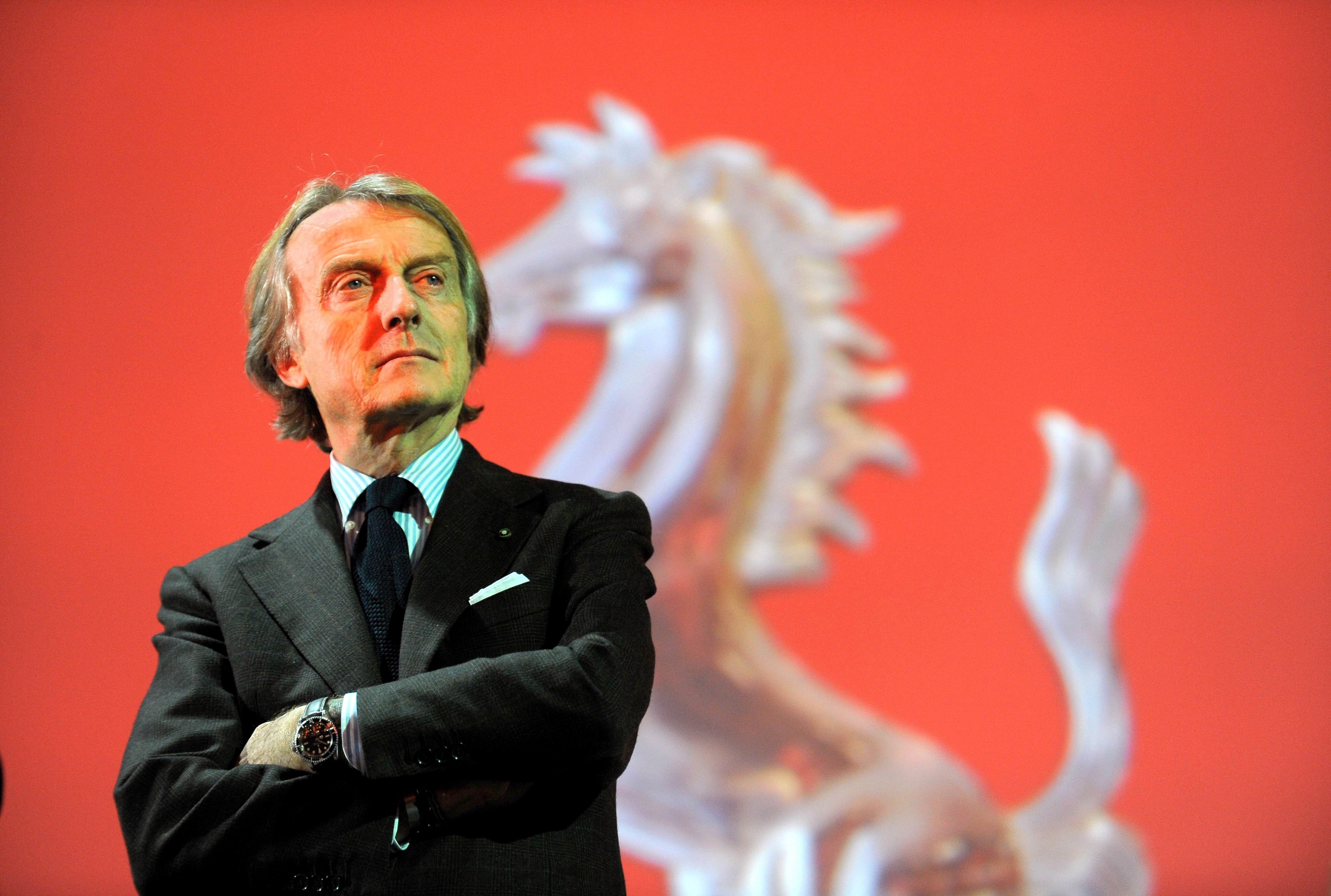
The leadership of Luca Cordero di Montezemolo at Ferrari from 1991 to 2014 represents one of the most successful corporate turnarounds and competitive streaks in industrial history. By combining rigorous organizational restructuring in...
The leadership of Luca Cordero di Montezemolo at Ferrari from 1991 to 2014 represents one of the most successful corporate turnarounds and competitive streaks in industrial history. By combining rigorous organizational restructuring in Formula 1 with a disciplined luxury business model, Montezemolo saved Ferrari from financial stagnation and racing irrelevance, transforming it into a high-margin global powerhouse.
Contents
The Early Chapter: Montezemolo and Enzo Ferrari (1973–1977)
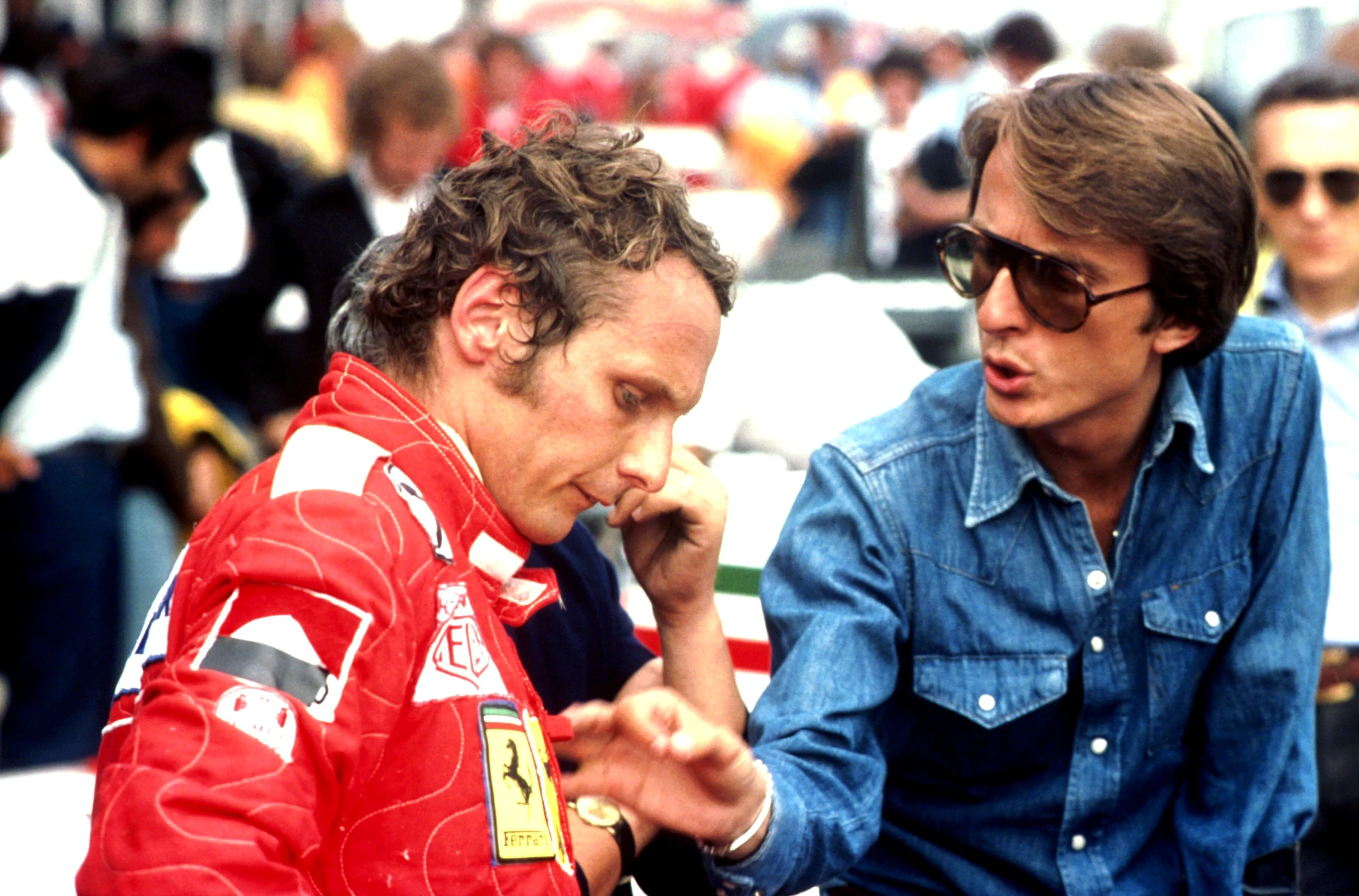
Luca Cordero di Montezemolo’s relationship with Maranello began long before his tenure as Chairman. In 1973, company founder Enzo Ferrari brought the 26-year-old lawyer into the organization as his direct assistant and manager of Scuderia Ferrari. At the time, the racing team was struggling to match the agility of nimble British garage-based constructors like Lotus and Tyrrell.
Montezemolo brought structured administration and diplomatic calm to the volatile racing garage. Working alongside technical director Mauro Forghieri and driver Niki Lauda, Montezemolo helped modernize team communications and political maneuvering within the Fédération Internationale de l'Automobile (FIA). This leadership structure delivered immediate results:
- 1975: Niki Lauda secured Ferrari’s first Drivers' World Championship in eleven years, alongside the Constructors' title.
- 1976: Ferrari secured the Constructors' Championship despite Lauda’s life-threatening crash at the Nürburgring.
- 1977: Lauda won his second Drivers' title, and Ferrari claimed its third consecutive Constructors' championship.
Having proven his executive talent, Montezemolo departed Ferrari in 1977 to advance through senior executive roles within the broader Fiat empire, including leadership positions at Cinzano and managing the organizing committee for the 1990 FIFA World Cup in Italy.
The 1991 Crisis and Montezemolo's Return
Following the death of Enzo Ferrari in 1988, Maranello drifted into crisis. By 1991, the road car division was suffering from inconsistent build quality, aging architecture, and lagging performance compared to emerging Japanese competitors like the Honda NSX. Concurrently, Scuderia Ferrari was experiencing one of its longest championship droughts, failing to win a Drivers' World Title since Jody Scheckter’s victory in 1979.
Recognizing the urgent need for strategic direction, Fiat Chairman Gianni Agnelli appointed Montezemolo as President and Chief Executive Officer of Ferrari in November 1991.
Upon arrival, Montezemolo executed a immediate audit of both the road car factory and the racing division. He discovered a culture hampered by internal silos, outdated production methods, and an over-reliance on brand heritage rather than technical superiority. He initiated a dual-track recovery strategy: rebuild Scuderia Ferrari from the foundation up, and completely re-engineer the road car lineup while establishing strict control over global supply and volume.
Rebuilding Scuderia Ferrari: The Golden Era of Formula 1
Montezemolo recognized that Ferrari's brand value was fundamentally tied to success on the track. However, achieving sustainable success required abandoning traditional Italian provincialism in favor of international talent.
Assembling the "Dream Team"
Rather than attempting to micro-manage the race team, Montezemolo hired proven leaders and insulated them from corporate interference.
- Jean Todt (1993): Recruited from Peugeot Talbot Sport, Todt was appointed Team Principal. He brought absolute operational discipline, logistics mastery, and a refusal to tolerate political factionalism.
- Michael Schumacher (1996): Securing two-time World Champion Michael Schumacher from Benetton signaled Ferrari's commitment to winning. Schumacher provided unparalleled technical feedback and driver work ethic.
- Ross Brawn and Rory Byrne (1996–1997): Brawn joined as Technical Director, bringing strategic brilliance to race management, while Byrne took over as Chief Designer to engineer aerodynamically dominant chassis.
- Luca di Montezemolo (Executive Autonomy & Political Shielding)
- Jean Todt (Operational Command & Team Management)
- Ross Brawn (Technical Dir.) / Rory Byrne (Chief Designer) (Technical & Race Strategy)
- Michael Schumacher (Execution & Vehicle Development)
- Ross Brawn (Technical Dir.) / Rory Byrne (Chief Designer) (Technical & Race Strategy)
- Jean Todt (Operational Command & Team Management)
Unprecedented Motorsport Dominance
The restructuring took time, enduring painful early setbacks, including public engine failures and title losses in the final races of 1997 and 1998. Montezemolo defended Todt and the team against hostile press commentary, providing the stability necessary to build momentum.
The strategy proved decisive:
- 1999: Ferrari claimed its first Constructors' Championship in 16 years.
- 2000–2004: Michael Schumacher and Ferrari swept five consecutive Drivers' and Constructors' World Championships, setting record operational run rates for dominance in F1 history.
- 2007–2008: Under the foundation laid during this era, Ferrari won the 2007 Drivers' Championship (Kimi Räikkönen) and consecutive Constructors' titles in 2007 and 2008.
According to official historical records archived by the Formula 1 Hall of Fame, this streak established Ferrari as the most successful era of modern motorsport management.
The Road Car Strategy and "Formula Uomo"
Simultaneously, Montezemolo transformed Ferrari's commercial product line. When he took control in 1991, models like the Ferrari 348 were criticized for erratic handling and poor ergonomics. Montezemolo demanded an immediate shift toward ride quality, daily usability, and class-leading engineering.
Technological and Model Evolution
The product transformation began with the F355 in 1994, which introduced usable power bands and pioneering F1 paddle-shift automated manual transmissions to road cars. This was followed by aluminum-spaceframe construction in the 360 Modena (1999), advanced electronic differentials in the F430 (2004), and aerodynamically active engineering in the 458 Italia (2009).
On the V12 front, Montezemolo returned Ferrari to its roots of front-engine GT performance with the 550 Maranello (1996), moving away from the mid-engine layout of the Testarossa era. Hypercars like the Ferrari Enzo (2002) and the hybrid LaFerrari (2013) demonstrated Maranello's ability to transfer F1 hybrid technologies directly into limited-run road cars.
The Business Philosophy: Controlled Volume and Scarcity
Montezemolo established a core luxury business rule: "Ferrari must always produce one less car than the market demands."
By intentionally capping annual production—maintaining output around 7,000 vehicles during the peak of his tenure—Montezemolo created long waiting lists, preserved residual values on used models, and maintained brand equity. Rather than chasing unit volume, Ferrari drove margin growth through personalization programs (such as the Tailor Made program), limited-edition collector series, and brand licensing.
The "Formula Uomo" Factory Transformation
Montezemolo recognized that high-performance vehicles could not be built in outdated environments. He launched Formula Uomo, an extensive modernization initiative for the Maranello production facilities.
Collaborating with world-renowned architects including Renzo Piano, Jean Nouvel, and Massimiliano Fuksas, Montezemolo transformed Maranello into a state-of-the-art facility featuring:
- Climate-controlled assembly lines with automated height-adjusting rigs for workers.
- On-site green spaces, indoor gardens, and optimized natural lighting to improve focus and worker well-being.
- Advanced metallurgical foundries integrated directly with digital design studios.
This program reduced manufacturing defect rates, boosted employee efficiency, and transformed Maranello into an architectural showcase for global clients.
Financial and Operational Performance Across Eras
The impact of Montezemolo's management can be measured by comparing the business metrics across different eras in Ferrari's history.
| Metric / Era | The Founder Era (1947–1988) | The Montezemolo Era (1991–2014) | Post-IPO / Modern Era (2015–Present) |
|---|---|---|---|
| Primary Executive Focus | Motorsport racing funding via road car sales | Balanced brand exclusivity, F1 dominance, & margin expansion | Public market valuation, unit growth, & powertrain electrification |
| Annual Car Production | ~500 to 4,000 units | ~2,300 to 7,255 units (Strictly Capped) | 10,000+ units (Expanded into SUV/Purosangue) |
| F1 Drivers' Championships | 9 Titles (1952, '53, '56, '58, '61, '64, '75, '77, '79) | 6 Titles (2000, 2001, 2002, 2003, 2004, 2007) | 0 Titles (Through 2025 season) |
| F1 Constructors' Titles | 8 Titles | 8 Titles (1999, 2000, '01, '02, '03, '04, '07, '08) | 0 Titles |
| Core Technological Shift | Mechanical innovation, carburetors, spaceframes | F1 paddle shifts, aluminum chassis, electronic E-Diff | Hybrid systems, turbos, electric drive units (EVs) |
| Facility Strategy | Traditional artisan workshops & manual assembly | "Formula Uomo" architectural & workplace overhaul | Highly automated, carbon-neutral manufacturing hubs |
Conflict, Departure, and the 2014 Transition
By 2014, tension mounted between Montezemolo and Sergio Marchionne, Chief Executive Officer of the newly merged Fiat Chrysler Automobiles (FCA). Marchionne sought to unlock shareholder value by listing Ferrari on the New York Stock Exchange (NYSE) and expanding annual vehicle production beyond 10,000 units to capitalize on surging demand in emerging markets.
Montezemolo strongly opposed expanding volume, arguing that mass production would dilute Ferrari's exclusivity and damage long-term residual values. Simultaneously, Scuderia Ferrari struggled during the launch of F1's 1.6-liter V6 turbo-hybrid engine era in 2014, failing to win a single race that season.
The strategic friction reached a turning point in late summer 2014. In September 2014, Montezemolo announced his resignation after 23 years as Chairman, officially stepping down on October 13, 2014. Marchionne took direct control as Chairman, paving the way for Ferrari’s spin-off from FCA and its initial public offering (IPO) in late 2015.
Detailed corporate background on Ferrari's initial public offering filing and corporate restructuring can be found through the official U.S. Securities and Exchange Commission (SEC) EDGAR Database.
Legacy and Impact on Modern Ferrari
Luca Cordero di Montezemolo’s legacy at Ferrari remains a masterclass in luxury brand preservation and high-performance engineering. He inherited a company struggling with identity and operational deficits, and left behind an enterprise valued in the tens of billions of dollars.
Key elements of his strategy remain embedded in Maranello’s DNA:
- The Power of Scarcity: Modern luxury automakers continue to use Montezemolo's model of intentional allocations and high-margin custom options to drive profitability.
- Separation of Management Silos: Insulating technical operations from short-term corporate politics remains the gold standard for high-performance motorsport organizations.
- Human-Centric Industrial Design: The "Formula Uomo" initiative established that top-tier mechanical precision requires modern, worker-focused manufacturing environments.
Frequently Asked Questions
What was Luca Montezemolo's main achievement at Ferrari?
Montezemolo successfully restructured Ferrari’s racing division and commercial business. He oversaw Scuderia Ferrari’s most dominant Formula 1 period (winning eight Constructors' and six Drivers' World Championships) while turning Ferrari into a profitable global luxury brand through strict production limits and improved vehicle quality.
Why did Luca Montezemolo leave Ferrari in 2014?
Montezemolo resigned in September 2014 primarily due to strategic disagreements with FCA CEO Sergio Marchionne. Marchionne wanted to increase annual production volume and take Ferrari public on the stock market, whereas Montezemolo argued that limiting volume was essential to preserve brand exclusivity. Poor performance in the 2014 F1 season also accelerated his exit.
What was the "Formula Uomo" program created by Montezemolo?
"Formula Uomo" was an extensive workplace modernization project launched by Montezemolo at the Maranello factory. It focused on improving worker ergonomics, integrating green spaces, maximizing natural light, and employing leading architects to construct state-of-the-art facilities, directly linking worker environment to production quality.
Who did Montezemolo bring in to rebuild Scuderia Ferrari in the 1990s?
Montezemolo hired Jean Todt as Team Principal in 1993. Todt then recruited driver Michael Schumacher (1996), Technical Director Ross Brawn, and Chief Designer Rory Byrne. This core group formed the foundation of Ferrari’s F1 dominance from 1999 to 2004.
How did Montezemolo approach road car production numbers?
Montezemolo maintained a policy of controlled scarcity, adhering to the principle of producing "one less car than the market demands." By capping annual production around 7,000 units during his tenure, he kept demand high, protected vehicle resale values, and maximized profit margins via custom options.
Key Strategic Takeaways
- Protect Brand Equity Over Short-Term Volume: Exclusivity and long waiting lists often generate higher long-term operating margins than chasing high sales volumes.
- Insulate Core Talent from Corporate Noise: Executive leaders must shield technical and operational teams from political interference to achieve elite performance.
- Invest in Factory and Human Infrastructure: High-precision manufacturing requires modern, ergonomic workplace design to minimize defects and maintain standards.
- Enforce Strategic Patience: Major operational turnarounds require sustained executive backing during initial transition periods before yielding steady results.
Image Gallery