Do You Need Business Auto Insurance for a Sole Proprietorship?
As a sole proprietor, you and your business are legally the exact same entity, which means any financial loss or liability incurred on the job falls directly on your personal assets. Standard personal auto insurance policies contain st...
As a sole proprietor, you and your business are legally the exact same entity, which means any financial loss or liability incurred on the job falls directly on your personal assets. Standard personal auto insurance policies contain strict exclusions for business activities, leaving you exposed to denied claims, personal lawsuits, and catastrophic financial loss if an accident occurs while working.
Contents
Disclaimer: Insurance rules, state regulations, and policy terms vary by jurisdiction and individual business operations. This guide provides educational information and does not constitute formal legal or financial advice. Consult a licensed insurance agent or legal representative to evaluate your specific coverage needs.
The Legal and Financial Reality of Sole Proprietorships
Operating as a sole proprietor offers simplicity: there are no complex corporate filings, separate business entity structures, or distinct legal separations required to start operating. However, this simplicity introduces significant risk when driving for business purposes.
No Legal Separation Between You and Your Business
Unlike formal corporate structures like Limited Liability Companies (LLCs) or Corporations, a sole proprietorship does not create a protective legal shield between your personal wealth and your business liabilities. If your business is sued following an auto accident, your personal savings, home equity, and future earnings are all eligible assets to satisfy a legal judgment.
When you drive your vehicle to deliver products, transport equipment, visit client sites, or perform paid services, any accident that occurs is categorized as an operational risk of your enterprise. Without the correct insurance coverage, a single serious accident can result in liability judgments that exceed your personal financial resources.
Why Personal Auto Insurance Falls Short
Many sole proprietors assume that because they own their vehicle personally, their Personal Auto Policy (PAP) covers all driving activities. This is one of the most common and costly misconceptions in small business risk management.
Standard personal auto insurance policies are underwritten based on personal driving profiles—such as commuting to a single office, runing personal errands, and taking personal trips. Insurers exclude commercial activities because business driving typically involves:
- Increased Mileage and Time on the Road: More exposure to traffic and adverse weather conditions.
- Higher Driver Stress and Deadlines: Delivery schedules or urgent service calls increase the probability of accidents.
- Heavier Loads: Transporting tools, equipment, or inventory alters vehicle handling and increases braking distances.
- Passenger Risks: Transporting clients or paying passengers introduces third-party bodily injury liabilities.
If you file a claim for an accident that occurred during business operations, insurance adjusters will investigate the circumstances of the trip. If they discover the vehicle was being used for undisclosed commercial purposes, the insurer can deny the claim entirely and cancel your policy for material misrepresentation.
Evaluating Your Driving: Personal vs. Commercial Use
Determining whether you need a dedicated Commercial Auto Policy (CAP) or a business use endorsement on your personal policy depends entirely on how, when, and why you use your vehicle.
Vehicle Usage Evaluation
- Light Errands / Occasional Commuting: Personal Policy + Business Use Endorsement
- Deliveries / Transporting Clients / Heavy Tools / Multi-Driver: Commercial Auto Policy
Scenarios Where a Personal Policy (or Endorsement) May Suffice
If your vehicle usage is limited to administrative business tasks, your personal auto insurer may allow you to add a Business Use Endorsement to your existing personal policy. This scenario typically applies if:
- You use your personal sedan or SUV to travel between occasional client meetings.
- You travel to the bank, post office, or office supply store for business errands.
- You do not transport heavy equipment, hazardous materials, or commercial goods.
- You are the sole driver of the vehicle, and no employees or subcontractors operate it.
- You do not charge fee-for-service transportation (e.g., taxi, rideshare, or delivery services).
A business use endorsement adjusts your personal policy premium to account for routine business driving without forcing you into a full commercial policy. However, you must explicitly inform your insurer about this usage to ensure your endorsement covers your exact driving habits.
Scenarios That Require a Commercial Auto Policy
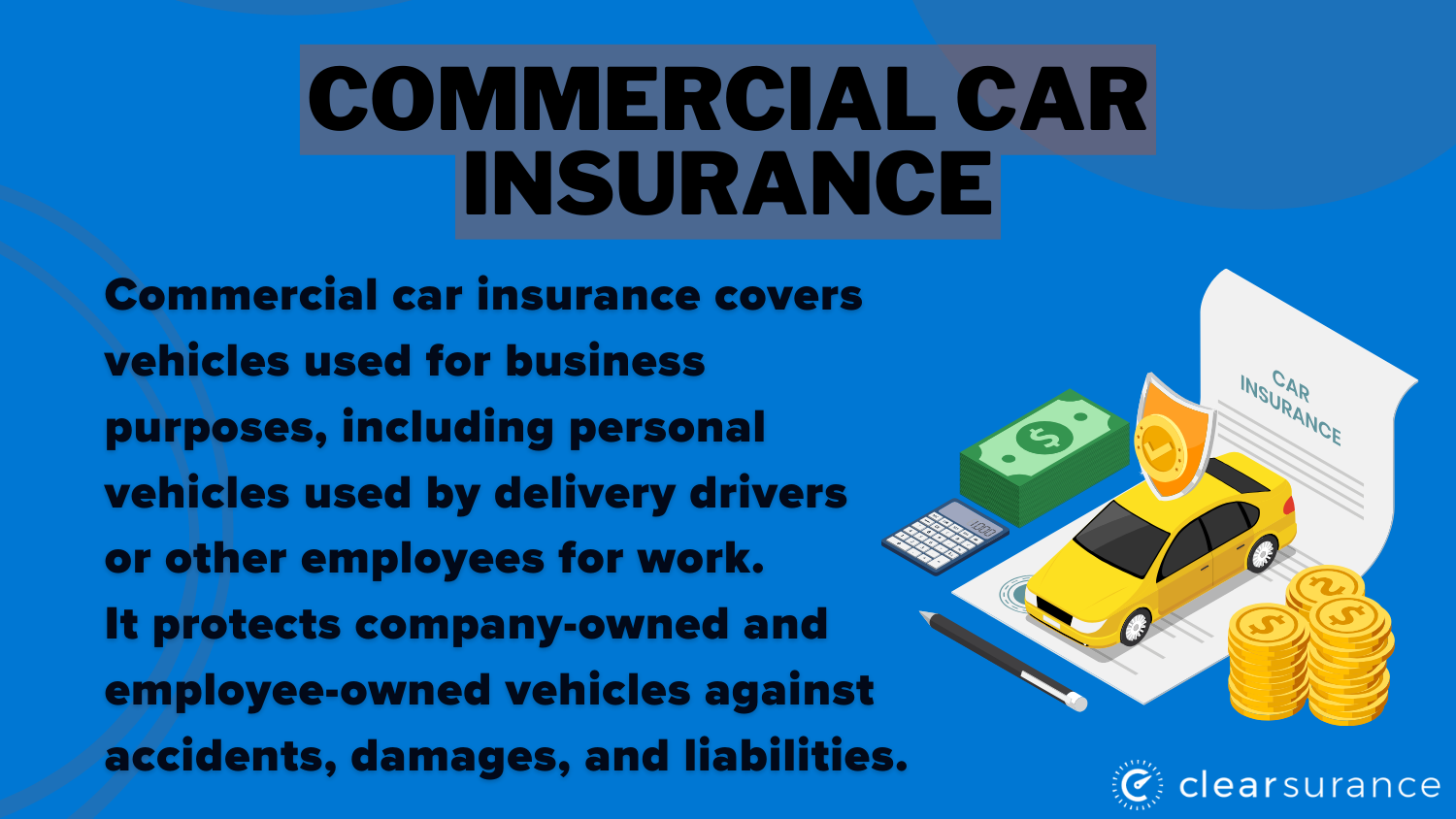
A dedicated commercial auto policy is mandatory when your business activities introduce risks that personal policies explicitly prohibit. You require commercial auto insurance if your sole proprietorship involves any of the following:
- Transporting Goods, Materials, or Food for a Fee: Engaging in courier services, catering deliveries, or freight hauling.
- Carrying Specialized Tools or Equipment: Operating a trade business (e.g., plumbing, electrical, carpentry, landscaping) where the vehicle stores or hauls heavy equipment, ladders, or raw materials.
- Transporting Clients or Passengers: Operating a limousine service, non-emergency medical transport, or carrying clients to property viewings (e.g., real estate agents carrying clients).
- Vehicles Registered to a Business Name: If you register your vehicle under a business trade name (DBA) rather than your personal legal name.
- Specialized Vehicle Types: Driving heavy-duty pickup trucks (typically over 10,000 lbs GVWR), box trucks, cargo vans, flatbeds, or vehicles modified with commercial racks and toolboxes.
- Multiple Operating Drivers: Allowing employees, independent contractors, or temporary workers to drive the vehicle for business operations.
Comparing Policy Types: Personal vs. Commercial Coverage
Understanding the structural differences between Personal Auto Policies and Commercial Auto Policies helps you select the correct protection level for your business.
| Policy Feature | Personal Auto Policy (PAP) | PAP with Business Endorsement | Commercial Auto Policy (CAP) |
|---|---|---|---|
| Primary Design Intent | Personal errands, household travel, standard commuting | Personal travel plus light business errands | Full commercial operations, transport, and trade activities |
| Typical Liability Limits | State minimums up to $300,000/$500,000 combined | Similar to standard personal limits | $500,000 to $1,000,000+ Combined Single Limit (CSL) |
| Material/Cargo Protection | Excluded | Excluded (or very limited) | Available via add-ons (Inland Marine / Motor Truck Cargo) |
| Driver Coverage Scope | Named policyholder and household members | Named policyholder for specific business tasks | Permissive drivers, employees, and designated business operators |
| Vehicle Types Allowed | Passenger cars, light SUVs, standard minivans | Passenger cars, light SUVs, standard minivans | Cargo vans, box trucks, heavy pickups, specialty commercial vehicles |
| Risk of Claim Denial for Business Accidents | Very High (Explicitly excluded) | Low (If activity falls within endorsement scope) | Zero (Provided operations were truthfully disclosed) |
Essential Coverage Options within a Commercial Auto Policy
When structuring a business auto insurance policy for your sole proprietorship, you can customize coverage components to match your operational exposure. Official guidance from the National Association of Insurance Commissioners (NAIC) recommends evaluating coverage options based on your state's financial responsibility laws and overall risk profile.
Liability Coverage (Combined Single Limit)
Commercial auto policies often utilize a Combined Single Limit (CSL) rather than the split limits standard in personal auto policies (e.g., 50/100/25). A CSL offers a single pool of money—frequently $500,000 or $1,000,000—that pays out for both bodily injury and property damage per accident. This higher limit is crucial for sole proprietors because commercial claims often involve larger vehicles, valuable commercial property, or multi-vehicle incidents.
Physical Damage Coverage (Collision and Comprehensive)
- Collision Coverage: Pays to repair or replace your business vehicle if it collides with another object, vehicle, or rolls over, regardless of fault.
- Comprehensive Coverage: Protects your vehicle against non-collision physical losses, including theft, vandalism, fire, fallen objects, weather damage, and animal strikes.
Hired and Non-Owned Auto (HNOA) Coverage
If your sole proprietorship occasionally rents vehicles for business travel or requires subcontractors or employees to use their personal cars for company tasks, your primary auto insurance may not apply. Hired and Non-Owned Auto (HNOA) Insurance provides liability coverage for vehicles your business uses but does not directly own, lease, or register.
Inland Marine / Equipment and Cargo Coverage
Standard commercial auto insurance covers the vehicle itself, not the items stored inside it. If your vehicle carries expensive tools, diagnostic equipment, or merchandise, you need an Inland Marine Policy (often called Tool and Equipment Coverage or Motor Truck Cargo Insurance). This protects your inventory and equipment against theft or damage while in transit or stored in your vehicle.
What Determines the Cost of Sole Proprietor Business Auto Insurance?
Commercial auto insurance typically costs more than personal auto insurance due to higher coverage limits and elevated risk profiles. According to research published by the Insurance Information Institute (III), insurance carriers calculate commercial auto premiums using several specific risk factors:
Cost Factors:
- Vehicle Weight & Type (GVWR, specialized equipment)
- Operating Radius (Local, regional, long-haul)
- Cargo & Use Type (Hazardous goods, client transport, high-value tools)
- Driving Record & Claims History (Personal & commercial record)
- Vehicle Type, Gross Vehicle Weight Rating (GVWR), and Modifications: Heavier vehicles and those with specialized modifications (e.g., hydraulic lifts, ladder racks, towing hitches) cost more to insure because they can cause greater damage in an accident.
- Industry Risk and Cargo Type: Transporting hazardous materials or expensive electronics carries higher liability and physical damage risks than hauling non-perishable paper products or travelling to consulting appointments.
- Radius of Operation: Driving exclusively within a local city radius (e.g., 50 miles) carries lower premiums than operating across multi-state regional routes, which increases highway time and fatigue risk.
- Driving History and Record: Insurers evaluate your personal Motor Vehicle Record (MVR). Clean driving histories keep commercial premiums manageable, whereas past speeding tickets, at-fault accidents, or DUI convictions significantly elevate costs.
- Selected Liability Limits and Deductibles: Choosing a $1,000,000 CSL with a $500 deductible results in a higher premium than a $500,000 CSL with a $2,000 deductible.
Step-by-Step Guide to Securing Coverage
Securing the proper auto coverage for your sole proprietorship requires careful disclosure to prevent coverage gaps. Follow these steps to audit your risk and bind the right policy:
Step 1: Conduct a Comprehensive Driving Audit
Document every way you use your vehicle for work. Track your annual business mileage, list all stored equipment, identify every individual who drives the vehicle, and note whether you transport passengers, haul cargo, or tow trailers.
Step 2: Review Your Current Personal Auto Policy Exclusions
Read the "Exclusions" section of your existing personal policy or speak directly with your personal policy agent. Explicitly ask: "If I am involved in an accident while driving for my business operations, will this policy cover the damage and third-party liabilities?" Request their answer in writing.
Step 3: Determine Required Coverage Limits
Evaluate your total personal assets, contract requirements, and client mandates. Many corporate clients and government entities require contractors to carry at least $1,000,000 in commercial auto liability coverage before allowing them on-site. The U.S. Small Business Administration (SBA) provides guidance on analyzing business liabilities to select appropriate coverage levels.
Step 4: Obtain Quotes from Commercial Insurance Specialists
Gather quotes from multiple commercial insurance carriers. Ensure you disclose all relevant business details, including:
- Your exact business trade name or DBA.
- All business driving activities and typical geographic range.
- The true estimated percentage of personal versus business driving.
- All drivers who will operate the vehicle.
Step 5: Bind the Policy and Synchronize Registration
Once you select a policy, bind the coverage before conducting further business driving. If your commercial insurer requires the vehicle title or registration to reflect business use, update your records at your local Department of Motor Vehicles (DMV).
Common Mistakes Sole Proprietors Make with Business Auto Coverage
- Assuming an LLC Tax Election Changes Auto Insurance Requirements: Changing your tax status or forming a single-member LLC does not automatically change how insurers view your vehicle usage. Usage type, not legal entity status, dictates whether you need commercial coverage.
- Failing to Disclose Business Driving to Save Money: Omitting business usage to maintain lower personal policy rates is considered insurance fraud. Insurers routinely check social media, business websites, state registry filings, and crash reports during claim investigations.
- Neglecting Coverage for Employees or Independent Contractors: If you hire temporary workers or independent contractors who drive their own vehicles to run business errands for you, your business can be held vicariously liable for accidents they cause. Secure Hired and Non-Owned Auto (HNOA) coverage to plug this gap.
- Assuming Commercial Auto Covers Personal Items Stored inside the Vehicle: Commercial auto policies cover the vehicle structure, not personal laptop computers, cell phones, or trade tools stored in the trunk or cab. Ensure you add an inland marine floater for operational tools and high-value cargo.
Frequently Asked Questions
Can I write off commercial auto insurance on my taxes as a sole proprietor?
Yes. As a sole proprietor filing Schedule C (Form 1040), you can deduct auto insurance premiums as a business expense. If you use the vehicle for both personal and business travel, you can deduct the business portion of your actual auto expenses (including insurance) or use the standard mileage rate set annually by the Internal Revenue Service (IRS). Consult a Certified Public Accountant (CPA) to confirm the best deduction method for your situation.
Is a business use endorsement the same thing as commercial auto insurance?
No. A business use endorsement is an add-on to a standard Personal Auto Policy (PAP) that extends coverage to limited business tasks, such as commuting between sales meetings. A Commercial Auto Policy (CAP) is a standalone contract designed for higher-risk commercial operations, heavier vehicles, passenger transport, employee drivers, and higher liability limits.
What happens if I have an accident while driving for work on a personal policy?
If your personal insurer discovers the accident occurred during commercial activity excluded by your policy terms, they can deny coverage for all third-party liabilities, personal injuries, and vehicle repairs. Furthermore, the insurer may cancel your policy for failure to disclose material usage, leaving you personally responsible for all damages and legal defense costs.
Do I need business auto insurance if I drive for rideshare or delivery apps?
Yes, standard personal policies exclude gig-economy work like rideshare driving and door-to-door food delivery. While gig platforms often provide secondary liability coverage while an active ride or delivery is underway, this coverage often leaves gaps during the phase when you are logged into the app waiting for a request. You need a dedicated rideshare/delivery endorsement or a commercial policy to maintain continuous coverage.
Can I hold a commercial auto policy if the vehicle is registered in my personal name?
Yes. Because a sole proprietor and their business entity are legally identical, you can insure a vehicle registered in your personal name under a Commercial Auto Policy. The policy will list your legal name as the primary named insured, often doing business as (DBA) your trade name.
Strategic Next Steps for Sole Proprietors
Managing vehicle risk is an essential part of protecting your personal wealth while running a sole proprietorship. Take these actions immediately to protect your business:
- Review your driving habits today: Document the exact percentage of miles you drive for business errands, deliveries, and client visits.
- Contact your insurance provider: Request a formal review of your current auto policy to confirm whether your current business driving falls within covered parameters or requires a policy adjustment.
- Obtain commercial quotes if required: If your operations involve deliveries, heavy tools, client transport, or employee drivers, contact a licensed commercial insurance broker to structure a policy with appropriate liability limits.
Image Gallery