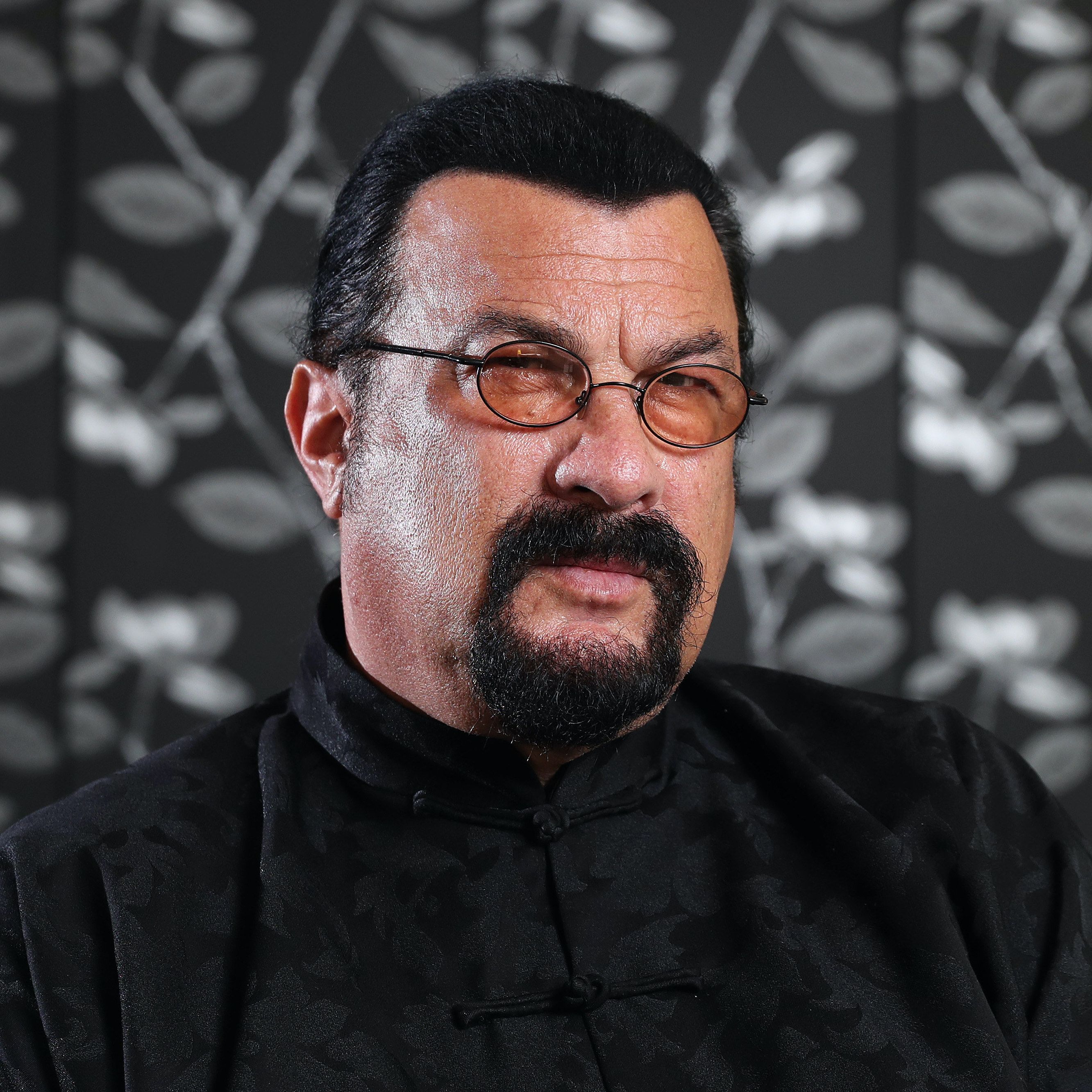
How Big Is Steven Seagal? Height, Weight, and Physical Footprint
Steven Seagal stands 6 feet 4 inches tall (193 cm) and has experienced significant physical changes throughout his career. During his peak action-hero era in the late 1980s and early 1990s, Seagal weighed approximately 210 to 225 pound...
Steven Seagal stands 6 feet 4 inches tall (193 cm) and has experienced significant physical changes throughout his career. During his peak action-hero era in the late 1980s and early 1990s, Seagal weighed approximately 210 to 225 pounds (95 to 102 kg). In his later years, his weight expanded to an estimated 300 to 330 pounds (136 to 150 kg).
Contents
Official Height: How Tall Is Steven Seagal?
Steven Seagal’s height is officially documented across biographical databases, film casting profiles, and martial arts registries at 6 feet 4 inches (193 cm). Unlike many Hollywood actors whose heights are exaggerated by publicists or camera trickery, Seagal’s towering height has been consistently verified throughout his decades in the public eye.
When Seagal emerged as a major action star with his film debut in Above the Law (1988), his height immediately set him apart from his contemporaries. The late 1980s and early 1990s action cinema landscape was dominated by martial artists and bodybuilders of varying physical statures. Seagal was noticeably taller than most martial arts leads of his era, giving him an imposing physical presence on screen.
| Action Star | Listed Height (Feet/Inches) | Listed Height (Centimeters) |
|---|---|---|
| Steven Seagal | 6'4" | 193 cm |
| Dolph Lundgren | 6'5" | 196 cm |
| Arnold Schwarzenegger | 6'2" | 188 cm |
| Chuck Norris | 5'10" | 178 cm |
| Jean-Claude Van Damme | 5'9" | 175 cm |
| Sylvester Stallone | 5'9" | 175 cm |
| Jet Li | 5'6" | 168 cm |
Seagal’s 6-foot-4 frame gave him a natural reach advantage in fight choreography. In martial arts cinema, taller fighters are often cast as villains or formidable enforcers to make the protagonist appear heroic when overcoming odds. Seagal inverted this archetype by playing the towering lead hero who dominated opponents with effortless physical authority.
Weight Evolution: From Lean Martial Artist to Heavyweight Frame
While Seagal's height remained constant, his weight and overall body composition changed dramatically over his four-decade career. His physical transformation can be divided into three distinct phases.
PHYSICAL EVOLUTION TIMELINE
- 1980s - Early 1990s (Peak Hero Era)
- Height: 6'4"
- Weight: 210–225 lbs
- Build: Lean, athletic
- Late 1990s - 2000s (Transition Era)
- Height: 6'4"
- Weight: 250–285 lbs
- Build: Solid, heavier frame
- 2010s - Present (Late Career Era)
- Height: 6'4"
- Weight: 300–330+ lbs
- Build: Heavyweight frame
1. The Peak Action Hero Era (1988–1996)
During his early career—spanning hits like Above the Law (1988), Hard to Kill (1990), Marked for Death (1990), Out for Justice (1991), and Under Siege (1992)—Seagal maintained an athletic, trim physique.
- Estimated Weight: 210 to 225 lbs (95–102 kg)
- Body Type: Lean, long-limbed, and muscular without the excessive bulk of classic bodybuilders.
- Movement Style: Fast, fluid footwork, explosive arm movements, and rapid wrist locks characteristic of high-level Aikido.
During this timeframe, Seagal’s low body fat percentage and long stride complemented his martial arts discipline. His physical conditioning allowed him to execute complex, multi-opponent fight sequences with rapid directional changes and minimal reliance on stunt doubles for close-range hand combat.
2. The Mid-Career Transition (Late 1990s–2000s)
By the late 1990s, starting around the release of Fire Down Below (1997) and continuing through his direct-to-video film releases in the 2000s, Seagal began gaining noticeable body mass.
- Estimated Weight: 250 to 285 lbs (113–129 kg)
- Body Type: Broad-shouldered with increased abdominal mass.
- Movement Style: Less mobile footwork, shifting toward stationary defense, powerful upper-body redirections, and shorter fight engagements.
To accommodate this change in physical size, costume designers shifted Seagal’s wardrobe away from tight-fitting shirts and denim to dark trench coats, long leather jackets, loose silk button-downs, and traditional Asian-inspired coats. These garments masked his midsection while retaining his broad-shouldered profile on camera.
3. The Late Career and Present Era (2010s–Present)
In his later years, Seagal’s physical size increased further, putting him firmly into the heavyweight category.
- Estimated Weight: 300 to 330+ lbs (136–150+ kg)
- Body Type: Large, heavy frame with high body mass index (BMI).
- Movement Style: Economy of movement; fight scenes feature minimal walking or footwork, relying heavily on close-up hand traps, wrist manipulations, and stunt-double doubling for falls or intense impacts.
How Size Influenced Steven Seagal’s Aikido Style
To understand why Steven Seagal’s size matters, one must examine his background in Aikido, a non-aggressive Japanese martial art that relies on leveraging an opponent's momentum, joint locks, and unbalancing techniques (kuzushi) rather than raw striking power.
Seagal holds a 7th-dan black belt (Shihan) in Aikido and was the first foreigner to operate an Aikido dojo in Japan (the Tenshin Dojo in Osaka). His physical stature fundamentally altered how Aikido was portrayed on film and practiced in his dojo.
1. Reach and Leverage Mechanics
Aikido relies heavily on wrist, elbow, and shoulder manipulations (such as kote-gaeshi and shiho-nage). A practitioner who stands 6 feet 4 inches possesses unusually long levers (arms and forearms).
- Extended Control Distance: Seagal could intercept an opponent's strike earlier in its arc than a shorter martial artist could.
- Gravitational Torque: When Seagal applied downward joint pressure, his height allowed him to use his upper-body weight to force opponents to the ground rapidly, creating the violent, abrupt takedowns that became his cinematic trademark.
2. Physical Contrast in Fight Choreography
Traditional Aikido practice often features fluid, circular movements designed to divert energy gently. Seagal adapted these techniques for cinema into a style often described as "hard-style Aikido." Because he was significantly larger and heavier than most of his stunt partners, his throws appeared exceptionally harsh and realistic on camera. Stunt performers were snapped downward with high velocity, creating a distinct visual impact compared to the acrobatic, kick-heavy choreography popular in Hong Kong cinema.
Comparative Matrix: Steven Seagal Across Four Decades
The following breakdown illustrates how Seagal’s physical metrics, cinematic roles, and movement style evolved over time.
| Era / Film Period | Age Range | Height | Estimated Weight | BMI Category (Approx.) | Primary Cinematic & Physical Characteristics |
|---|---|---|---|---|---|
| Early Peak (Above the Law, Under Siege) | 36–42 | 6'4" (193 cm) | 210–225 lbs (95–102 kg) | Normal to Overweight (Athletic Build) | Highly mobile footwork, rapid wrist locks, slim waistline, visible physical agility, minimal camera cuts during fights. |
| Mid-Career (Exit Wounds, Half Past Dead) | 45–53 | 6'4" (193 cm) | 240–270 lbs (109–122 kg) | Overweight to Class I Obese | Increased upper-body mass, heavy reliance on long coats/trench coats, fight choreography shifts toward upper-body speed over leg movement. |
| Direct-to-Video Era (Urban Justice, Driven to Kill) | 54–62 | 6'4" (193 cm) | 275–300 lbs (125–136 kg) | Class II Obese | Heavy frame, stationary combat positioning, frequent use of body doubles for sweeping movements, dark monochromatic clothing. |
| Late Era / Present (General Commander, Public Appearances) | 63–73+ | 6'4" (193 cm) | 300–330+ lbs (136–150+ kg) | Class III Obese | Significant body mass, seated or stabilized action framing, close-up hand choreography, limited physical movement on screen. |
On-Screen Optics: How Filmmakers Adapted to His Changing Size
As Steven Seagal’s body size increased, directors, cinematographers, and fight coordinators had to adjust their production methods to maintain the illusion of an unstoppable, highly agile action hero.
- Early Career Cinematography
- Wide shots showing full body
- Extended, unbroken takes
- Rapid footwork & wide movement
- Form-fitting denim / tactical
- Late Career Cinematography
- Tight close-ups on hands/face
- Quick, rapid cuts in editing
- Seated or static fight positions
- Loose trench coats & black robes
Strategic Editing and Stunt Doubling
In early films like Out for Justice, cameras pulled back into wide shots to show Seagal executing full throws, control techniques, and footwork patterns in continuous takes. In later productions, fight scenes were modified:
- Tight Framing: The camera framed Seagal from the chest up to emphasize his hand speed while hiding his lower body.
- Rapid Cuts: Action sequences relied on quick cuts between Seagal striking or grabbing and a stunt double performing complex falls, throws, or body rolls.
- Seated Combat: Several late-career films feature fight scenes where Seagal remains seated at a table or desk, disarming opponents exclusively through upper-body hand traps and wrist locks.
Wardrobe Choices
Seagal’s signature style evolved directly in response to his physical size. He popularized the use of black long-line coats, heavy leather dusters, and traditional Chinese changshan or Japanese gi-inspired garments in modern action cinema. Dark colors and vertical lines helped create a longer visual silhouette, minimizing the appearance of weight gain while highlighting his broad shoulders and 6-foot-4 height.
Frequently Asked Questions
What is Steven Seagal's official height?
Steven Seagal is 6 feet 4 inches (193 cm) tall. This measurement has remained consistent across film industry records and official biographical entries throughout his career.
How much did Steven Seagal weigh in his prime?
During his prime action-hero period in the late 1980s and early 1990s (films like Above the Law and Under Siege), Seagal weighed between 210 and 225 pounds (95–102 kg).
How much does Steven Seagal weigh today?
In his later years and recent public appearances, Steven Seagal's weight has been estimated between 300 and 330 pounds (136–150 kg).
Is Steven Seagal taller than Arnold Schwarzenegger and Sylvester Stallone?
Yes. Steven Seagal (6'4") is significantly taller than both Arnold Schwarzenegger (approximately 6'2") and Sylvester Stallone (approximately 5'9"). Among 1980s and 1990s action stars, only Dolph Lundgren (6'5") was taller.
Did Steven Seagal's height help him in martial arts?
Yes. Seagal’s 6-foot-4 frame provided a long physical reach and substantial leverage advantages. In Aikido, long arms allow for easier wrist manipulation, joint locks, and off-balancing controls (kuzushi) against shorter opponents.
Practical Takeaway
When evaluating Steven Seagal’s physical dimensions, it is essential to separate his height from his weight evolution:
- Height Stability: Seagal has always been a legitimately tall man at 6'4" (193 cm), making him one of the tallest lead martial arts actors in Hollywood history.
- Weight Shift: His physical frame expanded from a lean 215 lbs in 1988 to over 300 lbs in his later career.
- Martial Arts Impact: His size directly dictated his style—using long-limb leverage in his youth and heavy upper-body control in his later years.
Understanding this physical progression explains how Seagal’s screen presence shifted over four decades from an agile, fluid martial artist into a static, heavyweight defensive fighter.
Image Gallery