How Do Taxes Work Related to Life Insurance: A Complete 2026 Guide
Life insurance remains one of the most tax-advantaged financial instruments available in 2026. Generally, beneficiaries receive death benefits free of federal income tax, and the cash value within permanent policies grows on a tax-defe...
Life insurance remains one of the most tax-advantaged financial instruments available in 2026. Generally, beneficiaries receive death benefits free of federal income tax, and the cash value within permanent policies grows on a tax-deferred basis. However, taxes can apply if a policy is surrendered for profit, sold in a life settlement, or if the policy is structured as a Modified Endowment Contract (MEC).
Contents
Understanding the intersection of life insurance and the Internal Revenue Code (IRC) is essential for effective estate planning and wealth preservation. While the core promise of life insurance is a tax-free death benefit, the complexity of modern policy riders, cash value accumulation, and ownership structures can create unintended tax liabilities if not managed with precision.
The Federal Income Tax Treatment of Death Benefits
The primary reason many individuals purchase life insurance is the income tax-free nature of the death benefit. Under IRC Section 101(a)(1), gross income generally does not include amounts received under a life insurance contract if such amounts are paid by reason of the death of the insured. This rule applies whether the policy is a term life, whole life, or universal life contract.
However, there are critical nuances to this rule. If the death benefit is paid out in installments rather than a lump sum, the principal remains tax-free, but any interest accrued on the unpaid balance is considered taxable income for the beneficiary. For example, if a $500,000 benefit is held by the insurer to be paid over ten years, the portion of each payment representing interest must be reported on the beneficiary's tax return.
The Transfer-for-Value Rule
One of the most significant traps for the unwary is the transfer-for-value rule. If a life insurance policy or any interest in a policy is transferred to another party for "valuable consideration" (money or something of value), the tax-free status of the death benefit may be lost. In such cases, the death benefit is taxable to the extent that it exceeds the price paid for the policy plus any subsequent premiums paid by the new owner.
There are exceptions to this rule, such as transfers to the insured person, to a partner of the insured, or to a corporation in which the insured is a shareholder or officer. These exceptions are frequently utilized in business succession planning, such as buy-sell agreements.
Tax-Deferred Cash Value Growth
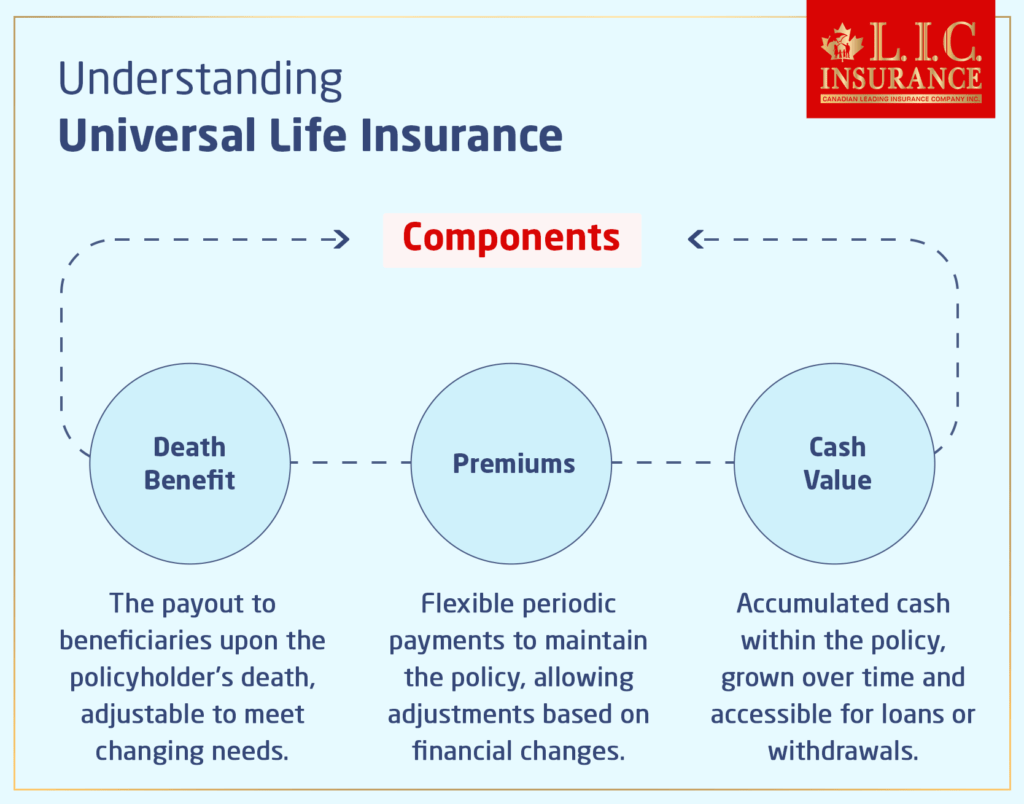
Permanent life insurance policies, such as whole life and universal life, include a cash value component. A portion of the premium is directed into an account that grows over time. Under current 2026 tax laws, this growth is tax-deferred, meaning the policyholder does not pay annual income taxes on dividends, interest, or capital gains realized within the policy.
This tax deferral is a powerful engine for long-term wealth accumulation. Because the money that would have otherwise gone toward taxes remains in the policy to compound, the cash value can grow significantly faster than a comparable taxable brokerage account. As long as the funds remain within the policy, the IRS does not recognize the gains as taxable income.
Accessing Cash Value: Withdrawals and Loans
Policyholders can access their cash value through withdrawals or loans, each with distinct tax consequences.
Policy Withdrawals and the "Basis" Concept
When you withdraw money from a life insurance policy, the IRS generally follows a "First-In, First-Out" (FIFO) approach. This means the first dollars you withdraw are considered a return of the premiums you paid (your "cost basis"). These withdrawals are tax-free. Only after you have withdrawn an amount equal to your total premiums paid do the withdrawals become taxable as ordinary income.
Policy Loans
Policy loans are generally not considered taxable income, even if the loan amount exceeds the cost basis. This is because a loan is viewed as a debt obligation rather than a distribution of gains. This allows policyholders to access liquidity without triggering a tax event.
However, there is a major caveat: if the policy lapses or is surrendered while a loan is outstanding, the unpaid loan balance (to the extent it exceeds the cost basis) becomes immediately taxable as ordinary income. In 2026, many retirees use "tax-free" policy loans to supplement income, but they must ensure the policy remains in force until death to avoid a "tax bomb" late in life.
Modified Endowment Contracts (MECs) and the 7-Pay Test
To prevent life insurance from being used purely as a tax-sheltered investment vehicle with no genuine insurance element, the IRS established the Modified Endowment Contract (MEC) rules under Section 7702A.
A policy becomes a MEC if the premiums paid during the first seven years exceed the amount necessary to provide a paid-up policy in seven years (the 7-pay test). Once a policy is classified as a MEC, it loses its favorable FIFO tax treatment. Instead, it is taxed on a "Last-In, First-Out" (LIFO) basis.
- LIFO Taxation: Withdrawals and loans are taxed as ordinary income to the extent there are gains in the policy.
- Penalty Tax: If the policyholder is under age 59½, a 10% federal penalty tax may apply to the taxable portion of the distribution, similar to an early withdrawal from an IRA.
Crucially, once a policy becomes a MEC, it remains a MEC forever. The death benefit remains tax-free, but the lifetime access to cash becomes significantly more expensive from a tax perspective.
Estate Tax Implications in 2026
While life insurance is generally free of income tax, it is not automatically free of federal estate tax. For the 2026 tax year, following the sunset of several Tax Cuts and Jobs Act (TCJA) provisions, the federal estate tax exemption has returned to lower historical levels (approximately $7 million per individual, adjusted for inflation).
If the insured individual owns the policy at the time of their death, the entire death benefit is included in their "gross estate" for tax purposes. If the total value of the estate exceeds the exemption threshold, the death benefit could be taxed at rates as high as 40%.
Avoiding Estate Tax with ILITs
To remove the death benefit from the taxable estate, many high-net-worth individuals use an Irrevocable Life Insurance Trust (ILIT). By having the trust own the policy rather than the individual, the proceeds are generally excluded from the estate. However, the "three-year rule" applies: if you transfer an existing policy into a trust and die within three years of the transfer, the IRS will still include the proceeds in your taxable estate.
Summary of Tax Treatments
The following table summarizes the typical tax treatment for various life insurance events as of 2026.
| Event | Tax Treatment | Tax Category |
|---|---|---|
| Lump-Sum Death Benefit | Generally Tax-Free | Income Tax |
| Interest on Death Benefit | Taxable | Ordinary Income |
| Cash Value Growth | Tax-Deferred | N/A |
| Policy Withdrawals | Tax-Free up to Basis (FIFO) | Ordinary Income (above basis) |
| Policy Loans | Generally Tax-Free | N/A |
| Dividends | Tax-Free (Return of Premium) | N/A |
| Policy Surrender | Taxable on Gains | Ordinary Income |
| MEC Withdrawals/Loans | Taxable (LIFO) | Ordinary Income + 10% Penalty |
Surrendering or Selling a Policy
If a policyholder decides they no longer need coverage, they may surrender the policy for its cash surrender value. The tax consequence is calculated by subtracting the cost basis (total premiums paid minus any previous tax-free distributions) from the total amount received. Any amount above the basis is taxed as ordinary income, not capital gains.
Similarly, in a life settlement—where a policyholder sells their policy to a third party for more than the cash value but less than the death benefit—the taxation is more complex. The gain up to the cash surrender value is taxed as ordinary income, while any gain above that amount is typically taxed at capital gains rates. This distinction is vital for seniors looking to liquidate policies in 2026.
Frequently Asked Questions
1. Are life insurance premiums tax-deductible?
No, for individuals, life insurance premiums are considered a personal expense and are not tax-deductible. For businesses, premiums paid for policies that protect the business (such as key-person insurance) are also generally not deductible if the business is a beneficiary of the policy.
2. What happens if I inherit a life insurance policy?
Inheriting the proceeds (the death benefit) is tax-free. However, if you inherit the ownership of a live policy on someone else's life, there are no immediate income taxes, but the value of that policy may be subject to estate taxes depending on the total size of the deceased's estate.
3. Do I have to report the death benefit on my tax return?
In most cases, no. You do not need to report the receipt of a life insurance death benefit to the IRS as it is not considered gross income. However, if the insurance company sends you a Form 1099-INT, it means a portion of the payment was interest, and that specific interest amount must be reported.
4. Can I exchange my policy for a different one without paying taxes?
Yes, under Section 1035 of the IRC, you can perform a "1035 Exchange." This allows you to swap one life insurance policy for another (or for an annuity) without triggering a tax on the built-in gains. To qualify, the insured person must remain the same, and the exchange must be conducted directly between insurance companies.
5. Are dividends paid by a life insurance policy taxable?
Policy dividends are generally considered a "return of premium" and are not taxable as long as they do not exceed the total premiums you have paid into the policy. If dividends are left with the insurer to accumulate interest, the interest portion earned is taxable annually.
Practical Recommendation
When managing life insurance in 2026, the most critical action is to maintain an updated Cost Basis Ledger. Knowing exactly how much you have paid in premiums—net of dividends and prior withdrawals—allows you to access cash value strategically without triggering unnecessary taxes. Furthermore, given the 2026 sunset of higher estate tax exemptions, individuals with estates valued over $7 million should review their policy ownership and consider the use of an Irrevocable Life Insurance Trust (ILIT) to protect death benefits from the 40% federal estate tax.
Note: This article is for informational purposes and does not constitute legal, tax, or financial advice. Tax laws are subject to change and vary by jurisdiction. Consult with a qualified tax professional or estate attorney regarding your specific situation.
Image Gallery