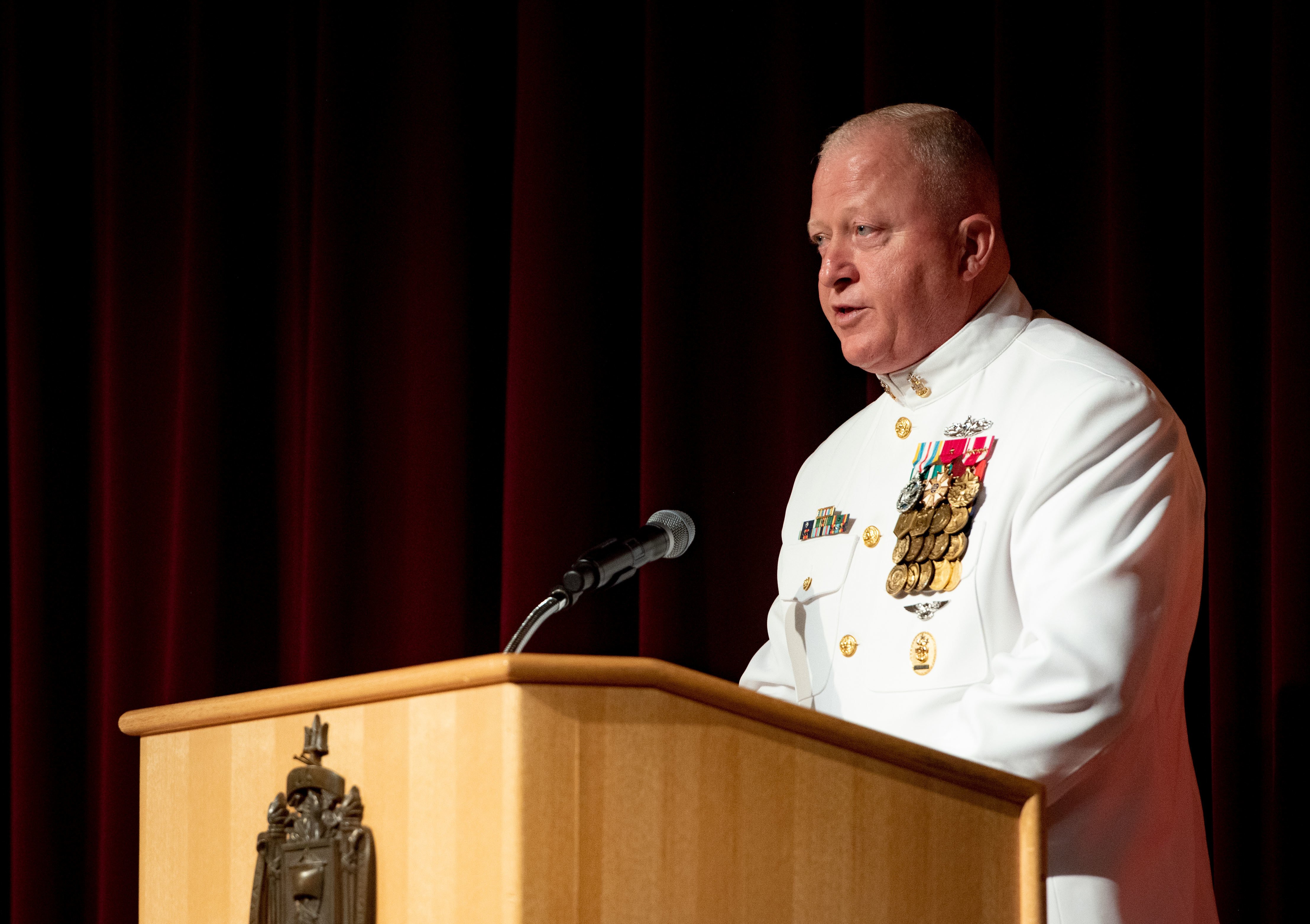
Comprehensive Guide to the Chief Petty Officer: 2026 Advancement, Leadership, and Impact
A Chief Petty Officer (CPO) is a senior enlisted leader holding the paygrade of E-7 in the United States Navy and United States Coast Guard. Acting as the vital link between the officer corps and junior enlisted personnel, a Chief is a...
A Chief Petty Officer (CPO) is a senior enlisted leader holding the paygrade of E-7 in the United States Navy and United States Coast Guard. Acting as the vital link between the officer corps and junior enlisted personnel, a Chief is a dual-hatted professional serving as both a technical expert and a primary mentor. In 2026, attaining this rank requires not only technical proficiency and passing a selection board but also the successful completion of "The Seasoning," a rigorous leadership transition process within the Chief’s Mess.
Contents
The Significance of the Chief Petty Officer in 2026
The year 2026 marks a continued evolution in how the sea services utilize senior enlisted leadership. While the core mission remains the same—"Ask the Chief"—the technical landscape has shifted. Today's Chief Petty Officer must manage advanced autonomous systems, AI-driven logistics, and complex cybersecurity protocols while maintaining the traditional maritime skills that have defined the rank since its inception on April 1, 1893.
The CPO is unique among world militaries because of the "Chief’s Mess." This is not merely a dining facility but a collective of leaders who operate horizontally to solve problems that the vertical chain of command might struggle with. In 2026, the Mess remains the bedrock of naval discipline and operational readiness, ensuring that the Commander’s intent is translated into actionable tasks for the "Bluejackets" (junior sailors).
The CPO Creed and Modern Authority
The authority of the Chief Petty Officer is derived from both federal law and a century of naval tradition. Unlike the transition from E-1 to E-6, which is largely based on individual performance and exam scores, the transition to E-7 is a fundamental change in status. As stated in the CPO Creed, the Chief is expected to be the fountain of knowledge and the arbiter of standards. In the 2026 operational environment, this means the Chief is often the most stable element in a unit, providing continuity as officers rotate through shorter command cycles.
Prerequisites for Advancement to Chief Petty Officer
Advancement to E-7 is the most significant hurdle in an enlisted career. It is not guaranteed by time-in-service alone; it is a competitive process overseen by a Selection Board. For the 2026 fiscal year, candidates must meet stringent eligibility requirements before their records are even seen by the board members.
- Time in Rate (TIR): Candidates must have served at least three years as a First Class Petty Officer (E-6) as of the 2026 board date.
- Performance Evaluations: A candidate's "FitRep" (Fitness Report) must consistently show "Early Promote" (EP) or "Must Promote" (MP) recommendations. In 2026, the Navy Personnel Command places higher weight on "Soft Break" rankings where a sailor stands out among their peers in large commands.
- Navy-Wide Advancement Exam (NWAE): Candidates must participate in the E-7 advancement examination. While the score is a factor, for E-7, the exam primarily serves as a "board qualifier." Only those who score in the top percentage for their rating (job specialty) will have their records forwarded to the Selection Board.
- Security Clearance: All CPOs in 2026 must maintain at least a Secret clearance, with many ratings requiring Top Secret/SCI eligibility due to the integration of advanced data systems.
- Physical Readiness: Maintaining "Medical Readiness" and passing the Physical Fitness Assessment (PFA) is non-negotiable. For 2026, failures in the previous two years can be disqualifying for board consideration.
The 2026 Selection Board Process
The Selection Board is a formal body of Master Chiefs and Officers who meet in Millington, Tennessee (for the Navy) to review the "Official Military Personnel File" (OMPF) of every qualified candidate. The board does not look for the person who is best at their job; they look for the person who is ready to lead other people in that job.
Key Factors the Board Evaluates in 2026:
- Leadership at Sea: Priority is given to sailors who have excelled in "Arduous Sea Duty" or "Global Support Assignments." In 2026, leadership during multi-domain exercises is highly valued.
- Mentorship: Evidence that the candidate has trained their subordinates for promotion. If a First Class Petty Officer's sailors are winning "Sailor of the Quarter" or advancing at high rates, the board views this as a "Chief-like" trait.
- Qualifications: Attaining "Platform Specific" qualifications, such as Enlisted Surface Warfare Specialist (ESWS), Enlisted Expeditionary Warfare Specialist (EXW), or Enlisted Aviation Warfare Specialist (EAWS).
- Education and Self-Improvement: Completion of the Primary Enlisted Professional Military Education (PEPME) and specialized leadership courses relevant to 2026 maritime strategy.
Comparison: Enlisted Tiers and Leadership Roles
The following table outlines the differences in responsibilities and compensation for a Petty Officer First Class (E-6), a Chief Petty Officer (E-7), and a Junior Officer (O-1) based on 2026 projected standards.
| Feature | Petty Officer First Class (E-6) | Chief Petty Officer (E-7) | Ensign / Junior Officer (O-1) |
|---|---|---|---|
| Primary Role | Technical Supervisor / Work Center Sup | Technical Manager / Enlisted Leader | Division Officer / Trainee Manager |
| Leadership Scope | Direct supervision of a small team | Management of a department/division | Legal and administrative oversight |
| Advancement Method | Exam Score + Performance Points | Selection Board + Exam Qualification | Commissioning Source / Time in Grade |
| 2026 Monthly Base Pay (Est.) | $3,450 - $4,800 (based on years) | $3,950 - $6,300 (based on years) | $3,900 - $4,900 (entry level) |
| Uniform Change | Standard Enlisted (Crackerjacks/NWU) | Officer-style (Khakis/Blues/Whites) | Officer Khakis/Blues/Whites |
| Dining/Social | General Mess / First Class Mess | The Chief's Mess (The Mess) | Wardroom |
The Chief’s Seasoning and Sailor 360
Once the "Selectee" list is published in the summer of 2026, the transition begins. This period, often called "CPO Initiation" or "The Seasoning," is a multi-week leadership laboratory designed to strip away the individualist mindset of a Petty Officer and replace it with the collective mindset of the Mess.
In 2026, this process is governed by the "Sailor 360" framework. It focuses on:
- Heritage: Learning the history of the Navy to provide context for modern decisions.
- Humility: Understanding that a Chief does not know everything and must rely on the Mess.
- Resilience: Stress-testing decision-making capabilities under simulated operational pressure.
- Ethics: Deep-dive discussions on the Uniform Code of Military Justice (UCMJ) and ethical leadership in complex environments.
The culmination of this period is "Pinning Recognition," where the selectee is officially donned with the fouled anchor collar devices and the CPO combination cover.
Roles and Responsibilities of a CPO in 2026
A Chief’s day-to-day operations involve more than just supervision. In 2026, their responsibilities are codified in several key areas:
Technical Authority
The Chief remains the subject matter expert (SME). If a radar system fails or a nuclear reactor requires maintenance, the Chief ensures the technical manuals are followed to the letter. They are the final check on quality assurance.
Officer Mentorship
One of the most critical roles of a CPO is the training of Junior Officers (Division Officers). An Ensign (O-1) may have the legal authority, but they lack experience. A Chief quietly guides the Ensign, ensuring the Division runs smoothly while allowing the officer to develop their leadership style.
Sailor Advocacy
The Chief is the primary advocate for their sailors' welfare. This includes managing career development, handling personal issues, and ensuring that the sailors have the equipment and training needed to fight and win. In the 2026 deployment cycles, this also involves a heavy focus on mental health and "Operational Stress Control."
Troubleshooting Common Advancement Failures
Many qualified First Class Petty Officers fail to "make Chief" for several cycles. Analysis of 2026 board trends suggests several common pitfalls:
- Stagnant Records: If a candidate’s performance evaluations look the same for three years, the board assumes they have reached their "ceiling."
- Lack of "Command Impact": Staying within one’s technical bubble is a mistake. The board wants to see sailors who lead Command-wide programs (e.g., Command Fitness Leader, Sexual Assault Prevention and Response advocate).
- Gaps in Professional Education: Failing to complete the required 2026 JPME (Joint Professional Military Education) modules can result in a record being passed over.
- Adverse Administrative Actions: Even a minor disciplinary issue (Mast) from several years ago can be a "tie-breaker" that prevents selection in a highly competitive rating.
Expert Advice on the CPO Record Review
Candidates for the 2026 board must review their "Performance Summary Record" (PSR) at least six months prior to the board convening. Discrepancies in awards, qualifications, or college transcripts must be corrected via the Navy Personnel Command (NAVPERS). A "clean" record allows the board to focus on your leadership rather than your paperwork errors.
Frequently Asked Questions
What is the significance of the "Fouled Anchor" in 2026?
The fouled anchor is the emblem of the Chief Petty Officer. The anchor represents stability and hope, while the "fouling" (the chain wrapped around it) symbolizes the trials and tribulations a Chief must overcome daily. In 2026, it remains the most respected enlisted insignia in the world.
Can a Chief Petty Officer become a Commissioned Officer?
Yes. Many CPOs transition to the "Mustang" ranks. In 2026, the most common paths are through the Limited Duty Officer (LDO) or Chief Warrant Officer (CWO) programs, which value the deep technical expertise a Chief possesses.
What is the "Master Chief Petty Officer of the Navy" (MCPON)?
The MCPON is the highest-ranking enlisted member in the Navy and serves as the senior enlisted advisor to the Chief of Naval Operations (CNO). In 2026, the MCPON focuses on legislative advocacy for sailor pay, housing, and the modernization of the CPO Mess.
Is the Chief’s Mess only for the Navy?
No. The U.S. Coast Guard also has a Chief Petty Officer corps with nearly identical traditions and a similar advancement structure. Other services have E-7s (like the Army Sergeant First Class), but the specific culture of "The Mess" is unique to the sea services.
How does the 2026 pay scale affect CPOs?
As of 2026, an E-7 with over 10 years of service earns a significant base pay, supplemented by Basic Allowance for Housing (BAH) and Basic Allowance for Subsistence (BAS). Total compensation often rivals mid-level civilian management roles, especially when factoring in tax-free allowances and comprehensive healthcare.
The Future of the Mess
As the maritime environment becomes more contested, the role of the Chief Petty Officer is more relevant than ever. Whether stationed at Naval Station Norfolk, San Diego, or forward-deployed in the Indo-Pacific, the Chief is the person who ensures the mission is met. For those aspiring to the rank in 2026, the path is difficult, but the reward is entry into one of the most exclusive and impactful leadership organizations in the world.
If you are a First Class Petty Officer preparing for the 2026 Selection Board, begin your record review immediately. Ensure your "Letter to the Board" is concise, your OMPF is accurate, and your physical readiness is beyond reproach. The Mess is looking for leaders who are ready to take the watch.
Image Gallery