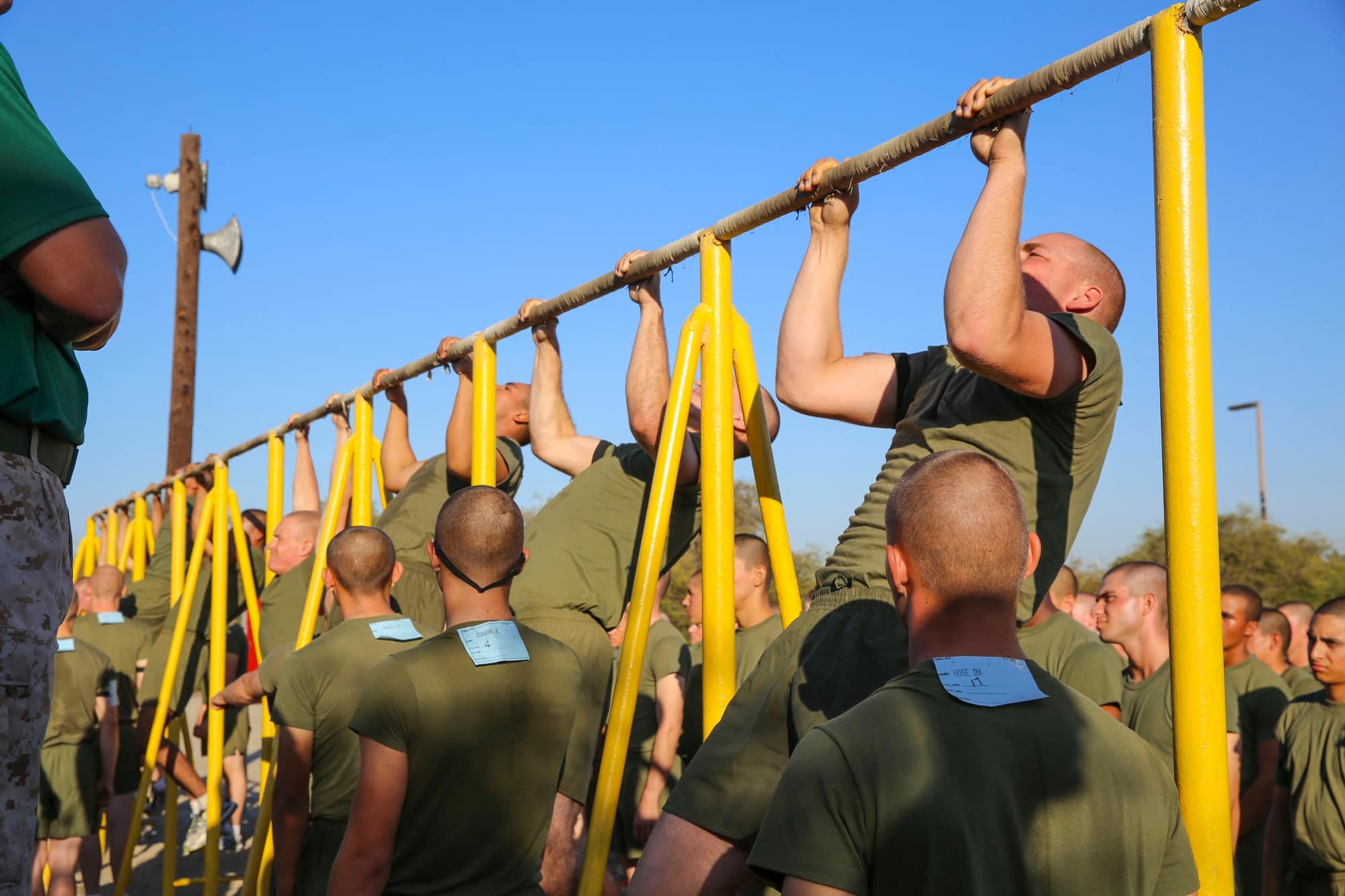
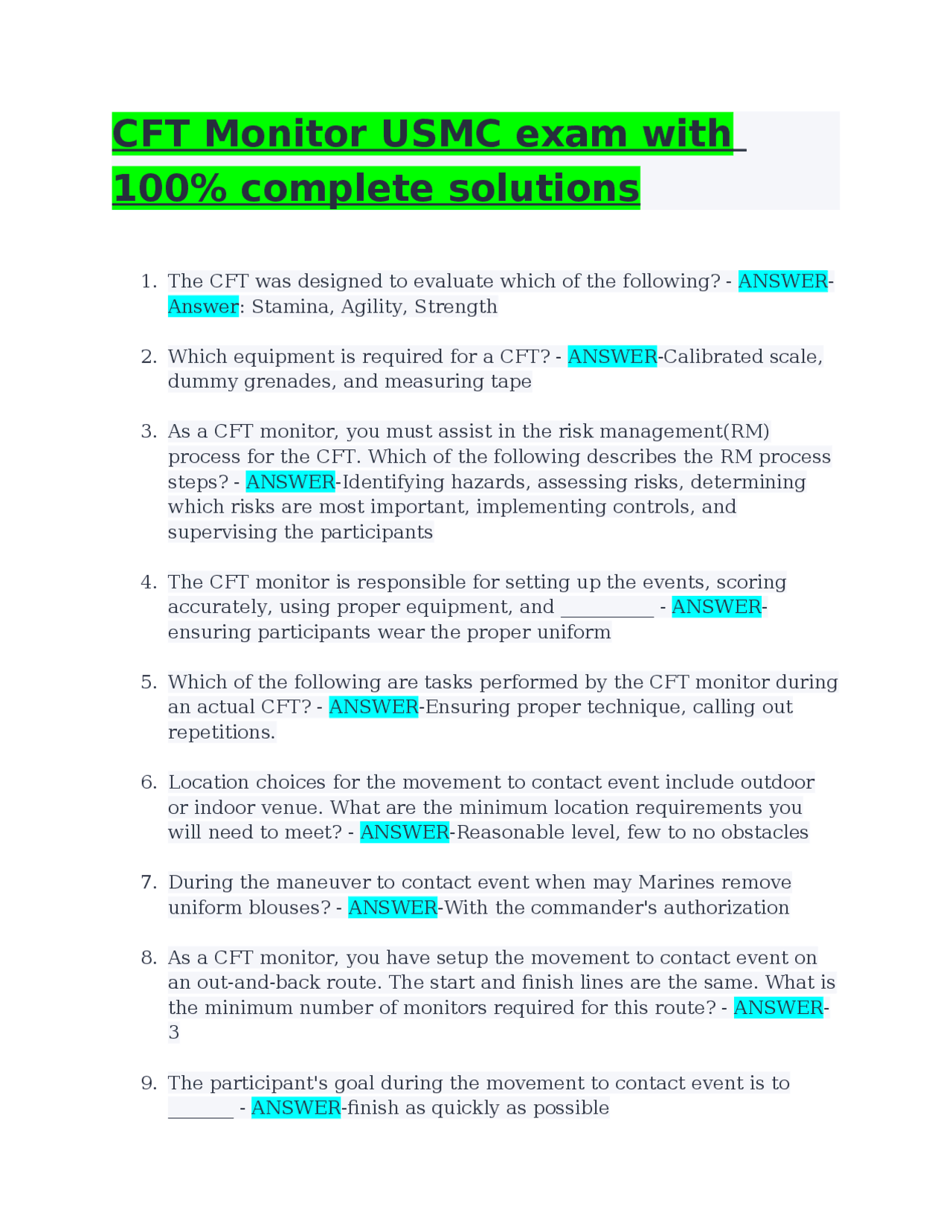
USMC Combat Fitness Test Order: Complete Guide to MCO 6110.3 Standards, Scoring, and Execution
The Marine Corps Order (MCO) governing the Combat Fitness Test (CFT) is MCO 6110.3A (Marine Corps Physical Fitness Program). It mandates that all active-duty and reserve Marines complete an annual CFT between July 1 and December 31. Th...
The Marine Corps Order (MCO) governing the Combat Fitness Test (CFT) is MCO 6110.3A (Marine Corps Physical Fitness Program). It mandates that all active-duty and reserve Marines complete an annual CFT between July 1 and December 31. The test evaluates functional battlefield fitness across three events: Movement to Contact, Ammunition Lift, and Maneuver Under Fire.
Contents
Overview of Marine Corps Order 6110.3A (The Governing CFT Policy)
The United States Marine Corps physical readiness framework relies on two distinct annual evaluations: the Physical Fitness Test (PFT), conducted during the first half of the calendar year, and the Combat Fitness Test (CFT), conducted during the second half. Marine Corps Order 6110.3A establishes the policy, procedures, and instructional standards for administering the CFT across all active and reserve components.
The objective of the CFT is to measure a Marine's functional fitness, stamina, and combat readiness under conditions that simulate operational environments. Unlike traditional physical fitness tests that emphasize general athletic conditioning in soft physical training (PT) gear, the CFT assesses movement capacity, load-bearing capability, and explosive power while wearing the Marine Corps Combat Utility Uniform (MCCUU) and combat boots.
Every active-duty Marine and member of the Selected Marine Corps Reserve (SMCR) must complete the CFT annually during the authorized testing period (July 1 through December 31). Command physical training representatives and Force Fitness Instructors (FFIs) oversee the setup, timing, safety, and official scoring entry into the Marine Corps Total Force System (MCTFS).
Core Components of the Combat Fitness Test
The CFT consists of three mandatory events designed to evaluate distinct physical energy systems required in combat scenarios: aerobic capacity, upper-body muscular endurance, and high-intensity anaerobic power combined with motor skill control.
Note: All events are conducted in boots and utilities (MCCUU trousers and boots, with a green skivvy shirt). Trousers must be bloused in accordance with Marine Corps uniform regulations.
1. Movement to Contact (MTC)
The Movement to Contact is an 880-yard (half-mile) run that measures continuous aerobic endurance and speed over distance while wearing combat boots and utility trousers.
- Distance and Course: Conducted on a flat, measured course such as an athletic track, paved road, or level dirt trail.
- Execution: Marines start from a standing position and must cover the 880-yard distance as quickly as possible.
- Scoring Factors: Raw time is recorded to the nearest second. Fast times yield higher points on the official scoring tables, which vary depending on the Marine’s age and gender group.
2. Ammunition Lift (AL)
The Ammunition Lift tests upper-body muscular endurance, stamina, and shoulder stability under repeated overhead loading over a two-minute window.
- Equipment: A standardized M2A1 5.56mm ammunition can weighing exactly 30 pounds.
- Starting Position: The Marine holds the ammo can horizontally at chin level with both hands, feet shoulder-width apart.
- Execution: On the command to start, the Marine raises the can fully above the head until both elbows are completely locked out, then lowers it back down until the base of the can descends below the level of the chin.
- Repetition Criteria: Only full repetitions count. Raising the can without full elbow lockout, failing to descend below chin level, or using non-standard body momentum (such as excessive waist bending) invalidates individual repetitions. Resting is permitted in the down position.
3. Maneuver Under Fire (MANUF)
The Maneuver Under Fire is a timed 300-yard shuttle course integrating diverse tactical maneuvers, heavy load transportation, physical dragging, marksmanship/grenade mechanics under fatigue, and sprint capacity.
- Course Length: 300 total yards broken down into specialized task segments along a 75-yard field grid.
- Maneuver Sequence:
- Sprint & Crawls: A 10-yard sprint followed immediately by a 10-yard low crawl and a 15-yard high crawl.
- Tactical Mobility: A 75-yard sprint around markers utilizing high-speed change-of-direction maneuvers.
- Casualty Evacuation: A 10-yard casualty drag of a partner of similar weight, immediately transitioning into a 65-yard Fireman's Carry.
- Resupply Carry: A 75-yard sprint carrying two 30-pound ammunition cans (one in each hand).
- Grenade Toss: Throwing a dummy grenade into a target area located 22.5 yards away from a designated throwing line. A successful hit incurs no penalty; a miss requires five mandatory push-ups before resuming the sprint.
- Final Sprint: Picking up both 30-pound ammo cans and sprinting the remaining distance back across the finish line.
Official Scoring Framework and Class Designations
The CFT uses a 300-point total scoring system, with each of the three events contributing a maximum of 100 points. Scoring scales are stratified by gender and age categories to account for physiological performance baselines across a career span.
CFT Age Categories
- 17–20
- 21–25
- 26–30
- 31–35
- 36–40
- 41–45
- 46–50
- 51+
Performance Classifications
To achieve an official passing score, a Marine must meet or exceed the minimum requirement for every single event and achieve a cumulative composite score matching at least a 3rd Class standard.
- 1st Class: 235 to 300 points
- 2nd Class: 200 to 234 points
- 3rd Class: 150 to 199 points
- Unsatisfactory (Fail): Less than 150 total points OR failure to meet the minimum standard in any single event.
Scoring Standards Summary Table
The table below outlines performance benchmarks for representative age brackets under MCO 6110.3A standards.
| Gender / Age Group | Event | Minimum Requirement (1 Pt) | 1st Class Threshold (80 Pts) | Max Score Standard (100 Pts) |
|---|---|---|---|---|
| Male (17–20) | Movement to Contact | 3:45 | 2:54 | 2:38 |
| Ammunition Lift | 67 reps | 100 reps | 115 reps | |
| Maneuver Under Fire | 3:01 | 2:20 | 2:04 | |
| Male (26–30) | Movement to Contact | 3:45 | 2:51 | 2:36 |
| Ammunition Lift | 71 reps | 104 reps | 120 reps | |
| Maneuver Under Fire | 3:00 | 2:16 | 2:01 | |
| Male (41–45) | Movement to Contact | 4:00 | 3:05 | 2:48 |
| Ammunition Lift | 62 reps | 96 reps | 111 reps | |
| Maneuver Under Fire | 3:20 | 2:30 | 2:13 | |
| Female (17–20) | Movement to Contact | 4:45 | 3:43 | 3:22 |
| Ammunition Lift | 33 reps | 60 reps | 75 reps | |
| Maneuver Under Fire | 4:25 | 3:22 | 3:01 | |
| Female (26–30) | Movement to Contact | 4:45 | 3:40 | 3:19 |
| Ammunition Lift | 38 reps | 65 reps | 80 reps | |
| Maneuver Under Fire | 4:20 | 3:15 | 2:54 | |
| Female (41–45) | Movement to Contact | 5:10 | 4:01 | 3:38 |
| Ammunition Lift | 30 reps | 56 reps | 71 reps | |
| Maneuver Under Fire | 4:55 | 3:45 | 3:20 |
Administrative Note on Score RangesExact point distribution tables are maintained within Marine Corps Order 6110.3A. Unit Force Fitness Instructors use automated calculators integrated into Marine Corps Training Information Management System (MCTIMS) to log official scores.
Operational Protocols, Field Setup, and Safety Regulations
The administration of an official CFT requires strict adherence to safety guidelines and standardized field setups to prevent environmental injury and ensure uniform scoring across the force.
Field Layout and Equipment Calibration
- Ammunition Cans: Must be standard metal M2A1 5.56mm cans filled with sand, metal contents, or contents sealed to weigh precisely 30 pounds. Weights must be verified using a calibrated scale prior to testing.
- Grenade Target Zone: The target area for the grenade toss is a 5-foot radius circle (or 10-foot square) positioned 22.5 yards from the throw line. The throwing missile must be an inert M69 practice grenade or an equivalent approved replica of similar weight and aerodynamic profile.
- Terrain Requirements: The MANUF course requires a dry, level grassy field or suitable artificial turf to prevent foot slips during high-speed change-of-direction cuts and minimize skin abrasions during low/high crawls.
Environmental Safety and Wet Bulb Globe Temperature (WBGT)
Commanders and test administrators must monitor local environmental conditions. Tests must be modified or rescheduled if thermal conditions exceed established limits under Marine Corps safety orders:
- Green/Yellow Flag Conditions: Testing proceeds normally with mandatory hydration monitoring.
- Red Flag Conditions (WBGT 88°F – 89.9°F): Extreme caution; strenuous activity for unacclimated Marines must be curtailed.
- Black Flag Conditions (WBGT 90°F and above): Official physical fitness testing, including the CFT, is strictly suspended for all personnel.
Medical Exemptions, Special Duty Status, and Administrative Policy
MCO 6110.3A outlines clear procedures for Marines who are medically impaired, pregnant, or assigned to light/limited duty status during the official CFT season.
Light Duty and Limited Duty (LIMDU)
Marines placed on medical Light Duty or Limited Duty by a credentialed military medical officer during the CFT season may be exempted from one or all events based on their specific Medical Evaluation Board (MEB) or medical profile recommendations.
- Partial CFT: If medically cleared for specific events (e.g., cleared for Ammo Lift but restricted from running), the Marine completes only the cleared events. However, a composite numerical score is not awarded unless all three events are completed.
- Medical Waiver: A formal medical waiver signed by the commanding officer excuses the Marine from the annual CFT requirement without administrative penalty, provided the medical status is documented in medical records.
Pregnancy and Postpartum Guidelines
In alignment with updated Marine Corps parental policies:
- Pregnant Marines are exempt from physical testing upon medical confirmation of pregnancy.
- Postpartum Marines are granted a mandatory recovery window (typically up to 12 months post-childbirth) before they can be required to complete an official PFT or CFT.
Administrative Consequences of CFT Failure
Physical readiness is a requirement for service in the Marine Corps. Failure to achieve a passing CFT score carries significant career implications:
- Mandatory Remedial Training: The Marine is placed on the Body Composition and Military Appearance Program (BCMAP) or assigned to mandatory Remedial Physical Conditioning Program (RPCP) training overseen by a Force Fitness Instructor.
- Adverse Administrative Entries: A formal Administrative Remark (Page 11 entry) is filed in the Marine's Official Military Personnel File (OMPF).
- Promotion Holds: The Marine becomes ineligible for promotion, competitive school assignments, or re-enlistment while in an unsatisfactory fitness status.
- Administrative Separation: Continued failure to meet physical fitness standards over consecutive evaluation cycles can lead to administrative separation processing under the Marine Corps Separation and Retirement Manual (MARCORSEPMAN).
Practical Training Strategies to Maximize Your CFT Score
Achieving a 1st Class score (235+ points) requires a structured training plan that targets upper-body muscular endurance, sprinting mechanics under metabolic fatigue, and grip strength.
1. Building Capacity for the Ammunition Lift
- Overhead Press Volume: Incorporate high-rep strict overhead dumbbell presses, kettlebell push presses, and barbell thrusters to build shoulder fatigue resistance.
- Time-Under-Tension Drills: Practice timed 2-minute sets using a 30-to-35-pound weight. Focus on rapid lockouts at the top and quick return control without lingering at the bottom.
- Grip and Core Stability: Strengthen the upper back and core using farmer's carries and planks to prevent torso swaying during the final 30 seconds of the event.
2. Optimizing the Movement to Contact (880-Yard Run)
- Interval Training: Run 400-meter and 800-meter repeats at target CFT pace while wearing utility trousers and boots to acclimate leg muscles to the added weight and restricted movement.
- Lactate Threshold Work: Perform 2-to-3-mile tempo runs to increase overall cardiovascular baseline and oxygen efficiency.
3. Mastering the Maneuver Under Fire (MANUF)
- Low/High Crawl Technique: Practice efficient low crawling by keeping hips down and pulling with knees and forearms to save energy for the upper-body drags.
- Casualty Carry Mechanics: When lifting a partner for the Fireman's Carry, dip low beneath their center of gravity, drive upward using leg strength rather than lower back bend, and secure their arm tightly before sprinting.
- Grenade Toss Precision: Do not rush the throw. Control your breathing after the heavy carry, plant your back foot, and aim for a high arc into the center of the target zone to avoid the 5 push-up penalty.
Frequently Asked Questions
What uniform is required for the USMC CFT?
The CFT is conducted in the Marine Corps Combat Utility Uniform (MCCUU) with combat boots. Trousers must be bloused. The skivvy shirt is worn under the utility blouse, though the blouse may be removed during events if authorized by the testing officer.
What is the testing season for the USMC Combat Fitness Test?
The annual testing window for the CFT runs strictly from July 1 through December 31. The Physical Fitness Test (PFT) is conducted during the first half of the year (January 1 through June 30).
What happens if a Marine misses the grenade toss target in the MANUF?
If a Marine throws the grenade and fails to land it within the designated 5-foot radius target zone, they must immediately execute 5 full push-ups at the throwing line before picking up the ammo cans and sprinting to the finish line.
Can a Marine retake the CFT to improve their score?
Yes, commanding officers may permit a Marine to retake the CFT within the official testing window to achieve a higher score, provided operational commitments allow. The highest official score recorded during the active season is logged in MCTFS.
What is a passing total score on the USMC CFT?
To pass, a Marine must achieve a minimum cumulative composite score of 150 points (3rd Class standard) and meet the absolute minimum performance threshold for all three individual events.
Operational Resources and Official References
Commanders, training NCOs, and Marines preparing for the CFT can verify standards and access official administrative forms through official Marine Corps channels:
- Official directives and administrative updates are published via Marines.mil MARADMINs.
- Physical fitness program policy, scoring software, and training guides are managed by the Training and Education Command (TECOM).
Image Gallery