Understanding the Maryland VEIP Emissions Test Process in 2026
The Maryland Vehicle Emissions Inspection Program (VEIP) requires most registered vehicles in designated Maryland counties to undergo periodic emissions testing to ensure compliance with state and federal clean air standards. The Maryl...
The Maryland Vehicle Emissions Inspection Program (VEIP) requires most registered vehicles in designated Maryland counties to undergo periodic emissions testing to ensure compliance with state and federal clean air standards. The Maryland Motor Vehicle Administration (MVA) oversees these inspections, which must be completed every two years at authorized testing stations or self-service kiosks.
Contents
Overview of the Maryland Vehicle Emissions Inspection Program
The Vehicle Emissions Inspection Program (VEIP) is a mandatory clean-air initiative administered by the Maryland Department of the Environment (MDE) and the Motor Vehicle Administration (MVA). Its primary purpose is to reduce harmful vehicle exhaust emissions, specifically hydrocarbons and carbon monoxide, which contribute to ground-level ozone and poor air quality in the region.
Compliance is legally required for vehicle registration renewal. Failing to complete the test or address a vehicle rejection notice by the designated deadline results in late fees and the potential suspension of vehicle registration privileges. The program applies to residents of specific Maryland counties and Baltimore City, reflecting regional urban air quality management zones.
Counties and Municipalities Requiring VEIP Testing
VEIP testing requirements are determined by the vehicle owner's legal residential zip code and the county where the vehicle is principally garaged. Not all Maryland jurisdictions require emissions testing; rural counties generally are exempt due to lower traffic density and differing air quality measurements.
Residents living in the following Maryland regions must comply with VEIP testing mandates:
- Anne Arundel County
- Baltimore City
- Baltimore County
- Calvert County
- Carroll County
- Cecil County
- Charles County
- Frederick County
- Harford County
- Howard County
- Montgomery County
- Prince George's County
- Queen Anne's County
- Washington County
Vehicles registered outside these designated counties are exempt from periodic testing unless ownership is transferred under specific regulatory conditions or if the vehicle is part of a commercial fleet operating across county lines.
Vehicle Eligibility and Exemption Categories
While most standard gasoline-powered passenger cars, light-duty trucks, and SUVs registered in covered counties must undergo testing, several explicit exemptions exist under Maryland law. Understanding these exemptions prevents unnecessary travel to testing facilities.
Common Vehicle Exemptions
- New Vehicles: Brand new passenger vehicles are typically exempt from testing for their first three model years. The MVA automatically assigns an initial test date three years after the vehicle's manufacture or purchase date.
- Historic and Antique Vehicles: Vehicles registered with historic or antique license plates are exempt, provided they are not used for daily transportation.
- Fully Electric Vehicles (EVs): Battery electric vehicles (BEVs) produce zero tailpipe emissions and are entirely exempt from VEIP testing.
- Older Model Vehicles: Vehicles manufactured prior to calendar year 1995 are generally exempt from standard OBDII testing, though specific rules apply depending on historical classification.
- Out-of-State Vehicles: If a vehicle registered in a Maryland VEIP county is currently located out-of-state for an extended period (such as military deployment or college attendance), owners can apply for an out-of-state exemption extension through the MVA.
Step-by-Step Guide to Completing Your VEIP Test
Preparing for and completing your VEIP test efficiently minimizes wait times and prevents common causes for vehicle rejection. Follow this systematic workflow to navigate the inspection seamlessly.
- Receive Your VEIP Test Notice: Approximately 6 to 8 weeks before your vehicle's registration expiration, the MVA will mail or email an official VEIP test notification. This document contains your vehicle identification number (VIN), test due date, and assigned testing window.
- Select a Testing Location: Choose between traditional full-service VEIP stations, 24/7 self-service VEIP kiosks, or participating certified Maryland service stations.
- Pay the Inspection Fee: The standard testing fee is typically $14. Payment is accepted via credit card, debit card, or cash depending on the facility type. Self-service kiosks require credit or debit card payment.
- Undergo the Inspection: Present your test notice or vehicle registration card to the inspector. For most modern vehicles (1996 and newer), the test is conducted via an On-Board Diagnostics (OBDII) plug-in scan. For older vehicles, a tailpipe exhaust sample test or gas cap pressure test may be performed.
- Receive Your Vehicle Inspection Report (VIR): Upon successful completion, you receive a VIR indicating a pass. If the vehicle fails, the report lists specific diagnostic trouble codes (DTCs) that identify the underlying mechanical or emissions system faults.
| Testing Method | Operational Availability | Best Used For | Payment Methods |
|---|---|---|---|
| Full-Service VEIP Station | Standard business hours (Monday–Saturday) | Standard inspections, motorist assistance, complex vehicles | Cash, Credit, Debit |
| 24/7 Self-Service Kiosks | Available 24 hours a day, 7 days a week | Quick testing without waiting in line, simple OBDII scans | Credit or Debit Card Only |
| Certified Repair Facilities | Varying local business hours | Vehicles requiring both testing and immediate diagnostic repairs | Set by individual facility |
Understanding VEIP Test Failures and Diagnostic Requirements
If your vehicle fails the VEIP emissions test, you must locate the fault, perform the necessary repairs, and bring the vehicle back for a retest before your registration can be renewed. Failing an emissions test indicates that your engine management system is not operating within acceptable environmental tolerances.
Common Causes of VEIP Failure
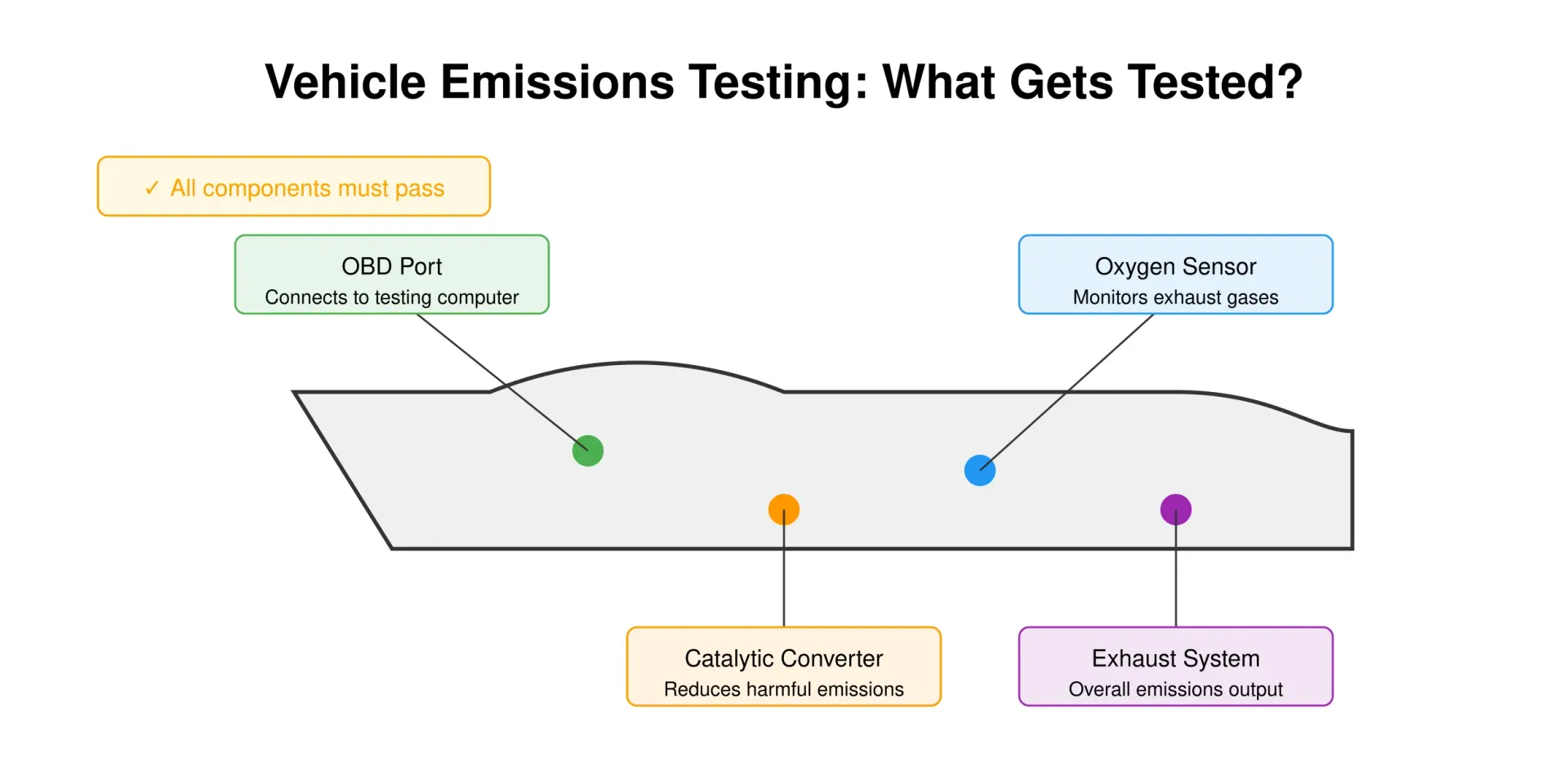
- Faulty Oxygen Sensor ($O_2$): Worn sensors alter air-fuel mixture calculations, increasing hydrocarbon output.
- Loose or Damaged Gas Cap: A degraded fuel cap seal allows pressurized fuel vapors to escape into the atmosphere, causing an evaporative emission system failure.
- Malfunctioning Catalytic Converter: Internal degradation prevents the conversion of toxic exhaust gases into harmless compounds.
- Unresolved Check Engine Light (CEL): An active dashboard warning light automatically triggers an immediate OBDII test failure, regardless of raw exhaust composition.
Waiver and Repair Expenditure Limits
If your vehicle fails the retest after substantial repairs, you may qualify for a repair waiver if you meet specific state-mandated financial expenditure thresholds. To qualify for a waiver, you must present itemized repair receipts from a recognized certified emissions repair facility proving that you have met or exceeded the minimum required diagnostic and repair cost limits established by the MDE.
Troubleshooting Readiness Monitors After Battery Disconnection
A frequent cause of immediate test rejection at a VEIP station is "Not Ready" status codes on the vehicle's computer. If your vehicle battery has been disconnected recently, or if diagnostic trouble codes were recently cleared with an OBDII scanner, the internal computer clears its readiness monitors.
To ensure your vehicle is ready for testing:
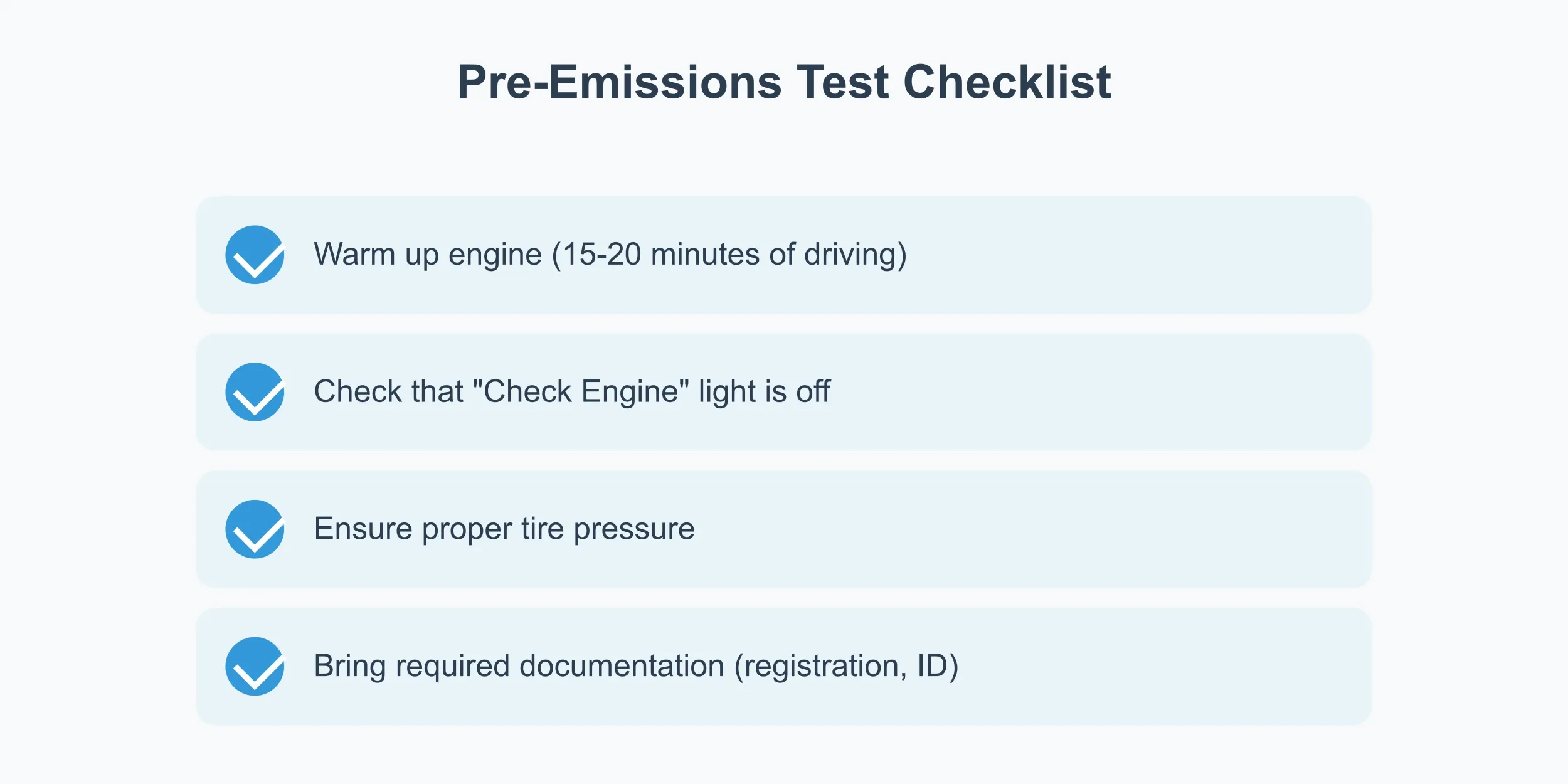
- Drive Cycle Completion: Drive your vehicle for at least 15 to 20 minutes under mixed driving conditions, including highway cruising and city stop-and-go driving.
- Avoid Quick Resets: Do not disconnect your battery or clear engine codes immediately before visiting a VEIP station, as this resets all internal self-tests to "Not Ready."
- Verify with an OBDII Scanner: If possible, scan your vehicle's computer prior to arrival to confirm that all mandatory monitors (such as catalyst, evaporative system, and oxygen sensor monitors) show a "Ready" status.
Frequently Asked Questions About the VEIP Emissions Test
How much does a Maryland VEIP emissions test cost?
The standard testing fee for a Maryland VEIP inspection is $14. Additional late fees may apply if the test is completed after the designated expiration date listed on your MVA notification.
Can I test my vehicle at any VEIP station in Maryland?
Yes. Maryland vehicle owners are not restricted to their home county for testing. You may visit any authorized full-service VEIP station, certified contractor facility, or 24/7 self-service kiosk statewide regardless of where your vehicle is registered.
What happens if my vehicle fails the VEIP test?
You must have the vehicle repaired by a certified mechanic or complete the repairs yourself, then return to a VEIP station for a free retest within the designated time frame. Bringing your original Vehicle Inspection Report (VIR) is mandatory for the retest.
Are electric vehicles (EVs) required to pass a VEIP test?
No. Battery electric vehicles (BEVs) are entirely exempt from emissions testing because they do not produce tailpipe exhaust emissions. Hybrid electric vehicles (HEVs) and plug-in hybrid electric vehicles (PHEVs), however, are subject to testing based on their internal combustion engine components.
How far in advance can I test my vehicle?
You can have your vehicle tested up to six months prior to your official registration renewal deadline. Early testing allows ample time to complete diagnostic repairs if the vehicle happens to fail its initial inspection.
Summary and Next Steps for Motorists
Ensuring your vehicle complies with Maryland environmental regulations protects local air quality and avoids costly registration late penalties. Review your VEIP notification letter carefully, verify that your dashboard check engine light is off, and complete your inspection at an authorized station or 24/7 kiosk well in advance of your renewal deadline.
Image Gallery