Understanding the Junior Gold Miners Index: Structure, Risks, and Investment Pathways
A junior gold miners index tracks the stock performance of small-cap exploration and early-stage mining companies within the precious metals sector. These benchmarks serve as barometers for investor sentiment toward high-risk, high-rew...
A junior gold miners index tracks the stock performance of small-cap exploration and early-stage mining companies within the precious metals sector. These benchmarks serve as barometers for investor sentiment toward high-risk, high-reward equities, offering magnified exposure to fluctuations in physical gold prices alongside unique operational challenges.
Contents
Defining the Junior Gold Miners Index
Financial markets categorize gold mining companies by their production scale, market capitalization, and financial stability. Majors represent the multi-national industry giants producing millions of ounces annually. Seniors operate established mid-tier mines with stable cash flows. Juniors, by contrast, are exploratory companies, developers, or early-stage producers. They typically hold mineral properties but may produce little to no commercial gold.
A junior gold miners index aggregates these small-cap and exploratory equities into a single benchmark. The most prominent example is the MVIS Global Junior Gold Miners Index (MVGDXJ), which underlies major exchange-traded products like the VanEck Junior Gold Miners ETF (GDXJ). These indices rely on specific quantitative rules—such as minimum market capitalization, free-float requirements, and daily trading volume thresholds—to select and weight their constituent holdings.
Understanding how these benchmarks function requires looking past a simple ticker symbol. Because junior mining firms rely heavily on equity financing rather than steady operating revenues, their market valuations react violently to changes in macroeconomic conditions, geopolitical stability, and the spot price of gold.
Mechanics of Index Construction and Weighting
Constructing a reliable junior gold miners index involves strict rules designed to ensure liquidity, investability, and fair representation of a volatile sector. Index providers utilize distinct methodologies to determine which companies qualify for inclusion and how much influence each constituent exerts on the overall performance of the benchmark.
Eligibility Criteria and Screening
Before a mining company enters an index like the MVIS Global Junior Gold Miners Index, it must pass several rigorous financial and operational hurdles:
- Market Capitalization: Constituents must generally fall below the threshold of senior producers, focusing primarily on small-cap and micro-cap entities.
- Liquidity Standards: Companies must maintain a minimum average daily trading value and sufficient share turnover to ensure that institutional index funds can buy and sell holdings without causing severe market distortion.
- Business Focus: A significant portion of the company's revenue or assets must derive directly from gold or silver mining, exploration, or related project development.
Weighting Methodologies
Most junior gold indexes utilize modified market-capitalization weighting. Under this approach, larger companies within the junior tier carry more weight than micro-cap explorers, but index providers apply caps to prevent a single dominant firm from controlling the entire benchmark. This structural choice prevents extreme concentration risk while still allowing market leaders to drive performance trends.
| Feature / Metric | Junior Gold Miners Index (e.g., MVGDXJ) | Senior Gold Miners Index (e.g., GDX) |
|---|---|---|
| Average Market Capitalization | Small-cap to Micro-cap ($100M – $2B) | Mid-cap to Large-cap ($2B – $20B+) |
| Primary Business Stage | Exploration, development, early production | Commercial production, cash-flow generation |
| Revenue Stability | Low or non-existent; relies on capital raises | High; driven by active mine operations |
| Volatility Profile | Extremely high; highly sensitive to macro shifts | Moderate to high; correlates closely with spot gold |
| Risk-Reward Dynamic | High potential upside, significant dilution risk | Slower growth, regular dividend yields common |
The Risk-Reward Profile of Junior Mining Equities
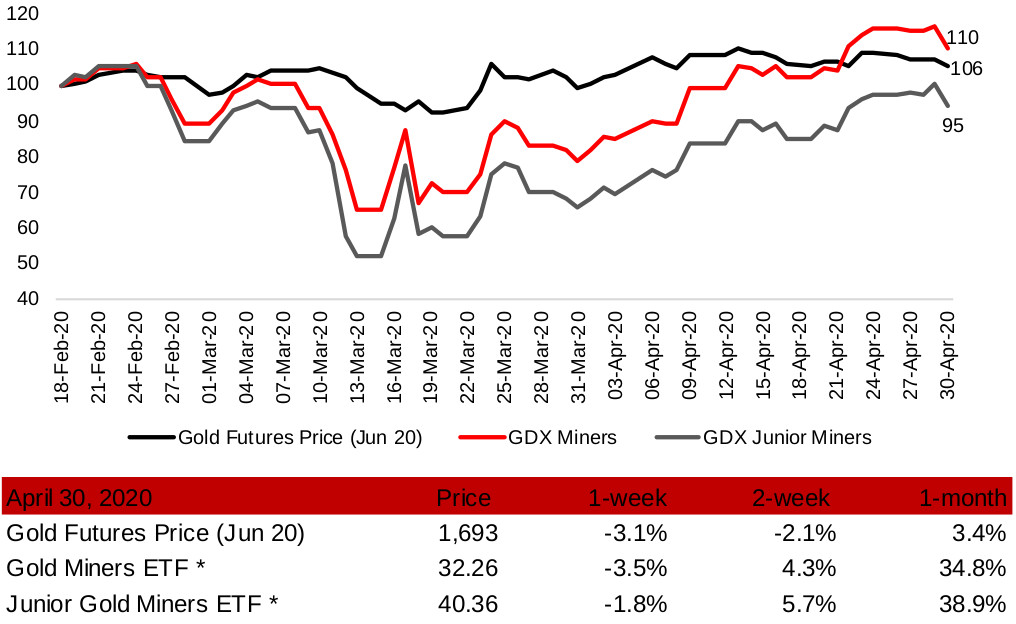
Investing in or tracking a junior gold miners index exposes participants to a specialized risk-reward dynamic often referred to as the leverage effect. When physical gold prices rise, junior miners frequently outperform the underlying commodity. This occurs because an increase in the market price of gold directly expands the net present value of undeveloped or marginal mineral deposits, transforming uneconomic resources into profitable reserves.
Conversely, this leverage cuts both ways. When gold prices stagnate or decline, junior miners suffer disproportionately. Explorers burn through cash reserves rapidly during exploration phases, requiring continuous equity dilution through secondary share offerings. If capital markets freeze, these companies may struggle to fund ongoing drilling programs or service existing debt obligations.
Furthermore, jurisdictional risk plays a major role in index performance. Junior explorers operate globally, often in remote regions characterized by complex political landscapes, shifting environmental regulations, and uncertain tax codes. A single regulatory dispute, permit denial, or local community protest can devastate the valuation of an individual explorer, which in turn impacts the broader index depending on that company's weighting.
Operational Lifecycle of Index Constituents
To comprehend how a junior gold miners index evolves, one must examine the operational pipeline of the companies inside it. The gold mining lifecycle moves through distinct phases, and index constituents populate different segments of this progression:
- Prospecting and Acquisition: Junior companies acquire land packages based on geological surveys and historical data. At this stage, valuations depend almost entirely on geological theory and drill targets.
- Exploration and Resource Estimation: Companies conduct extensive core drilling to define a compliant mineral resource estimate. Funding comes exclusively from equity financing, making these firms acutely vulnerable to market downturns.
- Feasibility and Permitting: Successful explorers transition into developers, commissioning economic studies, securing environmental permits, and designing processing facilities. Capital requirements peak during this phase.
- Construction and Production: The final transition occurs when a developer builds the mine and achieves commercial production. At this milestone, the company often outgrows the junior classification and graduates to a senior or mid-tier producer index.
Indices continuously rebalance to account for this lifecycle. When a junior miner gets acquired by a senior producer—a common occurrence in the gold sector—or graduates to a senior index, the index provider removes it and adds new exploration-stage entrants during the next scheduled reconstitution window.
Frequently Asked Questions
What is the difference between a junior gold miners index and a senior gold miners index?
A junior gold miners index focuses on small-cap exploration and development companies that typically produce little to no gold. A senior gold miners index tracks large, established producing companies with operating mines, steady cash flows, and lower relative volatility.
How do changes in the spot price of gold affect junior mining indexes?
Because junior miners hold undeveloped or marginal deposits, a rise in physical gold can exponentially increase the estimated value of their assets, causing junior indexes to outperform the physical metal. Conversely, falling gold prices compress profit margins and hinder capital-raising efforts, leading to sharp declines.
Are junior gold mining stocks suitable for long-term buy-and-hold strategies?
Due to high capital dilution, operational setbacks, and cyclical commodity exposure, junior gold mining equities generally require active management or periodic rebalancing rather than passive, long-term buy-and-hold investing, as unsuccessful exploration projects frequently lose all value over time.
What causes a company to be removed from a junior gold miners index?
Index providers remove companies during regular reconstitutions if they experience a sharp drop in market capitalization, fall below minimum daily trading liquidity thresholds, graduate to senior producer status through production growth, or get acquired by a larger mining corporation.
How can investors gain exposure to a junior gold miners index?
Investors typically access these benchmarks through exchange-traded funds (ETFs) that replicate the holdings of established indexes, such as the VanEck Junior Gold Miners ETF (GDXJ), avoiding the need to purchase individual micro-cap stocks directly.
Strategic Next Steps
For individuals analyzing the precious metals sector, evaluating a junior gold miners index requires assessing current macroeconomic trends, real interest rates, and central bank monetary policies that influence gold demand. Before committing capital to index-linked products or individual exploration stocks, review the underlying index methodology, examine the geographic distribution of its top holdings, and ensure your portfolio risk tolerance aligns with the severe volatility inherent in small-cap resource equities.
Image Gallery