What the American Century S&P 500 Index Fund Offers Investors in 2026
The American Century S&P 500 Index Fund provides investors with a low-cost, passively managed vehicle designed to track the performance of the S&P 500 Index. It offers broad exposure to the 500 largest U.S. companies, a competitive fee...
The American Century S&P 500 Index Fund provides investors with a low-cost, passively managed vehicle designed to track the performance of the S&P 500 Index. It offers broad exposure to the 500 largest U.S. companies, a competitive fee structure across various share classes, and a unique philanthropic mission that supports global medical research.
Contents
Core Investment Objective and Strategy
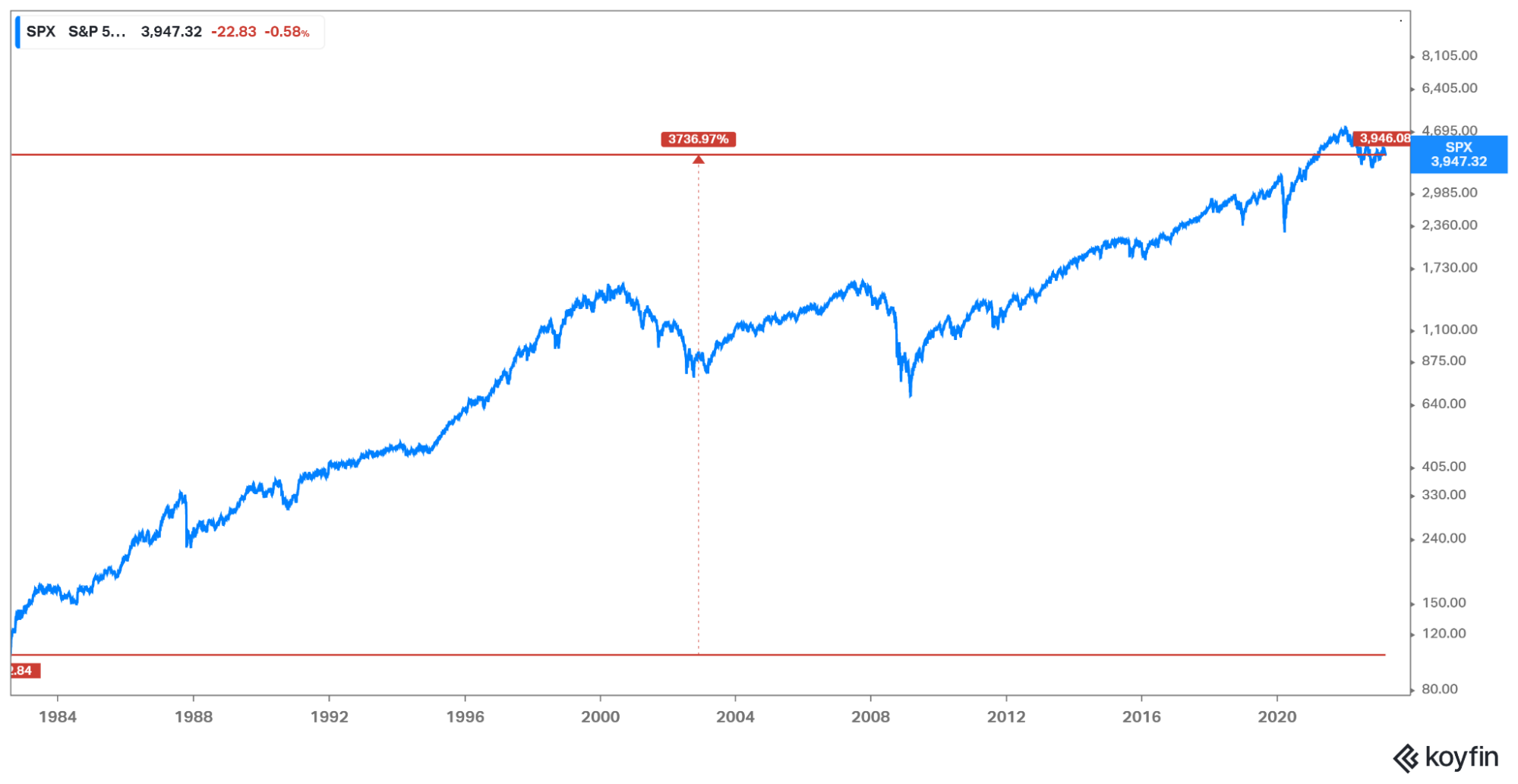
The primary goal of the American Century S&P 500 Index Fund (notably represented by the ASPIX ticker for its Investor class) is to provide investment results that correspond to the total return of the S&P 500 Index. As of 2026, this remains a cornerstone of many diversified portfolios because it captures approximately 80% of the available market capitalization of the U.S. equity market.
To achieve this, the fund employs a full replication strategy. This means the fund managers purchase all 500 stocks in the index in nearly the exact proportions they are represented in the S&P 500. This approach minimizes "tracking error"—the difference between the fund's performance and the index's performance—ensuring that investors get the precise market return they expect, minus the operating expenses.
The fund is managed by American Century’s Global Quantitative Strategies team. This team utilizes sophisticated software to monitor index changes, corporate actions (such as mergers or spin-offs), and daily cash flows to keep the portfolio tightly aligned with the benchmark. Because it is a passive fund, it does not attempt to "outbeat" the market by picking winners; rather, it aims to ride the wave of the overall U.S. economy's growth.
The Unique Philanthropic Value Proposition
One of the most distinct features that the American Century S&P 500 Index Fund offers—which distinguishes it from competitors like Vanguard, BlackRock, or Fidelity—is its ownership structure. American Century Investments is partially owned by the Stowers Institute for Medical Research.
James Stowers, the founder of American Century, and his wife Virginia established the institute to conduct basic research into the causes, treatment, and prevention of genetically based diseases, including cancer and diabetes. A significant portion of the profits generated by American Century's management fees is directed toward the institute. As of 2026, this partnership has resulted in billions of dollars in support for medical research.
For many investors, this offers a "double bottom line." While the primary goal is personal financial gain through S&P 500 growth, a portion of the costs paid to manage the fund supports life-saving scientific innovation. This social impact component is often a deciding factor for institutional investors and ESG-conscious (Environmental, Social, and Governance) retail investors.
Share Classes and Fee Structure
American Century offers the S&P 500 Index Fund through several share classes to accommodate different types of investors, ranging from individual retail accounts to large institutional retirement plans. Understanding these classes is vital because the expense ratio directly impacts long-term compounding.
- Investor Class (ASPIX): This is the most common entry point for individual investors. It typically requires a lower minimum investment but carries a slightly higher expense ratio than institutional tiers.
- I Class (ACIIX): Designed for institutional investors or those using specific fee-based advisory platforms. This class usually features a lower expense ratio because it does not include 12b-1 distribution fees.
- R Class: Often found in 401(k) and other employer-sponsored retirement plans. These may have higher fees to cover plan administration costs.
- ETF Alternative (ACIO): While the mutual fund is the traditional vehicle, American Century also offers the S&P 500 Index as an Exchange Traded Fund (ETF), which often provides even higher tax efficiency and liquidity.
As of 2026, the competitive landscape for index funds has pushed fees lower than ever. While American Century’s Investor Class may have an expense ratio slightly higher than the "zero-fee" models offered by some competitors, the institutional and ETF versions remain highly competitive within the industry standard of 0.03% to 0.10%.
Portfolio Composition and Sector Diversification
By investing in this fund, an investor gains immediate access to 11 major sectors of the U.S. economy. Because the S&P 500 is market-cap weighted, the largest companies have the greatest impact on the fund's performance.
Key Sector Weightings
In 2026, the portfolio continues to be heavily influenced by the following sectors:
- Information Technology: Including leaders in software, semiconductors, and cloud computing.
- Health Care: Covering pharmaceutical giants, medical device manufacturers, and biotech firms.
- Financials: Comprising major banks, insurance providers, and asset management firms.
- Consumer Discretionary: Including e-commerce platforms and automotive manufacturers.
- Communication Services: Encompassing social media, search engines, and telecommunications.
This diversification protects investors from the failure of a single company or a specific industry downturn. If one sector struggles—such as Energy during a period of falling oil prices—the growth in other sectors like Technology or Health Care can often offset those losses.
Performance and Tracking Efficiency Comparison
When evaluating what this fund offers, it is helpful to compare its operational metrics against other industry leaders. The following table illustrates how the American Century S&P 500 Index Fund (Institutional/ETF levels) typically stacks up against the broader market.
| Feature | American Century S&P 500 (2026 Status) | Industry Benchmark (Avg) |
|---|---|---|
| Tracking Error | < 0.05% | 0.05% - 0.10% |
| Portfolio Turnover | Low (approx. 2-4%) | 3-5% |
| Dividend Yield | Market Standard (approx. 1.3-1.6%) | Market Standard |
| Minimum Investment | $2,500 (Investor) / $5M (Inst) | Varies ($0 to $5M) |
| Management Style | Passive / Quantitative | Passive |
| Philanthropic Link | Yes (Stowers Institute) | None / Minimal |
Note: Data reflects typical institutional and investor class performance profiles as of the 2026 fiscal year.
Risk Considerations
While the American Century S&P 500 Index Fund offers broad market exposure, it is not without risk. Investors must be aware of the following:
- Market Risk: Since the fund tracks the S&P 500, it will decline in value if the overall stock market falls. There is no "active" manager to move assets into cash during a market crash.
- Concentration Risk: Although there are 500 companies, the top 10 holdings often represent 25-30% of the fund’s total value. If mega-cap tech stocks experience a correction, the fund will be significantly impacted.
- Interest Rate Sensitivity: High-interest rates can lead to higher borrowing costs for the companies within the index, potentially slowing earnings growth and pressuring stock prices.
Tax Efficiency and Dividend Reinvestment
For investors holding the fund in a taxable brokerage account, the American Century S&P 500 Index Fund offers high tax efficiency. Because index funds have low turnover (they rarely sell stocks unless the index changes), they generate fewer capital gains distributions than actively managed funds.
The fund also offers automatic dividend reinvestment. Quarterly dividends paid by the underlying 500 companies are collected by the fund and can be automatically used to purchase more shares for the investor. This process, known as compounding, is the primary driver of long-term wealth in S&P 500 index investing.
How to Access the Fund
In 2026, the fund is accessible through several channels:
- Directly via American Century: Investors can open an account on the American Century website to purchase ASPIX or other share classes.
- Brokerage Platforms: The fund is available on major platforms like Charles Schwab, Fidelity, and Vanguard, though "transaction fees" may apply if the platform does not have a partnership with American Century.
- Retirement Plans: Many 401(k) and 403(b) plans include the American Century S&P 500 Index Fund as a core equity option due to its low cost and reliability.
Frequently Asked Questions
What is the minimum investment for the American Century S&P 500 Index Fund?
For the Investor Class (ASPIX), the standard minimum initial investment is $2,500. However, this minimum may be waived or reduced if the investor sets up an automatic investment plan (AIP) or holds the fund within a qualified retirement account like an IRA.
Does this fund pay dividends?
Yes, the fund pays dividends. As the 500 companies within the S&P 500 pay out their earnings to shareholders, the fund collects these payments and distributes them to fund investors, typically on a quarterly basis. Investors can choose to receive these as cash or reinvest them.
How does the Stowers Institute benefit from my investment?
American Century Investments is roughly 40% owned by the Stowers Institute for Medical Research. This means that about 40% of the company's profits—derived from the management fees you pay—are directed to fund scientific research. This does not increase your fees; it simply changes where the profit goes.
Is the American Century S&P 500 Index Fund better than a Vanguard S&P 500 fund?
In terms of performance, both funds should perform almost identically because they track the same index. The choice often comes down to the expense ratio offered by your specific brokerage, whether you prefer the mutual fund or ETF format, and whether you value the philanthropic mission associated with American Century.
What happens if a company is removed from the S&P 500?
The fund's management team monitors the S&P Dow Jones Indices announcements. When a company is removed and replaced, the fund will sell the shares of the outgoing company and buy shares of the incoming company. This rebalancing is done automatically and is included in the fund's internal operations.
Practical Recommendation
The American Century S&P 500 Index Fund is an excellent choice for long-term investors seeking foundational U.S. equity exposure. It is particularly well-suited for those who appreciate a corporate structure that supports medical research. If you are a retail investor with at least $2,500, the Investor Class is a solid entry point. However, if you are investing through a brokerage that offers the ETF version (ACIO), you may benefit from even lower expense ratios and better intraday liquidity. Always verify the specific expense ratio of the share class offered to you, as even small differences in fees can significantly impact your portfolio's value over a 20- or 30-year horizon.
Image Gallery