Does Term Life Insurance Cost More? Analyzing Quizlet Study Materials and Market Realities in 2026
No, term life insurance does not cost more than permanent life insurance in terms of initial premium outlays. In fact, term life insurance is consistently the most affordable form of life insurance because it provides "pure" death bene...
No, term life insurance does not cost more than permanent life insurance in terms of initial premium outlays. In fact, term life insurance is consistently the most affordable form of life insurance because it provides "pure" death benefit protection for a specific period without the added costs of cash value accumulation or lifelong coverage guarantees.
Contents
In 2026, the landscape of life insurance continues to evolve with advanced underwriting, yet the fundamental distinction between term and permanent policies remains a cornerstone of financial literacy and insurance licensing exams. Many students and prospective policyholders encounter the question "does term life insurance cost more" while studying on platforms like Quizlet. Understanding why the answer is a definitive "no" requires a deep look into how insurance companies price risk, the structure of different policy types, and the specific contexts where "cost" might be interpreted differently.
The Fundamental Reason Term Life Insurance Is Less Expensive
To understand why term life insurance is the most budget-friendly option, one must look at what you are—and are not—paying for. Term life insurance is often described as "renting" coverage, whereas permanent insurance (like whole life or universal life) is akin to "owning" a policy that eventually builds equity.
1. Pure Death Protection
Term life insurance provides what actuary tables and Quizlet study sets refer to as pure death protection. The premium you pay goes almost entirely toward the statistical probability of the insured individual passing away during the specified term (e.g., 10, 20, or 30 years). Because there is a high statistical likelihood that the policyholder will outlive the term, the insurance company takes on less "certain" risk compared to a permanent policy, which is guaranteed to pay out eventually as long as premiums are met.
2. Lack of Cash Value Component
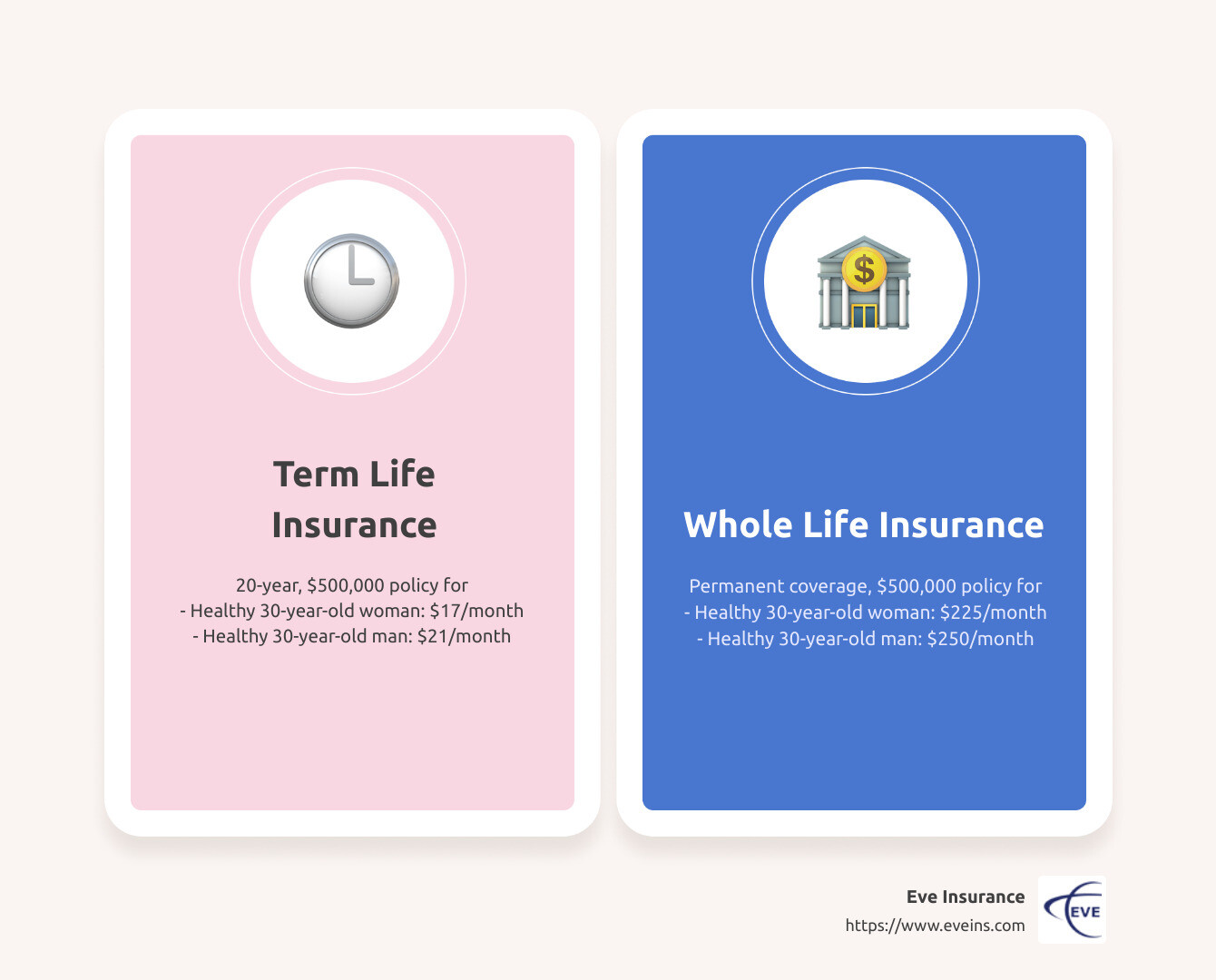
Unlike whole life or universal life insurance, term policies do not have a cash value or investment component. In permanent policies, a significant portion of the premium is diverted into a tax-deferred savings account or investment vehicle managed by the insurer. This "overfunding" in the early years of a permanent policy is what makes the premiums significantly higher—often five to ten times more expensive than a comparable term policy for the same death benefit amount.
3. Limited Duration
The "term" in term life insurance is its defining feature. By limiting the window of coverage, the insurer limits its liability. Most term policies are purchased for 20 or 30 years to cover specific financial obligations, such as a mortgage or a child’s education. Since the policy expires after this window, the insurer does not have to account for the extreme mortality risks associated with advanced old age (85+), which keeps the premiums low during the productive years of the policyholder's life.
Decoding the "Quizlet" Search Intent: Pre-Licensing Exam Context
Most individuals searching for "does term life insurance cost more quizlet" are likely preparing for a state life insurance pre-licensing exam (such as those for a Life, Accident, and Health license). In the context of these exams, the question is often a trick or a test of a student's understanding of Initial Premium vs. Long-term Cumulative Cost.
On Quizlet, flashcards often highlight that:
- Term Life has the lowest initial premium.
- Whole Life has higher premiums but builds cash value.
- Annually Renewable Term (ART) starts very cheap but increases in cost every year as the insured gets older.
A common point of confusion in study materials is the concept of opportunity cost. While term insurance is cheaper in dollars paid today, some financial theories suggest that if a person lives a very long life, the "cost" of term insurance is "lost" money because there is no return if you don't die. However, from a strictly premium-based perspective, term is always the lower-cost entry point.
Comparing Costs: Term vs. Permanent Insurance in 2026
The following table illustrates the typical cost structures for a healthy 35-year-old individual seeking $500,000 in coverage in the 2026 market.
| Feature | Term Life Insurance (20-Year) | Whole Life Insurance (Permanent) | Universal Life Insurance (Flexible) |
|---|---|---|---|
| Initial Monthly Premium | $25 - $45 | $250 - $450 | $150 - $300 |
| Cash Value Growth | None | Guaranteed growth | Variable/Market-linked |
| Coverage Duration | Fixed (e.g., 20 years) | Entire Life | Entire Life (if funded) |
| Premium Stability | Level (Fixed) | Level (Fixed) | Flexible (Can change) |
| Complexity | Low | High | High |
| Primary Purpose | Income replacement | Estate planning/Wealth | Flexibility/Tax-advantaged growth |
Note: Estimates are based on 2026 actuarial trends for "Preferred Plus" health ratings. Actual rates vary by carrier and individual health profile.
When Might Term Life Insurance "Cost More"?
While the initial premiums are lower, there are specific scenarios and technical definitions where term life insurance might be perceived as costing more in the long run.
The Problem of "Annually Renewable Term" (ART)
If a student is looking at a Quizlet set regarding Annually Renewable Term, they will find that the premium increases every single year. Because the risk of death increases as you age, the cost to "buy" one year of protection at age 70 is exponentially higher than at age 25. If an individual keeps an ART policy for 40 years, the total premiums paid in the later years could eventually exceed the level premiums of a whole life policy started at the same initial age.
The Cost of Renewability and Conversion
Many term policies offer a "Right to Renew" or "Right to Convert." If you reach the end of a 20-year term and realize you still need insurance but have developed a chronic illness, renewing the term policy will be extremely expensive because the new premium will be based on your attained age and increased risk. In this specific "worst-case" scenario, the total lifecycle cost of term insurance can be higher than if a permanent policy had been secured early on.
No Return of Premium (Standard Policies)
Standard term insurance provides no "return" if the policyholder survives the term. From a psychological or "sunk cost" perspective, some consumers feel this makes the insurance "more expensive" than a policy that returns cash value. However, high-quality financial advice usually distinguishes between an expense (insurance) and an investment (cash value), noting that term insurance allows the policyholder to invest the premium savings elsewhere.
Key Factors Influencing Term Costs in 2026
As of 2026, several factors have refined how term life insurance is priced, making it even more affordable for some while increasing costs for others:
- Accelerated Underwriting: Most term policies now use algorithmic underwriting, which analyzes prescription history, driving records, and even credit scores to offer instant approval. This reduces the administrative "cost" for the insurer, keeping premiums low.
- Mortality Table Updates: In 2026, insurers are using updated mortality data that accounts for medical advancements. Generally, as life expectancy increases, the cost of term insurance for younger brackets tends to stabilize or decrease.
- Inflationary Adjustments: While the structure of term insurance is cheap, the face value needed is higher in 2026 due to inflation. A $500,000 policy in 2026 covers less than it did in 2016, leading many to buy $1 million+ policies, which naturally increases the total premium.
Common Myths Found in Study Materials
When browsing Quizlet for insurance exam prep, it is vital to distinguish between factual insurance law and common myths.
- Myth: Term insurance is always a waste of money.
- Fact: Term insurance is the most efficient way to manage the risk of premature death during peak earning years. It is a risk-management tool, not a savings account.
- Myth: You can't get term insurance after age 65.
- Fact: Many companies in 2026 offer 10-year terms for individuals up to age 75, though the premiums are significantly higher than for younger applicants.
- Myth: Increasing Term insurance is the most common.
- Fact: Level Premium Term is the most common. "Increasing term" is usually a rider used to keep up with inflation or to cover specific increasing debts, but it is rarely the base policy.
Strategic Advice for Insurance Students and Buyers
If you are using Quizlet to study for an exam, remember that the answer to "Does term life insurance cost more?" is No because it lacks a cash value and covers a limited time.
For those looking to purchase insurance in 2026:
- Layer your policies: Instead of one giant permanent policy, many "buy term and invest the difference."
- Check for Conversion Riders: Ensure your term policy can be converted to permanent insurance without a medical exam. This protects you if your health declines.
- Evaluate the "Term" Length Carefully: Choosing a 30-year term when you only have 15 years left on your mortgage may result in unnecessary costs, even if the monthly premium is relatively low.
For more information on insurance standards and consumer protections, you can visit the National Association of Insurance Commissioners (NAIC) or the Insurance Information Institute.
Frequently Asked Questions
1. Is term life insurance cheaper than whole life?
Yes. Term life insurance is significantly cheaper than whole life insurance because it only provides a death benefit for a specific timeframe and does not build cash value. A whole life policy requires higher premiums to fund both the insurance and the savings component that lasts for the insured's entire life.
2. Why do people say term life insurance is "renting" coverage?
The comparison to renting exists because term insurance only lasts for a set period. Once the term ends, the coverage stops, and the policyholder has no "equity" or cash to show for it. Permanent insurance is compared to "owning" because the policy remains in force for life and builds cash value that the owner can eventually borrow against or withdraw.
3. Does the cost of term insurance stay the same?
In a Level Premium Term policy, the cost stays exactly the same for the duration of the term (e.g., 10, 20, or 30 years). However, in an Annually Renewable Term (ART) policy, the premium increases every year as the insured person ages. Most modern consumers prefer level premium policies for their predictability.
4. What happens to the money if I don't die during the term?
In a standard term life insurance policy, the insurance company keeps the premiums, and the coverage simply expires. You do not get a refund. However, there are "Return of Premium" (ROP) term policies available, though these are much more expensive than standard term insurance.
5. Why is term insurance featured so heavily on Quizlet for insurance exams?
Term insurance is a fundamental concept for licensing exams because it represents the "purest" form of insurance. Understanding the mechanics of term insurance—such as renewability, convertibility, and the lack of cash value—is essential for passing the Life and Health insurance exams across all U.S. states.
Summary Recommendation
If you are currently studying insurance concepts on Quizlet or a similar platform, keep the distinction clear: Term life insurance is the lowest-cost option for initial death benefit protection. It does not cost more than other types of life insurance in a direct premium-to-premium comparison. For consumers in 2026, term insurance remains the most effective way to protect a family's financial future without over-extending a monthly budget on complex permanent policies.
Image Gallery