Essential Guide to Medical Air Ambulance Services: Logistics, Costs, and Safety Standards
A medical air ambulance service provides specialized emergency or non-emergency transport for patients via aircraft equipped with ICU-level technology. These services bridge the gap between healthcare facilities over long distances or...
A medical air ambulance service provides specialized emergency or non-emergency transport for patients via aircraft equipped with ICU-level technology. These services bridge the gap between healthcare facilities over long distances or from remote areas, staffed by highly trained flight medics and nurses to ensure continuous critical care during transit.
Contents
Medical air ambulance services represent the highest tier of patient logistics, functioning as a flying intensive care unit (ICU). As of 2026, the industry has evolved significantly with the integration of advanced telemedicine, specialized aircraft for long-range transport, and rigorous international safety standards. Whether you are arranging a repatriation for a family member or managing a critical hospital transfer, understanding the technical, financial, and operational nuances of air medical transport is essential for ensuring patient safety and financial protection.
Core Components of Medical Air Ambulance Services
A medical air ambulance is defined not just by the aircraft, but by the synergy between aviation expertise and specialized clinical care. These services are generally divided into two categories: emergency scene response and inter-facility transfers.
The Role of Fixed-Wing vs. Rotary-Wing Aircraft
The choice of aircraft is the first technical decision in any medical transport mission. The distance, patient condition, and terrain dictate which platform is appropriate.
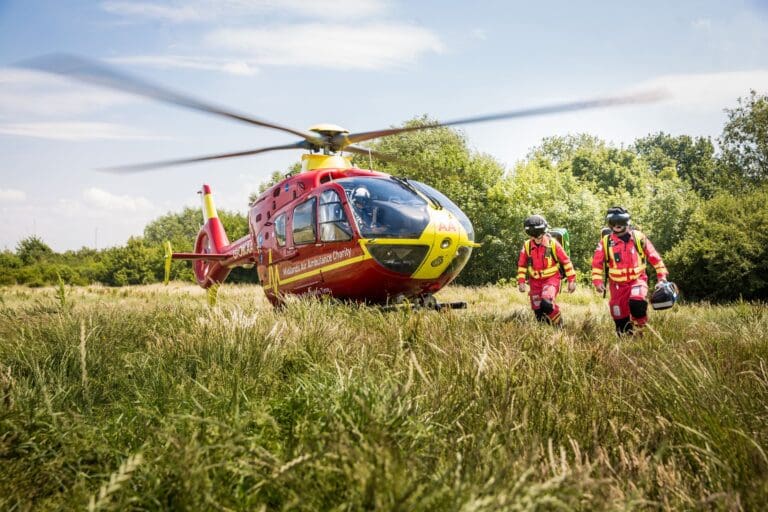
- Rotary-Wing (Helicopters): These are primarily used for short-distance "scene" responses—such as trauma on a highway—or hospital-to-hospital transfers within a 150-mile radius. Helicopters like the Eurocopter EC135 or Bell 407 can land directly on hospital helipads, eliminating the need for ground ambulance transitions. However, they are limited by weather conditions, fuel capacity, and interior space.
- Fixed-Wing (Airplanes): For distances exceeding 200 miles, fixed-wing aircraft such as the Beechcraft King Air (turboprop) or Learjet (jet) are the industry standard. These aircraft provide a pressurized environment, which is critical for patients with respiratory issues or neurological injuries. They offer more space for medical equipment and family members, and they can fly in more diverse weather conditions than helicopters.
Medical Staffing and Flight Physiology
Medical air ambulance crews are not typical paramedics. Flight nurses and flight paramedics must master flight physiology, which focuses on how altitude, gas expansion (Boyle’s Law), and decreased barometric pressure affect the human body. For example, a patient with a pneumothorax (collapsed lung) faces life-threatening risks as air expands at higher altitudes, requiring the crew to manage chest tubes and cabin pressure with extreme precision.
In 2026, standard staffing for a critical care transport (CCT) usually includes at least two clinicians, often a combination of a Certified Flight Registered Nurse (CFRN) and a Flight Paramedic-Certified (FP-C). For neonatal or pediatric cases, specialized teams including neonatologists or pediatric respiratory therapists are brought on board.
The Logistics of "Bed-to-Bed" Service
One of the most important concepts in medical air transport is bed-to-bed coordination. A professional air ambulance service does not simply fly a patient from airport to airport; they manage the entire continuum of care.
- Initial Clinical Assessment: The service’s medical director reviews the patient’s charts, labs, and current stability to determine if they are "fit to fly."
- Ground Ambulance Coordination: The provider arranges for ALS (Advanced Life Support) ground ambulances to transport the patient from the sending hospital to the aircraft, and from the destination airport to the receiving hospital.
- The Handover: The flight crew meets the patient at their bedside in the sending facility. This allows for a detailed briefing from the local medical team, ensuring no gap in medication administration or monitoring.
- In-Flight Monitoring: Continuous monitoring of vitals, invasive line management, and ventilator support occurs throughout the flight.
- Final Delivery: The process concludes only when the flight crew gives a formal report to the receiving physician at the destination facility.
Comparison of Air Ambulance Transport Tiers
Understanding the differences in service levels helps in selecting the right provider and managing expectations regarding care and cost.
| Feature | Rotary-Wing (Helicopter) | Fixed-Wing Turboprop | Fixed-Wing Jet |
|---|---|---|---|
| Typical Range | 100–150 Miles | 200–800 Miles | 800–3,000+ Miles |
| Speed | 120–150 mph | 250–300 mph | 450–550 mph |
| Primary Use | Trauma/Short Inter-facility | Regional Transfers | International/Transcontinental |
| Cabin Pressure | Unpressurized | Pressurized | High-Altitude Pressurized |
| Landing Site | Helipads, Fields, Roads | Regional Airports | Major & Regional Airports |
| Patient Capacity | 1 Patient | 1–2 Patients | 1–2 Patients + Family |
Cost Drivers and Financial Considerations
The cost of a medical air ambulance service is notoriously high, often ranging from $15,000 to over $100,000 for international flights. These costs are driven by three primary factors:
1. Aviation Operations
Maintaining an aircraft in "mission-ready" status 24/7 is expensive. This includes pilot salaries (usually two pilots per flight for safety), fuel, hangar fees, landing fees at airports, and rigorous FAA Part 135 (or equivalent international) maintenance schedules.
2. Medical Readiness
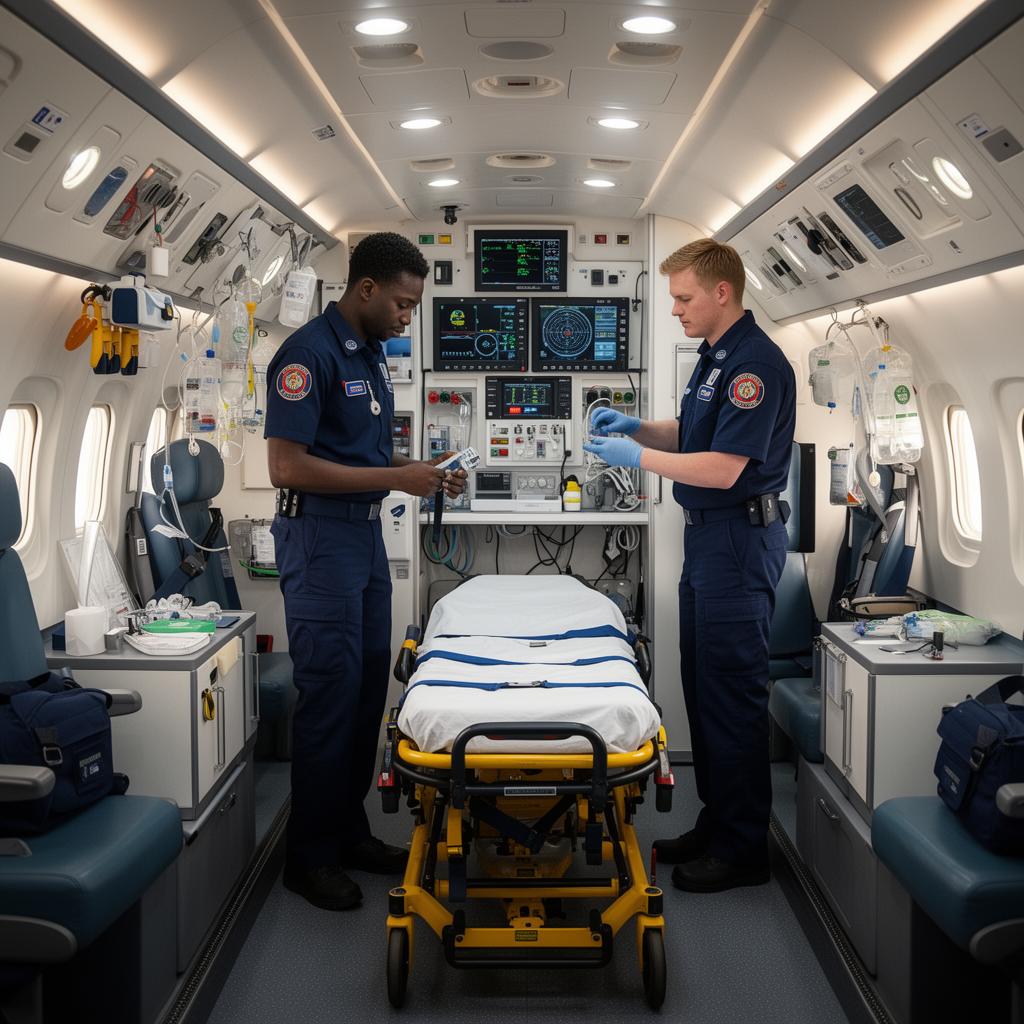
The specialized equipment on board—such as the Hamilton-T1 ventilator, Zoll X-Series monitors, and portable blood chemistry analyzers—must be flight-certified and regularly calibrated. Additionally, the service must pay for high-level clinical staffing even when the aircraft is not in the air.
3. Specialized Missions
If a patient requires an ECMO (Extracorporeal Membrane Oxygenation) machine or an isolette for a neonate, the cost increases. These missions require additional specialized technicians and heavy equipment that may necessitate a larger, more expensive aircraft.
Insurance Coverage and the "No Surprises Act"
In the United States, the legal landscape for air ambulance billing changed significantly with the No Surprises Act. As of 2026, this federal law protects patients from "balance billing" when they are transported by an out-of-network air ambulance provider in emergency situations.
- Emergency vs. Non-Emergency: Most insurance providers will cover air medical transport only if it is deemed a "medical necessity." This means the patient requires a level of care or a specific procedure that the sending facility cannot provide, and ground transport is not a viable option due to time or distance.
- Prior Authorization: For non-emergency repatriations (e.g., flying a patient home after an injury abroad), insurance rarely covers the cost. These are typically "private pay" missions, though some premium travel insurance policies include high-limit medevac coverage.
- Documentation: To increase the likelihood of insurance reimbursement, medical directors must provide detailed documentation showing that the patient’s stability depended on the speed or specialized environment of an air ambulance.
Evaluating Safety and Accreditation
Not all medical air ambulance services are equal. When selecting a provider, looking beyond the price tag is vital for patient safety.
Accreditation Standards
The Commission on Accreditation of Medical Transport Systems (CAMTS) is the gold standard for safety and quality in the United States and many parts of the world. In Europe, EURAMI (European Aero-Medical Institute) provides similar oversight. These organizations conduct rigorous on-site audits of a company's medical protocols, pilot training, safety management systems (SMS), and equipment maintenance.
Safety Records and Transparency
A reputable provider should be transparent about their aviation partner. Many "air ambulance companies" are actually brokers who coordinate the medical team but charter the aircraft from a third-party operator. While this is a common industry practice, the client should always know who the FAA Certificate Holder is and what their safety rating (such as ARGUS or Wyvern) entails.
Common Mistakes to Avoid
- Assuming Insurance Coverage: Never assume a flight is covered without a written verification or understanding of the "medical necessity" criteria.
- Ignoring Ground Logistics: Ensure the quote includes the ground ambulance costs at both ends. "Hidden" ground fees can add thousands to the total bill.
- Delaying the Decision: For critical patients, the "window of stability" can close. Waiting several days to compare every minor price difference can result in the patient becoming too unstable to fly.
- Overlooking Family Needs: Some smaller aircraft cannot accommodate a family member. If it is essential for a spouse or parent to travel with the patient, this must be established during the initial intake.
Frequently Asked Questions
Can a family member fly with the patient on a medical air ambulance?
In most fixed-wing missions, at least one family member can accompany the patient at no extra charge, provided they do not interfere with medical care and their weight fits within the aircraft's payload limits. In helicopters, this is rarely possible due to space and weight restrictions.
What medical equipment is standard on these flights?
Most services provide a "Mobile ICU" setup, which includes a multi-parameter cardiac monitor, a transport ventilator, multiple infusion pumps, a defibrillator, and a full pharmacy of emergency medications (ACL/PALS). Specialized equipment like an intra-aortic balloon pump (IABP) or an incubator must be requested in advance.
How long does it take to launch a mission?
For an urgent inter-facility transfer, a crew can often be "wheels up" within 2 to 4 hours of receiving medical clearance and payment/insurance authorization. International repatriations typically require 24 to 48 hours to secure international overflight permits and coordinate ground logistics across time zones.
Is the cabin pressure the same as a normal commercial flight?
Commercial flights are typically pressurized to an equivalent of 6,000–8,000 feet. Medical air ambulances can often be flown at a "sea-level cabin" pressure (by flying at a lower actual altitude or using advanced pressurization systems), which is vital for patients with air-trapping conditions or severe anemia.
What happens if the patient's condition worsens during the flight?
The flight crew is trained in advanced life support and follows strict medical protocols overseen by a Medical Director. They have the authority to divert the aircraft to the nearest appropriate hospital if the patient's stability is compromised beyond the capabilities of the in-flight equipment.
Practical Recommendation for Choosing a Service
If you are tasked with arranging a medical air ambulance service, your first action should be to request a clinical consultation. A reputable provider will ask to speak with the patient's current attending physician before giving a final quote. This ensures that the aircraft and staff assigned are actually capable of managing the patient’s specific needs. Always prioritize providers with CAMTS or EURAMI accreditation, and ask for an "all-inclusive" quote that covers ground ambulance transfers, respiratory therapy (if needed), and all pilot/fuel expenses to avoid unexpected costs.
Image Gallery