Essential Guide to Residential Solar Panel Installation in Bethesda, MD
Installing residential solar panels in Bethesda, Maryland, requires balancing federal incentives, state-level renewable energy programs, and Montgomery County’s specific permitting requirements. As of 2026, homeowners must navigate loc...
Installing residential solar panels in Bethesda, Maryland, requires balancing federal incentives, state-level renewable energy programs, and Montgomery County’s specific permitting requirements. As of 2026, homeowners must navigate local zoning codes, historic district regulations, and utility interconnection standards to ensure their solar array is legally compliant, financially viable, and structurally sound.
Contents
Understanding the Regulatory Landscape in Montgomery County
Bethesda operates under the jurisdiction of Montgomery County, which maintains specific guidelines for residential solar photovoltaic (PV) systems. Unlike some jurisdictions with lax oversight, Montgomery County requires a formal permit for almost all rooftop solar installations.
The primary regulatory bodies you will interface with are the Department of Permitting Services (DPS) and the local utility provider, Pepco. The permitting process generally involves submitting detailed structural plans—often provided by your solar installer—to confirm that your roof can support the added weight of the racking system and panels. For homes located within designated historic districts or areas governed by strict Homeowners Associations (HOAs), you may face additional reviews regarding the aesthetic visibility of the panels from the street.
Financial Incentives and Economic Viability
The economic case for solar in Maryland is anchored by the combination of the Federal Investment Tax Credit (ITC) and the state’s Renewable Energy Portfolio Standard. As of 2026, the federal credit remains a significant component of the initial return on investment, allowing homeowners to deduct a specific percentage of the total installation cost from their federal income taxes.
Beyond the federal level, Maryland facilitates the creation of Solar Renewable Energy Certificates (SRECs). When your system generates electricity, it earns these credits, which you can sell on the open market. The value of these certificates fluctuates based on supply and demand, providing a supplementary income stream that can shorten the overall payback period for your solar investment.
Site Suitability and Technical Prerequisites
Before committing to an installation, you must assess the physical suitability of your property. Bethesda’s mature tree canopy—a defining feature of the area—often acts as the biggest inhibitor to solar efficiency.
- Roof Orientation and Pitch: South-facing roofs are typically the most productive, but east-west configurations can also be viable depending on your peak energy usage hours.
- Shade Analysis: Professional installers utilize satellite imagery and on-site LIDAR or physical shade analysis tools to calculate the "Solar Access Value." Even minor, consistent shading from a nearby oak tree can disproportionately reduce the output of a string inverter system.
- Structural Integrity: If your roof is nearing the end of its lifespan, it is strongly recommended to replace it before or during the solar installation. Removing and reinstalling panels to accommodate a roof replacement several years down the line is a costly logistical hurdle.
Comparing Solar Equipment and Configurations
Choosing the right hardware involves evaluating the trade-offs between cost, efficiency, and aesthetics.
| Feature | Standard String Inverter | Microinverters / DC Optimizers |
|---|---|---|
| Performance | Affected by single-panel shade | Independent panel performance |
| Complexity | Centralized, fewer failure points | Distributed, easier to monitor |
| Cost | Generally lower | Higher initial investment |
| Best For | Unshaded, consistent roof lines | Complex roofs with partial shade |
In modern installations, microinverters or DC power optimizers are increasingly common in Bethesda. These technologies ensure that if a tree branch shades one panel, the output of the remaining panels in the array remains unaffected, maximizing the total energy yield of the system.
The Installation Process: Step-by-Step
The transition to solar power typically follows a structured timeline. Homeowners should anticipate the following sequence of events:
- Consultation and Design: A site survey confirms roof health and electrical capacity. The design phase creates a blueprint that satisfies building codes.
- Permitting: The installer submits plans to the Montgomery County Department of Permitting Services. This phase can take several weeks depending on current departmental volume.
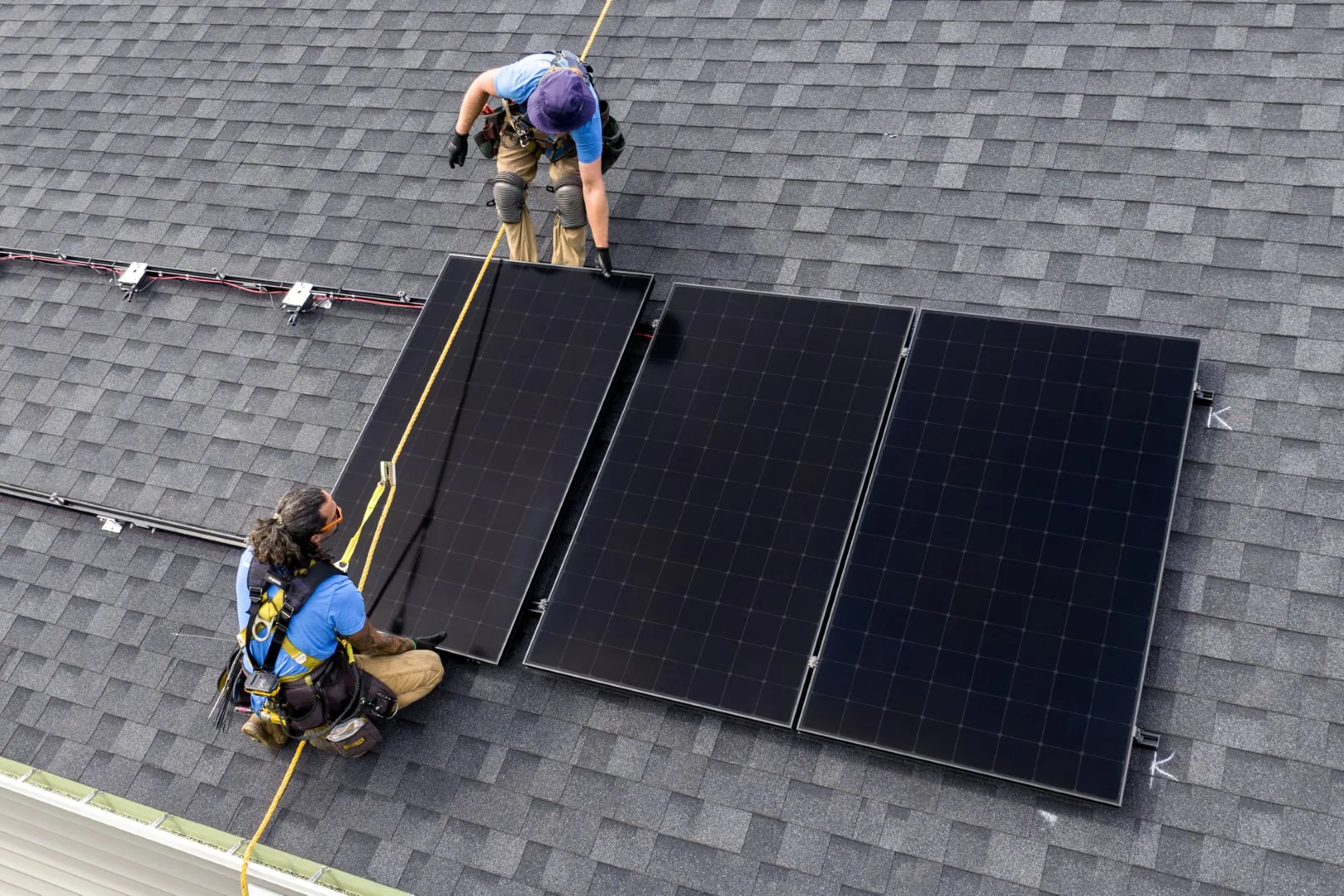
- Installation: The physical setup typically takes two to three days. This includes installing mounting hardware, laying the electrical conduit, and mounting the modules.
- Inspections: Once installed, the system must be inspected by a county electrical inspector.
- Utility Interconnection: Finally, your installer coordinates with Pepco to receive "Permission to Operate" (PTO). Only after this official authorization is the system turned on and connected to the grid.
Common Challenges and Troubleshooting
Even with professional installation, homeowners should remain proactive about system maintenance. The most common issues involve connectivity failures between the monitoring hardware and your home Wi-Fi, which can make it appear as though the system is underperforming when, in fact, it is merely failing to report data.
Additionally, while Bethesda receives sufficient sunlight, heavy winter snow accumulation can occasionally obscure panels. Most modern panels are engineered to handle the load of Maryland snow, but efficiency will drop to zero during periods of total coverage. Generally, no manual cleaning is required, as the slant of the panels and natural melting cycles are sufficient to clear the surface.
Frequently Asked Questions
Does a solar installation increase my property taxes in Bethesda? Maryland provides a property tax exemption for solar energy property. Under state law, your local property tax assessment should not increase simply because you have installed a solar energy system.
Can I install solar panels if I have an HOA? Maryland law generally prohibits HOAs from banning solar installations. However, they may impose "reasonable restrictions" regarding the placement of panels, provided those restrictions do not significantly decrease the system's efficiency or increase its cost.
What happens to my solar power during a grid outage? Standard grid-tied solar systems automatically shut down during a power outage for safety reasons, preventing electricity from "back-feeding" onto the grid and endangering utility workers. If you want power during an outage, you must install a battery backup system (such as a lithium-ion storage unit) and an automatic transfer switch.
How long do residential solar panels last? Most manufacturers provide a 25-year performance warranty. While the panels will continue to produce power after 25 years, their efficiency—the amount of sunlight converted to electricity—will gradually decline by a small percentage annually.
Is it better to lease or buy my solar system? Buying your system (or financing it through a solar loan) allows you to capture the tax incentives and own the SRECs. Leasing typically means a third party owns the system, takes the tax credits, and you pay a fixed monthly fee for the electricity produced. Owning generally yields a higher long-term financial return.
Recommendation
For residents in Bethesda, the most critical next step is obtaining multiple competitive quotes from installers who have experience specifically within Montgomery County’s permitting framework. Prioritize companies that provide a production guarantee and have a clear, transparent process for handling the "Permission to Operate" paperwork with Pepco. Request a shade analysis early in the process to ensure that the projected savings align with your actual historical electricity usage.
Image Gallery