What’s New in Hyperscale Data Centers: Scaling for the AI Era
In 2026, hyperscale data centers are undergoing a fundamental architectural shift driven by the massive power and cooling demands of high-density AI clusters. The current evolution focuses on the transition to liquid cooling at the chi...
In 2026, hyperscale data centers are undergoing a fundamental architectural shift driven by the massive power and cooling demands of high-density AI clusters. The current evolution focuses on the transition to liquid cooling at the chip level, the integration of modular rack systems designed for exascale computing, and a transition toward grid-interactive energy management to handle unprecedented thermal loads.
Contents
The Shift to High-Density Infrastructure
The most significant trend in 2026 is the decoupling of traditional "air-cooled" room designs in favor of specialized liquid-to-chip architectures. As server racks pushing 50kW to 100kW become the standard to support the latest generation of GPU clusters, traditional CRAC (Computer Room Air Conditioning) units have reached their physical limits.
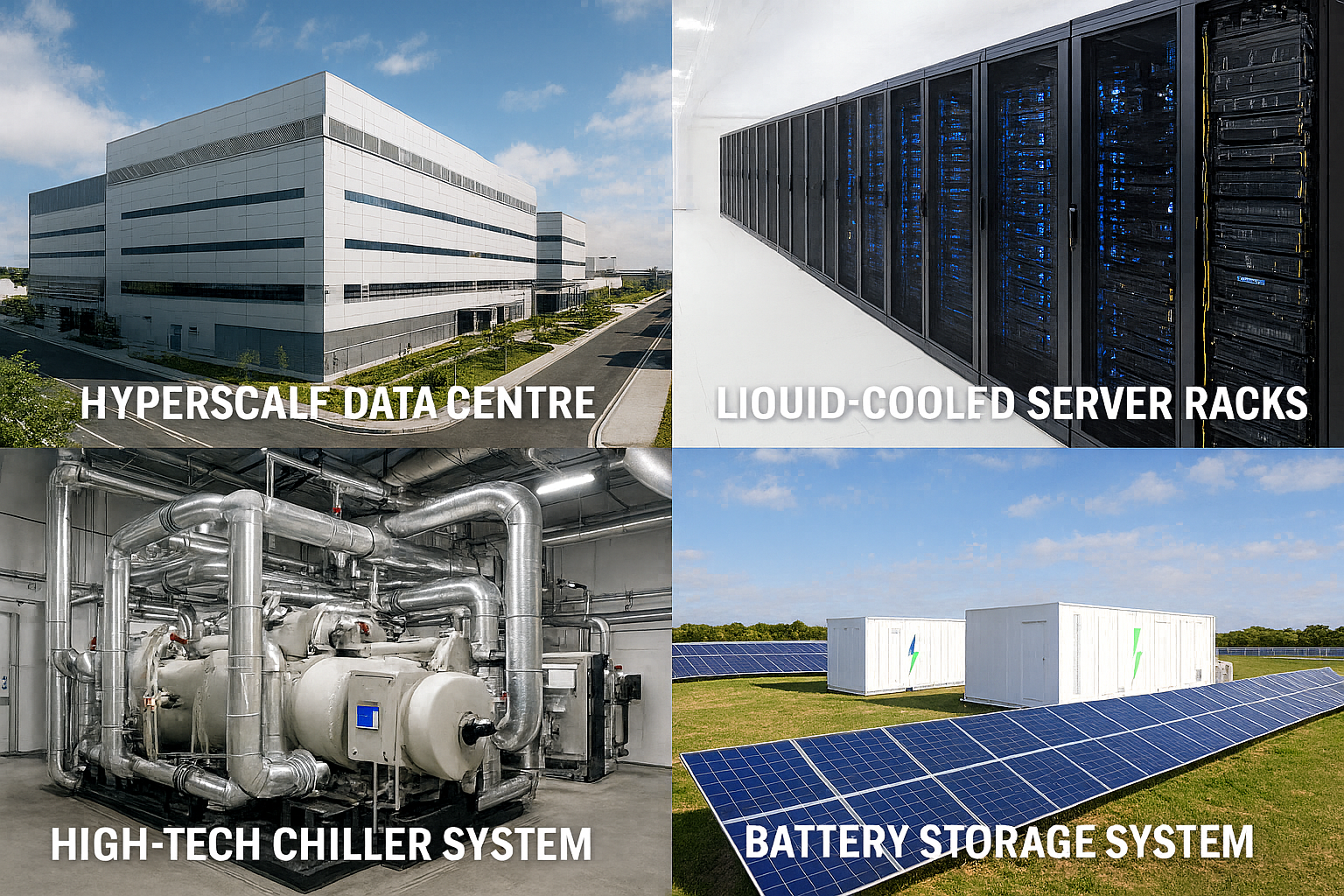
Operators are now deploying Direct-to-Chip (D2C) liquid cooling, where coolant is circulated directly over high-heat components like CPUs and GPUs via cold plates. This approach is not merely an efficiency upgrade but a requirement for maintaining the operational longevity of hardware that would otherwise experience thermal throttling under air-based cooling in high-density configurations.
Modular Design and Scalability
To keep pace with the rapid deployment cycles required by cloud providers and AI research organizations, hyperscale facilities have shifted toward hyper-modular construction. Rather than building monolithic, rigid structures, 2026-era hyperscale projects utilize "factory-built" modules—pre-integrated containers that house power distribution units (PDUs), battery energy storage systems (BESS), and cooling distribution units (CDUs).
These modules are tested off-site and dropped into the data center shell, significantly reducing lead times for commissioning. This method allows providers to increase capacity incrementally, matching capital expenditure directly with incoming demand from cloud service consumers.
Energy Integration and Grid Interactivity
Hyperscale data centers are no longer passive consumers of the electrical grid; they are becoming active participants. As AI workloads create volatile power demand spikes, operators are deploying advanced BESS and on-site generation to act as a buffer.
By utilizing Artificial Intelligence for Energy Management (AIEM), these facilities can shift non-critical background processes—such as batch data processing—to off-peak hours or respond to grid frequency signals. This integration is essential for obtaining construction permits in densely populated regions, where local utility providers mandate that new large-scale developments must demonstrate grid stability support rather than simply consuming local power capacity.
Comparison of Modern Hyperscale Cooling Techniques
| Cooling Method | Target Density | Efficiency (PUE) | Operational Complexity |
|---|---|---|---|
| Traditional Air | 10–20 kW/rack | Moderate (1.3+) | Low |
| Rear Door Heat Exchanger | 20–40 kW/rack | High (1.15) | Medium |
| Direct-to-Chip (Liquid) | 50–100+ kW/rack | Very High (1.05) | High |
| Immersion (Single/Two-phase) | 100+ kW/rack | Exceptional (<1.03) | High |
Sustainability and the Circular Economy
Sustainability in 2026 has moved beyond simple Power Usage Effectiveness (PUE) metrics. The focus is now on Water Usage Effectiveness (WUE) and the lifecycle carbon footprint of the building materials themselves. Because high-density cooling often requires significant water evaporation, many new hyperscale sites are shifting to "closed-loop" liquid systems that eliminate water consumption during the cooling process.
Furthermore, there is a growing trend of "heat reuse." Waste heat generated by servers is being redirected to district heating networks, industrial greenhouses, or nearby commercial buildings. This transition is helping hyperscale operators comply with stringent ESG (Environmental, Social, and Governance) reporting mandates that have become standard for large-scale infrastructure investments in major markets.
The Role of Software-Defined Data Centers (SDDC)
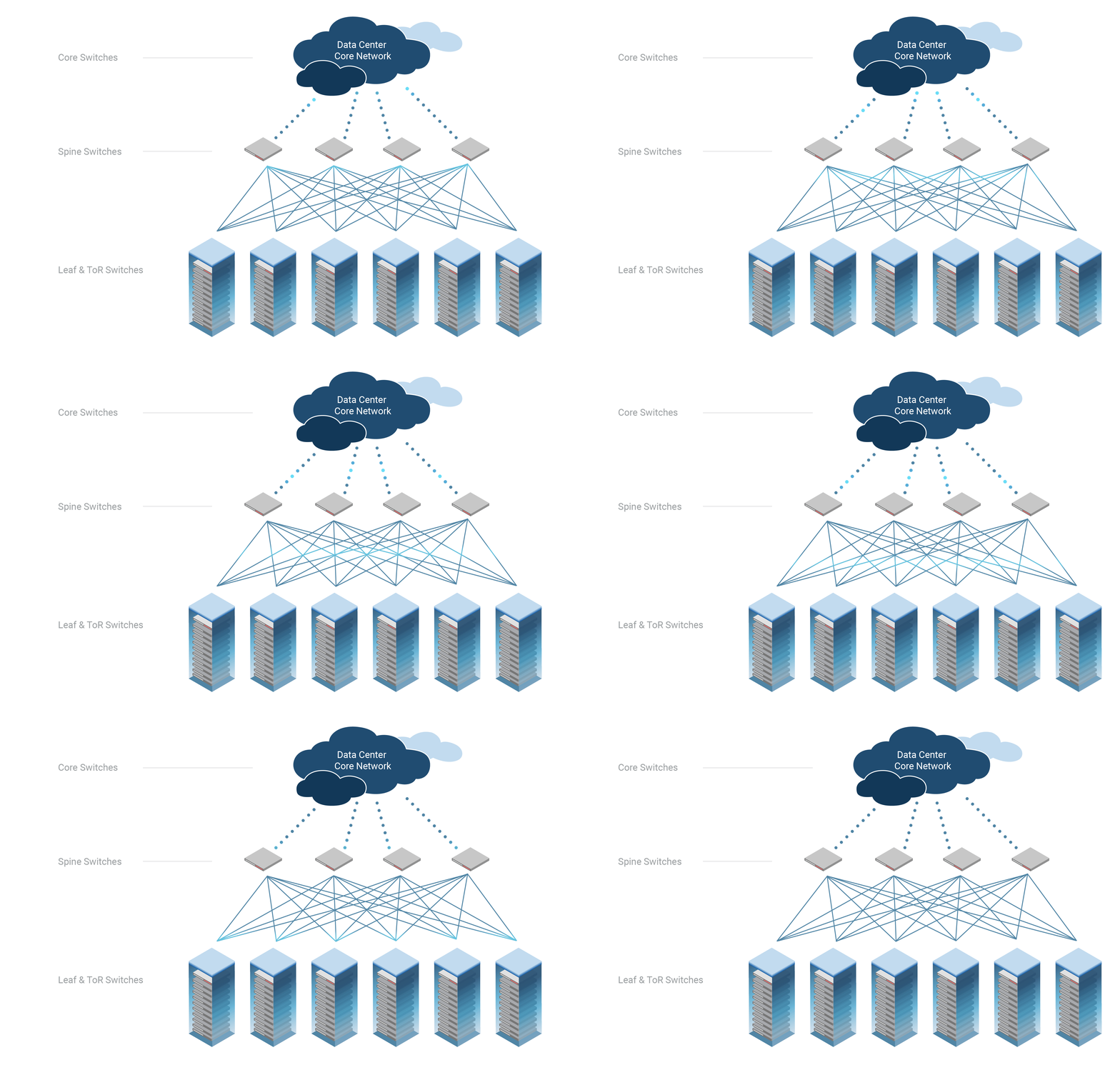
Hardware is only as efficient as the software managing it. The modern hyperscale facility is a fully Software-Defined Data Center. Automation platforms now manage the entire stack, from the physical switch fabric to the power distribution at the rack level.
By using telemetry data, these systems perform "self-healing" functions—rerouting traffic away from failing hardware, adjusting cooling flow rates in real-time based on actual server thermal output, and balancing energy loads across different zones of the data center to prevent localized hotspots. This level of granular control is what allows modern facilities to sustain 99.999% uptime despite the immense complexity of 2026-era compute clusters.
Common Operational Challenges
Despite these innovations, operators face three persistent challenges:
- Supply Chain Lead Times: Despite modular design, the specialized components for cooling systems and high-voltage power components remain subject to long manufacturing queues.
- Talent Scarcity: Managing a facility that functions as both a power plant and a supercomputer requires a hybrid workforce proficient in both high-voltage electrical engineering and data science.
- Regulatory Hurdles: Zoning and environmental impact reviews have become more rigorous as data centers consume larger shares of municipal infrastructure.
Frequently Asked Questions
What is the maximum density a modern hyperscale data center can support? As of 2026, densities are reaching 100kW per rack in specialized AI zones. While the industry average for general-purpose compute remains lower, the upper limit is dictated by the thermal transfer capacity of the cooling delivery system rather than the server hardware itself.
Does liquid cooling increase the risk of hardware failure? Modern Direct-to-Chip systems are engineered with redundant pumps, leak detection sensors, and dielectric fluids that are non-conductive, significantly mitigating the risk of damage in the event of a leak.
How is AI used to manage a hyperscale data center? AI is used to predict thermal load spikes and adjust cooling and power distribution proactively, often managing energy flows at a speed human operators cannot match.
Are hyperscale data centers still building with diesel backups? While diesel generators remain the standard for emergency power, they are increasingly being replaced by large-scale Lithium-Ion or Sodium-Ion battery arrays capable of sustaining the facility during shorter grid outages, or by hydrotreated vegetable oil (HVO) as a drop-in lower-carbon alternative for longer runtimes.
What is the impact of "heat reuse" on operational costs? Heat reuse can provide a secondary revenue stream or offset local utility costs, although it requires additional capital investment in plumbing infrastructure to export the heat effectively to external users.
Recommendation for Future-Proofing
If you are planning or upgrading infrastructure, prioritize "coolant-ready" facility design. Even if your current deployment is air-cooled, ensure your floor loading capacity and ceiling height can accommodate future retrofits to liquid cooling systems. By designing for the highest possible density today, you avoid the prohibitive costs of structural modification in the future as compute requirements inevitably increase.
Image Gallery