The 2009 UEFA Champions League Final: A Tactical Masterclass in Rome
The 2009 UEFA Champions League final, held at the Stadio Olimpico in Rome on May 27, 2009, stands as a seminal moment in football history. It marked the definitive coronation of Pep Guardiola’s FC Barcelona, as they secured a 2-0 victo...
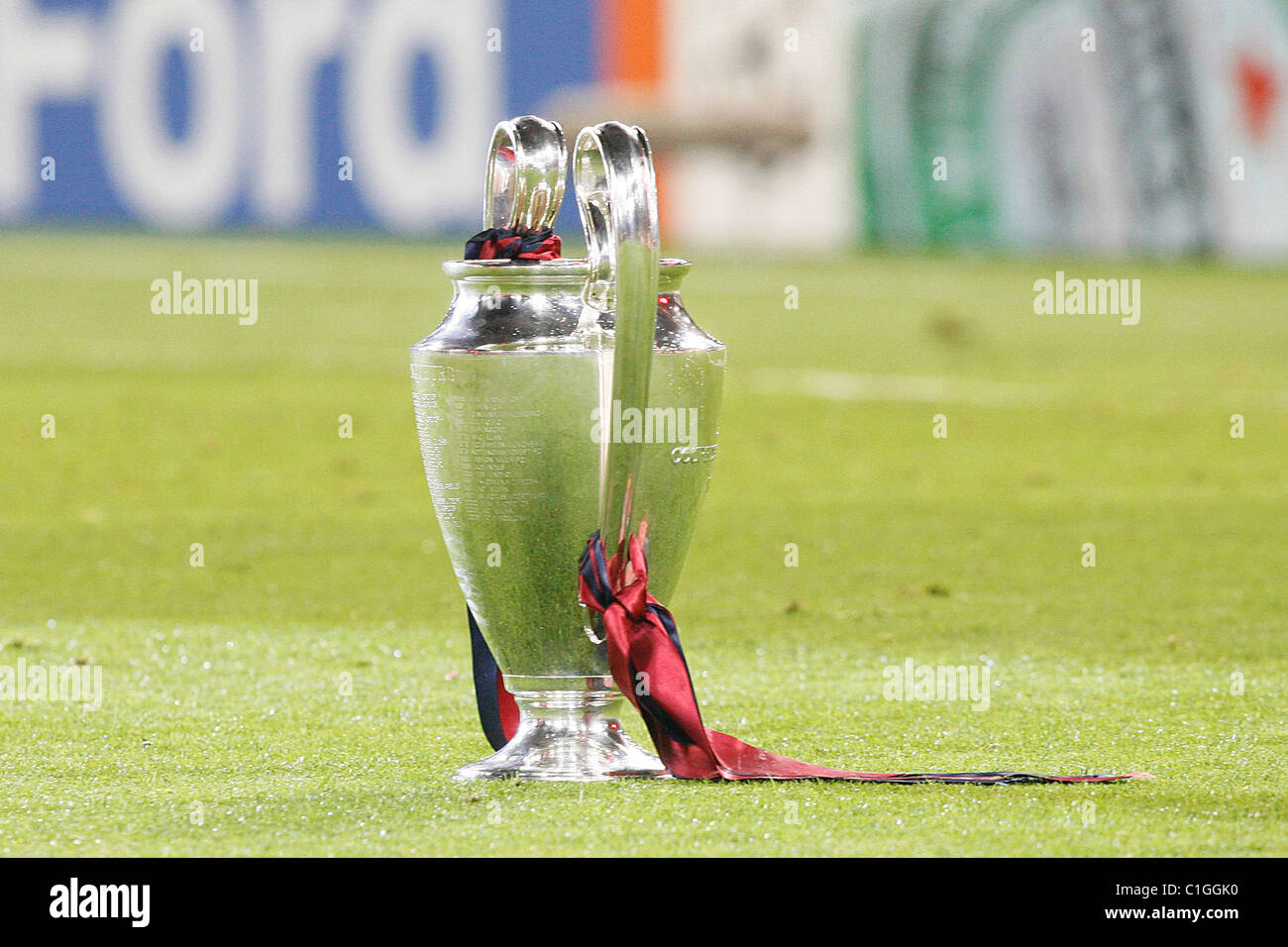
The 2009 UEFA Champions League final, held at the Stadio Olimpico in Rome on May 27, 2009, stands as a seminal moment in football history. It marked the definitive coronation of Pep Guardiola’s FC Barcelona, as they secured a 2-0 victory over Manchester United to complete a historic treble, effectively signaling a shift in the tactical landscape of European football through the mastery of the "tiki-taka" philosophy.
Contents
The Context: A Clash of European Titans
Entering the 2009 final, the narrative was centered on the battle between two of the world's most dominant sides. Manchester United, led by Sir Alex Ferguson, were the defending champions, having defeated Chelsea in the 2008 Moscow final. They boasted a fearsome attacking trio of Cristiano Ronaldo, Wayne Rooney, and Park Ji-sung, supported by a resilient defense marshaled by Rio Ferdinand and Nemanja Vidić.
Barcelona, conversely, was in the first year of Pep Guardiola’s tenure. After a transitional period, Guardiola had implemented a high-pressing, possession-based system that prioritized technical superiority and geometric positioning. For many, this match was viewed as a referendum on two competing ideologies: the organized, industrious pragmatism of the Premier League versus the fluid, positional mastery of La Liga.
Tactical Divergence and Pre-Match Expectations
The tactical setup of the 2009 final provided a masterclass in risk management and adaptation. Manchester United started the game aggressively, looking to unsettle Barcelona’s defense with high energy and early shots from Cristiano Ronaldo. However, this early pressure proved to be short-lived.
Barcelona’s approach was rooted in numerical superiority in midfield. By positioning Lionel Messi as a "false nine"—a role that drifted him away from center-backs Ferdinand and Vidić into the pockets between United’s midfield and defensive lines—Guardiola neutralized United’s central structure. As Michael Carrick and Anderson struggled to track the movement of Xavi Hernández and Andrés Iniesta, the space required for United to launch counter-attacks evaporated.
Defining Moments of the Match
The match began with a frantic pace, but the complexion of the game changed in the 10th minute. Samuel Eto’o, cutting inside from the right, exploited a rare moment of hesitation from Nemanja Vidić to fire a shot past Edwin van der Sar. This early breakthrough forced Manchester United to abandon their initial defensive shape and push forward, which ultimately played into Barcelona’s hands.
The second goal, arriving in the 70th minute, served as the exclamation point on Barcelona’s dominance. Lionel Messi, despite his relative lack of height, rose to meet a perfectly weighted cross from Xavi. His header looped over Van der Sar, effectively ending any hopes of a United comeback. This goal remains iconic not just for the execution, but for the symbolism of Messi establishing himself as the premier talent in world football.
Comparative Analysis of Key Squad Elements
| Feature | FC Barcelona (2009) | Manchester United (2009) |
|---|---|---|
| Manager | Pep Guardiola | Sir Alex Ferguson |
| Primary Philosophy | Possession & Positional Play | Verticality & Counter-attacking |
| Key Midfielders | Xavi, Iniesta, Busquets | Carrick, Anderson, Giggs |
| Primary Attacking Strategy | False Nine / Width | Direct Wings / Early Crosses |
| Final Result | 2-0 Win | 0-2 Loss |
The Legacy of the 2009 Final
The aftermath of the 2009 final in Rome was profound. For Barcelona, it was the culmination of a "perfect season," having already captured the La Liga title and the Copa del Rey. It established Guardiola as a tactical innovator and cemented the core of the team—Messi, Xavi, and Iniesta—as one of the most influential units in the history of the sport.
For Manchester United, the loss served as a harsh lesson in the difficulty of retaining the Champions League trophy in the modern era. Sir Alex Ferguson later reflected on the match as a painful reminder of the importance of midfield control, noting that Barcelona's ability to keep the ball rendered United's attacking talent peripheral for long stretches of the second half.
Technical Requirements and Infrastructure
Staging a UEFA Champions League final requires a rigorous standard of infrastructure and logistics. The Stadio Olimpico in Rome was chosen for its capacity and historical significance, meeting the UEFA Category 4 stadium requirements necessary for a showpiece event.
Key infrastructure considerations for such a final include:
- Pitch Quality: The surface must meet specific drainage and grass density requirements to allow for the high-speed ball movement essential to elite football.
- Security and Access: Managing the influx of thousands of international supporters requires integrated public transport solutions and high-level stadium entry protocols.
- Media Facilities: With a global audience in the hundreds of millions, the stadium must provide state-of-the-art broadcasting infrastructure, including dedicated commentary positions and extensive mixed-zone areas for post-match interviews.
Frequently Asked Questions
Why is the 2009 final considered a turning point for football tactics?
The match popularized the "false nine" position globally. By moving a striker into a deep-lying playmaker role, Guardiola forced teams to reconsider how they marked attackers, eventually leading to a shift away from traditional man-marking toward more sophisticated zonal defensive systems.
What was the significance of the "Treble" for Barcelona?
The 2009 victory completed the treble (League, Cup, and Champions League), making Barcelona the first Spanish club to achieve this feat. It set a new benchmark for excellence that defined the following decade of European club football.
How did the playing surface in Rome impact the match?
While the Stadio Olimpico was a world-class venue, players from both sides noted the texture of the pitch. However, Barcelona’s technical proficiency allowed them to adapt to the surface quicker than United, maintaining their passing tempo throughout the ninety minutes.
What role did youth development play in Barcelona’s 2009 success?
A significant portion of the starting XI, including Messi, Iniesta, Xavi, Busquets, and Puyol, were products of "La Masia," Barcelona’s youth academy. This fostered a unique, innate understanding of the team’s tactical system, which was clearly evident in the fluidity of their play in Rome.
Where can one watch archives of the 2009 final?
Full match replays, highlights, and expert analysis are available through the official UEFA website’s archive portal, as well as licensed streaming partners that hold historical rights to Champions League content.
Moving Forward: Historical Impact
As we look back in 2026, the 2009 final remains a primary case study for coaching education and sports science. The match demonstrated that elite performance is not merely a product of individual talent, but of the structural environment created by the manager. Modern tactical trends, such as inverted fullbacks and high-pressing triggers, trace much of their DNA back to the principles exhibited by Barcelona on that night in Rome.
For enthusiasts looking to understand the mechanics of elite football, studying the 2009 final is a fundamental exercise. It offers a clear view of how high-level preparation, when combined with a cohesive team identity, can overcome even the most formidable defensive structures. Next steps for those interested in the history of the competition should include exploring the progression of these two clubs in the years immediately following, specifically looking at how both sides evolved their recruitment strategies in response to the outcome of this specific match.
Image Gallery