Hydro Jetting Explained: How High-Pressure Water Clears Pipes
Hydro jetting is a heavy-duty plumbing technique that uses pressurized water streams—often ranging from 1,500 to 4,000 pounds per inch (PSI)—to scour the interior walls of drainage and sewer pipes. Unlike traditional cabling or snaking...
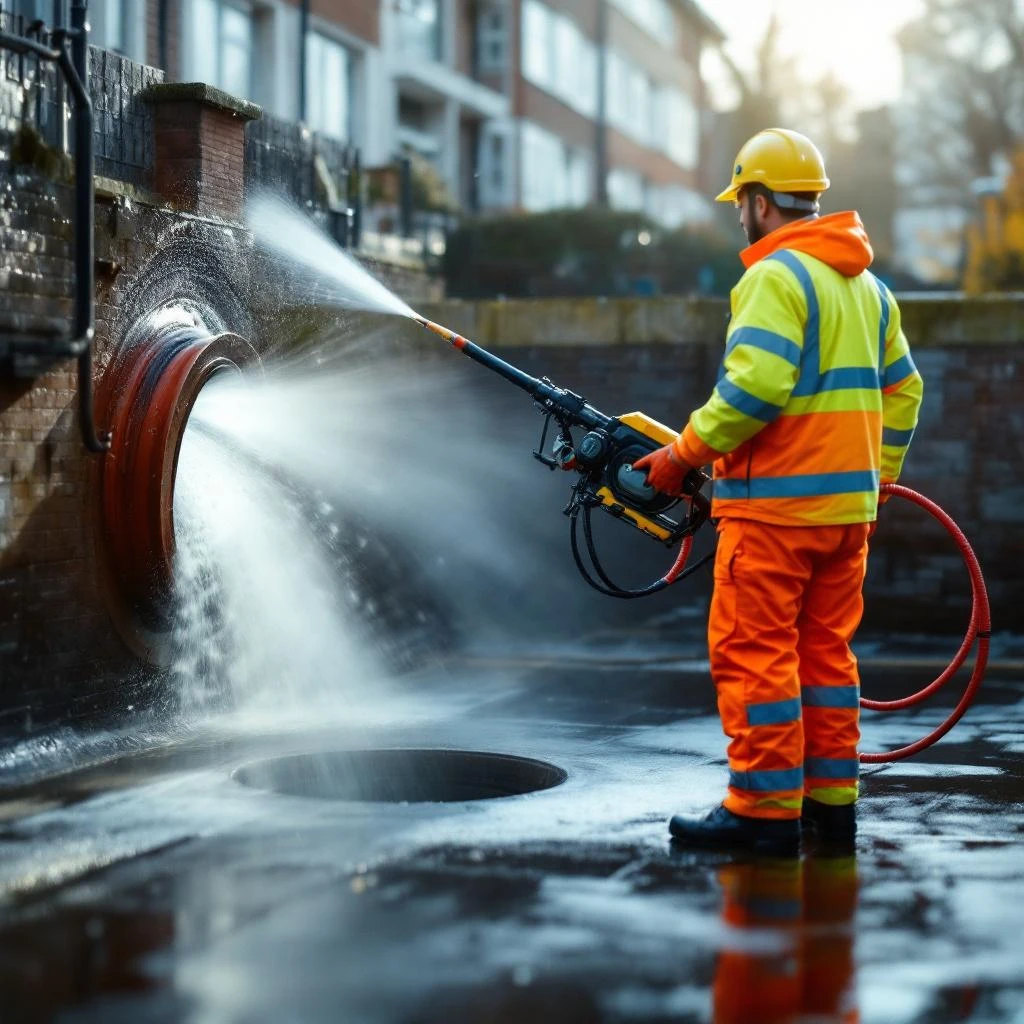
Hydro jetting is a heavy-duty plumbing technique that uses pressurized water streams—often ranging from 1,500 to 4,000 pounds per inch (PSI)—to scour the interior walls of drainage and sewer pipes. Unlike traditional cabling or snaking, which merely punches a temporary hole through a clog, hydro jetting completely eliminates grease, mineral scale, sludge, and tree roots to restore pipes to a near-factory condition.
Contents
Understanding the Mechanics of Hydro Jetting Systems
To appreciate how hydro jetting works, it helps to examine the core components that make up a commercial-grade hydro jetting unit. Unlike standard garden hoses or lightweight residential pressure washers, a professional hydro jet system is an industrial machine engineered to deliver high volumes of water at extreme velocities.
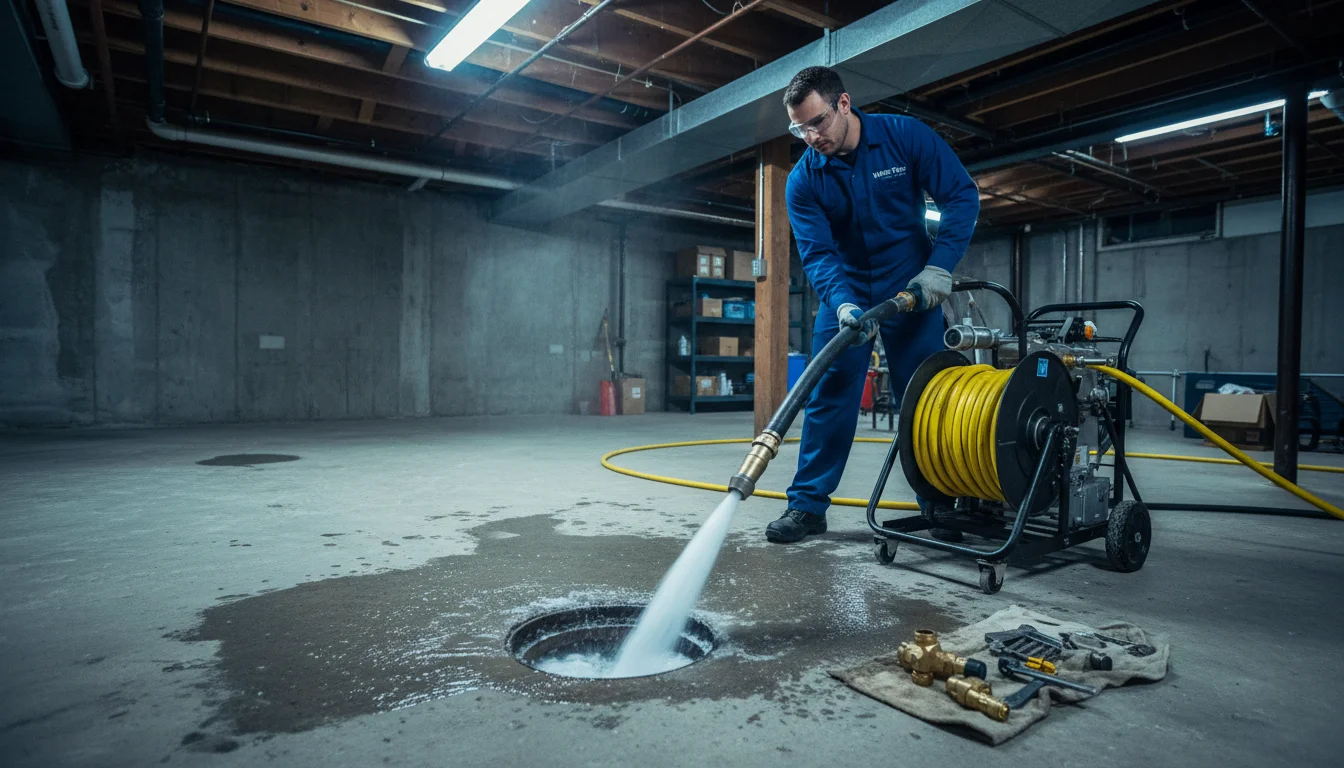
The primary components of a hydro jetter include a large water supply tank, a heavy-duty water pump, a high-pressure reinforced hose, a specialized metal nozzle, and a gas-powered or diesel engine. The engine drives the pump, which pressurizes the water drawn from the tank or a direct municipal hookup. This pressurized water is forced through the flexible hose and out the microscopic orifices of the nozzle.
The secret to hydro jetting lies in the physics of the nozzle design. Most sewer jetting nozzles feature a combination of forward-facing and rear-facing jets. Forward-facing jets act as a cutting tool, breaking up solid obstructions, blockages, and calcified mineral deposits directly in front of the hose. Meanwhile, rear-facing jets—typically angled at 15 to 45 degrees—serve two vital functions. First, they propel the hose forward through the twisting turns and vertical drops of the plumbing system using the sheer thrust of the water. Second, as the hose is retrieved, these rearward jets scour the pipe walls, washing all displaced debris backward toward the access point for extraction.
The Step-by-Step Hydro Jetting Process
Professional plumbers follow a rigorous, methodical sequence when performing hydro jetting to ensure safety, efficiency, and complete remediation of the pipe network. Rushing any phase of this operation can lead to property damage or incomplete pipe clearing.
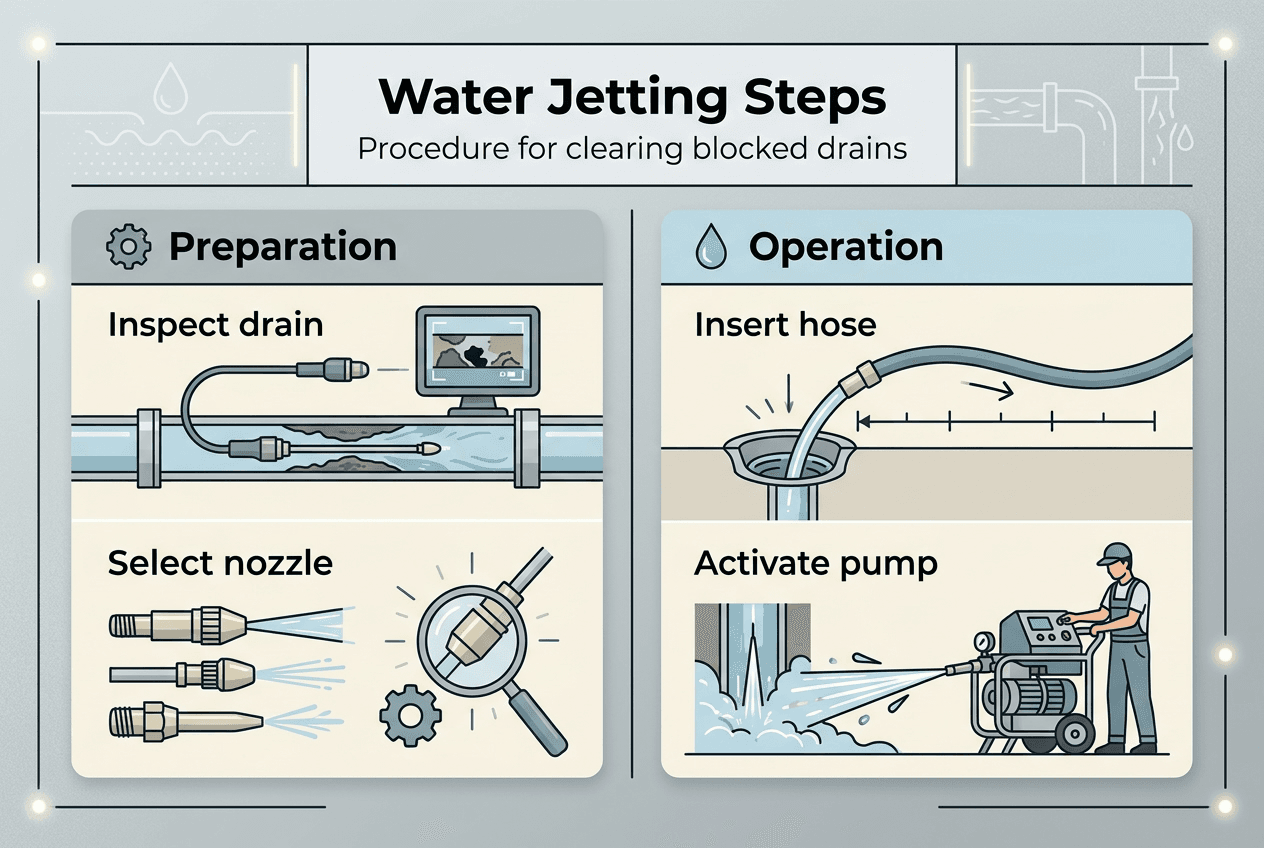
- Video Camera Inspection: Before a single drop of high-pressure water enters the system, a certified technician inserts a specialized fiber-optic sewer camera down the cleanout. This crucial diagnostic step reveals the exact nature, severity, and location of the clog. It also allows the technician to check for structural defects, cracked pipes, offset joints, or severe root intrusion that might collapse under high pressure.
- Access Point Identification: The technician locates or installs an appropriate access point, known as a cleanout. This provides direct entry into the main sewer line without requiring disruption to indoor fixtures like toilets or bathtubs.
- Pressure Calibration: Based on the material, diameter, and condition of the piping—whether cast iron, PVC, clay, or ABS—the operator adjusts the PSI and the Gallons Per Minute (GPM) flow rate. Older or compromised pipes require lower pressures to prevent structural blowouts, while thick industrial grease or heavy roots in modern PVC demand higher thresholds.
- Jetting Execution: The nozzle and hose are fed into the cleanout. The pump is engaged, and the technician carefully navigates the hose through the system. The combination of forward cutting jets and backward scrubbing jets pulverizes debris and flushes it down the line.
- Post-Cleaning Verification: Once the line is cleared, a second video camera inspection is performed. This verifies that the interior pipe walls are completely clean, ensures no debris remains lodged in downstream traps, and confirms the structural integrity of the line.
Comparing Hydro Jetting to Traditional Drain Snaking
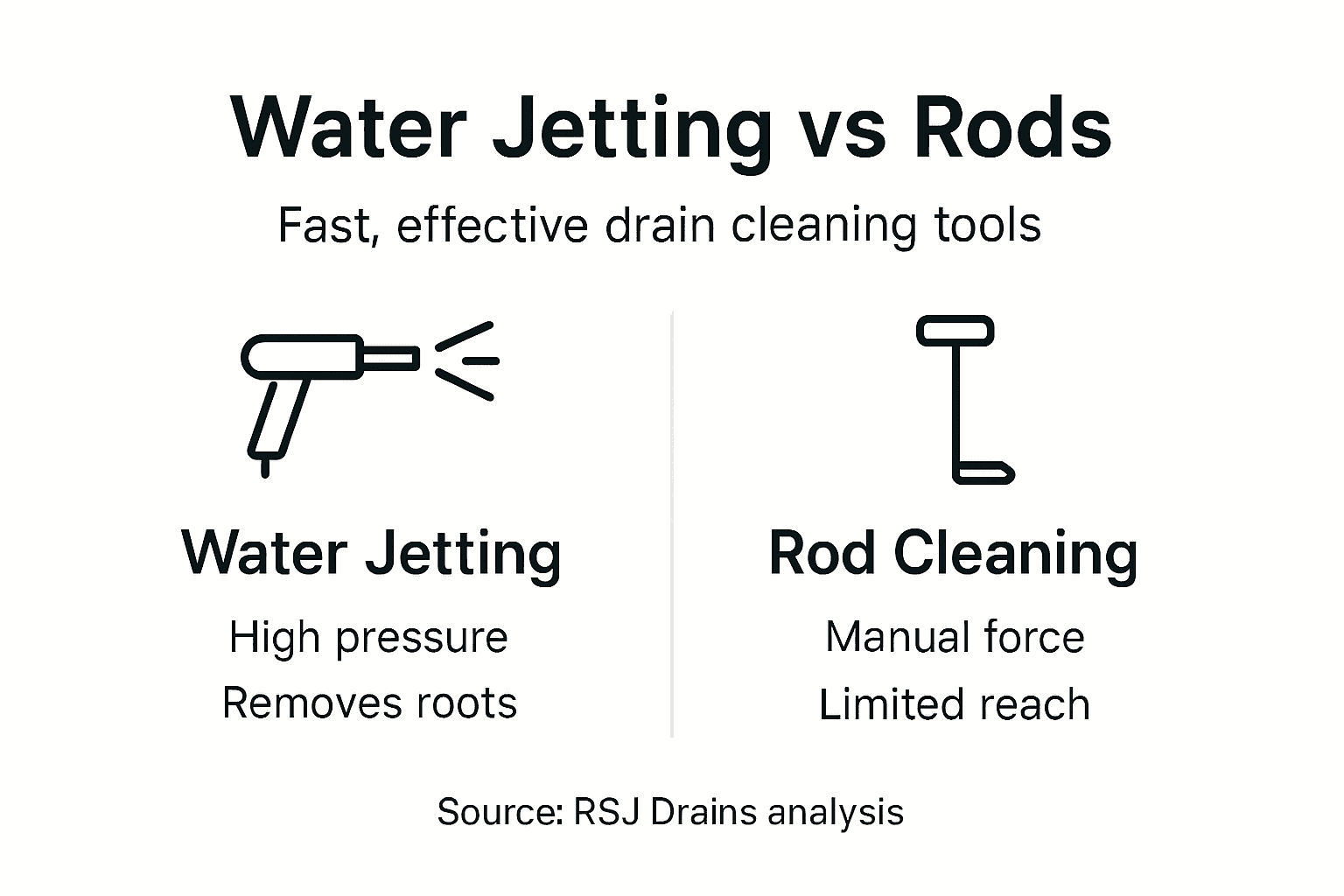
When faced with a stubborn blockage, property owners generally choose between traditional drain snaking (augering) and hydro jetting. While both methods clear blockages, their mechanisms, effectiveness, and long-term value differ significantly.
| Feature / Metric | Traditional Drain Snaking (Augering) | Hydro Jetting |
|---|---|---|
| Primary Mechanism | A metal cable with a cutting head punches through clogs. | High-pressure water streams scour entire interior pipe walls. |
| Debris Removal | Pokes a hole through the obstruction; leaves grease and scale behind. | Completely removes grease, scale, roots, and sludge. |
| Longevity of Results | Short-term fix; clogs frequently return as residual buildup remains. | Long-term solution; leaves pipes clean down to the bare walls. |
| Risk to Old Pipes | Low risk of structural damage if handled by a trained technician. | Moderate risk if used improperly on fragile, deteriorated cast iron or clay. |
| Scope of Cleanliness | Clears only the immediate path of the cable. | Cleans 360 degrees of the pipe circumference. |
Common Applications and Target Issues
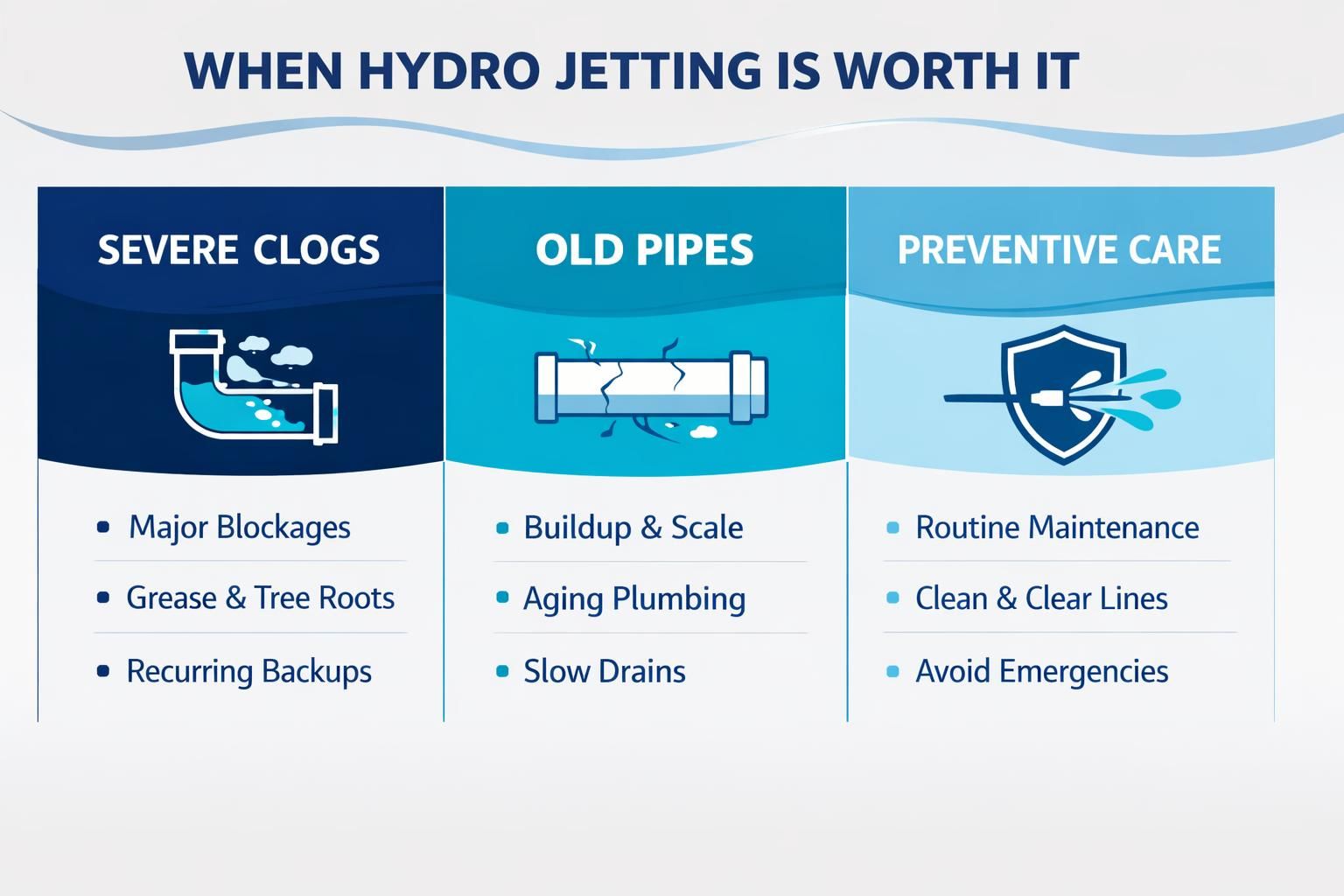
Hydro jetting is versatile, serving both residential and commercial sectors. However, certain plumbing challenges make hydro jetting the undisputed treatment of choice.
Grease and Fat Accumulation
In commercial kitchens, restaurants, and residential homes with heavy cooking habits, fats, oils, and grease (FOG) coat the interior of drain pipes. Over time, these substances solidify, narrowing the internal diameter of the pipe and trapping food particles. Drain snakes only carve a narrow tunnel through this grease. Hydro jetting uses high-volume water to emulsify and strip away the grease completely.
Invasive Tree Roots
Tree roots naturally seek out moisture and nutrients, frequently infiltrating tiny cracks or joints in underground sewer lines. Once inside, they grow into dense, hair-like mats that catch toilet paper and waste. Hydro jetting nozzles equipped with specialized root-cutting heads utilize intense water pressure to slice through and shred root masses, washing the remnants out of the system.
Mineral Scale and Calcification
In regions with hard water, dissolved minerals such as calcium and magnesium precipitate out of the water and form a hard, crusty scale inside pipes—particularly in older cast iron systems. This scaling restricts flow and creates rough surfaces that catch debris. Hydro jetting abrades and strips away mineral scale without requiring destructive pipe replacement.
Prerequisites, Safety Considerations, and Limitations
Despite its high efficacy, hydro jetting is not a universal panacea and requires strict adherence to safety protocols and pre-work evaluations.
First and foremost, a pre-inspection via sewer camera is non-negotiable. Introducing 4,000 PSI of water into a severely corroded cast iron pipe with thin walls or a collapsed clay tile sewer lateral can cause catastrophic pipe failure, flooding the surrounding property with sewage.
Furthermore, hydro jetting requires specialized training and personal protective equipment (PPE). The extreme pressure can cause severe lacerations or puncture skin if handled carelessly. Professional plumbers are trained to maintain constant control of the hose and nozzle, ensuring that backpressure does not force the heavy hose out of the access point unexpectedly.
Property owners should also verify that their plumbing system is up to code and structurally sound before booking the service. Homes constructed prior to the mid-20th century may feature Orangeburg pipe (compressed tar paper) or severely degraded cast iron that cannot withstand high-pressure cleaning methods. In such cases, alternative trenchless pipe repair or traditional excavation may be required.
Cost Factors and Economic Value
The cost of hydro jetting varies depending on geographic location, accessibility of the cleanout, the severity of the blockage, and whether the job is residential or commercial. Generally, residential hydro jetting services range from several hundred to over a thousand dollars.
While the upfront cost is higher than a standard $150 snaking service, hydro jetting often delivers superior long-term value. By thoroughly cleaning the pipe network, it reduces the frequency of emergency plumbing callouts, prevents recurring backups, and extends the operational lifespan of expensive underground sewer infrastructure.
Frequently Asked Questions
Can hydro jetting damage my home’s plumbing pipes?
Yes, if performed incorrectly or on compromised infrastructure. High-pressure water can crack fragile, heavily corroded, or root-damaged pipes. This is why a professional video camera inspection must always precede hydro jetting to verify that the pipe material and structural condition can safely handle the pressure.
How often should a commercial property be hydro jetted?
Commercial properties—especially restaurants, food processing plants, and multi-family residential buildings—often require hydro jetting on a preventive maintenance schedule, typically every 6 to 12 months. This prevents grease and sludge accumulation before it triggers a catastrophic back-up during peak business hours.
Is hydro jetting safe for the environment?
Yes. Hydro jetting uses pure water without harsh chemical drain openers that can corrode metal pipes, damage municipal wastewater treatment facilities, and leach into local groundwater. The process relies entirely on mechanical water force rather than toxic chemical reactions.
Does hydro jetting remove tree roots permanently?
While hydro jetting completely clears existing roots from the interior of the pipe, it does not stop roots from eventually returning if the structural cracks or compromised joints that allowed them entry are not repaired. Following hydro jetting with structural pipe lining or joint sealing provides a permanent solution to root intrusion.
How long does a hydro jetting service take?
For a standard residential sewer line, the complete process—including the initial camera inspection, setup, jetting, and post-cleaning verification—typically takes between one to three hours. Commercial properties with extensive plumbing networks may require several hours or an overnight service window.
Conclusion and Next Actions
Hydro jetting represents the gold standard in modern drain and sewer cleaning, utilizing sheer water power to eradicate grease, scale, and roots down to the bare pipe walls. If your property suffers from recurring clogs, slow drains, or recurring root intrusion, contact a licensed, insured plumbing professional equipped with camera inspection technology. Request a comprehensive camera diagnostic to determine if your pipes are structurally sound and ready for a complete hydro jetting restoration.
Image Gallery