Navigating ESPN Pick Em Experts: Strategies and Insights for 2026
Leveraging ESPN pick em experts insights requires a strategic blend of analytical data processing, contrarian game theory, and bankroll management. While public analysts offer valuable baseline projections, succeeding in competitive fo...
Leveraging ESPN pick em experts insights requires a strategic blend of analytical data processing, contrarian game theory, and bankroll management. While public analysts offer valuable baseline projections, succeeding in competitive football pick em pools demands independent verification, an understanding of point-spread value, and systematic weekly roster construction.
Contents
Understanding the Landscape of ESPN Pick Em Contests
Football pick em contests run by major platforms like ESPN present unique challenges for both casual players and seasoned handicappers. Whether you participate in the ESPN Pigskin Pick 'Em, standard confidence pools, or survivor formats, recognizing the structural mechanics of the game is essential. Public consensus often skews heavily toward high-profile teams, creating distinct market inefficiencies.
ESPN analysts and featured personalities provide weekly consensus picks, but these selections reflect a blend of entertainment value, narrative momentum, and standard analytical models. To gain an edge, participants must differentiate between standard pick ems, where you simply select game winners straight-up (SU), and point-spread (against the spread - ATS) formats.
- Straight-Up (SU) Pools: Focus purely on win probability. Selecting heavy favorites is usually optimal for the vast majority of games, though picking calculated upsets is required to differentiate your entry in large-field tournaments.
- Against the Spread (ATS) Pools: Require evaluating margins of victory relative to the oddsmaker's line. Here, expert insights must be cross-referenced with advanced metrics like EPA (Expected Points Added) and success rates.
- Confidence Pools: Demand ranking your selections from 1 to 16 (or the total number of games that week). Misjudging high-confidence games can ruin an otherwise solid week.
Evaluating Expert Predictions Against Advanced Analytics
When reviewing recommendations from sports media experts, it is crucial to analyze the underlying methodology. Traditional media analysis often relies on qualitative factors, such as team momentum, injuries, and historical rivalries. In contrast, modern sharp bettors and advanced technical models rely on quantitative data.
To maximize the utility of ESPN pick em expert advice, cross-examine their selections against the following data points:
- DVOA (Defense-adjusted Value Over Average): Measures team efficiency by comparing success on every single play to a league-average baseline, adjusted for opponent strength.
- Yards Per Play (YPP) Differentials: A strong historical indicator of underlying team quality that often strips away the noise of turnovers and red-zone variance.
- Injuries and Depth Chart Impact: Quantifying the point-spread value of key positions, particularly starting quarterbacks, elite pass rushers, and secondary anchors.
- Travel and Scheduling Spots: Factoring in west-to-east travel, short weeks, and look-ahead spots before high-profile divisional matchups.
Strategic Framework for Small vs. Large Pick Em Pools
Your strategy when utilizing expert picks must scale dynamically based on the size and payout structure of your specific pool. A strategy designed to win a small office pool of ten people will guarantee failure in a massive national online contest featuring tens of thousands of entries.
| Pool Type | Optimal Strategy Focus | Expert Alignment | Risk Tolerance |
|---|---|---|---|
| Small Pools (Under 20 Entries) | Maximize expected value; pick the most probable winners consistently; avoid extreme longshots. | High alignment with consensus favorites; fade extreme public overreactions. | Low to Moderate |
| Medium Pools (20 to 100 Entries) | Balanced approach; find 1 or 2 high-leverage contrarian value spots per week to separate your card. | Moderate alignment; leverage expert disagreement to find value. | Moderate |
| Large-Field / National Contests | Game theory and leverage; deliberately fade heavily skewed public picks when win probabilities are close. | Low alignment; use expert picks to identify where the public will mass their selections. | High |
Game Theory and Public Bias in Pick Em Leagues
Public consensus is rarely sharp. Casual participants in ESPN pick em leagues consistently exhibit predictable cognitive biases that astute players can exploit. Understanding these tendencies allows you to turn expert consensus into a contrarian weapon.
- Recency Bias: The public heavily overweights the most recent performance. A team that wins in blowout fashion is routinely overvalued the following week, while a struggling team is often written off entirely.
- Brand Loyalty and Star Power: Teams with massive national followings or star quarterbacks attract inflated pick percentages, regardless of injuries or difficult matchups on the road.
- The Primetime Effect: National television games skew public perception. Casual players remember the final minutes of a Monday Night Football thriller far more accurately than they evaluate the structural inefficiencies exposed during a quiet Sunday afternoon slate.
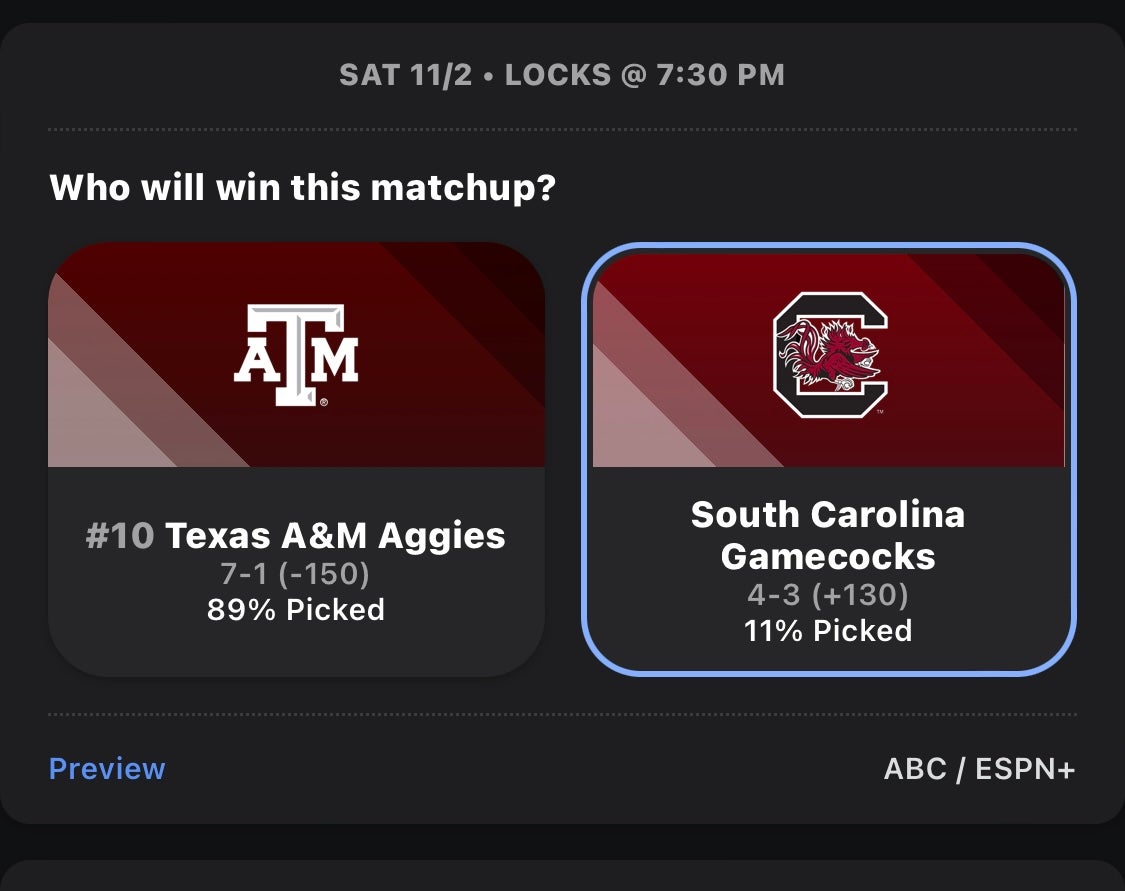
When ESPN experts unanimously back a popular team, examine the ownership projection. If 85% of your pool is picking a heavy favorite, but advanced analytics suggest their true win probability is closer to 65%, the mathematical value of picking the underdog increases significantly in large tournaments.
Step-by-Step Guide to Constructing Your Weekly Pick Em Card
Building a winning weekly card requires a disciplined, repeatable workflow. Rushing your selections hours before kickoff often leads to emotional decision-making driven by weekend hype.
- Review the Opening Lines and Early Expert Consensus: Examine the early-week point spreads as soon as they are posted to identify key numbers (such as 3 and 7) and note where early sharp money is moving.
- Analyze Injury Reports and Practice Participation: Monitor Wednesday through Friday injury reports. Quarterback designations and offensive line health dictate massive shifts in game projections.
- Run Your Primary Metrics Check: Compare the consensus expert picks against efficiency metrics, situational spots (home dogs, divisional rematches), and weather forecasts for outdoor venues.
- Calculate Pool Leverage: If you are trailing in your standings late in the season, increase your exposure to calculated upsets. If you are protecting a lead, prioritize high-probability favorites to maintain your position.
- Finalize and Lock Selections: Double-check your confidence point distribution (if applicable) to ensure your highest confidence values are assigned to your most thoroughly researched selections.
Common Pitfalls to Avoid in ESPN Pick Em Contests
Even experienced players occasionally fall into traps that undermine their long-term performance. Recognizing these mistakes is the first step toward eliminating them from your routine.
Chasing Losses with Emotional Picks Description: When a player falls behind in the standings mid-season, they often begin making erratic, highly improbable underdog selections to catch up quickly. This almost invariably results in falling further behind. Maintain your analytical framework regardless of your current standing.
Ignoring Pool Rules and Scoring Weights Description: Failing to adjust your strategy to unique scoring systems—such as bonus points for picking road underdogs or cumulative confidence point scales—will neutralize any edge gained through superior game analysis. Read the rulebook thoroughly before Week 1.
Blindly Copying Any Single Analyst Description: Treating any expert's card as gospel without reviewing the underlying reasoning eliminates your ability to adapt to changing injury news or weather conditions. Use expert insights as a data input, not a strict instruction manual.
Frequently Asked Questions About ESPN Pick Em Experts
Can I trust ESPN pick em experts to win my office pool?
While ESPN analysts offer strong baseline knowledge, blindly following them is rarely sufficient to win competitive pools because their picks often reflect public consensus. You should use their insights as one of many data points combined with advanced efficiency metrics and game theory.
How do I adjust my pick em strategy for confidence pools?
Confidence pools require you to rank your weekly selections from 1 to the total number of games. Reserve your highest confidence points for games where your analytical edge is strongest, rather than simply picking the biggest betting favorites blindly.
What is the difference between straight-up and against-the-spread pick ems?
Straight-up pools only require you to pick the outright winner of each game, heavily favoring favorites. Against-the-spread pools require the selected team to win or lose by fewer points than the oddsmaker's handicap, demanding much deeper quantitative analysis.
How do I handle bye weeks and late-season injuries in my picks?
Always track practice participation reports up until kickoff and account for how a team's depth handles missing starters. During bye weeks, ensure your pool software or manual card is updated well ahead of deadlines to avoid automatic default forfeitures.
Why do public consensus picks often fail in large tournaments?
Public consensus is heavily influenced by media narratives, brand loyalty, and recency bias rather than pure mathematical value. In large-field contests, picking against heavily skewed public selections provides the leverage needed to climb past thousands of entries.
Maximizing Your Long-Term Success
Succeeding in pick em contests is a marathon rather than a sprint. By combining the qualitative perspectives of ESPN pick em experts with rigorous quantitative metrics, sound game theory, and disciplined bankroll or pool management, you can consistently position yourself at the top of your standings. Stay objective, adapt to new data as injury reports evolve, and let systematic analysis drive every decision on your weekly card.
Image Gallery