The Historical Context of the Day Russia Invaded Ukraine
The Russian invasion of Ukraine began on February 24, 2022, marking a major escalation in the Russo-Ukrainian War that originated in 2014. Initiated by a televised address from President Vladimir Putin announcing a "special military op...
The Russian invasion of Ukraine began on February 24, 2022, marking a major escalation in the Russo-Ukrainian War that originated in 2014. Initiated by a televised address from President Vladimir Putin announcing a "special military operation," the invasion involved a large-scale offensive across multiple fronts, significantly altering the geopolitical landscape of Europe and triggering a global response regarding international law, security, and economic sanctions.
Contents
Origins and Pre-Invasion Tensions
The events leading to the February 2022 invasion were the culmination of long-standing tensions between the Russian Federation and Ukraine, particularly following the 2014 Euromaidan protests and the subsequent annexation of Crimea by Russia. For months prior to the full-scale invasion, the Russian government engaged in a massive military buildup, positioning over 150,000 troops, armored vehicles, and naval assets along the borders of Ukraine, including in neighboring Belarus.
Throughout early 2022, international diplomatic efforts led by the United States, France, Germany, and various multilateral organizations sought to de-escalate the situation. However, these efforts failed to resolve the core disagreements surrounding Ukraine’s potential integration with Western alliances like NATO and Russia’s assertions regarding its sphere of influence in post-Soviet states. On February 21, 2022, Russia formally recognized the independence of the self-proclaimed Donetsk and Luhansk People's Republics, a move widely condemned by the international community as a violation of Ukrainian sovereignty and the Minsk agreements.
The Morning of February 24, 2022
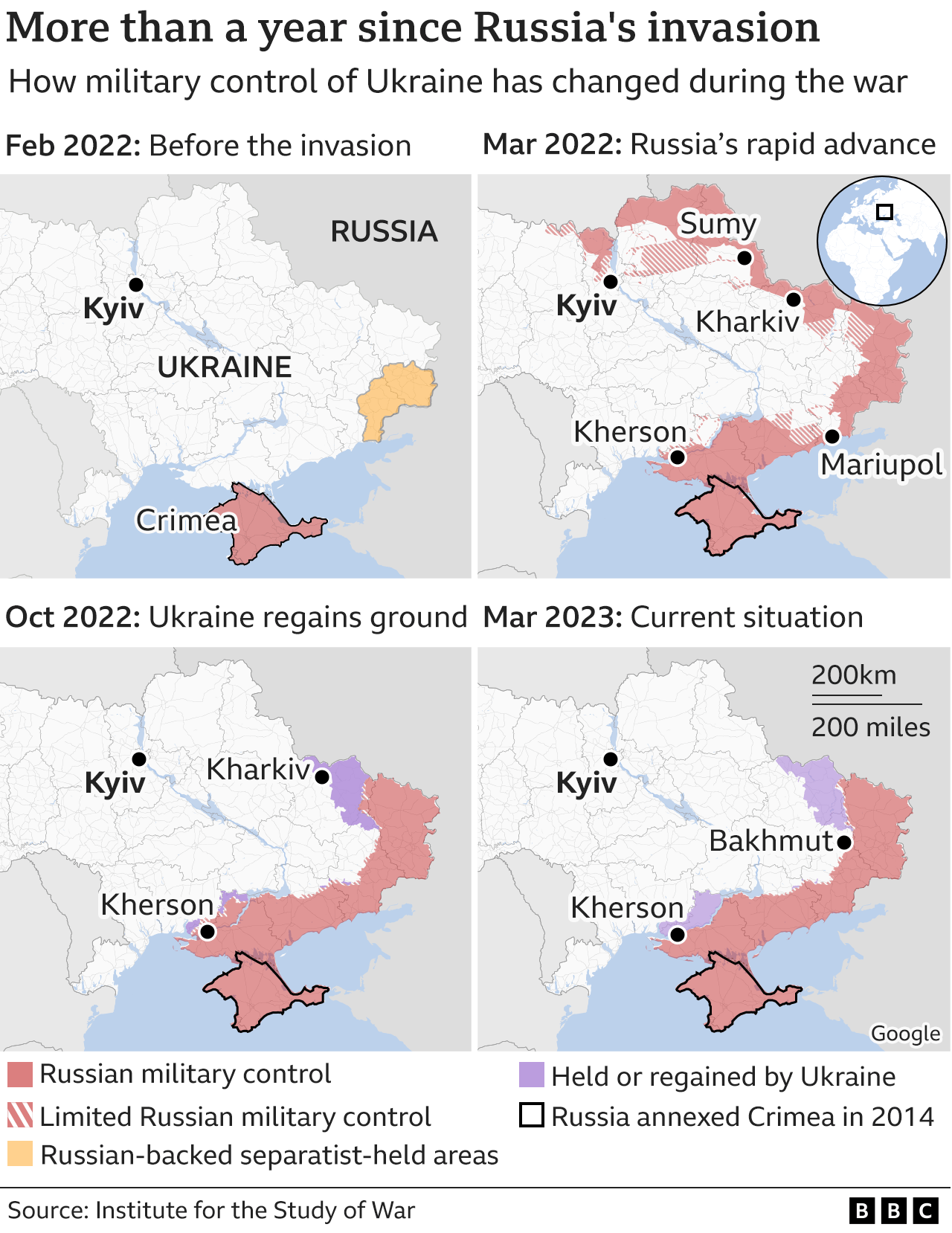
At approximately 5:00 AM local time in Ukraine, Russian forces launched a multi-pronged assault. The invasion was characterized by synchronized operations that extended far beyond the Donbas region. Missile strikes and precision-guided munitions targeted critical infrastructure, including military airfields, command centers, radar facilities, and logistics hubs throughout Ukraine, including cities far from the front lines like Kyiv, Kharkiv, and Odesa.
Simultaneously, Russian ground troops crossed the border from the north (via Belarus), the east, and the south (from Crimea). The objective of the initial phase appeared to be a rapid decapitation strike aimed at capturing the capital, Kyiv, and installing a pro-Russian government. However, Ukrainian armed forces, backed by territorial defense units and widespread civilian mobilization, mounted a determined resistance that significantly stalled the initial Russian advance.
Immediate Global and Legal Ramifications
The international response to the invasion was immediate and profound. The United Nations General Assembly overwhelmingly passed resolutions condemning the aggression and demanding the immediate withdrawal of Russian forces. In the days following February 24, Western nations, led by the European Union, the United States, the United Kingdom, and others, implemented an unprecedented suite of sanctions. These measures targeted Russia’s central bank, cut off major financial institutions from the SWIFT global payment system, and restricted the export of high-technology goods to Russia.
The legal implications were equally significant. The Prosecutor of the International Criminal Court (ICC) opened an investigation into alleged war crimes, crimes against humanity, and acts of genocide within Ukrainian territory. The invasion also prompted a fundamental shift in European defense policy, characterized by increased military spending among NATO members and the abandonment of decades-long neutrality policies by nations such as Finland and Sweden.
Summary of Initial Invasion Impacts
| Sector | Nature of Initial Impact |
|---|---|
| Security | Immediate activation of NATO’s Article 4 consultations; rapid increase in Eastern European troop deployments. |
| Economic | Freezing of Russian foreign currency reserves; collapse of the ruble; exit of hundreds of international corporations. |
| Humanitarian | Immediate displacement of millions of refugees into neighboring European countries; suspension of civilian air travel. |
| Energy | Start of a structural decoupling of European markets from Russian oil and natural gas supplies. |
Humanitarian Consequences and Displacement
One of the most immediate and lasting impacts of the day the invasion commenced was the humanitarian crisis. Within hours of the first strikes, major transport hubs, specifically railway stations and highways leading toward Poland, Romania, and Moldova, became overwhelmed with civilians attempting to flee the conflict zones.
The invasion triggered the largest refugee crisis in Europe since the conclusion of World War II. According to data tracked by the United Nations High Commissioner for Refugees (UNHCR) throughout the years following the 2022 outbreak, millions of Ukrainians crossed borders to seek temporary protection, fundamentally changing the demographics and labor markets of host nations throughout Europe. Domestically, the war resulted in the destruction of civilian housing, schools, and hospitals, leading to a long-term humanitarian requirement for internal aid and infrastructure reconstruction.
Evolution of the Conflict
Since the events of February 24, 2022, the nature of the conflict has undergone several phases. The initial attempt to seize Kyiv failed, leading to a Russian withdrawal from the northern regions of Ukraine in the spring of 2022. The focus of the military operations then shifted primarily to the eastern and southern regions of the country.
By 2026, the conflict has evolved into a war of attrition characterized by intense trench warfare, the widespread use of unmanned aerial vehicles (UAVs) and advanced missile systems, and localized territorial shifts. The integration of modern technology—including satellite-linked communications and AI-assisted artillery targeting—has defined the operational tempo of the war, distinguishing it from traditional mid-20th-century conflicts.
Frequently Asked Questions
Why did Russia invade Ukraine on February 24, 2022? Russia’s stated reasons included the "demilitarization and denazification" of Ukraine, though these claims were rejected by international observers and historians as pretexts for an unprovoked war of aggression aimed at overturning Ukraine's democratic government and preventing its alignment with Western security architectures.
What was the immediate goal of the invasion? Intelligence reports and military analysts concluded that the primary goal was a rapid seizure of Kyiv to facilitate a change in leadership within a few days, a plan that failed due to unforeseen levels of Ukrainian military and civilian resistance.
How did the invasion impact global energy markets? The invasion caused an immediate spike in global energy prices due to Russia's status as a major exporter of oil and gas. This prompted many countries to accelerate the diversification of their energy portfolios and reduce dependency on fossil fuel imports from Russia.
What is the legal status of the invasion under international law? The invasion is widely regarded by the United Nations and international legal experts as a violation of the UN Charter, specifically the prohibition against the use of force against the territorial integrity or political independence of any state.
How can I learn more about the current status of the region? For real-time updates and verified reports, consult official bulletins from the United Nations, the European Union's foreign affairs portals, or academic research centers focusing on Eastern European security studies.
Recommended Next Steps
If you are researching the specific timeline or military maneuvers of the invasion, prioritize primary sources such as verified satellite imagery from organizations like the European Space Agency (ESA) or declassified intelligence briefs released by government bodies. For those analyzing the economic or social consequences, the reports published by the World Bank and the UNHCR provide granular, verifiable data on the impact of the conflict on regional and global stability.
Image Gallery