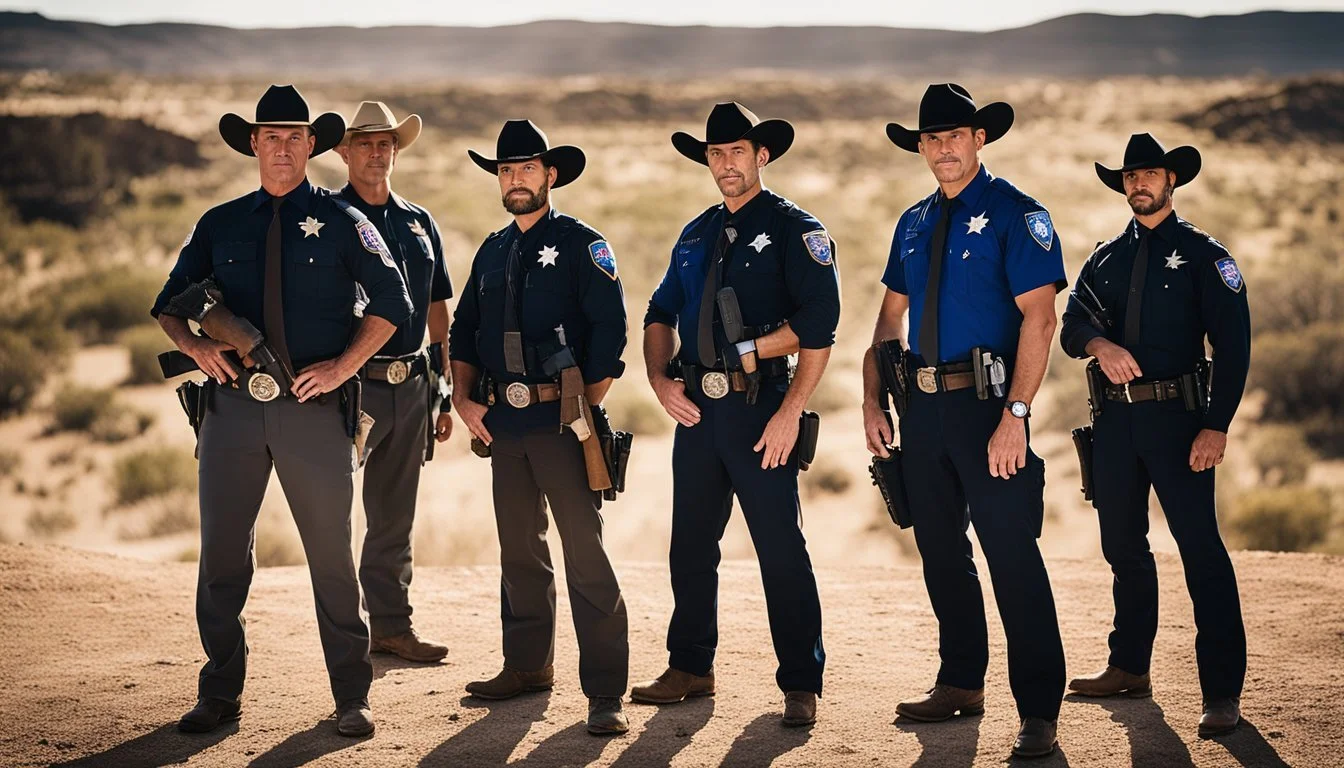
Texas Rangers vs State Troopers: Understanding the Differences in Law Enforcement Roles
While both the Texas Rangers and Texas State Troopers operate under the umbrella of the Texas Department of Public Safety (DPS), they serve distinctly different functions, hold separate operational responsibilities, and undergo unique...
While both the Texas Rangers and Texas State Troopers operate under the umbrella of the Texas Department of Public Safety (DPS), they serve distinctly different functions, hold separate operational responsibilities, and undergo unique selection processes. Understanding the contrast between these elite agencies clarifies how law enforcement and criminal investigations are structured in the Lone Star State.
Contents
Introduction to Texas Law Enforcement Structures
The Texas Department of Public Safety acts as the state-level law enforcement agency for Texas, overseeing multiple divisions designed to maintain public safety, secure borders, and enforce state laws. Within this large organization, the Texas Highway Patrol (commonly referred to as state troopers) and the Texas Rangers represent two specialized tiers of service.
Confusion between the two often arises because both wear badges and operate statewide. However, their day-to-day missions diverge sharply. State troopers are primarily responsible for traffic safety, highway patrol, and general public policing across vast road networks, whereas the Texas Rangers function as a premier investigative division focusing on major violent crimes, public corruption, and cold cases.
The Texas Highway Patrol: Duties and Operations
Texas State Troopers are the most visible face of the Texas Department of Public Safety. Operating under the Texas Highway Patrol Division, these officers are tasked with enforcing traffic laws, commercial vehicle regulations, and criminal statutes on public roads, rural highways, and interstate systems throughout the state.
Core Responsibilities
- Traffic Enforcement: Monitoring speed limits, reckless driving, driving under the influence (DUI), and ensuring overall compliance with the Texas Transportation Code.
- Accident Investigation: Responding to, documenting, and investigating motor vehicle collisions on state and interstate highways.
- Rural and General Policing: Assisting local sheriff's departments and police agencies in rural areas where municipal or county resources may be limited.
- Border Security Operations: Participating in multi-agency initiatives such as Operation Lone Star to deter transnational crime, human trafficking, and drug smuggling along the Texas-Mexico border.
Training and Deployment
Becoming a state trooper requires rigorous physical and academic conditioning at the Texas DPS Training Academy in Austin. Recruits undergo months of intensive instruction covering constitutional law, defensive tactics, emergency vehicle operations, crash reconstruction, and Spanish language proficiency. Upon graduation, troopers are deployed to specific duty stations across the state's diverse geographic regions, ranging from bustling urban corridors to remote rural outposts.
The Texas Rangers: History and Investigative Scope
Formed originally in 1823 by Stephen F. Austin to protect settlers, the Texas Ranger Division is one of the oldest state law enforcement organizations in the United States. Today, the Rangers operate as an elite investigative division within the Texas Department of Public Safety, handling high-profile, complex, and sensitive criminal investigations.
Core Responsibilities
- Major Crime Investigations: Investigating homicides, serial crimes, kidnapping, and sexual assaults, often at the request of local law enforcement agencies that lack specialized investigative resources.
- Public Corruption and Official Misconduct: Investigating crimes committed by elected officials, judges, law enforcement officers, and other public servants.
- Officer-Involved Shootings: Conducting independent, impartial investigations into the use of lethal force by police officers across the state.
- Specialized Units: Managing specialized teams such as the Special Response Team (SRT), Ranger Reconnaissance teams, and the Unsolved Crimes Investigation Program (cold cases).
Selection and Qualifications
Unlike state troopers, who recruit directly from civilian applicants who meet basic law enforcement prerequisites, the Texas Rangers are not an entry-level position. Candidates for the Texas Rangers must be experienced commissioned peace officers currently serving within the Texas Department of Public Safety (typically holding the rank of trooper or sergeant) with years of dedicated field experience. The selection process is fiercely competitive, evaluating candidates on their investigative acumen, interviewing skills, tactical judgment, and professional reputation.
Comparative Overview: Texas Rangers vs State Troopers
To clearly understand the operational boundaries, structural placement, and expectations of each agency, the following table compares key aspects of Texas State Troopers and Texas Rangers.
| Feature | Texas State Troopers (Highway Patrol) | Texas Rangers (Ranger Division) |
|---|---|---|
| Primary Mission | Traffic enforcement, highway safety, and general public policing. | Major criminal investigations and specialized tactical support. |
| Agency Division | Texas Highway Patrol Division (DPS). | Texas Ranger Division (DPS). |
| Entry Requirements | Civil applicants meeting DPS academy prerequisites and physical standards. | Experienced, commissioned DPS peace officers with significant tenure. |
| Uniform & Appearance | Traditional grey uniform with campaign hats and marked patrol vehicles. | Often wear civilian business attire (suits, boots, cowboy hats) on duty, though tactical gear is used when necessary. |
| Jurisdiction | Statewide, with primary focus on highways, traffic corridors, and rural areas. | Statewide, focusing on major crimes, public corruption, and complex cases. |
| Case Initiation | Proactive patrol stops, accident response, and dispatched calls for service. | Requests from local, state, or federal agencies, or direct assignment by DPS leadership. |
Operational Interaction and Collaboration
Despite their different primary functions, state troopers and Texas Rangers frequently work in tandem. When a severe crime occurs on a state highway or in a rural jurisdiction, state troopers are typically the first law enforcement officers to arrive, secure the perimeter, render medical aid, and preserve the crime scene.
Once the immediate safety threat is contained and preliminary evidence is gathered, state troopers hand the investigation over to the Texas Rangers if the case involves complex elements, multi-jurisdictional coordination, or high-level violent crime. This seamless division of labor ensures that everyday traffic safety and specialized detective work complement one another within the overarching framework of the Texas Department of Public Safety.
Frequently Asked Questions
Can anyone apply directly to become a Texas Ranger?
No. You cannot apply to become a Texas Ranger as an entry-level applicant. Candidates must already be commissioned peace officers within the Texas Department of Public Safety and meet strict tenure and performance requirements before they are eligible to apply for a transfer into the Ranger Division.
Do Texas State Troopers wear cowboy hats?
Yes, Texas State Troopers wear distinctive campaign hats (often colloquially referred to as cowboy hats) as part of their formal dress and daily uniform, mirroring a tradition shared with the Texas Rangers.
Who has higher rank, a state trooper or a Texas Ranger?
While both hold sworn peace officer authority, Texas Rangers hold the rank of commissioned investigators within the DPS hierarchy and traditionally possess supervisory authority over complex crime scenes where local and state resources converge. However, administrative rank within DPS depends on specific civil service grades.
Are Texas Rangers involved in border security?
Both agencies contribute to border security, but in different capacities. State Troopers heavily participate in high-visibility patrols, checkpoints, and tactical deterrence operations along the border. Texas Rangers may assist with border operations by investigating cartel-related violence, human trafficking networks, and transnational criminal organizations.
What kind of vehicle do Texas Rangers drive?
Unlike state troopers, who drive prominently marked black and white or green and white patrol vehicles equipped with light bars, Texas Rangers typically drive unmarked, civilian-style trucks or SUVs to blend in during investigations and surveillance operations.
Conclusion and Next Actions
The distinction between Texas State Troopers and the Texas Rangers highlights the diverse capabilities required to maintain public safety across a geographically vast state. State troopers secure the highways and respond to daily public safety needs, while the Texas Rangers provide elite investigative muscle for the state's most challenging criminal cases. For individuals interested in pursuing a career within the Texas Department of Public Safety, the standard entry point is through the Texas Highway Patrol academy, with opportunities for advancement into specialized divisions like the Rangers available to seasoned officers.
Image Gallery