Pep Guardiola: The Tactical Evolution and Legacy of a Modern Managerial Icon
Pep Guardiola is widely regarded as the most influential football manager of the 21st century. His career is defined by a relentless pursuit of tactical perfection, characterized by the "Juego de Posición" (Positional Play) philosophy,...
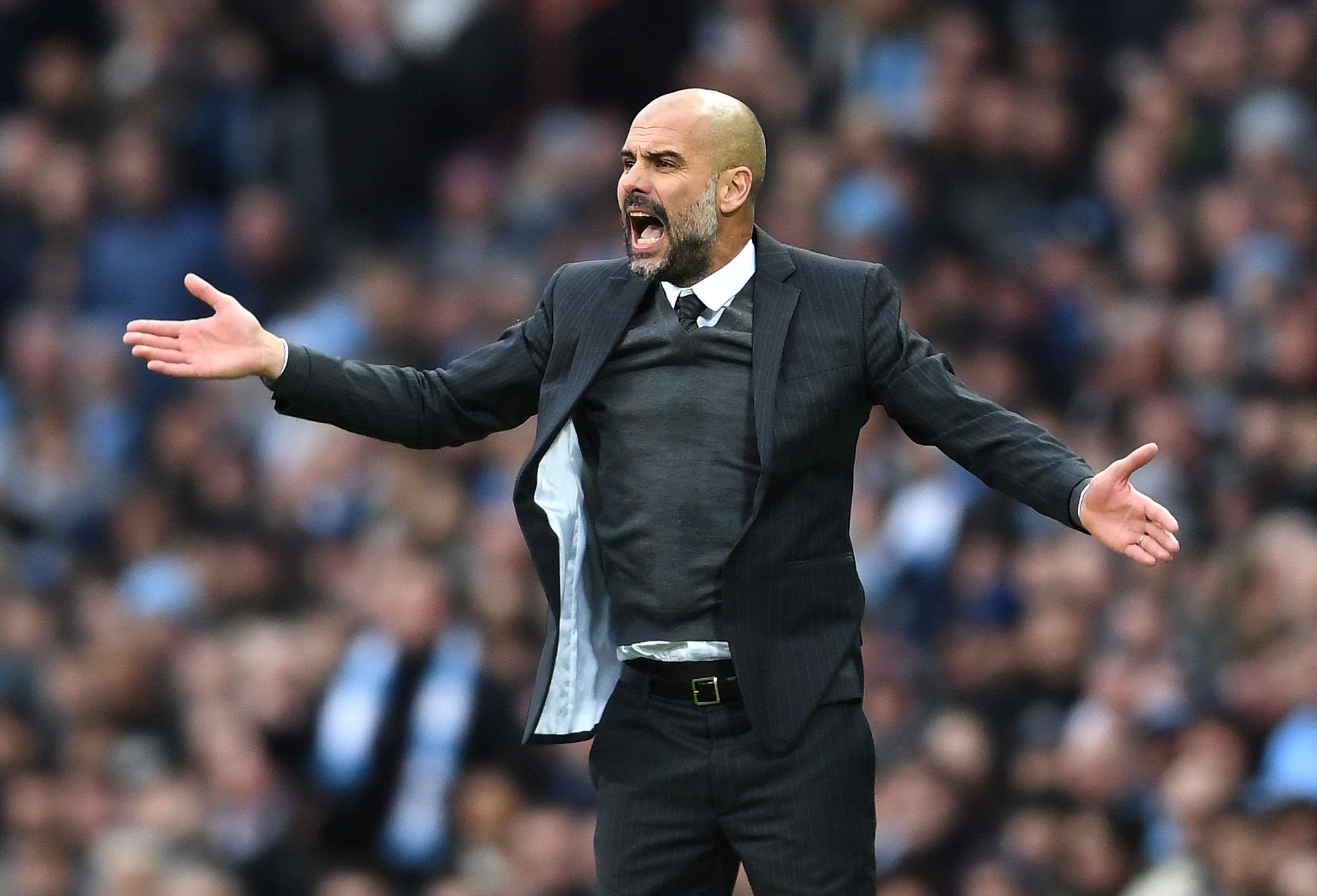
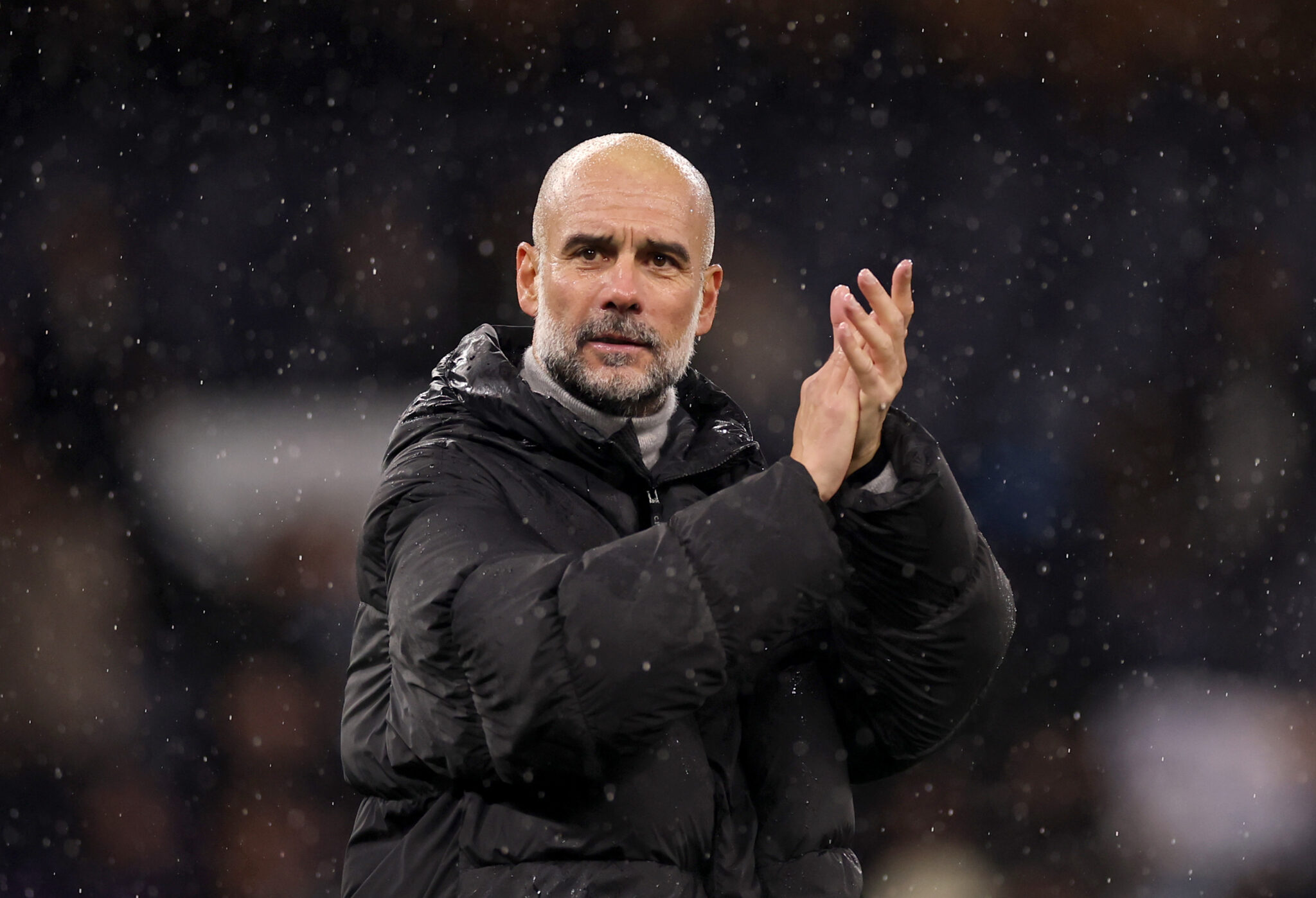
Pep Guardiola is widely regarded as the most influential football manager of the 21st century. His career is defined by a relentless pursuit of tactical perfection, characterized by the "Juego de Posición" (Positional Play) philosophy, resulting in over 35 major trophies across spells at FC Barcelona, Bayern Munich, and Manchester City, including multiple historic trebles.
Contents
The Architectural Blueprint: Defining the Guardiola Philosophy
To understand Pep Guardiola as a manager, one must look beyond the trophy cabinet and examine the fundamental principles he instills in his teams. At the core of his success is Juego de Posición. Unlike the "Tiki-Taka" label often applied by the media—a term Guardiola himself has dismissed as aimless passing—Positional Play is a highly structured system where the pitch is divided into specific zones.
In this system, players are assigned specific coordinates based on the position of the ball, their teammates, and the opponents. The primary objective is to create "superiorities"—numerical, qualitative, or positional advantages—to progress the ball through the thirds of the pitch. This approach requires players to have elite technical proficiency and the cognitive ability to process complex instructions in real-time.
The Evolution of the "False 9" and Inverted Roles
One of Guardiola’s most significant contributions to modern coaching is the re-invention of traditional roles. During his tenure at Barcelona, he famously moved Lionel Messi from the wing to a False 9 position. This tactical shift dropped the striker into midfield, dragging central defenders out of position and creating a numerical overload that most 4-4-2 or 4-3-3 systems of the time could not contain.
At Bayern Munich and Manchester City, this innovation evolved into the use of inverted full-backs. By instructing full-backs like Philipp Lahm or João Cancelo to tuck into the midfield during possession, Guardiola secured the center of the pitch against counter-attacks while allowing his creative midfielders to push higher into the "half-spaces."
The Barcelona Years (2008–2012): The Birth of a Dynasty
Guardiola’s appointment as the first-team manager of FC Barcelona in 2008 was initially met with skepticism due to his lack of top-flight experience. However, his four-year tenure transformed the club and the sport. He immediately made bold decisions, offloading established stars like Ronaldinho and Deco to build a team around La Masia graduates Xavi Hernández, Andrés Iniesta, and Lionel Messi.
His debut season (2008-09) remains one of the greatest in football history, as Barcelona became the first Spanish club to win the Sextuple: La Liga, the Copa del Rey, the UEFA Champions League, the Spanish Super Cup, the UEFA Super Cup, and the FIFA Club World Cup. The 2011 Champions League final win against Manchester United is often cited by analysts as the pinnacle of his Barcelona side, showcasing a level of dominance and technical mastery rarely seen in a major final.
The Bayern Munich Chapter (2013–2016): Tactical Intellectualism
After a sabbatical in New York, Guardiola joined Bayern Munich in 2013. While he did not secure a Champions League title in Germany, his impact on the Bundesliga was profound. He won three consecutive league titles, often by staggering margins, and fundamentally altered the tactical landscape of German football.
In Munich, Guardiola proved he could adapt his Spanish principles to a more physical, transition-based league. He experimented with unconventional formations, including a 3-4-3 and a 2-3-5 in possession. His work with players like Joshua Kimmich and Manuel Neuer—the latter of whom epitomized the "sweeper-keeper" role—demonstrated his ability to enhance the tactical intelligence of an entire squad. According to official Bundesliga records, Guardiola holds one of the highest win percentages in the league's history.
The Manchester City Era: Dominance in the Premier League
Guardiola’s move to Manchester City in 2016 marked his longest and most dominant tenure. After a difficult first season of adaptation, he built a machine that redefined the standards of the Premier League.
Breaking Records and the 2023 Treble
The 2017-18 "Centurions" season saw City become the first team in English top-flight history to reach 100 points. This was followed by a domestic quadruple in 2019 and a period of sustained dominance where City won four consecutive league titles between 2021 and 2024.
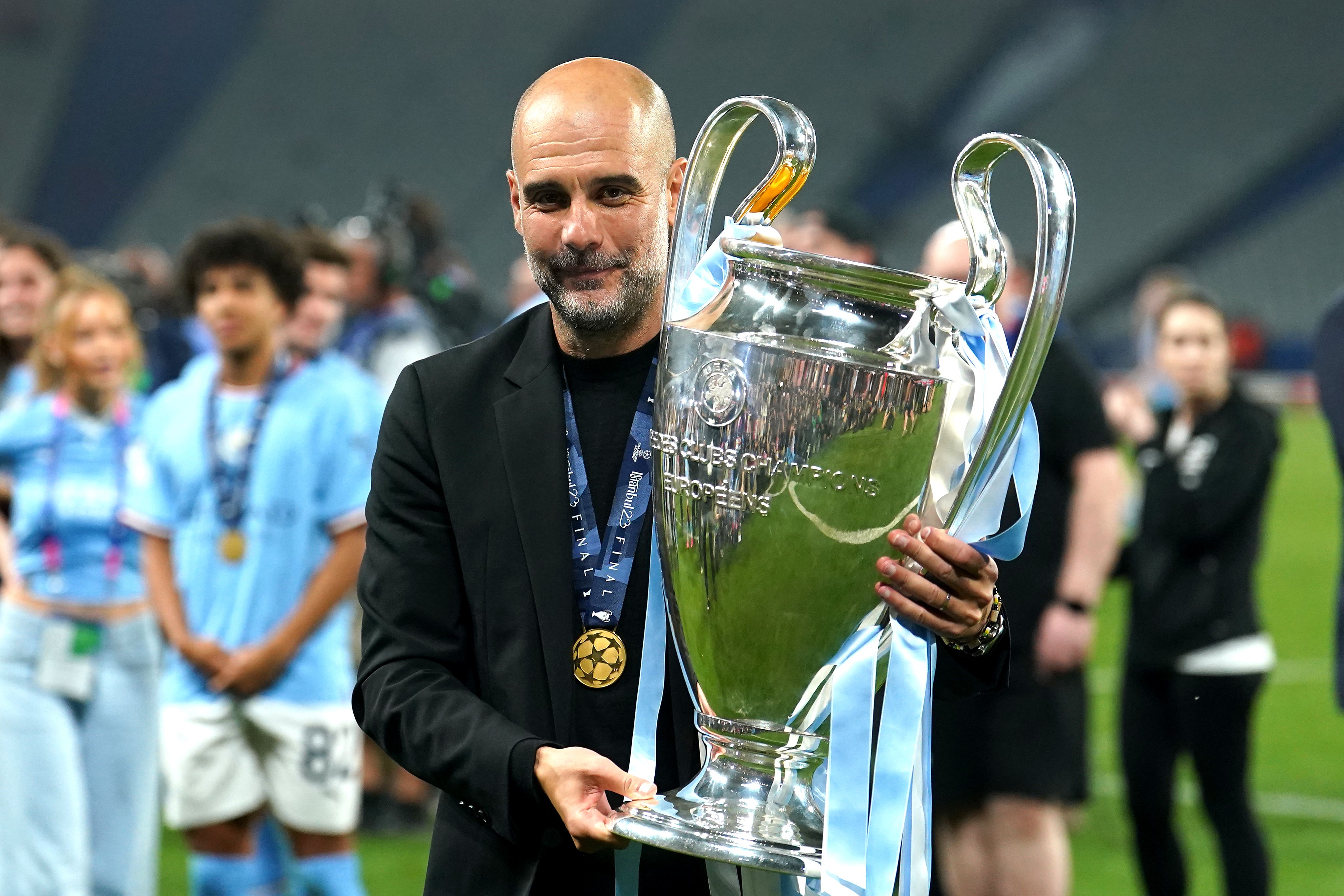
The crowning achievement of his City career came in 2023, when he led the club to its first UEFA Champions League title, completing a historic Continental Treble. This success was built on yet another tactical evolution: the use of John Stones as a "hybrid" defender-midfielder, providing a sturdy defensive base that allowed players like Kevin De Bruyne and Erling Haaland to thrive.
| Metric | FC Barcelona (2008-12) | Bayern Munich (2013-16) | Manchester City (2016-Present) |
|---|---|---|---|
| Major League Titles | 3 | 3 | 6+ |
| Champions League Titles | 2 | 0 | 1 |
| Domestic Cups | 2 | 2 | 2+ (FA Cup) |
| Win Percentage | ~72% | ~75% | ~73% |
| Primary Innovation | False 9 / Tiki-Taka | Sweeper-Keeper / Hybrid Midfield | Inverted Full-backs / Box Midfield |
The "Guardiola Coaching Tree": A Global Influence
As of 2026, the "Guardiola effect" is visible across world football through his former assistants and players who have moved into management. This coaching tree has spread his principles to various leagues, proving that his methods are adaptable beyond the elite financial resources of his own clubs.
- Mikel Arteta: Guardiola’s former assistant at City, who transformed Arsenal into title contenders using similar positional principles.
- Enzo Maresca: A former City assistant who implemented Guardiola’s tactical structures at Leicester City and Chelsea.
- Xavi Hernández: His former captain at Barcelona, who led the Catalan club back to a La Liga title in 2023.
- Vincent Kompany: His former City captain, who took the reins at Bayern Munich, completing a full circle of influence.
Challenges and Criticisms
Despite his success, Guardiola's managerial career has not been without criticism. The most frequent charge leveled against him is "overthinking" in high-stakes matches. This refers to his tendency to introduce radical tactical changes in crucial Champions League knockout games, which occasionally led to unexpected exits against underdogs.
Furthermore, critics often point to the immense financial backing he has received at every club. While it is true he has managed clubs with vast resources, supporters argue that other managers with similar budgets have failed to achieve his level of consistency or tactical innovation. His ability to maintain a high "floor" of performance—rarely finishing outside the top two in any league—is a testament to his daily coaching methods rather than just transfer spending.
Key Attributes of Guardiola's Management Style
- Intensity and Micro-management: Guardiola is known for his high-energy training sessions and his obsession with "the details." He often coaches players on their body orientation when receiving a pass, believing that a few degrees of difference can change the entire flow of an attack.
- Adaptability: Contrary to the belief that he is dogmatic, Pep has adapted to every league. In the Premier League, he increased the physical profile of his squad, bringing in players like Rodri and Ruben Dias to handle the league’s aerial and transitional demands.
- Squad Rotation and Longevity: He is a master of managing elite egos and keeping a squad hungry for success after multiple titles. He frequently rotates his starting XI to ensure physical freshness and tactical unpredictability.
Frequently Asked Questions
What is Pep Guardiola's most successful season?
His most successful season was the 2008-09 campaign with FC Barcelona, where he won all six available trophies (the Sextuple). However, his 2022-23 season with Manchester City is also considered a career peak, as he secured the elusive Champions League title alongside the Premier League and FA Cup.
How many Champions League titles has Pep Guardiola won?
As of early 2026, Guardiola has won three UEFA Champions League titles as a manager: two with FC Barcelona (2009, 2011) and one with Manchester City (2023). He also won the competition as a player with Barcelona in 1992.
What is "Juego de Posición"?
Juego de Posición, or Positional Play, is a tactical framework where the pitch is organized into a grid. Players must occupy specific zones to create passing lanes and numerical advantages. The goal is to move the opponent, not just the ball, to find gaps in the defensive structure.
Has Pep Guardiola ever managed a national team?
As of early 2026, Guardiola has exclusively managed club teams (Barcelona B, Barcelona, Bayern Munich, and Manchester City). While he has expressed interest in coaching a national team in the future, his career has been defined by the daily rhythm of club football.
What makes Guardiola different from Sir Alex Ferguson or Jose Mourinho?
While Ferguson was a master of man-management and longevity, and Mourinho was a specialist in defensive organization and psychological warfare, Guardiola is defined by his tactical ideology. He prioritizes the collective system and the aesthetic quality of play as the primary means to achieve results.
Final Recommendation for Students of the Game
For those looking to understand the mechanics of modern football, studying Pep Guardiola’s career is essential. His influence is not just found in the results he achieves, but in the way he forces every opponent to adapt. To truly grasp his impact, one should watch "The Centurions" or "All or Nothing" documentaries, which provide a rare glimpse into his fiery team talks and meticulous tactical preparations. Whether he continues at Manchester City or eventually moves into international management, his legacy as the ultimate tactical disruptor is firmly secured in the annals of football history.
Image Gallery