SBI Life Insurance Health Policy Explained: A Comprehensive Guide to Plans and Benefits
SBI Life Insurance health policies are primarily "fixed-benefit" plans, which pay a predetermined lump sum upon the diagnosis of a covered illness or during hospitalization. Unlike traditional indemnity insurance that reimburses actual...
SBI Life Insurance health policies are primarily "fixed-benefit" plans, which pay a predetermined lump sum upon the diagnosis of a covered illness or during hospitalization. Unlike traditional indemnity insurance that reimburses actual hospital bills, these policies provide financial liquidity to cover secondary costs, lost income, and specialized treatments, complementing your primary medical insurance.
Contents
Selecting the right health coverage within the life insurance ecosystem requires an understanding of how these specialized plans function. In 2026, as medical costs continue to rise, SBI Life’s health portfolio remains a critical component for individuals seeking to bridge the gap between basic hospitalization coverage and the actual long-term financial impact of critical ailments.
Understanding the Distinction: SBI Life vs. SBI General
A common point of confusion for many policyholders is the difference between health offerings from SBI Life and SBI General. It is essential to disambiguate these before selecting a plan.
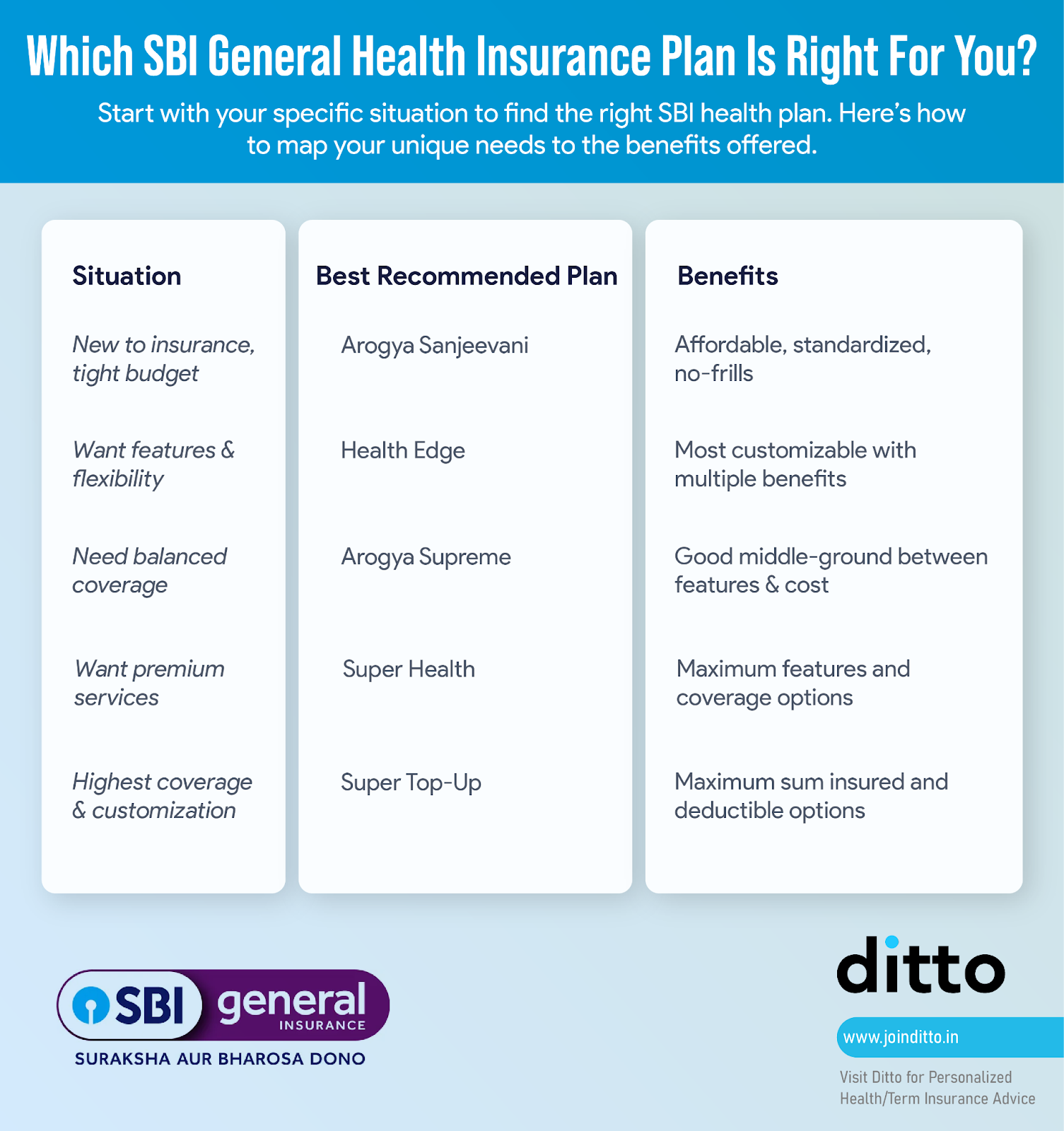
- SBI General Insurance: This entity provides "Indemnity" plans, such as the standard Mediclaim. These plans pay for the actual expenses incurred in the hospital, such as room rent, surgeon fees, and medicines, up to the sum insured.
- SBI Life Insurance: As a life insurer, SBI Life offers "Fixed-Benefit" health plans and riders. These do not care about your hospital bill; they pay you the full sum assured if you meet the policy's criteria (e.g., a diagnosis of cancer or a 24-hour hospital stay).
By 2026, the strategy for most robust financial plans involves having a primary indemnity cover from a general insurer and a supplemental fixed-benefit plan from a life insurer like SBI Life to manage the "out-of-pocket" expenses that standard medical insurance often excludes.
Core SBI Life Health Products in 2026
SBI Life has streamlined its health portfolio to focus on high-impact areas: critical illness, cancer care, and hospital cash flow.
SBI Life - Poorna Suraksha
This is a unique "rebalancing" plan that combines term life insurance with critical illness cover. It is designed for individuals who want their protection to evolve as they age.
- The Rebalancing Feature: At the start, the policy might have a higher Life Cover and a lower Critical Illness (CI) cover. As the policyholder ages, the CI cover increases automatically while the Life Cover decreases, reflecting the higher statistical probability of health issues in later years.
- Premium Stability: One of the most significant advantages of Poorna Suraksha is that the premium remains constant throughout the policy term, regardless of the rebalancing between life and health components.
SBI Life - Sampoorn Cancer Suraksha
Cancer treatment remains one of the most significant financial burdens in 2026. This plan is a dedicated non-linked, non-participating health insurance product focused entirely on oncology.
- Stage-Based Payouts: The plan offers payouts at various stages—Minor, Major, and Advanced. This ensures that the policyholder receives financial aid at the earliest point of diagnosis rather than waiting for the condition to become terminal.
- Premium Waiver: If a "Major Stage" cancer is diagnosed, the policy often includes a feature where future premiums are waived, ensuring the cover continues without further financial strain on the family.
SBI Life - Hospital Cash
This plan is designed to handle the "hidden costs" of hospitalization. While a regular health insurance policy pays the hospital, the SBI Life Hospital Cash plan pays the policyholder a fixed daily amount.
- Daily Allowance: A fixed sum (e.g., ₹2,000 to ₹5,000) is paid for every 24 hours of hospitalization.
- ICU Benefit: Typically, the daily cash amount doubles if the policyholder is admitted to the Intensive Care Unit (ICU).
- Lump Sum Surgical Benefit: If the hospitalization involves a major surgery, an additional lump sum is provided, regardless of the actual surgical costs.
Key Features and Policy Mechanisms
To fully explain SBI Life insurance health policies, one must look at the technical mechanisms that govern how these benefits are triggered and maintained.
Fixed Benefit Payouts
The hallmark of an SBI Life health policy is the fixed payout. For instance, if you have a ₹10 lakh Critical Illness cover and are diagnosed with a covered condition, SBI Life pays you ₹10 lakh. You can use this money for lifestyle modifications, paying off a mortgage, or seeking experimental treatment abroad. This is the "Why" behind choosing a life-insurance-based health plan.
Survival Periods and Waiting Periods
A critical technical detail in these policies is the "Survival Period." For most critical illness claims, the policyholder must survive for a specific duration (usually 15 to 30 days) after the initial diagnosis for the claim to be valid. This distinguishes health-benefit payouts from death-benefit payouts. Additionally, there is a "Waiting Period" (often 90 days from policy inception) during which no claims are accepted, except for those resulting from accidents.
Tax Advantages under Section 80D
In 2026, tax efficiency remains a primary driver for insurance adoption. Premiums paid for SBI Life health plans (or the health portion of a combo plan) are eligible for deductions under Section 80D of the Income Tax Act.
- Self/Family: Up to ₹25,000.
- Senior Citizen Parents: An additional ₹50,000. This makes these plans not just a safety net, but a core component of a tax-optimized financial strategy.
Eligibility Criteria and Comparison
Before applying, it is necessary to understand the boundary conditions of these policies. Most SBI Life health plans are designed for adults, though some allow for child inclusion under family constructs.
Comparison of Popular SBI Life Health Plans (2026)
| Plan Name | Primary Benefit Type | Minimum Entry Age | Maximum Entry Age | Distinctive Feature |
|---|---|---|---|---|
| Poorna Suraksha | Life + Critical Illness | 18 Years | 65 Years | Rebalancing of sum assured as you age. |
| Sampoorn Cancer Suraksha | Cancer Specific (Fixed) | 18 Years | 65 Years | Payouts for Minor, Major, and Advanced stages. |
| Hospital Cash | Daily Cash Allowance | 18 Years | 55 Years | Double benefits for ICU stays; surgical benefit. |
| Health Riders | Add-on Fixed Benefit | Varies by base policy | Varies | Can be added to any standard term or ULIP plan. |
The Claim Process: A Step-by-Step Explanation
The effectiveness of an insurance policy is ultimately measured by its claim settlement. For SBI Life health policies, the process is predominantly document-based because they are fixed-benefit plans.
- Notification: Inform SBI Life as soon as a diagnosis is made or hospitalization occurs. This can be done via the SBI Life website, mobile app, or by visiting a branch.
- Documentation: Since these are not usually "cashless" at the hospital desk (as they pay the policyholder, not the hospital), you must collect all original medical reports, discharge summaries, and diagnostic tests (like biopsy reports for cancer).
- Submission: Submit the claim form along with the medical evidence. For critical illnesses, the insurer may require a "Medical Practitioner’s" statement confirming the diagnosis according to the policy definitions.
- Verification: SBI Life’s medical team verifies the diagnosis against the policy’s definitions of the illness.
- Disbursement: Once approved, the lump sum is credited directly to the policyholder’s registered bank account.
Common Exclusions to Consider
No health policy covers everything. SBI Life health plans have specific exclusions that are vital to understand to avoid claim rejection.
- Pre-Existing Diseases (PED): Conditions that existed before the policy was issued are generally not covered for the first 2 to 4 years.
- Standard Exclusions: Self-inflicted injuries, suicide attempts, injuries resulting from participation in riots or war, and cosmetic surgeries are universally excluded.
- Specific Exclusions for Cancer: Some plans do not cover skin cancer or tumors that are histologically described as pre-malignant or non-invasive unless specifically mentioned in the policy document.
- Substance Abuse: Any illness or hospitalization resulting from the use of alcohol or drugs is not covered.
Strategic Role of Health Riders
If you already have an SBI Life term plan or a savings plan, you might not need a separate health policy. SBI Life offers Critical Illness and Accidental Death & Disability riders.
Adding a rider is often more cost-effective than buying a standalone policy. However, the limitation is that the rider's sum assured is usually capped at a percentage of the base life cover. In 2026, experts recommend standalone health policies like Sampoorn Cancer Suraksha for higher specialized covers, while using riders for general critical illness protection.
Summary of Recommendations
When navigating SBI Life’s health offerings in 2026, follow these practical steps:
- Identify the Gap: If you have a ₹5 lakh Mediclaim policy, your primary gap is likely the "loss of income" during a major illness. A fixed-benefit plan like Poorna Suraksha is designed to fill this gap.
- Check Definitions: Critical illness definitions are standardized but precise. Ensure you understand what constitutes a "Major Stage Cancer" or a "Heart Attack of Specified Severity" as per the policy wordings.
- Disclose Everything: During application, ensure all medical history is disclosed. With the digital health records integration prevalent in 2026, non-disclosure is the fastest way to a rejected claim.
- Evaluate the Rebalancing Feature: If you are young, Poorna Suraksha offers a cost-effective way to get high life cover now and high health cover later without increasing your premiums.
Frequently Asked Questions
Can I claim from both SBI Life and a regular Mediclaim policy?
Yes. Because SBI Life offers fixed-benefit plans, you can claim the hospital bills from your indemnity (Mediclaim) provider and still receive the full lump-sum payout from SBI Life upon providing the required medical diagnosis evidence.
Does SBI Life offer "cashless" treatment for health policies?
Generally, no. SBI Life’s health products are designed to pay the policyholder a lump sum rather than paying the hospital directly. You pay the hospital (or your general insurer does), and SBI Life provides you with the survival/diagnosis benefit separately.
What is the maximum age to renew an SBI Life health policy?
While entry ages usually cap at 65, many SBI Life health plans allow for renewals up to age 75 or 80, depending on the specific product terms chosen at the time of inception.
Is a medical check-up mandatory before buying?
For younger applicants and lower sum assured amounts, SBI Life often issues policies based on a "Tele-Medical" or a self-declaration of health. However, for older applicants or high-value covers, a physical medical examination at an authorized center is typically required.
How long is the waiting period for critical illness?
Most SBI Life plans have a standard waiting period of 90 days from the date of commencement of the policy. If a diagnosis is made within these 90 days, the claim is usually not payable.
Image Gallery