How to Finance a Rental Property in 2026: A Comprehensive Guide
To finance a rental property in 2026, you generally need a down payment of 15% to 25%, a credit score above 680, and sufficient cash reserves. Common methods include conventional bank loans, Debt Service Coverage Ratio (DSCR) loans for...
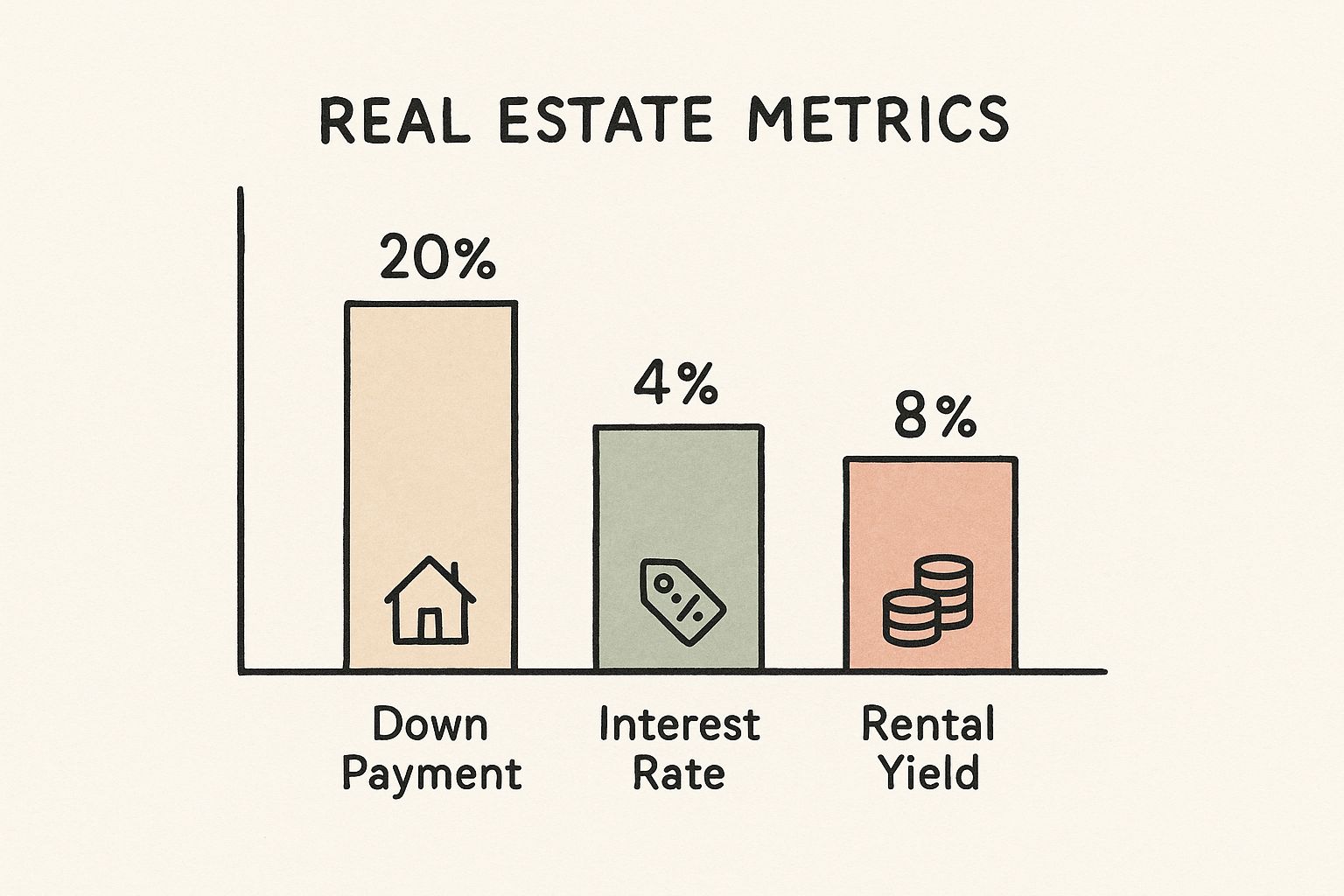
To finance a rental property in 2026, you generally need a down payment of 15% to 25%, a credit score above 680, and sufficient cash reserves. Common methods include conventional bank loans, Debt Service Coverage Ratio (DSCR) loans for cash-flowing assets, FHA or VA loans for owner-occupied multi-family units, and creative strategies like seller financing or hard money.
Contents
Financing a rental property is fundamentally different from securing a mortgage for a primary residence. Lenders view investment properties as higher risk because, in times of financial hardship, a borrower is statistically more likely to default on an investment property than on their own home. As we navigate the 2026 real estate landscape, understanding the intersection of interest rates, lending criteria, and property valuations is essential for both novice and seasoned investors.
Core Financial Requirements and Eligibility
Before selecting a loan product, you must meet the baseline institutional requirements that govern the 2026 lending market. These benchmarks ensure you have the "skin in the game" and the liquidity necessary to weather vacancies or unexpected repairs.
Credit Score Thresholds
While you can obtain a primary mortgage with a credit score in the low 600s, rental property financing typically requires a minimum score of 680. However, to unlock the most competitive interest rates—which often carry a 0.5% to 1.0% premium over primary residence rates—a score of 740 or higher is the industry standard. Lenders use the middle score from the three major bureaus (Equifax, Experian, and TransUnion) to determine your tier.
Down Payment Standards
The days of 3% or 5% down for pure investment properties are largely gone, unless you are using specific "house hacking" strategies. For a single-family rental, most conventional lenders require at least 15% down, though 20% to 25% is often required to avoid Private Mortgage Insurance (PMI) and to improve the loan-to-value (LTV) ratio. For 2-to-4-unit properties, the requirement almost universally moves to 25% down to offset the increased risk associated with multi-unit management.
Cash Reserves
Lenders in 2026 are increasingly focused on "reserves"—liquid assets available after the down payment and closing costs are paid. You should expect to show 6 to 12 months of PITI (Principal, Interest, Taxes, and Insurance) for every property you own. If you are starting your portfolio, the reserve requirement may only apply to the subject property, but as you scale, the cumulative reserve requirement can become a significant barrier to entry.
Traditional Financing Routes
Conventional loans remain the most popular way to finance a rental property due to their long-term stability and relatively lower interest rates. These loans are typically backed by Fannie Mae or Freddie Mac and follow strict federal guidelines.
Conventional Investment Loans
A conventional loan is a "full-doc" loan, meaning you must provide tax returns, W-2s, and bank statements to prove your Debt-to-Income (DTI) ratio. In 2026, most lenders want to see a DTI of 43% or lower, though some may stretch to 50% if you have high credit scores and significant cash reserves. The primary advantage of a conventional loan is the 30-year fixed-rate term, which provides predictable monthly payments regardless of market volatility.
Portfolio Loans
Unlike conventional loans, which are sold on the secondary market, portfolio loans are kept on the lender’s own books. Small local banks and credit unions are the primary providers of these products. Because the bank holds the risk, they have more flexibility with their underwriting. Portfolio loans are ideal for investors who:
- Exceed the Fannie Mae limit of 10 financed properties.
- Are buying "non-warrantable" condos or properties in need of minor repairs.
- Have complex income structures that don't fit traditional W-2 boxes.
The Rise of DSCR (Debt Service Coverage Ratio) Loans
For many professional investors in 2026, the DSCR loan has become the preferred vehicle for scaling. These are asset-based loans that focus on the income potential of the property rather than the personal income of the borrower.
How DSCR is Calculated
The lender looks at the gross monthly rent of the property (often verified via a 1007 Rent Schedule appraisal) and divides it by the monthly PITI.
- DSCR = Gross Monthly Rent / Total Monthly Debt Service
- Example: If a property generates $2,500 in rent and the mortgage, taxes, and insurance cost $2,000, the DSCR is 1.25.
Benefits of Asset-Based Lending
Most DSCR lenders look for a ratio of 1.20 or higher, meaning the property generates 20% more income than its debt obligations. The major advantage here is that your personal DTI is irrelevant. If the property "pencils out," the loan is likely to be approved. This allows investors to continue buying properties even after their personal income-to-debt ratio would normally prevent further conventional borrowing. Note that DSCR loans often come with slightly higher interest rates and may require a 20-25% down payment.
Low-Down-Payment Strategies (House Hacking)
If you are a first-time investor or looking to minimize initial capital outlay, "house hacking" remains a viable strategy in 2026. This involves purchasing a multi-family property (up to 4 units), living in one unit, and renting out the others.
FHA 2-4 Unit Financing
The Federal Housing Administration (FHA) allows buyers to purchase a multi-family home with as little as 3.5% down. In late 2023, policy shifts made it easier to qualify for these loans on 3- and 4-unit properties by adjusting the "self-sufficiency test" requirements. By 2026, this remains a cornerstone strategy for building equity. The catch is that you must intend to live in the property as your primary residence for at least one year.
VA Loans for Veterans
Active-duty service members and veterans have access to the most powerful financing tool in existence: the VA loan. For multi-family properties (up to 4 units), eligible borrowers can use a 0% down payment option. Like FHA loans, the VA requires the borrower to occupy one of the units. The ability to control a four-unit asset with zero equity down provides an unparalleled return on investment through tenant-paid debt reduction.
Creative and Short-Term Financing
When a property does not qualify for traditional financing—often due to its physical condition—or when an investor needs to move faster than a bank allows, creative financing fills the gap.
Hard Money Loans
Hard money is short-term, high-interest financing provided by private companies. These loans are usually used for "fix-and-flips" or "BRRRR" (Buy, Rehab, Rent, Refinance, Repeat) strategies.
- Terms: Typically 6 to 24 months.
- Rates: Usually 8% to 12% in the 2026 market.
- Focus: The After Repair Value (ARV) of the property rather than its current state.
Seller Financing
In seller financing, the current owner acts as the bank. You sign a promissory note and a mortgage (or deed of trust) with the seller, making monthly payments directly to them. This is often an "off-market" negotiation. It is particularly useful if you cannot qualify for a bank loan or if the seller wants to spread out their capital gains tax liability over several years.
Comparison of Financing Options in 2026
| Loan Type | Typical Down Payment | Credit Req. | Key Advantage | Best For |
|---|---|---|---|---|
| Conventional | 15% - 25% | 680+ | Lowest long-term rates | Single-family long-term holds |
| DSCR | 20% - 25% | 660+ | No DTI or income verification | Scaling a large portfolio |
| FHA (House Hack) | 3.5% | 580+ | Very low entry cost | First-time buyer-investors |
| Hard Money | 10% - 20% | Varies | Speed and property condition | Fix-and-flip or BRRRR |
| Portfolio | 20% - 25% | 700+ | Flexible underwriting | Non-standard properties |
Common Pitfalls and Mitigation Strategies
Financing a rental is not just about getting the loan; it is about ensuring the loan doesn't jeopardize your solvency.
- Underestimating Closing Costs: Investment property closing costs are often higher than residential ones. You should budget 3% to 5% of the purchase price for title insurance, appraisal fees, origination points, and government recording fees.
- Overlooking Prepayment Penalties: Many DSCR and commercial loans include a "prepays" clause (e.g., a 5-4-3-2-1 structure), which charges a fee if you refinance or sell within the first few years. Always negotiate these terms upfront.
- Ignoring the Appraisal Gap: In competitive 2026 markets, if a property appraises for less than the purchase price, the lender will base the LTV on the lower appraised value. You must be prepared to cover the difference in cash or negotiate a price reduction.
Next Steps for Prospective Investors
If you are ready to finance a rental property, your first action should be to get a pre-approval from a lender that specializes in investment properties. Not all mortgage brokers understand the nuances of rental income or DSCR calculations.
Simultaneously, begin organizing your "lending package." This includes two years of tax returns, two months of bank statements, and a detailed schedule of real estate owned (SREO) if you already have properties. In the 2026 market, the ability to provide documentation quickly is often the difference between a winning bid and a missed opportunity.
For further information on federal lending guidelines, you may consult the Fannie Mae Eligibility Matrix or the HUD FHA Resource Center.
FAQ
Can I use a Home Equity Line of Credit (HELOC) to finance a rental property? Yes. Many investors use a HELOC on their primary residence to fund the down payment for a rental property. This is a common way to leverage existing equity. However, remember that you are adding a second debt payment to your primary home, which increases your overall financial risk if the rental property experiences a vacancy.
Is it better to finance a rental property in my own name or an LLC? Conventional loans generally require you to close in your personal name, though you can often transfer the title to an LLC later (subject to the "due-on-sale" clause). DSCR and commercial lenders, however, often require you to close in an LLC. Using an LLC provides liability protection but may involve slightly higher interest rates and legal setup costs.
What is a "blanket mortgage"? A blanket mortgage is a single loan that covers multiple properties. This is an advanced financing tool used by investors to consolidate their portfolio. It allows you to release individual properties from the mortgage as they are sold, provided a portion of the loan is paid down.
Do lenders consider potential rental income when qualifying me for a loan? Yes. Most conventional lenders will allow you to use 75% of the projected rental income (verified by an appraiser) to offset the new mortgage payment. The 25% "haircut" accounts for estimated vacancies and maintenance costs.
Image Gallery