Netflix Shows That Got Cancelled After One Season: A Comprehensive Guide
Netflix cancels many series after a single season primarily due to its "completion rate" metric—the percentage of viewers who finish an entire season within its first 28 days—weighted against production costs. Even shows with high init...
Netflix cancels many series after a single season primarily due to its "completion rate" metric—the percentage of viewers who finish an entire season within its first 28 days—weighted against production costs. Even shows with high initial viewership are often terminated if the data suggests low retention or insufficient subscriber growth.
Contents
For over a decade, Netflix has redefined the television landscape, moving away from the traditional "pilot season" model toward a data-driven ecosystem. However, this shift has led to a phenomenon that frustrates millions of subscribers: the "one-and-done" cancellation. From high-budget sci-fi epics to cult-favorite teen dramas, the graveyard of single-season Netflix originals is vast. Understanding why these shows were cut requires looking beyond simple "ratings" and into the complex world of streaming analytics and ROI (Return on Investment).
The Data-Driven Philosophy Behind Netflix Cancellations
To understand why a show like 1899 or First Kill gets the axe while others continue, one must understand the proprietary metrics Netflix prioritizes. Unlike traditional network television, which relies on Nielsen ratings and advertising revenue, Netflix operates on a subscription-based model where the goal is either to attract new subscribers or prevent existing ones from churning.
The 28-Day Completion Rate
The most critical metric in the Netflix boardroom is the 28-day completion rate. This tracks what percentage of the audience that started a show actually finished it within the first month of release. Industry insiders and data analysts have noted that a completion rate below 50% is often a "death sentence" for a series, regardless of its total hours watched.
If ten million people watch the first episode, but only four million reach the finale, the algorithm interprets this as a lack of "stickiness." It suggests that while the marketing was successful, the content failed to hold the audience's interest, making a second season a risky investment.
Cost vs. Efficiency
Netflix evaluates shows based on an "efficiency ratio." A show that costs $10 million per episode (like a major sci-fi production) must generate significantly more "impact"—measured in new sign-ups and long-term retention—than a reality show or a multi-cam sitcom that costs $1 million per episode. This explains why niche reality hits often survive for multiple seasons while ambitious, high-concept dramas are cancelled despite having larger raw audiences.
Notable Sci-Fi and Fantasy Casualties
Sci-fi and fantasy are the most vulnerable genres on Netflix due to their high production costs, including extensive VFX, location scouting, and ensemble casts.
1899 (2022)
Perhaps the most shocking cancellation in recent years was 1899, created by Jantje Friese and Baran bo Odar, the minds behind the global hit Dark. Despite a massive marketing campaign and a plot that invited deep fan theory engagement, Netflix cancelled it in early 2023.
- The Conflict: While 1899 initially topped the Top 10 charts in 58 countries, its dense, multilingual narrative may have contributed to a lower completion rate compared to more "bingeable" linear stories.
- Technical Ambition: The show utilized "The Volume"—advanced LED stage technology—which made it expensive to produce. Without a near-perfect retention rate, the cost of the planned second and third seasons could not be justified.
Cowboy Bebop (2021)
The live-action adaptation of the iconic anime Cowboy Bebop was cancelled just three weeks after its debut.
- Reception: The show suffered from a "middle-of-the-road" reception. It wasn't a total failure in viewership, but it failed to capture the core anime fanbase while simultaneously feeling too "niche" for a general audience.
- Budgetary Burden: With high costs for stylized sets and music licensing, the "hours watched" did not offset the production spend.
Jupiter’s Legacy (2021)
This was meant to be Netflix's answer to The Boys or Invincible. Based on Mark Millar’s comics, the show had an estimated budget of $200 million for its first season.
- The Outcome: Plagued by production delays and creative differences, the show failed to resonate with critics. Netflix released the cast from their contracts almost immediately, choosing to pivot to a spin-off, Supercrooks, rather than continuing the main narrative.
The COVID-19 "Un-Renewals"
A unique category of one-season cancellations occurred during the height of the 2020 global pandemic. These were shows that had actually been renewed for Season 2, only for Netflix to reverse the decision due to logistical and financial hurdles.
- The Society (2019): A modern-day Lord of the Flies reimagining that had a dedicated young adult following. It was officially renewed, but the uncertainty of filming schedules and the rising costs of safety protocols led to its sudden cancellation.
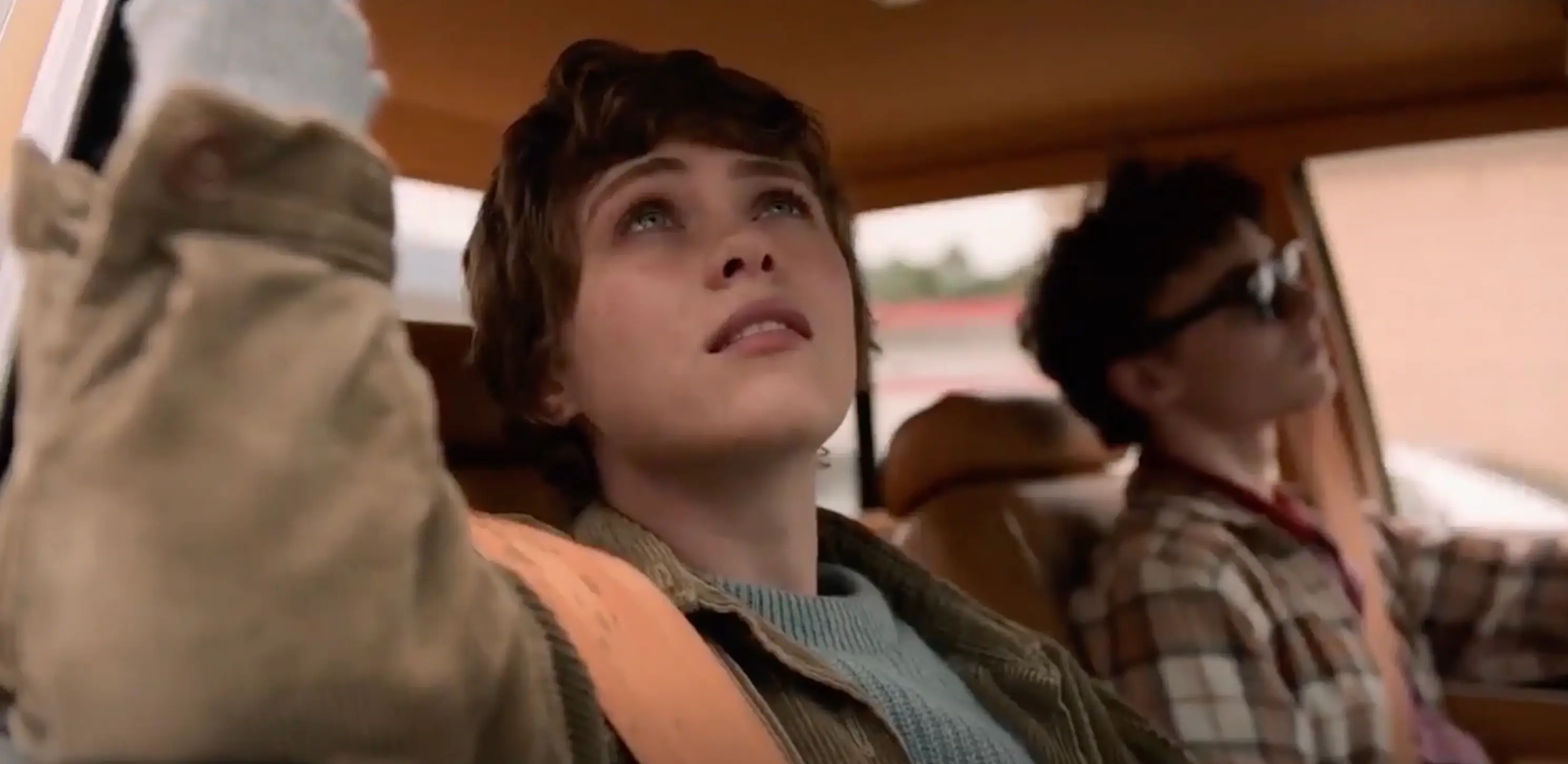
- I Am Not Okay with This (2020): Starring Sophia Lillis, this show ended on a massive cliffhanger. Despite strong reviews and a renewal plan, it suffered the same fate as The Society due to the "COVID-19 budget bloat."
Teen Dramas and the "Binge" Metric
Teen-oriented content often drives massive social media engagement, but that doesn't always translate to survival.
First Kill (2022)
The cancellation of First Kill, a lesbian vampire drama, sparked significant backlash on social media. Fans pointed out that the show outperformed several renewed series in total hours watched during its first few weeks. However, reports surfaced that the completion rate was the deciding factor; many viewers started the show but dropped off before the finale, indicating that the audience wasn't "hooked" enough to guarantee a successful second season.
Archive 81 (2022)
A masterclass in atmospheric horror, Archive 81 was a critical darling. It reached #1 on Netflix’s internal charts. Its cancellation was a prime example of the "growth" metric. If a show doesn't appear likely to grow its audience in Season 2, Netflix often prefers to spend that budget on a new "Season 1" of a different project to see if it can capture a larger lightning-in-a-bottle effect.
Key One-Season Cancellations Comparison Table
| Show Title | Genre | Year Released | Primary Reason for Cancellation |
|---|---|---|---|
| 1899 | Sci-Fi / Mystery | 2022 | High cost vs. low 28-day completion rate |
| Cowboy Bebop | Sci-Fi / Action | 2021 | Poor critical reception and budget concerns |
| Jupiter's Legacy | Superhero | 2021 | Bloated production budget and creative shifts |
| First Kill | YA Supernatural | 2022 | Low viewer retention despite high initial hours |
| The Get Down | Musical Drama | 2016 | One of the most expensive shows ($120M+); low ROI |
| Archive 81 | Horror / Mystery | 2022 | Lack of projected audience growth for Season 2 |
| The Society | YA Drama | 2019 | Production complications due to COVID-19 |
| Girlboss | Comedy | 2017 | Negative critical reception and niche appeal |
| Spinning Out | Sports Drama | 2020 | High production costs for a niche "figure skating" audience |
The Impact on the Creator-Platform Relationship
As we observe the landscape in 2026, these cancellations have fundamentally changed how creators pitch to Netflix. There is now a distinct trend toward Limited Series or "Miniseries." By labeling a show as a limited series from the outset, Netflix and the creators manage audience expectations. If the show is a massive hit, it can be rebranded as an anthology (like Monster or The White Lotus on other platforms). If not, it can end gracefully without the "cancelled" stigma.
For the viewers, the "one-season curse" has created a sense of "wait-and-see" skepticism. Many subscribers now wait until a show is renewed for a second season before starting the first, which ironically creates a self-fulfilling prophecy: lower initial viewership leads to the very cancellation the viewers feared.
Frequently Asked Questions
Why does Netflix cancel shows even if they are in the Top 10?
The Top 10 list measures what people are starting, not what they are finishing. A show can be #1 for a week because of strong marketing, but if most viewers stop watching after episode three, the show is considered a failure by Netflix’s internal metrics.
Does a show have a chance of being "saved" by another network?
It is rare but possible. One Day at a Time was saved by Pop TV after its Netflix cancellation, and Tuca & Bertie moved to Adult Swim. However, most Netflix contracts include a clause that prevents the show from appearing on a competing streamer for a set period (often two years), which usually kills any momentum for a revival.
How can fans help a show get renewed?
The most effective way to help a show is to watch the entire season within the first 28 days of release. Rewatching the series and encouraging others to finish it quickly also improves the data points Netflix uses to determine a show's "value."
What is the "Season 3" hurdle?
While many shows die after Season 1, there is another "cancellation cliff" after Season 3. At this point, production costs typically rise because of contract renegotiations and talent raises. Unless a show is a global phenomenon (like Stranger Things), Netflix often finds it more profitable to start a new show than to pay the premium for a fourth season.
Are there any shows Netflix regretted cancelling?
While Netflix rarely admits regret, the immediate pivot of creators like Mike Flanagan (The Haunting of Hill House) to other platforms after the cancellation of The Midnight Club suggests that losing top-tier talent over one-season decisions can be a long-term strategic loss for the streamer.
Practical Recommendation for Viewers
To avoid the disappointment of a cliffhanger that will never be resolved, viewers should check the "Editorial Label" on the Netflix interface. In 2026, Netflix has become much more transparent about labeling "Limited Series" versus "Series." If you are looking for a guaranteed conclusion, prioritize Limited Series. If you are starting a new drama, try to watch the full season within the first two weeks of its release to contribute to its retention data, which is the only "vote" that truly counts in the streaming era.
Image Gallery