The Real Batmobile Horsepower Revealed: Engineering Truths Behind the Caped Crusader’s Garage
The real Batmobile horsepower varies significantly across cinematic and real-world custom builds, ranging from standard high-performance V8 engines pushing 400 to 500 horsepower up to custom turbine-powered or heavily modified platform...
The real Batmobile horsepower varies significantly across cinematic and real-world custom builds, ranging from standard high-performance V8 engines pushing 400 to 500 horsepower up to custom turbine-powered or heavily modified platforms reaching an estimated 500 to 700 horsepower. Unlike comic book lore that often claims impossible nuclear or jet propulsion, actual functional iterations rely on heavy-duty automotive engineering to move their massive custom body panels.
Contents
For decades, the Caped Crusader's ride has captured the public imagination. From the sleek George Barris Lincoln Futura custom of the 1966 television series to the military-grade Tumbler in Christopher Nolan’s The Dark Knight trilogy and the muscle-car aesthetic of Matt Reeves' The Batman (2022), the vehicle evolves with automotive technology. Yet, separating Hollywood movie magic from internal combustion reality requires looking under the fiberglass and steel hoods of the actual working vehicles used on set.
Evolution of the Cinematic Batmobile and Engine Platforms
To understand the real horsepower of a Batmobile, one must examine the specific platform of each cinematic era. Movie studios rarely rely on a single car; instead, they build multiple iterations—including stunt cars, hero cars for close-up shots, and specialized rigs for camera mounting. Each of these builds utilizes distinct engine architectures that dictate its raw output.
The Classic Era: Ford and Lincoln Powerplants (1966)
The original television Batmobile, designed and built by George Barris, started as a 1955 Lincoln Futura concept car. Underneath its futuristic, double-bubble canopy and jet-inspired rear styling lay a standard Lincoln chassis and powertrain.
- Engine: 390 cubic-inch (6.4-liter) Ford FE V8.
- Induction: Four-barrel carburetor.
- Factory Horsepower Rating: Approximately 300 horsepower.
While 300 horsepower sounds modest by modern standards, the heavy steel framework and custom fiberglass body meant the vehicle required substantial torque to get moving. It was built for visual theater rather than quarter-mile track times, relying on a standard Lincoln automatic transmission to cruise smoothly through Gotham City streets.
The Gothic Era: Big-Block V8s and Jet Styling (1989–1997)
Tim Burton’s 1989 Batman introduced a long, low, and aggressive silhouette designed by Anton Furst. To achieve the vehicle's menacing stance and high-speed stunts, the production team turned to high-displacement performance engines.
- Chassis: Modified Chevrolet Impala frame.
- Engine: Chevrolet 350 cubic-inch (5.7-liter) small-block V8 and, in some stunt iterations, high-output big-block alternatives.
- Horsepower Output: Estimated between 350 and 450 horsepower, depending on the specific tuning and carburetor setup.
For Joel Schumacher’s Batman Forever (1995) and Batman & Robin (1997), the vehicles became more stylized, incorporating illuminated fins and hubcaps. However, beneath the ornate exterior panels, these cars continued to utilize robust Chevrolet V8 crate engines to ensure reliability during grueling stunt sequences.
The Military Era: The Tumbler’s Custom Power (2005–2012)
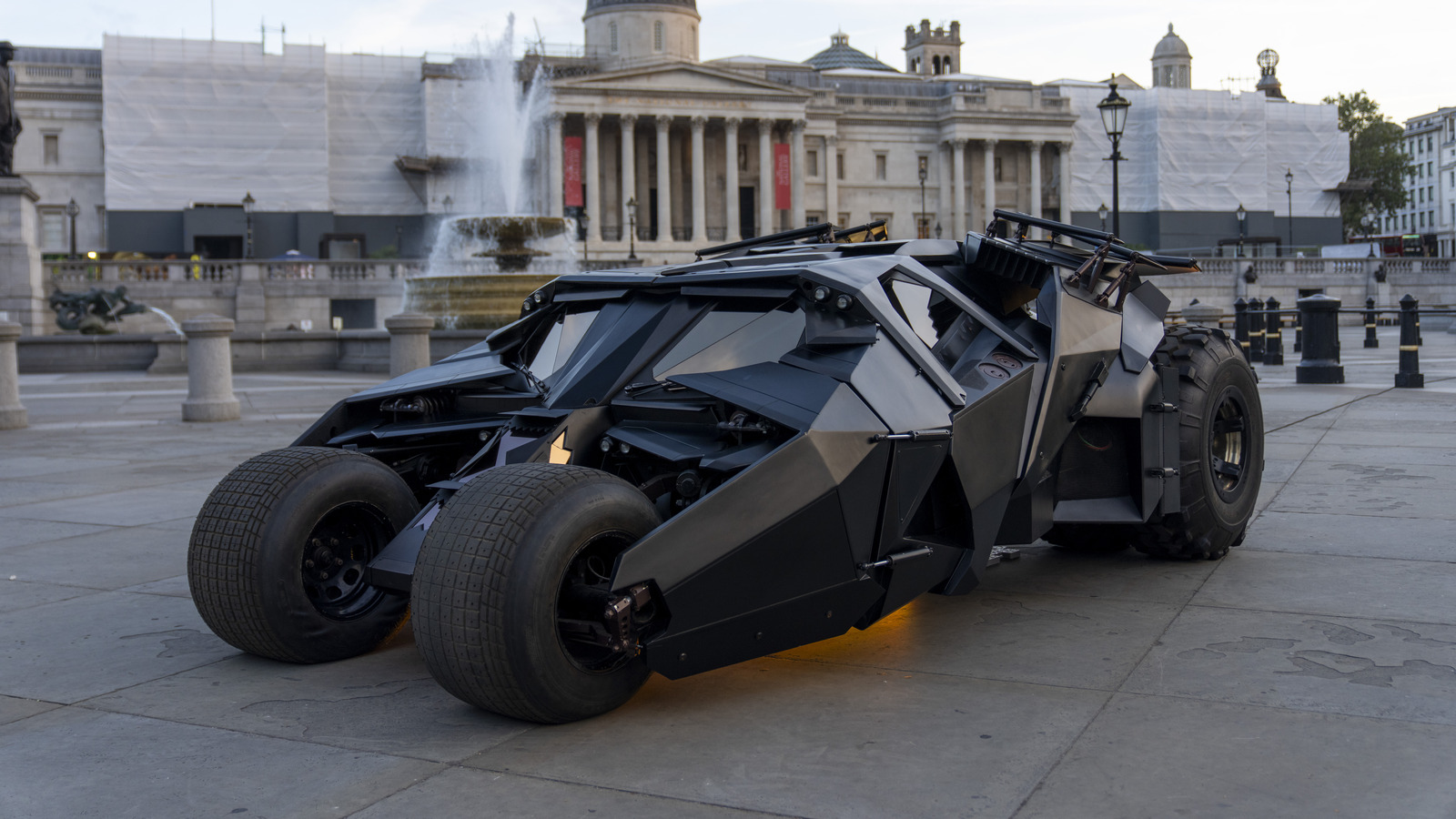
Christopher Nolan’s The Dark Knight trilogy revolutionized the franchise by reimagining the Batmobile as a tactical military bridge-laying vehicle called the Tumbler. Unlike its predecessors, the Tumbler was engineered to function as a genuine, heavy-duty off-road truck.
- Engine: 5.7-liter (350 cubic-inch) General Motors V8 engine.
- Chassis: Custom-fabricated tubular steel frame with heavy-duty independent suspension.
- Horsepower Output: Approximately 500 horsepower.
The Tumbler weighed roughly 2.5 tons, necessitating a massive amount of torque to launch its bulk through ramps and across obstacles. While the films featured fictional depictions of jet-engine afterburners and stealth modes, the physical stunt vehicles relied on raw American V8 muscle mated to truck transmissions to perform their gravity-defying leaps.
The Modern Era: Muscle Car Roots (2022)
In The Batman (2022), director Matt Reeves pivoted away from military tanks and sleek fantasy concepts toward a grounded, hand-built muscle car aesthetic. This version looked as though it could have been assembled by a skilled mechanic in an abandoned subway station.
- Inspiration: Classic American muscle, drawing visual cues from the Dodge Charger and Plymouth Barracuda.
- Engine: Mid-mounted V8 engine layout, specifically utilizing high-performance Ford or Chevrolet small-block platforms in custom stunt builds.
- Horsepower Output: Estimated between 500 and 600 horsepower, optimized for low-end torque to facilitate high-speed drifting and chase sequences in wet, industrial environments.
Comparative Specifications of Working Batmobiles
To clearly understand how these mechanical beasts compare across generations, the following table breaks down their core engineering specifications, chassis origins, and estimated power outputs based on verified automotive documentary features and builder disclosures.
| Era / Film | Base Chassis / Origin | Engine Type | Displacement | Estimated Horsepower | Primary Operational Focus |
|---|---|---|---|---|---|
| 1966 TV Series | 1955 Lincoln Futura | Ford FE V8 | 6.4L (390 ci) | ~300 HP | Cruising, visual presence, parade appearances |
| 1989 Burtonverse | Modified Chevrolet Impala | Chevy V8 (Small/Big Block) | 5.7L+ (350+ ci) | 350 – 450 HP | Straight-line acceleration, cinematic styling |
| 2008 Dark Knight (Tumbler) | Custom Tubular Steel Frame | GM V8 | 5.7L (350 ci) | ~500 HP | Heavy off-road stunts, jump landings, durability |
| 2022 The Batman | Custom Tubular Frame / Muscle Car | Mid-Mounted V8 | 6.2L+ (383+ ci) | 500 – 600 HP | High-speed drift control, rugged pursuit handling |
The Myth vs. Reality of Turbine and Nuclear Power
Pop culture media frequently attributes impossible technical specifications to the Batmobile. Comic books, animated series, and promotional material often state that the vehicle runs on a "turbine engine" or a "controlled nuclear fusion pile," generating thousands of horsepower and allowing Mach-level speeds.
In reality, building a true gas-turbine-powered automobile for a motion picture set is exceptionally impractical and dangerous. While automotive pioneers like Jay Leno have driven turbine-powered cars (such as the Chrysler Turbine Car), they present severe operational challenges:
- Throttle Lag: Gas turbines take time to spool up to their operating RPM, making instantaneous acceleration and precise stunt maneuvering nearly impossible.
- Extreme Exhaust Temperatures: The exhaust gas temperature of a functional turbine engine can melt asphalt or incinerate bystanders standing too close to the rear bumper.
- Fuel Inefficiency: Turbines consume vast quantities of specialized fuel, severely limiting run time during grueling multi-hour film shoots.
Consequently, production special effects teams rely on internal combustion V8 engines fitted with custom acoustic exhaust tips to sound like jet turbines while delivering the instant torque and reliability required by stunt drivers.
Street-Legal Replicas and Modern Custom Builds
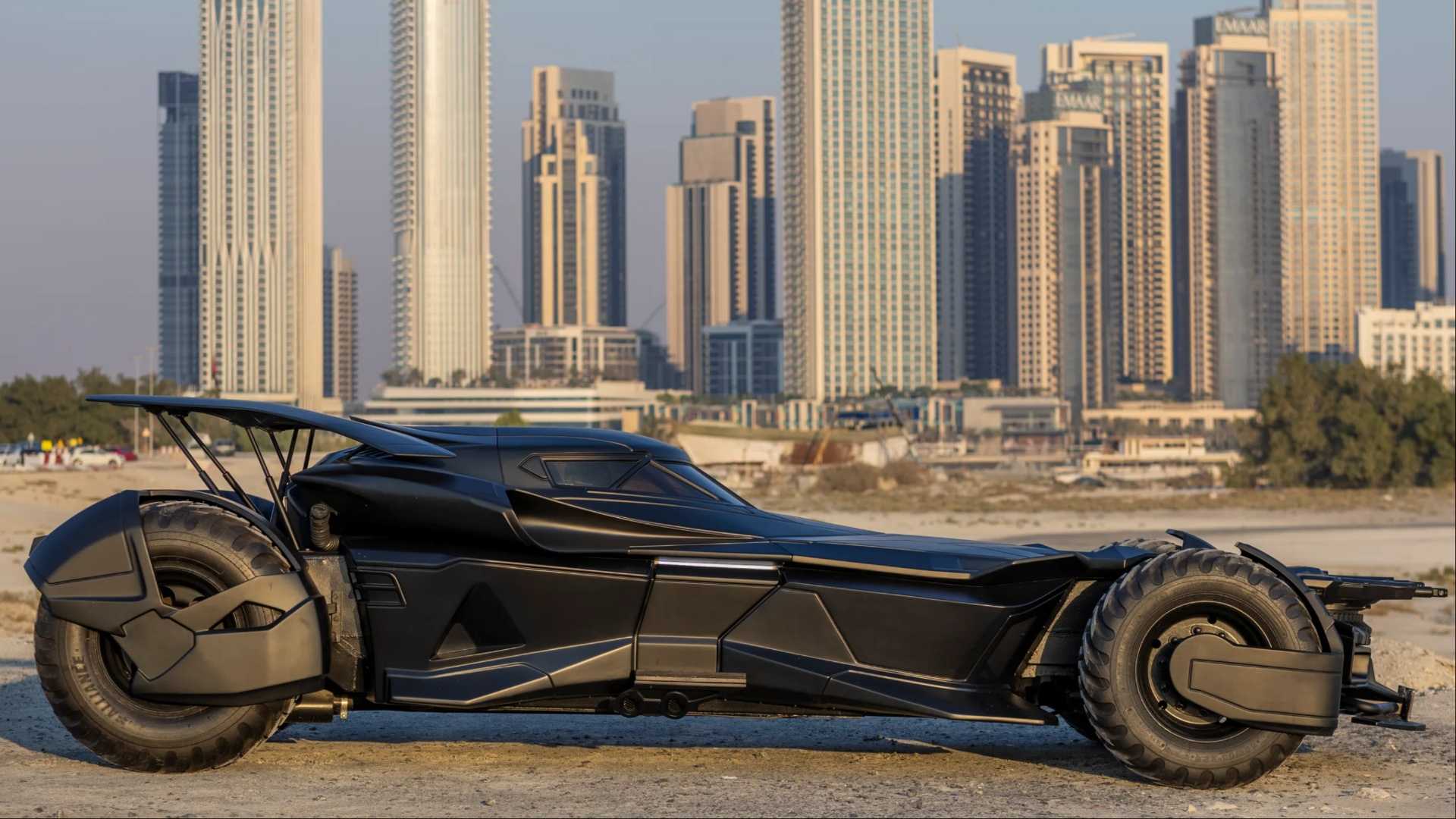
For affluent collectors and automotive enthusiasts, owning a functional replica of the Batmobile is a multi-million-dollar reality. Independent coachbuilders and specialized engineering firms have constructed street-legal variants of both the Tumbler and the 1989 classic.
Companies offering custom-built Tumbler replicas often integrate modern powertrain options, such as GM LS3 or LS7 V8 crate engines. These modern powerplants deliver significantly higher efficiency and reliability than the engines available during the original film productions:
- Displacement: 6.2 to 7.0 liters.
- Output: 525 to 700 horsepower.
- Torque: Often exceeding 500 lb-ft at low RPMs to move heavy composite armor plating.
Registering these vehicles for public road use varies heavily by jurisdiction. In the United States, street legality depends on state-specific DMV regulations regarding emissions, bumper heights, lighting placement, and windshield safety glass. Most replica owners must register their vehicles as custom-built or kit cars, complying with local safety inspection standards before taking their machines onto public highways.
Frequently Asked Questions
What engine is actually inside the 1989 movie Batmobile?
The primary hero and stunt cars used in the 1989 Tim Burton film utilized modified Chevrolet V8 engines mounted on custom or modified automotive frames. While the exterior bodywork suggests a futuristic jet-car, the mechanical foundation relies on dependable American muscle car engineering to ensure the vehicle could perform heavy stunt driving without mechanical failure.
How much does a real operational Batmobile weigh?
Weight varies drastically by design. The 1966 Barris Lincoln Futura build weighs roughly 4,500 to 5,000 pounds due to heavy steel and fiberglass components. In contrast, the military-style Tumbler from The Dark Knight trilogy weighs approximately 5,000 pounds (2.5 tons) because of its thick steel tubular frame, heavy-duty truck axles, and structural armor panels.
Are any real Batmobiles street legal?
Yes, several custom builders create fully street-legal replicas of the 1989 Batmobile and the Tumbler. These vehicles must be retrofitted with standard headlights, turn signals, mirrors, horn systems, and DOT-approved tires, and they must pass state-specific custom vehicle inspections to obtain license plates.
Why do movie Batmobiles use V8 engines instead of real jet turbines?
Internal combustion V8 engines provide immediate throttle response, manageable operating temperatures, reliable maintenance intervals, and the precise low-end torque required for stunt driving. Real jet turbine engines suffer from dangerous heat output, sluggish throttle response, and extreme fuel consumption, making them impractical for film production environments.
How fast can a real custom Batmobile go?
While top speed is rarely tested due to aerodynamic drag and poor high-speed stability from massive rear tires, high-performance V8-powered replicas can easily exceed 100 to 120 miles per hour. However, they are engineered primarily for rapid acceleration, handling, and cinematic presence rather than top-end speed records.
Summary and Next Actions
The real Batmobile horsepower is rooted in heavy-duty American V8 engineering, delivering between 300 and 700 horsepower depending on whether you examine a classic television cruiser, a gothic movie hero car, or a modern custom muscle build. While Hollywood lore invokes jet propulsion and nuclear reactors, practical stunt coordination requires reliable internal combustion power to move thousands of pounds of custom armor and fiberglass.
For automotive enthusiasts looking to explore further, research specialized coachbuilding firms that construct street-legal movie car replicas, or review automotive museum collections—such as the Petersen Automotive Museum—where physical cinematic vehicles are preserved and documented for public exhibition.
Image Gallery