How to Choose a Bike Wreck Lawyer
To choose a bike wreck lawyer, prioritize a specialist with a documented history of handling bicycle-specific personal injury claims rather than a generalist. Evaluate their understanding of local cycling laws, their willingness to go...
To choose a bike wreck lawyer, prioritize a specialist with a documented history of handling bicycle-specific personal injury claims rather than a generalist. Evaluate their understanding of local cycling laws, their willingness to go to trial, and their fee structure. Ensure they have access to accident reconstruction experts and offer a clear communication plan.
Contents
Choosing the right legal representation after a bicycle accident is a decision that significantly impacts the trajectory of your recovery and financial future. Unlike standard motor vehicle collisions, bicycle wrecks involve unique physics, specific municipal ordinances, and often, a deep-seated bias against cyclists from insurance adjusters and juries. As of 2026, the complexity of these cases has increased due to the prevalence of e-bikes, evolving "vulnerable road user" statutes, and the integration of sophisticated digital evidence from wearable devices and onboard cycling computers.
Finding a lawyer who understands that a bicycle is not just a "small car" and that a cyclist is uniquely exposed to catastrophic injury requires a systematic approach to vetting and selection.
The Critical Distinction: Why a Specialist Matters
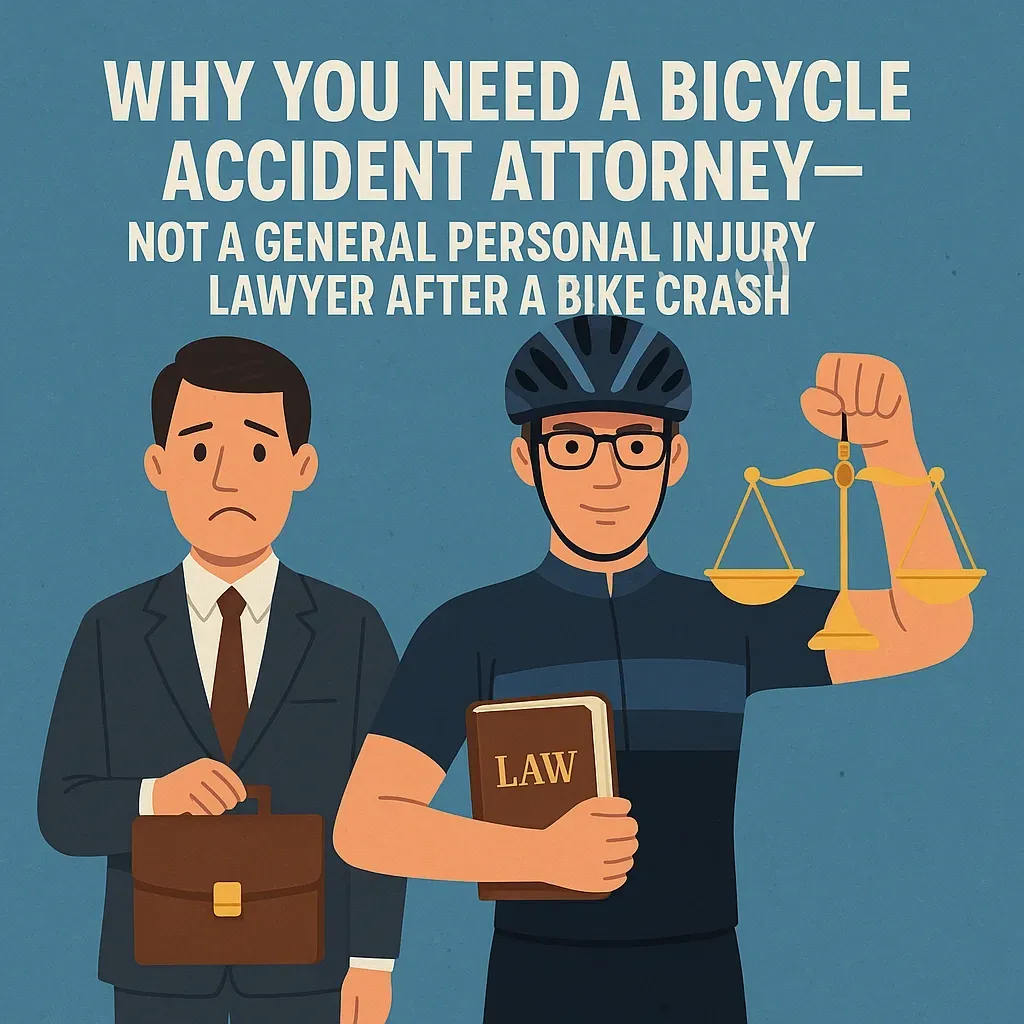
The most common mistake injured cyclists make is hiring a general personal injury lawyer who primarily handles car-on-car collisions. While the basic principles of negligence apply to both, the nuances of a bike wreck demand specialized knowledge. A dedicated bike wreck lawyer understands the "why" behind the crash, such as how road defects like longitudinal cracks or improper drainage grates can cause a "solo" wreck that is actually the fault of a municipality.
Bicycle specialists are also familiar with the "contributory negligence" traps that insurance companies often set. In many jurisdictions, if an insurer can prove the cyclist was even 1% at fault—perhaps for not wearing high-visibility clothing or for riding slightly outside a bike lane—the cyclist may be barred from any recovery. A specialist knows how to counter these defenses by citing current safety studies and specific "three-foot" or "five-foot" passing laws that shift the burden of care onto the motorist.
Furthermore, a specialist lawyer often rides themselves. This isn't just a marketing point; it means they understand the mechanics of a bicycle. They know the difference between a carbon fiber frame's structural failure and a superficial scratch, and they understand how a "dooring" incident occurs from the cyclist's perspective. This firsthand knowledge is invaluable when explaining the mechanics of the crash to a jury that may never have commuted by bike.
Core Qualifications to Verify
When researching potential attorneys, you must look beyond their website’s testimonials. In 2026, transparency in legal results is more accessible than ever, but you still need to know what metrics matter.
Specialized Case History
Ask for a list of recent settlements or verdicts specifically involving bicycles. You are looking for cases that mirror yours—whether it was a left-turn "smash," a rear-end collision, or a crash caused by a ride-share vehicle. If the firm’s portfolio is 95% trucking accidents and 5% bicycles, your case may not receive the specialized attention or the nuanced legal strategy it requires.
Knowledge of E-Bike Legislation
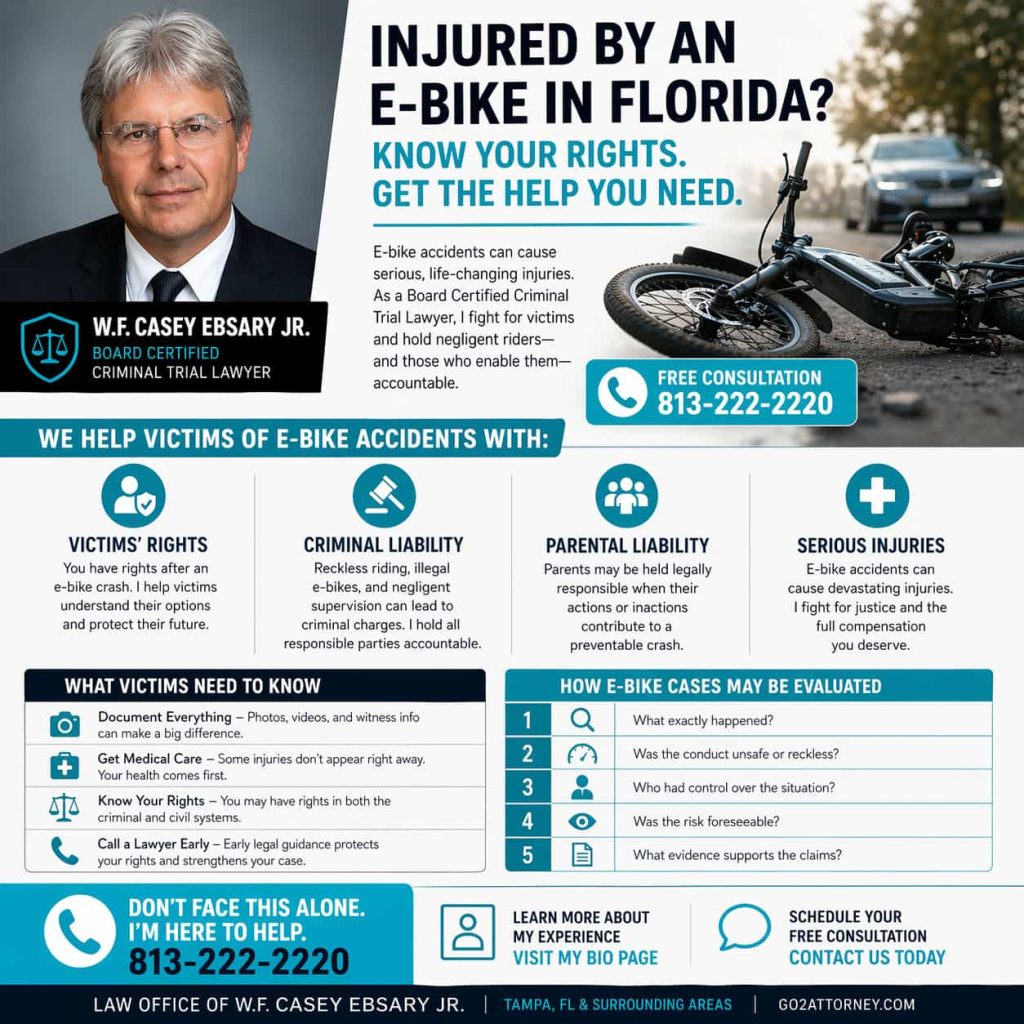
As of 2026, e-bikes have transformed the legal landscape. Depending on the class of the e-bike (Class 1, 2, or 3), different laws regarding speed, trail access, and insurance requirements apply. A qualified lawyer must be up-to-date on how these classifications affect liability. For instance, if you were riding a Class 3 e-bike, the defense might argue you were operating a motor vehicle without proper equipment. Your lawyer needs to be prepared to defend your status as a cyclist under the law.
Access to Technical Experts
A high-quality bike wreck lawyer maintains a network of professional experts. These include:
- Accident Reconstructionists: Professionals who can use skid marks, point of impact, and GPS data from your bike computer (like a Garmin or Wahoo) to recreate the crash.
- Biomechanical Engineers: Experts who can explain how the forces of the impact resulted in your specific injuries, proving the severity of the wreck.
- Medical Life-Care Planners: For catastrophic injuries, these experts calculate the cost of medical care, physical therapy, and lost earning capacity for the remainder of your life.
The Vetting Process: Questions to Ask
Once you have a shortlist of candidates, schedule a consultation. Most personal injury firms offer these for free. Use this time not just to tell your story, but to interview the attorney.
- "Who will actually be handling my file?" In large "mill" firms, you might meet a senior partner but have your case managed by a junior associate or a paralegal. You want a firm where the lead attorney is directly involved in the strategy.
- "How do you handle digital evidence?" In 2026, data from your Strava account, GoPro footage, or smart-watch heart rate monitors can be used to prove your speed and the intensity of the impact. Your lawyer should be tech-savvy enough to preserve and utilize this data.
- "What is your trial frequency?" Insurance companies know which lawyers always settle and which ones are willing to go to court. If a lawyer never goes to trial, the insurance company has no incentive to offer a maximum settlement.
- "How do you value the bicycle and gear?" A high-end road bike or e-bike can cost upwards of $10,000. Many adjusters will try to value your bike like a used toy from a big-box store. Your lawyer should know how to document the replacement value of specialized carbon components, custom wheels, and expensive safety gear like MIPS-equipped helmets.
Understanding Fee Structures and Costs
Almost all bike wreck lawyers work on a contingency fee basis. This means they only get paid if you win. However, the details of these agreements can vary significantly.
| Fee Component | Standard Range (2026) | What to Look For |
|---|---|---|
| Contingency Percentage | 33.3% to 40% | Is the percentage higher if the case goes to trial? This is common. |
| Litigation Costs | Variable | Are costs (filing fees, expert witnesses) deducted before or after the attorney's percentage? |
| Administrative Fees | $0 - $500 | Avoid firms that charge for "opening a file" or routine photocopying. |
| No-Recovery, No-Fee | Mandatory | Ensure you are not responsible for the firm’s out-of-pocket costs if the case is lost. |
It is crucial to clarify the "costs" versus "fees." Fees are the lawyer's payment for their time. Costs are the expenses the firm pays to move the case forward, such as hiring a court reporter for a deposition. A reputable lawyer will typically advance these costs and only seek reimbursement from the final settlement.
Navigating Insurance and Liability Nuances
A significant part of a bike wreck lawyer's job is finding "coverage." Often, the driver who hit you may have minimal insurance. A skilled lawyer will look into:
- Uninsured/Underinsured Motorist (UM/UIM) Coverage: Many cyclists don't realize their own auto insurance policy might cover them even when they are on their bike.
- Homeowners or Renters Insurance: In some cases, if the person at fault was a pedestrian or another cyclist, their liability might be covered under a home insurance policy.
- Employer Liability: If the driver was working (e.g., a delivery driver or a salesperson), the employer’s commercial policy may be accessible.
The lawyer's ability to identify multiple layers of insurance is often what makes the difference between a settlement that covers your medical bills and one that provides for your long-term financial security.
The Importance of Local Jurisdiction Knowledge
Traffic laws are notoriously local. What is legal in one city—such as "Idaho Stops" (treating stop signs as yields)—may be illegal in the next county over. Choosing a lawyer who is familiar with the specific courts, judges, and local ordinances where your accident occurred is a strategic advantage. They will know the reputation of the local police department’s accident investigation unit and whether the local municipality has a history of ignoring reports of dangerous road conditions.
Red Flags to Avoid
Be wary of any lawyer who "solicits" you directly. In many states, it is unethical for a lawyer to contact you via phone or in person immediately after an accident (often called "ambulance chasing"). If a lawyer finds you before you find them, it is a significant red flag regarding their professional ethics.
Additionally, avoid lawyers who promise a specific dollar amount early in the process. It is impossible to accurately value a claim until your "Maximum Medical Improvement" (MMI) is reached. Any lawyer promising a "million-dollar payout" within a week of your crash is likely prioritizing a quick turnover rather than your best interests.
Frequently Asked Questions
What if I was partially at fault for the accident?
In 2026, many states follow "comparative negligence" rules. This means you can still recover damages even if you were partially at fault, though your total compensation will be reduced by your percentage of blame. A specialized bike lawyer is essential here to minimize the percentage of fault assigned to you by highlighting the motorist's "duty of care."
How long do I have to hire a lawyer and file a claim?
This is governed by the Statute of Limitations, which varies by state. Generally, it ranges from one to four years. However, for bicycle wrecks, hiring a lawyer immediately is critical because physical evidence (like skid marks or bike damage) and digital evidence (like nearby storefront surveillance footage) can disappear within days.
Can I handle a bike wreck claim myself?
While you can handle small property-damage-only claims, any accident involving injury should be handled by a professional. Insurance companies use sophisticated software to minimize payouts. Without a lawyer to "level the playing field," you are at a significant disadvantage during negotiations.
Does it matter if I wasn't wearing a helmet?
In many jurisdictions, the "helmet defense" is used by insurance companies to argue that you contributed to your own injuries. However, many states have laws prohibiting the lack of a helmet from being used as evidence of negligence. A bike wreck specialist will know how to prevent this from being used against you.
What should I do with my damaged bike and gear?
Do not repair or discard anything. Your bike, helmet, and even your torn clothing are critical pieces of evidence. Your lawyer will want to have these items inspected by an expert to prove the force and angle of the impact.
Final Recommendation
When choosing a bike wreck lawyer, trust your instincts during the initial consultation, but verify them with hard data. Look for an attorney who provides a clear, written plan for how they will handle your case, how they will communicate with you, and how they will handle the costs of litigation. The best lawyer for a cyclist is one who treats your case with the same technical precision you use to maintain your bike—focusing on the details, understanding the mechanics, and showing a relentless commitment to the finish line.
Disclaimer: This article provides general information and does not constitute legal advice. Laws vary by jurisdiction and are subject to change. Always consult with a qualified attorney regarding your specific legal situation.
Image Gallery