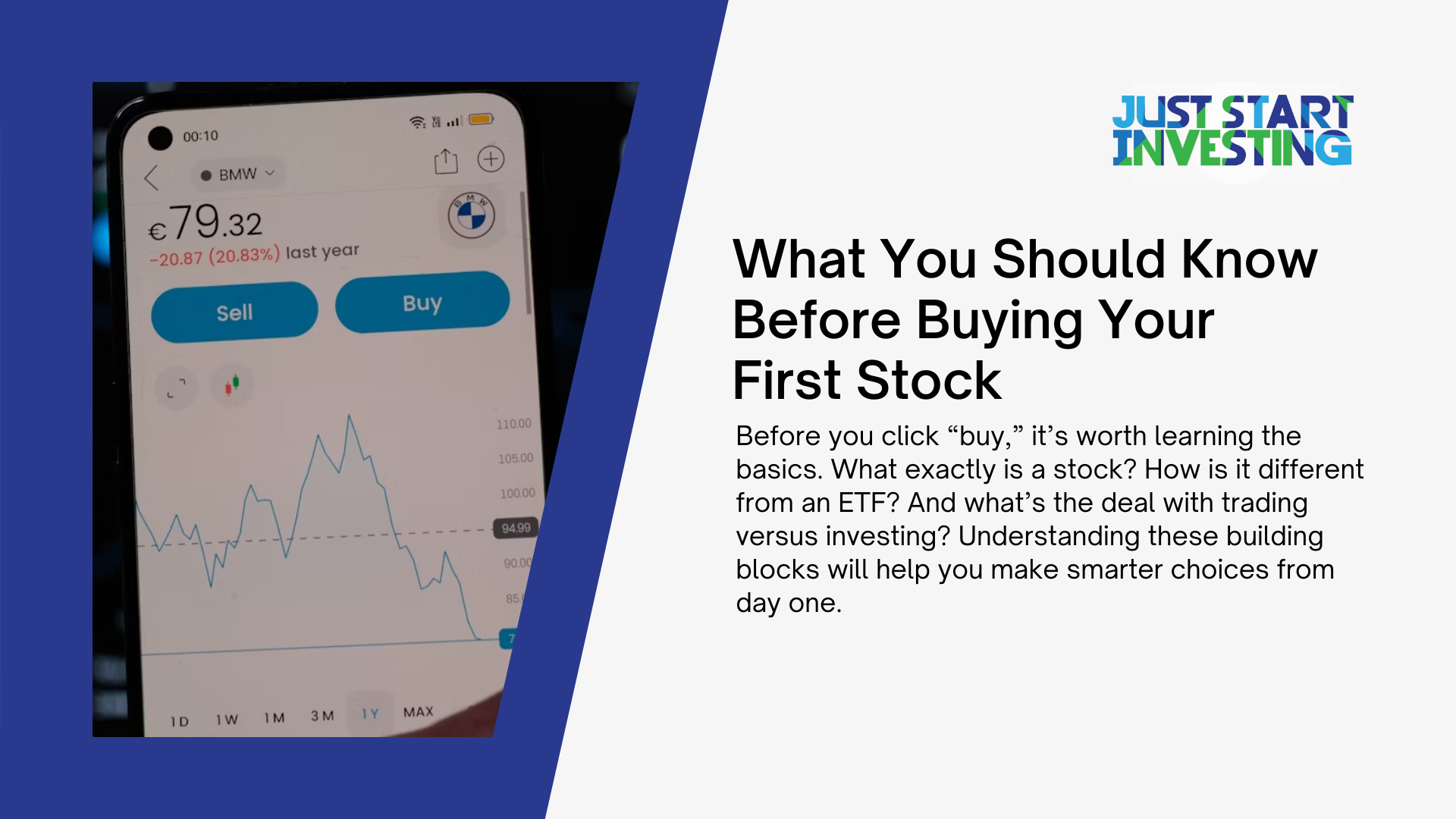
How to Buy a Stock Online: A Comprehensive Guide for 2026
To buy a stock online, you must open an account with a regulated brokerage, verify your identity, and deposit funds via a linked bank account. Once funded, you search for a specific company's ticker symbol, select an order type—such as...
To buy a stock online, you must open an account with a regulated brokerage, verify your identity, and deposit funds via a linked bank account. Once funded, you search for a specific company's ticker symbol, select an order type—such as a market or limit order—and execute the trade.
Contents
Investing in the stock market has transitioned from a high-barrier activity reserved for institutional players to an accessible digital experience. As of 2026, the infrastructure supporting online trading is more streamlined than ever, with many platforms offering fractional shares, zero-commission trades, and instantaneous mobile execution. However, while the mechanical process is simple, successful investing requires an understanding of the regulatory environment, the various types of brokerage accounts, and the mechanics of order execution.
1. Prerequisites for Opening an Online Brokerage Account
Before you can place your first trade, you must satisfy several regulatory and financial requirements. Online brokerages operate under the supervision of the Securities and Exchange Commission (SEC) and the Financial Industry Regulatory Authority (FINRA). These organizations enforce "Know Your Customer" (KYC) and Anti-Money Laundering (AML) rules that require brokers to verify the identity of every user.
Eligibility and Documentation
To open an account in the United States, you generally need to be at least 18 years old and a legal resident or citizen. During the application process, you will be required to provide:
- Social Security Number (SSN) or Taxpayer Identification Number (TIN): This is essential for tax reporting purposes, specifically for capital gains and dividends.
- Government-Issued ID: A valid driver’s license, passport, or state ID.
- Employment Information: Brokers often ask for your employer’s name and your annual income to assess your risk profile and ensure compliance with insider trading regulations.
- Financial Profile: You may be asked about your net worth, liquid assets, and investment experience. This helps the broker determine if certain high-risk products, like options or margin trading, are appropriate for you.
Technical Requirements
Most modern trading is done via dedicated mobile applications or web-based portals. Ensure your device supports biometric security (fingerprint or facial recognition) or multi-factor authentication (MFA). In 2026, MFA is no longer optional for most reputable platforms due to the increased sophistication of cyber threats.
2. Selecting the Right Online Brokerage
Choosing a platform is one of the most critical decisions an investor makes. The "best" broker depends entirely on your goals, whether you are a long-term "buy-and-hold" investor or a frequent day trader.
Discount vs. Full-Service Brokers
Most online investors use discount brokers. These platforms, such as Fidelity, Charles Schwab, or Robinhood, offer low or zero-commission trades on stocks and Exchange-Traded Funds (ETFs). They provide robust digital tools but do not offer personalized investment advice from a human advisor unless you pay for a premium tier.
Full-service brokers, conversely, provide comprehensive financial planning, tax advice, and estate planning. While they have digital platforms for stock buying, their primary value lies in the relationship with a human advisor. These services typically come with higher management fees, often calculated as a percentage of your total assets under management (AUM).
Key Features to Compare
When evaluating a platform, consider the following:
- Fractional Shares: This allows you to buy a portion of a single share. If a stock is trading at $3,000 but you only have $100 to invest, fractional shares allow you to own a 3.33% piece of that share.
- Educational Resources: Beginners should look for platforms with extensive libraries, webinars, and paper trading (a simulator that lets you practice with fake money).
- Customer Support: Ensure the broker offers 24/7 support or at least rapid response times during market hours.
- Asset Availability: Beyond stocks, you might want access to international markets, bonds, or mutual funds.
3. Understanding Brokerage Account Types
Not all accounts are treated equally by the IRS. The type of account you choose will dictate when and how you are taxed on your profits.
Standard Taxable Brokerage Account
This is the most flexible option. You can deposit and withdraw money at any time without penalty. However, you are taxed on any "realized" gains—profits made when you sell a stock for more than you paid—and on any dividends received. In 2026, capital gains tax rates remain dependent on how long you held the asset (short-term vs. long-term).
Retirement Accounts (IRA and Roth IRA)
- Traditional IRA: Contributions may be tax-deductible, and the investments grow tax-deferred. You pay income tax when you withdraw the money in retirement.
- Roth IRA: You contribute "after-tax" money, but the investments grow tax-free. As long as you follow the rules, you pay no taxes on withdrawals after age 59½. These are ideal for younger investors who expect to be in a higher tax bracket later in life.
| Feature | Taxable Brokerage | Roth IRA | Traditional IRA |
|---|---|---|---|
| Tax Treatment | Taxed on gains annually | Tax-free withdrawals | Tax-deferred growth |
| Withdrawal Rules | No restrictions | Principal anytime; earnings at 59½ | Penalties before 59½ |
| Contribution Limits | No limit | Strict annual limits | Strict annual limits |
| Best For | Liquidity and flexibility | Long-term tax-free growth | Immediate tax deduction |
4. Funding Your Account and Settlement Times
Once your account is approved, you must transfer capital to start trading. The most common method is an Electronic Funds Transfer (EFT) via the Automated Clearing House (ACH) network.
Deposit Methods
- ACH Transfer: This links your bank account directly to the broker. While the transfer might take 1–3 business days to fully "clear," many modern brokers grant "instant buying power," allowing you to trade immediately while the funds are in transit.
- Wire Transfer: Faster than ACH but usually incurs a fee from your bank (typically $25–$50). This is preferred for very large deposits.
- Mobile Check Deposit: Some apps allow you to snap a photo of a check to fund your account.
T+1 Settlement Standard
A significant development in market infrastructure is the T+1 settlement cycle, which became the standard in 2024 and remains the rule in 2026. This means that when you sell a stock, the transaction officially "settles," and the cash becomes available for withdrawal or reinvestment one business day after the trade date. This increased speed reduces systemic risk and gives investors faster access to their capital.
5. How to Research a Stock
Buying a stock is purchasing a piece of a living business. Before clicking "buy," you must perform due diligence to ensure the company's valuation aligns with its growth prospects.
Ticker Symbols
Every publicly traded company is identified by a unique one-to-five-letter code known as a ticker symbol. For example, Apple Inc. is AAPL, and Amazon.com Inc. is AMZN. Searching by name is possible on most platforms, but double-checking the ticker is essential to avoid buying a similarly named but different company.
Fundamental vs. Technical Analysis
- Fundamental Analysis: This involves looking at the company's financial health. Investors examine the Earnings Per Share (EPS), the Price-to-Earnings (P/E) Ratio, and the balance sheet. Official filings, such as the SEC Form 10-K (annual report), provide the most accurate data.
- Technical Analysis: This focuses on price movement and chart patterns. Technical traders look for trends and volume data to predict short-term price fluctuations. While popular, it is generally considered higher risk for beginners than fundamental investing.
6. Executing the Trade: Step-by-Step
Once you have selected a stock, you need to navigate the order entry screen. This is where most errors occur for new investors.
- Enter the Ticker: Search for the symbol and confirm you have the right company.
- Choose "Buy" or "Sell": Ensure you are on the "Buy" side of the transaction.
- Specify Quantity: Enter the number of shares you want to buy or the dollar amount (if using fractional shares).
- Select Order Type: This determines how the broker fills your order.
- Review and Confirm: Check the estimated total cost, including any fees, before clicking "Place Order."
Common Order Types
Understanding order types is the best way to control your costs:
- Market Order: Instructs the broker to buy the stock immediately at the best available current price. In a volatile market, the price you pay might be slightly higher than the last price you saw on your screen.
- Limit Order: Sets a maximum price you are willing to pay. For example, if a stock is at $105, you can set a limit order for $100. The trade will only execute if the price drops to $100 or lower. This provides price protection.
- Stop-Loss Order: An order to sell a stock once it reaches a specific price, designed to limit an investor's loss on a position.
7. Costs and Hidden Fees
While "zero-commission" is the standard in 2026, trading is not entirely free. Investors should be aware of:
- The Bid-Ask Spread: This is the difference between the highest price a buyer is willing to pay (bid) and the lowest price a seller is willing to accept (ask). The broker or market maker often keeps this difference as a small "hidden" cost.
- Expense Ratios: If you are buying ETFs rather than individual stocks, the fund manager charges an annual fee. A 0.05% expense ratio means you pay $5 for every $10,000 invested.
- Margin Interest: If you borrow money from your broker to buy more stock (trading on margin), you will be charged interest on that loan.
8. Managing Your Portfolio Post-Purchase
Buying the stock is only the beginning. You must decide how to handle your investment over time.
Reinvesting Dividends
Many companies pay out a portion of their profits to shareholders as dividends. Most online brokers offer a Dividend Reinvestment Plan (DRIP). If enabled, your dividends are automatically used to buy more shares of that stock, allowing your wealth to compound more effectively over time.
Monitoring and Rebalancing
Check your portfolio periodically—though not necessarily every day—to ensure your "asset allocation" remains on track. If one stock grows significantly, it might represent too large a portion of your wealth, increasing your risk. Rebalancing involves selling some of the winners and buying underrepresented assets to maintain your desired risk level.
FAQ
Is it safe to buy stocks online?
Yes, provided you use a broker registered with the SEC and a member of the Securities Investor Protection Corporation (SIPC). SIPC protection covers up to $500,000 (including $250,000 for cash) if the brokerage firm fails. It does not, however, protect you against losses caused by a decline in the stock market.
How much money do I need to start?
Technically, you can start with as little as $1 to $5 if your broker offers fractional shares. While you won't see significant gains with such small amounts, it is an excellent way to learn the mechanics of the market without risking substantial capital.
Can I buy stocks on the weekend?
You can place an order on the weekend, but it will not execute until the market opens on Monday morning (unless it is a holiday). Some brokers offer "Extended Hours Trading," allowing you to trade before the market opens or after it closes, but these periods have lower liquidity and higher volatility.
What happens if the company I bought goes bankrupt?
In the event of a total bankruptcy, common shareholders are usually the last to be paid, often receiving nothing after creditors and bondholders are settled. This is why diversification—buying many different stocks or an index fund—is a critical strategy to mitigate the risk of a single company failing.
Do I have to pay taxes every time I sell?
You only owe taxes if you sell the stock for a profit in a taxable brokerage account. If you sell for a loss, you can often use that loss to offset other gains or up to $3,000 of your ordinary income, a strategy known as tax-loss harvesting.
Practical Recommendation
For most new investors in 2026, the most effective "next step" is to automate the process. Once you have opened your account and learned to place a trade, set up a recurring monthly deposit. This strategy, known as dollar-cost averaging, ensures you are buying shares consistently regardless of market fluctuations, which typically results in a lower average cost per share over the long term. Start by researching broad-market ETFs, which offer instant diversification across hundreds of companies through a single purchase.
Disclaimer: This information is for educational purposes only and does not constitute financial, legal, or tax advice. Investing involves risk, including the possible loss of principal. Consult with a qualified professional before making significant investment decisions.
Image Gallery