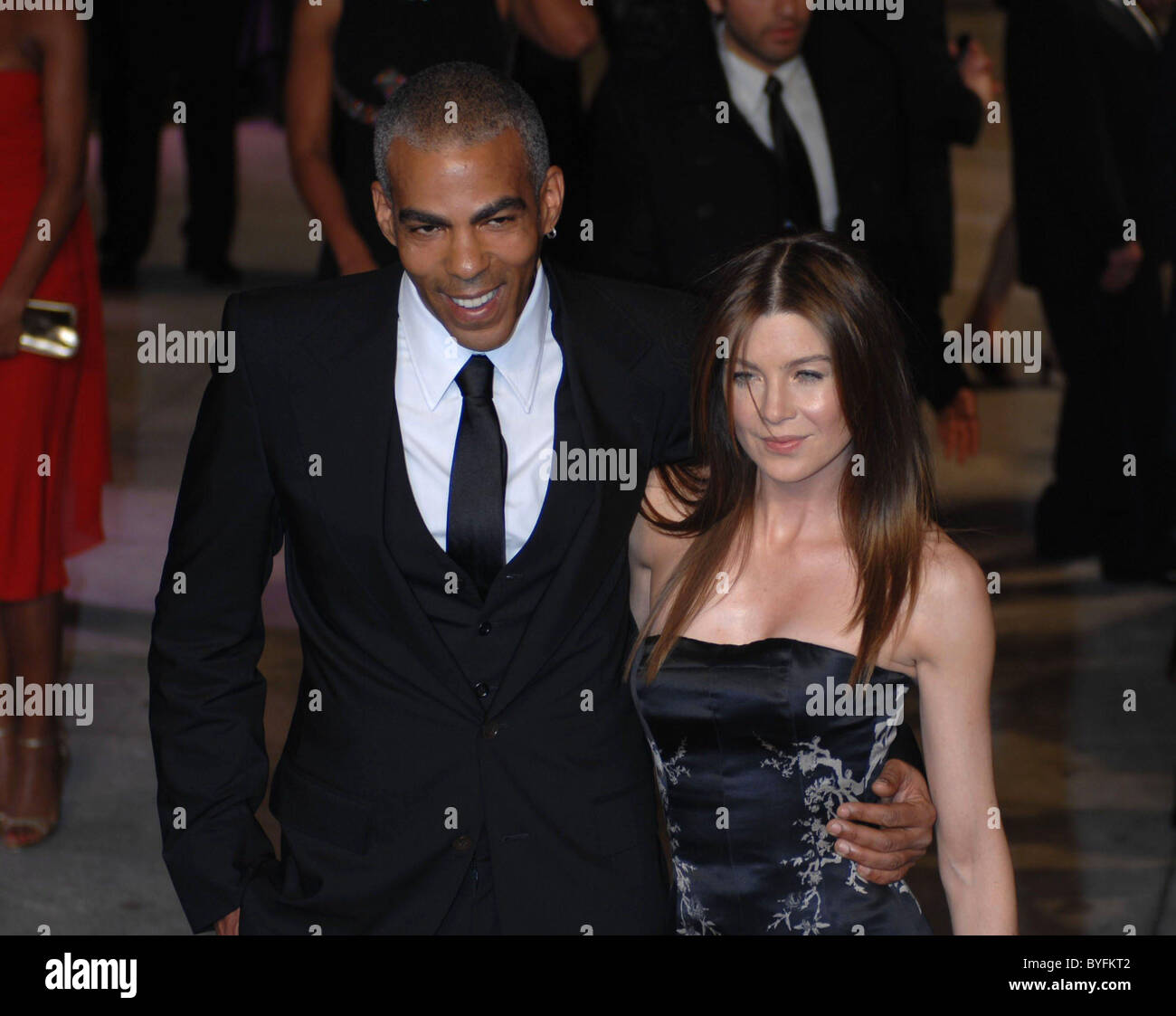
What Does Chris Ivery Do in Music?
Chris Ivery is a veteran music producer and songwriter who earned significant recognition for his contributions to the pop and R&B landscape during the late 2000s and early 2010s. His most prominent professional achievement in the musi...
Chris Ivery is a veteran music producer and songwriter who earned significant recognition for his contributions to the pop and R&B landscape during the late 2000s and early 2010s. His most prominent professional achievement in the music industry is his co-writing credit on Rihanna’s 2011 hit single "Cheers (Drink to That)."
Contents
While his name is often associated with his high-profile marriage to actress Ellen Pompeo, Ivery’s career in the music industry spans decades, characterized by behind-the-scenes production work and a sharp eye for commercial appeal. In the years leading up to 2026, Ivery has largely transitioned his focus from active music production to the fashion and lifestyle industries, though his legacy within the music business remains rooted in his ability to bridge the gap between street-level production and mainstream chart success.
The Foundations of Chris Ivery’s Music Career
To understand what Chris Ivery does in music, one must look at the culture of the Northeast music scene during the 1990s and early 2000s. Born and raised in Cambridge, Massachusetts, Ivery grew up in an environment where urban music was rapidly evolving. Unlike performers who seek the spotlight, Ivery’s interests were always oriented toward the technical and business sides of the industry.
In his early career, Ivery functioned as a talent scout and production assistant. His role involved identifying potential hits, connecting songwriters with the right producers, and navigating the complex legalities of music licensing and publishing. This "connector" role is vital in the music industry, as it ensures that the creative energy of a studio session is translated into a commercially viable product.
His background in Cambridge provided him with a unique perspective. The city’s proximity to Boston’s diverse musical hub allowed him to develop a taste for various genres, which would later influence his production choices. While he didn't release solo albums or tour as a performer, his influence was felt in the rooms where tracks were built from the ground up.
The Rihanna Connection: "Cheers (Drink to That)"
The most frequently cited answer to what Chris Ivery does in music is his work on Rihanna’s fifth studio album, Loud. Ivery is credited as one of the songwriters for the track "Cheers (Drink to That)," which peaked at number seven on the Billboard Hot 100 in 2011.
This track is an excellent case study in the modern songwriting process. The song famously samples Avril Lavigne’s 2002 ballad "I'm with You." In the music industry, a songwriting credit is often given to those who help structure the melody, write the lyrics, or facilitate the use of samples that form the backbone of the song. Ivery’s involvement in this track solidified his status as a "platinum-selling" songwriter.
The Mechanics of the "Cheers" Production
The production of "Cheers" involved a massive collaborative effort, including notable figures like Andrew Harr, Jermaine Jackson, Stacy Barthe, and Laura Pergolizzi (LP). Ivery’s role in this ensemble was to ensure the track maintained its "anthemic" quality. Songwriters in this capacity often act as editors, stripping away elements that don't work and emphasizing hooks that will resonate in clubs and on the radio.
For Ivery, this success was not just a creative win but a financial one. In the music business, a songwriting credit on a Top 10 Billboard hit ensures a steady stream of publishing royalties for decades. Even as of 2026, "Cheers" remains a staple of party playlists and "throwback" radio rotations, continuing to generate revenue for Ivery and the other credited writers.
The Role of a Music Producer vs. Songwriter
In discussions about Ivery’s career, the terms "producer" and "songwriter" are often used interchangeably, but they represent different skill sets that Ivery frequently combined.
- The Songwriter Role: This involves the creation of lyrics and melodic structures. Ivery’s contributions often focused on the "feel" of a song—ensuring the phrasing matched the artist's persona.
- The Producer Role: In the urban and pop genres, the producer is often the architect of the sound. This includes selecting the drum kits, managing the synthesizer layers, and directing the artist's vocal performance during recording sessions.
Ivery’s technical depth in the studio allowed him to communicate effectively with engineers. He understood that a hit song requires a balance of frequency—enough bass to satisfy club sound systems, but enough mid-range clarity for the song to sound good through smartphone speakers or car radios.
Strategic Transitions: From Music to Fashion
By the mid-2010s, Chris Ivery’s day-to-day involvement in the music studio began to wane as he pivoted toward another passion: high-end fashion and brand revitalization. This transition is common among successful music industry veterans who use their networking skills and aesthetic sensibilities to conquer new markets.
In 2019, Ivery spearheaded the relaunch of the Italian sportswear brand Sergio Tacchini in the United States. While this may seem like a departure from music, the two industries are deeply intertwined. Sergio Tacchini had a historical connection to hip-hop culture and the "streetwear" movement of the 1980s and 90s. Ivery utilized his connections in the music world to market the brand, recognizing that musicians are the primary tastemakers for fashion trends.
His work with the "STLA" (Sergio Tacchini Los Angeles) collection showed that he could apply the same principles of "sampling" and "remixing"—taking a classic Italian brand and updating it for a modern, West Coast audience—that he used in the music studio.
Professional Milestones: A Career Summary
To provide a clear picture of Chris Ivery’s professional trajectory through 2026, the following table outlines his key contributions and industry shifts.
| Era | Primary Focus | Key Achievement/Role | Industry Impact |
|---|---|---|---|
| Late 1990s | Talent Discovery | Independent Scout (Boston/NY) | Built foundational industry network. |
| 2003 - 2010 | Songwriting & Production | Studio Collaborator | Developed urban-pop crossover tracks. |
| 2011 | Peak Music Success | Co-writer for Rihanna’s "Cheers" | Earned multi-platinum certification. |
| 2012 - 2018 | Publishing & Mentorship | Music Executive Consultant | Managed intellectual property and royalties. |
| 2019 - 2026 | Fashion & Branding | CEO/Lead for Sergio Tacchini LA | Revived heritage brand for modern markets. |
The Business of Music Royalties in 2026
As we look at Chris Ivery’s standing in 2026, his primary "action" in the music industry is the management of his publishing catalog. In the current landscape, songwriting credits are more valuable than ever due to the stabilization of streaming revenue and the high demand for music in sync licensing (TV, film, and advertisements).
For a producer like Ivery, the "work" in music never truly stops because the assets he helped create continue to perform. This passive income provides the capital necessary to fund larger entrepreneurial ventures, such as his fashion lines. His career serves as a blueprint for "the quiet professional"—someone who achieves significant financial and creative success without the need for constant public performance.
Public Perception and Professional Identity
It is impossible to discuss what Chris Ivery does in music without acknowledging the shadow of his wife's fame. Ellen Pompeo, the star of Grey's Anatomy, is one of the highest-paid actresses in television history. Because of this, Ivery is frequently labeled in the media as a "house husband" or simply "Ellen Pompeo’s husband."
However, within the music industry, Ivery is respected as a peer. His ability to navigate the ego-driven world of recording studios and the cutthroat environment of international fashion proves a level of professional competence that operates independently of his marriage. He has often spoken about the importance of being a supportive partner while maintaining his own identity as a businessman.
Frequently Asked Questions
Does Chris Ivery still produce music in 2026?
While he is no longer a full-time studio producer, Ivery remains involved in the industry through consulting and managing his existing musical assets. His focus has shifted primarily to his apparel brand, but he maintains the "producer" mindset in all his business ventures.
How did Chris Ivery get his start in the music industry?
He began in the Boston area, working his way up through independent labels and production houses. His knack for identifying commercial hooks and his ability to network with rising stars in New York and Los Angeles allowed him to transition into major label songwriting.
What is Chris Ivery's most famous song?
His most famous contribution is "Cheers (Drink to That)" by Rihanna. He is credited as a songwriter on the track, which became a global hit and remains his most commercially significant work in the music field.
Is Chris Ivery a singer?
No, Chris Ivery is not a singer or a public performer. He works behind the scenes as a songwriter, producer, and executive. His talent lies in the creation and curation of sound rather than vocal performance.
How does his music background help his fashion career?
The music and fashion industries share the same "cool factor" and consumer base. Ivery uses his understanding of what makes a song "hit"—repetition, style, and cultural relevance—and applies those same metrics to designing and marketing clothing.
Practical Recommendation for Aspiring Producers
If you are looking to emulate Chris Ivery’s career path in the music industry, the key takeaway is the importance of diversification and networking. Ivery did not rely solely on one hit song; he built a network that allowed him to move into fashion and executive roles.
- Focus on Publishing: Prioritize getting songwriting credits, as these provide long-term royalty income that "work" for you even when you aren't in the studio.
- Master One, Learn All: While Ivery was a songwriter, he understood production and the business of licensing. Understanding the "full stack" of the music business makes you indispensable.
- Build a Personal Brand: Even if you work behind the scenes, ensure your reputation for reliability and taste is known among industry peers.
Image Gallery