Robinhood Dividend Yield Explained: A Comprehensive Guide for 2026 Investors
Dividend yield on Robinhood is a financial ratio, expressed as a percentage, that shows how much a company pays out in dividends each year relative to its current stock price. It is calculated by dividing the annual dividend per share...
Dividend yield on Robinhood is a financial ratio, expressed as a percentage, that shows how much a company pays out in dividends each year relative to its current stock price. It is calculated by dividing the annual dividend per share by the stock's current market price. On the Robinhood app, this figure helps investors estimate the passive income potential of a specific stock or Exchange-Traded Fund (ETF) in their portfolio.
Contents
Dividend investing remains a cornerstone of wealth building in 2026, especially as investors seek stability amidst shifting market cycles. For users of the Robinhood platform, understanding the "Div/Yield" statistic is essential for distinguishing between companies that prioritize returning capital to shareholders and those that reinvest all earnings back into growth. While the interface makes these numbers easily accessible, the implications of a specific yield require a deeper look at company health, market conditions, and tax efficiency.
Understanding the Fundamentals of Dividend Yield
To master dividend investing on Robinhood, one must first grasp the mechanics of the yield itself. The dividend yield is not a fixed payment like the interest on a savings account; rather, it is a variable metric that fluctuates every time the stock price changes.
The Inverse Relationship Between Price and Yield
The most critical concept to understand is the inverse relationship between a stock's price and its dividend yield. Because the share price is the denominator in the yield equation, a falling stock price will cause the dividend yield to rise, provided the company does not cut its dividend payment. Conversely, if a stock’s price rallies significantly, the yield will drop.
For example, if a company pays an annual dividend of $2.00 and the stock is trading at $50.00, the yield is 4%. If the stock price drops to $40.00 due to market volatility, the yield jumps to 5%. This is why a "high yield" can sometimes be a warning sign (a "yield trap") rather than a bargain—it may indicate that the market is devaluing the stock because of underlying financial trouble.
Trailing Twelve Months (TTM) vs. Forward Yield
Robinhood typically displays data provided by third-party aggregators like Morningstar. This data often reflects the Trailing Twelve Months (TTM) yield, which is based on the dividends actually paid out over the past year. However, experienced investors also look at the Forward Yield, which is an estimate of the next year's yield based on the company's most recent dividend announcement. In a stable market, these numbers are often the same, but during periods of economic transition in 2026, they can diverge significantly if companies begin raising or lowering their payouts.
How to Find and Interpret Dividend Yield on Robinhood
Robinhood has streamlined its user interface to ensure that key financial metrics are visible even to novice investors. Finding the dividend yield is a straightforward process, but interpreting it requires looking at the broader "Stats" section.
Locating the Metric
- Search for a Stock: Open the Robinhood app and use the search bar to find a specific ticker symbol (e.g., AAPL, O, or VOO).
- Scroll to Stats: Once on the stock's detail page, scroll past the chart and the "About" section until you reach the Stats header.
- Identify Div/Yield: You will see a data point labeled "Div/Yield." This is usually presented as the annual dividend amount in dollars followed by the percentage yield in parentheses (e.g., 0.80 / 1.25%).
Decoding the Display
The first number (the dividend amount) tells you exactly how much cash you would receive annually for every full share you own. The second number (the yield) tells you the efficiency of that investment for generating income. If you see a dash (—) or "0.00," the company currently does not pay a dividend. This is common for "growth" companies like many in the tech sector, which prefer to use their cash to expand the business or buy back shares.
The Math Behind the Metric: Calculating Your Returns
While Robinhood does the math for you, calculating the yield manually helps you perform "what-if" scenarios, especially when considering limit orders at specific price points.
The formula is: Dividend Yield = (Annual Dividends Per Share / Current Stock Price) × 100
Practical Example
Imagine you are looking at a Real Estate Investment Trust (REIT) on Robinhood. The company pays a quarterly dividend of $0.50, totaling $2.00 per year.
- If you buy the stock at $40.00, your yield is 5%.
- If you wait for a dip and buy at $35.00, your yield becomes 5.71%.
By understanding this calculation, you can set "Limit Orders" on Robinhood to purchase stocks only when they hit a price that provides your target dividend yield. This is a common strategy for "income investors" who require a specific cash flow to cover living expenses or to reinvest.
Yield Traps and Risks: What Robinhood Data Won't Tell You
The "Div/Yield" stat on Robinhood is a snapshot, not a guarantee. One of the biggest mistakes investors make is chasing the highest yield available without investigating the company's ability to maintain that payment.
The Payout Ratio
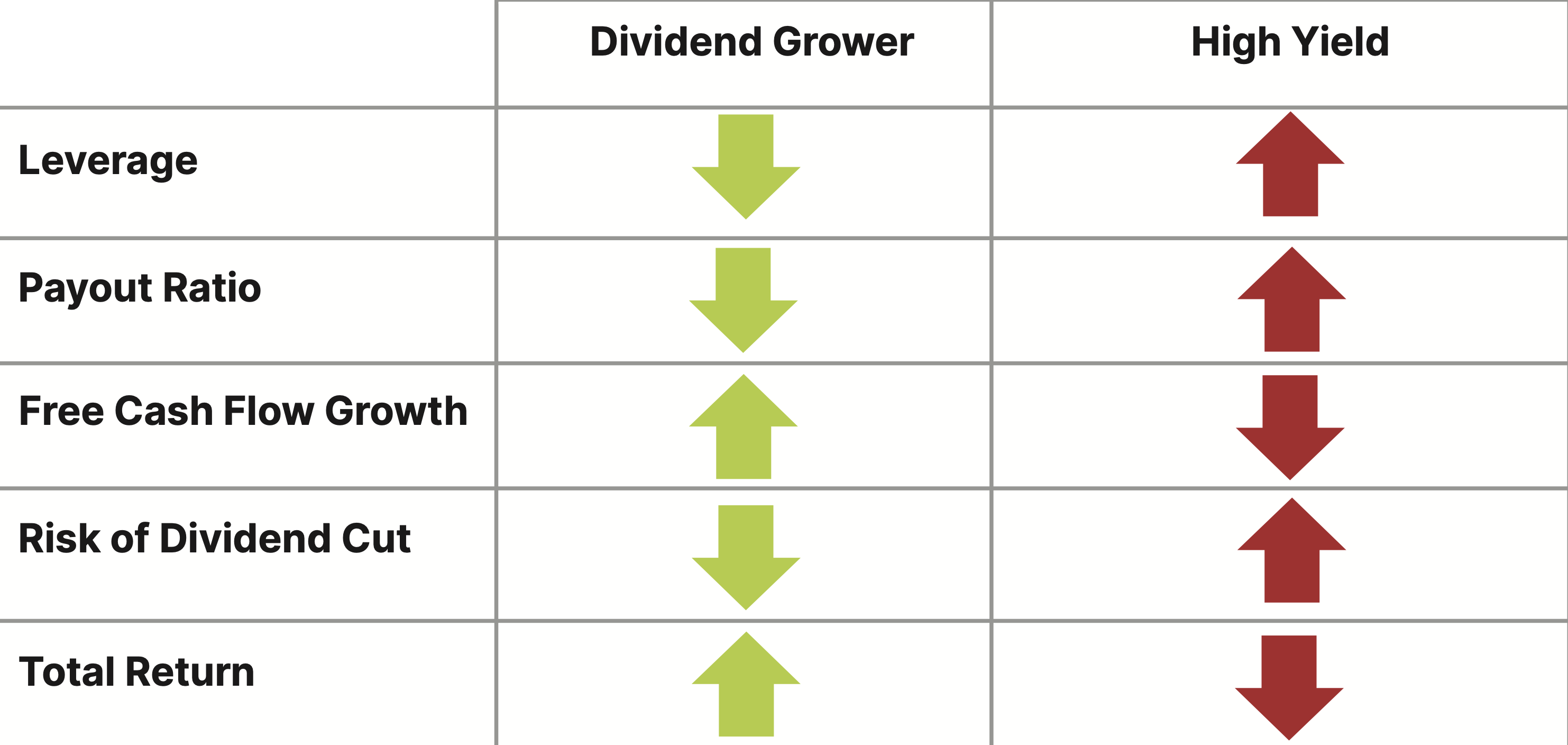
Robinhood's basic interface does not prominently display the Payout Ratio, which is the percentage of earnings a company pays out as dividends. If a company has a dividend yield of 10% but a payout ratio of 110%, it means they are paying out more than they are earning. This is unsustainable and usually leads to a dividend cut, which often causes the stock price to crash.
Dividend Sustainability
In the 2026 economic landscape, sectors like energy and retail may show high yields that reflect market skepticism. Before buying based on yield, check the company's "Dividend History" (often found in the "News" or "Earnings" section of the app). A company that has consistently increased its dividend for 25+ years (a "Dividend Aristocrat") is generally safer than a company whose yield has spiked recently due to a falling stock price.
Leveraging Robinhood Tools for Dividend Growth
Robinhood offers several features that complement dividend investing, making it easier to build wealth through compounding.
Dividend Reinvestment Plan (DRIP)
One of Robinhood's most powerful tools is the Dividend Reinvestment Plan (DRIP). When enabled, any dividends you receive are automatically used to buy more shares (or fractional shares) of the same stock.
- How to Enable: Go to the "Account" tab -> "Investing" -> "Dividend Reinvestment."
- The Benefit: This allows you to accumulate more shares without manually placing trades. Over time, these additional shares produce their own dividends, creating a "snowball effect" of compound growth.
Robinhood Gold and Cash Interest
For investors who hold cash while waiting for dividend stocks to hit a certain yield, Robinhood Gold often provides a competitive annual percentage yield (APY) on uninvested brokerage cash. In 2026, this remains a viable way to earn "dividend-like" returns on your liquidity while maintaining the flexibility to buy stocks during market downturns.
Comparing Dividend Profiles on Robinhood
Different types of assets offer varying yield profiles. Investors should diversify their yield sources to protect against sector-specific downturns.
| Asset Type | Typical Yield Range | Primary Objective | Example Tickers (Illustrative) |
|---|---|---|---|
| Growth Stocks | 0% - 1.5% | Capital Appreciation | NVDA, AMZN, META |
| Dividend Aristocrats | 2% - 4% | Stability & Growth | KO, PEP, JNJ |
| REITs | 4% - 8% | High Current Income | O, STAG, PLD |
| Broad Market ETFs | 1.2% - 2% | Diversification | VOO, VTI, SPY |
| High-Yield ETFs | 3% - 5% | Income Focus | SCHD, VIG, VYM |
Tax Implications for Dividend Investors
It is vital to remember that dividends received in a standard Robinhood brokerage account are generally taxable.
- Qualified Dividends: Most dividends from U.S. corporations are "qualified," meaning they are taxed at the lower long-term capital gains rate (0%, 15%, or 20% depending on your income).
- Ordinary Dividends: Dividends from REITs or certain foreign companies are often "non-qualified" and are taxed at your standard income tax rate, which is typically higher.
- The 1099-DIV: Every year, Robinhood provides a 1099-DIV form in the "Documents" section. This form summarizes your total dividend income for the IRS.
To mitigate taxes, many Robinhood users utilize the Robinhood Retirement (IRA) accounts. Dividends earned within an IRA grow tax-deferred (Traditional) or tax-free (Roth), which can significantly increase your long-term returns compared to a taxable brokerage account.
Frequently Asked Questions
Why did my dividend yield change even though the dividend stayed the same?
This happens because the stock price changed. Since yield is a ratio of dividend-to-price, any movement in the stock’s market value will automatically update the yield percentage shown on Robinhood. If the stock price goes up, the yield goes down; if the price goes down, the yield goes up.
When do I have to own the stock to get the dividend?
To receive a dividend, you must own the stock before the Ex-Dividend Date. Robinhood usually lists upcoming dividends in your "History" or "Pending" transactions. If you buy the stock on or after the ex-dividend date, the previous owner receives the payment, not you.
Why does some stock show a "0.00" yield?
A "0.00" yield means the company does not currently pay a dividend. Many companies, especially in the technology and biotech sectors, reinvest all their profits into research, development, and acquisitions to drive the stock price higher rather than paying cash to shareholders.
Are Robinhood's dividend yields updated in real-time?
While Robinhood updates stock prices in real-time during market hours, the dividend yield calculation is typically based on the most recently confirmed dividend announcement and the current market price. There can be a slight delay in updating the yield immediately after a company announces a change to its dividend policy.
Is a high dividend yield always better?
No. An extremely high yield (often over 10%) can be a sign of "distress." If the market believes a company is going to fail or cut its dividend, the stock price will drop, making the yield look artificially high. Always check the company's earnings and debt levels before investing in high-yield stocks.
Practical Recommendation for 2026 Investors
When using Robinhood to build a dividend portfolio, focus on Yield on Cost rather than just the current yield. Yield on cost is the dividend you receive relative to the price you paid, not the current market price. By using Robinhood’s Recurring Investment tool to buy quality dividend-paying ETFs or stocks consistently, you can "average down" your cost basis during market dips, effectively locking in a higher personal yield for the long term. Always pair your yield analysis with an evaluation of the company's "Payout Ratio" to ensure the income you are chasing is sustainable.
Image Gallery