Choosing Between On-Site and Off-Site Shredding Services for Document Security
Selecting the appropriate document destruction method requires balancing immediate security verification, operational workflow, and cost. On-site shredding uses mobile trucks to destroy documents at your premises, providing direct visu...
Selecting the appropriate document destruction method requires balancing immediate security verification, operational workflow, and cost. On-site shredding uses mobile trucks to destroy documents at your premises, providing direct visual oversight, while off-site shredding involves transporting secured materials to a centralized, industrial facility for destruction, offering higher volume throughput at a lower price point.
Contents
Defining Document Destruction Modalities
Document destruction has moved beyond simple office paper shredders, which are often inadequate for large volumes or high-compliance environments. Professional services utilize high-torque industrial shredders that produce strip-cut or cross-cut particles, rendering sensitive data irrecoverable. The industry classifies these services into two primary categories based on the point of destruction: on-site (mobile) and off-site (plant-based).
In 2026, the selection process remains governed by data protection standards such as the Health Insurance Portability and Accountability Act (HIPAA) in healthcare, the Gramm-Leach-Bliley Act (GLBA) in finance, and various state-level privacy mandates like the California Consumer Privacy Act (CCPA). Both methods must adhere to a "chain of custody" protocol, ensuring that documents are tracked from the moment they are deposited in a secure container until the final certificate of destruction is issued.
On-Site Shredding: The "Witnessed" Approach
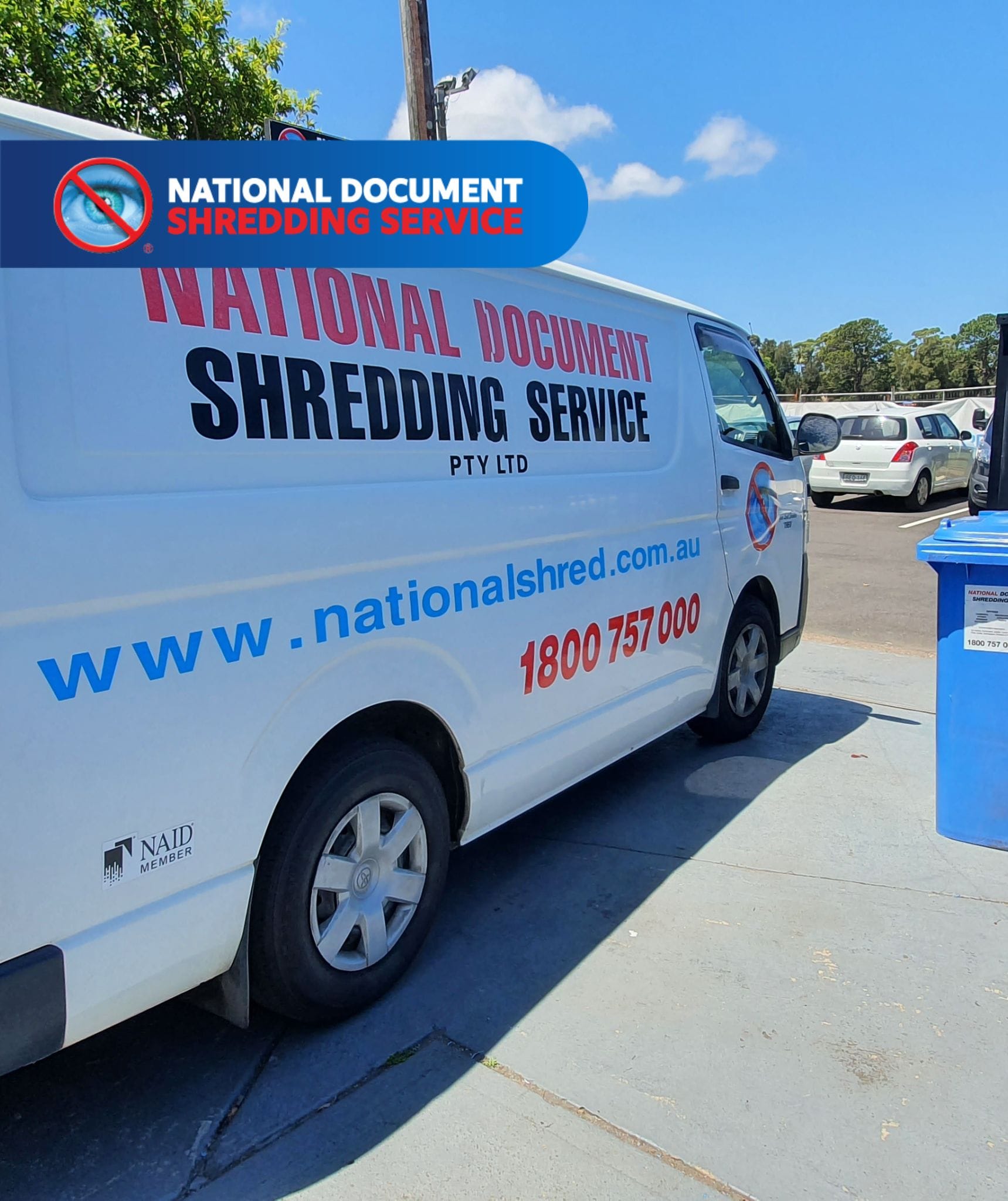
On-site shredding, frequently referred to as mobile shredding, involves a specialized truck equipped with a heavy-duty shredder arriving at your place of business. Your documents are collected from locked, tamper-evident consoles and immediately fed into the truck’s mechanical system.
Advantages:
- Visual Verification: The primary benefit is the ability for a staff member to observe the destruction process, providing internal audit peace of mind.
- Reduced Transit Risk: Because documents are shredded on-site, the risk associated with transporting confidential material over public roads is virtually eliminated.
- Speed: Destruction is finished before the vehicle leaves your property, satisfying strict internal security policies that mandate immediate disposal.
Limitations:
- Higher Cost: The convenience of a mobile unit incurs higher labor and logistics expenses compared to plant-based services.
- Capacity Constraints: Mobile trucks have limited throughput speeds and physical space, which may be inefficient for massive, multi-year archival purges.
Off-Site Shredding: Industrial Efficiency
Off-site shredding involves a bonded driver collecting your locked bins and transporting them to a secure, gated facility. These facilities utilize industrial-grade shredders that are significantly larger than those mounted on trucks, allowing for rapid processing of massive volumes.
Advantages:
- Cost-Effectiveness: Due to the scale of operations and the ability to process thousands of pounds of paper simultaneously, off-site services are generally the most economical choice.
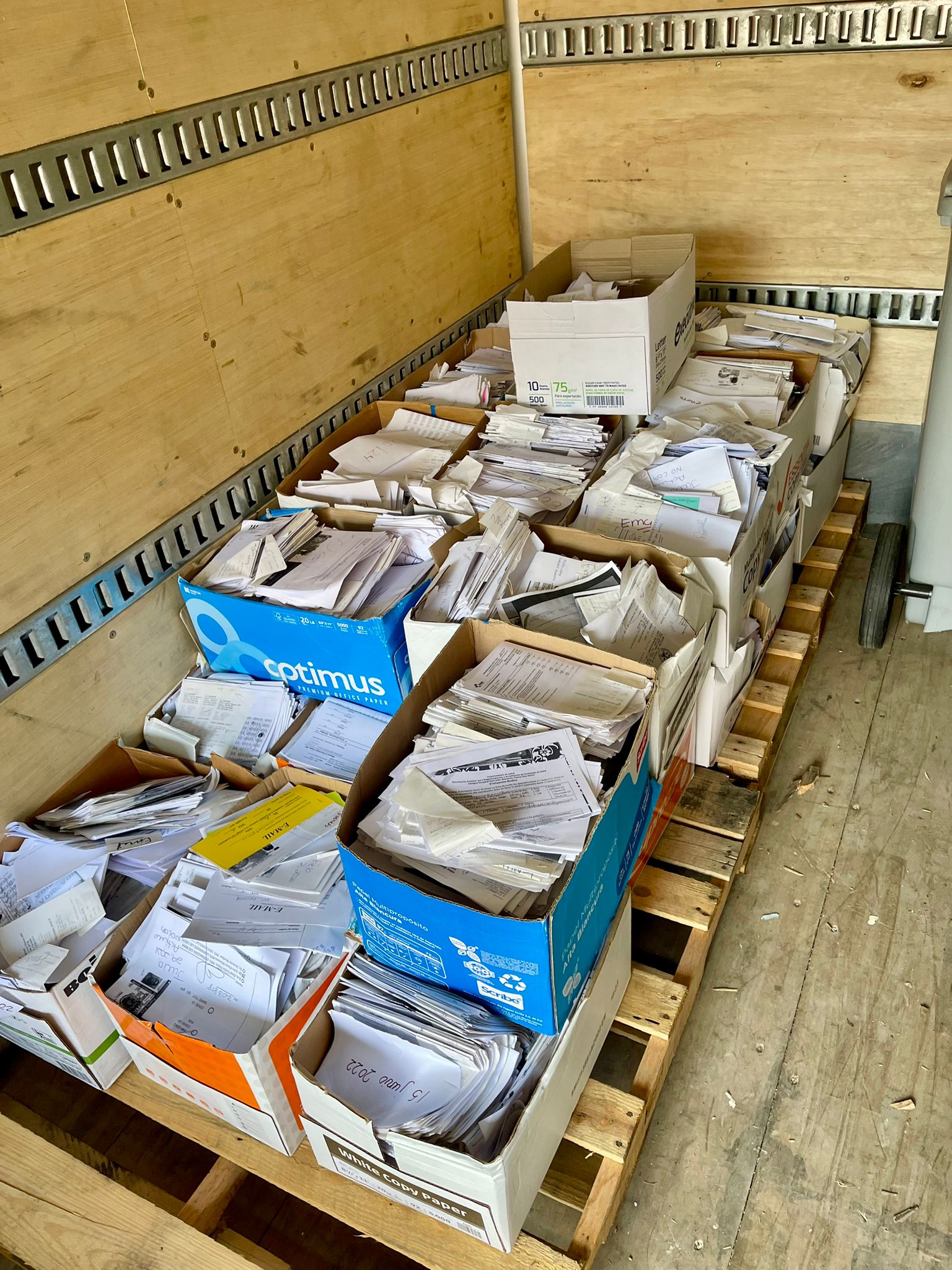
- High Volume: If your organization is undergoing a large-scale record purging project, such as cleaning out a decade of stored files, an industrial plant can handle the volume much faster than a mobile truck.
- Security Standards: Professional shredding facilities operate under strict security measures, including 24/7 video surveillance, biometric access controls, and background-checked employees.
Limitations:
- Transit Exposure: While vehicles are GPS-tracked and locked, the physical movement of documents away from your controlled environment introduces a minor risk factor.
- Remote Destruction: You cannot personally witness the shredding, necessitating absolute reliance on the vendor’s integrity and their provided audit trail.
Comparative Decision Matrix
Choosing the right service requires an objective assessment of your organization's risk tolerance, budget, and logistical requirements.
| Feature | On-Site (Mobile) | Off-Site (Plant) |
|---|---|---|
| Verification | Witnessed at your site | Certificate of Destruction |
| Primary Benefit | Maximum security/oversight | Lower cost/high volume |
| Logistics | Trucks come to you | Scheduled pickups/transport |
| Turnaround | Immediate | Within 24–48 hours |
| Typical Use Case | Daily office compliance | Large archival purges |
Security Verification and Compliance
Regardless of the service model chosen, the final deliverable for any reputable shredding provider is the Certificate of Destruction. This legal document serves as proof that your records were destroyed in accordance with federal and state regulations. In 2026, corporate auditors and regulatory bodies expect this certificate to detail the date, location, and the specific material destroyed.
Before entering into a service agreement, verify the following:
- NAID AAA Certification: Look for providers certified by the National Association for Information Destruction (NAID). This certification confirms that the provider has passed rigorous third-party audits regarding security, employee screening, and insurance.
- Chain of Custody Documentation: Ensure the provider tracks the movement of materials from your secure bins to the shredding point via a documented manifest system.
- Insurance Coverage: Confirm the provider carries adequate commercial general liability and professional liability insurance to protect your organization in the event of a breach or accident during transport.
Identifying Your Organizational Needs
Before selecting a vendor, perform an internal audit to determine your specific volume and frequency requirements. High-turnover offices producing sensitive documents daily benefit from a recurring scheduled service, where bins are swapped out periodically. Conversely, law firms, accounting practices, or medical clinics handling sensitive client data may prefer on-site shredding to provide an extra layer of visible compliance for their own clients.
If your organization is strictly concerned with cost optimization—such as a facility disposing of non-sensitive but confidential marketing materials—off-site shredding is almost always the superior choice. If, however, your primary directive is risk mitigation regarding highly sensitive proprietary information or protected health information (PHI), the ability to witness the shredding on-site is an invaluable safeguard against potential data leaks.
Frequently Asked Questions
What happens if a document is accidentally placed in the shredding bin? Most vendors provide a "retrieval period" policy, but generally, once an item enters the secure container, it is considered destroyed. If you have concerns about accidental disposal, establish a "review period" policy with your employees to double-check documents before they enter the locked bin.
Is off-site shredding less secure than on-site shredding? Not necessarily. While on-site shredding allows for physical witnessing, reputable off-site facilities often employ more stringent security infrastructure, such as multi-factor authentication, perimeter security, and continuous video monitoring, which exceed the security level of a mobile truck.
Can I recycle the paper after it is shredded? Yes. In fact, most professional shredding companies are deeply integrated into the recycling supply chain. Once the paper is shredded, it is typically baled and sent to paper mills to be pulped and converted into new paper products, supporting sustainability goals.
Do I need to remove staples, paperclips, or binders? Industrial shredders are specifically designed to handle standard office materials, including paperclips, staples, and spiral notebooks. Large metal binders or heavy plastic coverings may need to be removed depending on the specific equipment of the provider; always confirm with your vendor.
What is the "Certificate of Destruction" and why is it required? This document serves as your legal audit trail. It certifies that the documents provided were destroyed according to specific protocols. It is essential for compliance with various industry regulations (e.g., HIPAA, FACTA) and provides documentation in the event of an internal or external audit.
Recommendation
For organizations requiring the highest level of regulatory compliance and verifiable security, prioritize on-site mobile shredding to ensure immediate destruction. For cost-conscious operations or organizations needing to purge large, backlogged archives, off-site plant-based shredding is the optimal solution, provided the vendor maintains NAID AAA certification. Ensure your service agreement mandates a recurring, signed Certificate of Destruction for every service event.
Image Gallery