What Professional Mold Remediators Do: Protocols, Equipment, and Process
Professional mold remediators identify, contain, and eliminate indoor fungal growth while restoring affected indoor environments to safe, normal background fungal levels. Rather than simply spraying surface cleansers, certified remedia...
Professional mold remediators identify, contain, and eliminate indoor fungal growth while restoring affected indoor environments to safe, normal background fungal levels. Rather than simply spraying surface cleansers, certified remediators isolate contaminated zones using negative air pressure containment, physically remove mold-damaged structural materials, HEPA-vacuum and sanitize surfaces, and correct underlying moisture sources to prevent recurrence.
Contents
Understanding Professional Mold Remediation vs. Surface Cleaning
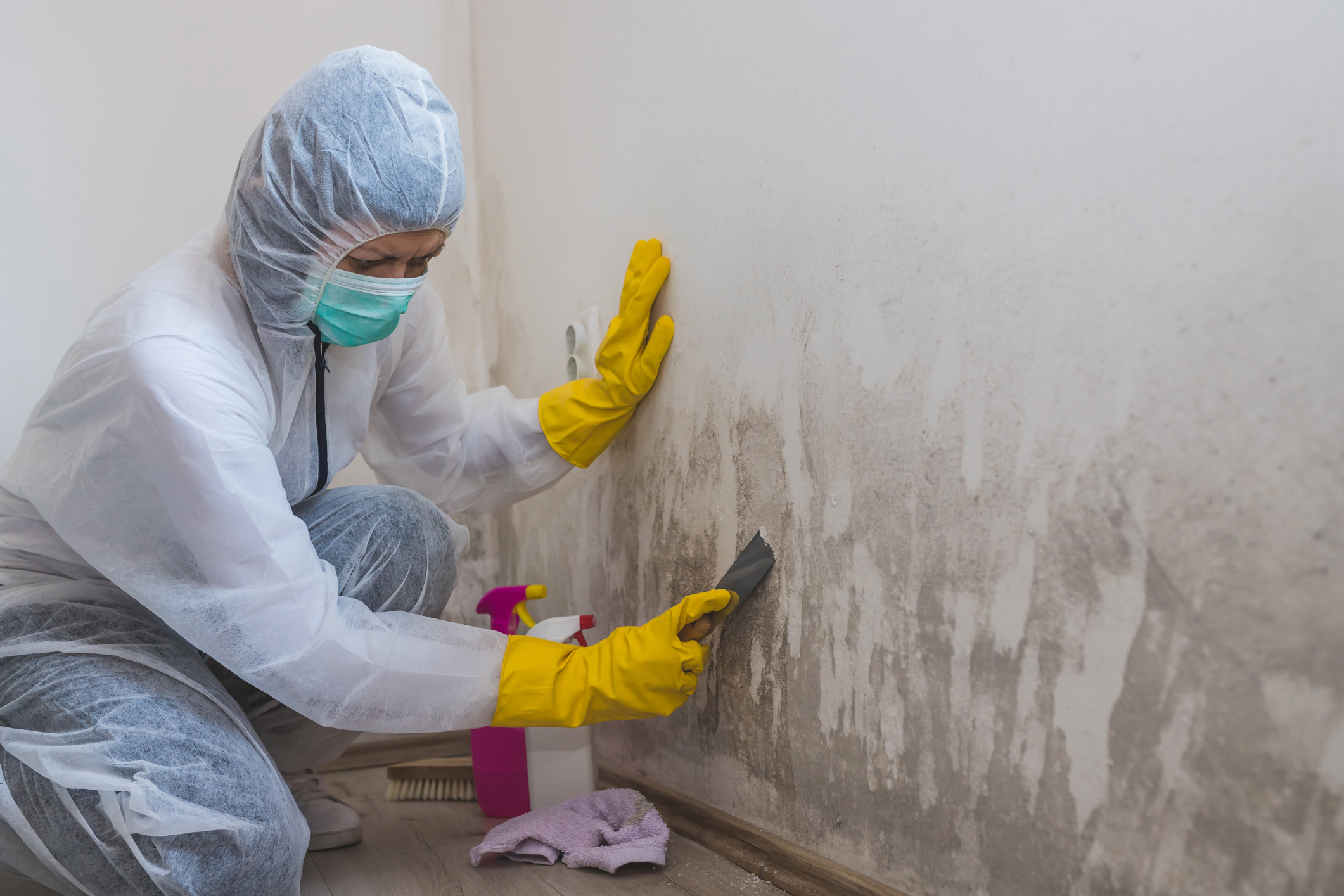
A common misconception among property owners is that mold can be permanently eliminated with household bleach or topical spray treatments. Surface cleaning only targets visible surface spores on non-porous materials. When fungi colonize porous building materials—such as drywall, ceiling tiles, carpet padding, or insulation—the microscopic root structures, known as hyphae, penetrate deep beneath the surface.
Professional mold remediation is an engineering-based environmental containment and removal process. Governed by technical standards such as the Institute of Inspection, Cleaning and Restoration Certification (IICRC) S520 Standard for Professional Mold Remediation, professional remediation aims to return a contaminated structure to a normal fungal ecology, designated as Condition 1.
- Condition 3 (Active Growth)
- Remediation & Containment
- Condition 1 (Normal Fungal Ecology)
The IICRC categorizes indoor environments into three distinct conditions:
- Condition 1 (Normal Fungal Ecology): An indoor environment that contains normal background levels of fungi and fungal spores, consistent with the local outdoor air quality.
- Condition 2 (Settled Spores): An environment contaminated with settled spores or fungal fragments that have dispersed from an active growth site, but where active growth is not directly present on the localized surface.
- Condition 3 (Active Growth): An environment characterized by active fungal growth and colonization on indoor surfaces, driven by elevated moisture levels.
Professional remediators follow systematically managed steps to transition a building from Condition 3 or Condition 2 back to Condition 1 without spreading millions of microscopic fungal spores to uninfested areas of the property.
Step 1: Initial Inspection, Moisture Mapping, and Protocol Development
Before any physical removal begins, professional remediators conduct a diagnostic evaluation of the structure. Fungi require three elements to thrive: organic cellulose substrates (drywall, wood, dust), oxygen, and liquid water or elevated relative humidity (typically above 60%). Because fungal growth is a symptom of water intrusion, remediation cannot succeed without locating and eliminating the moisture source.
Diagnostic Tools Used by Remediators
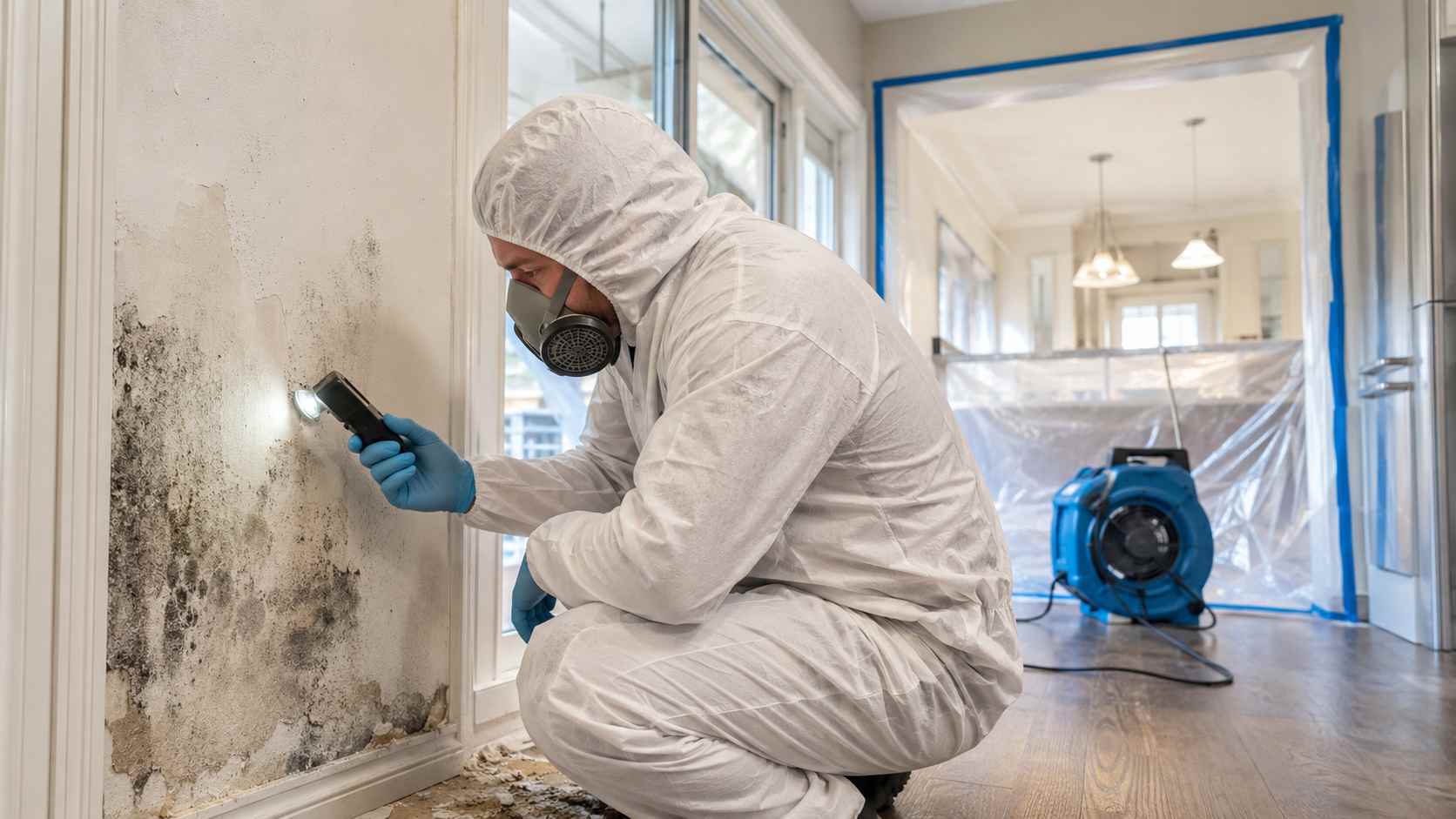
To evaluate hidden moisture and structural contamination, remediators deploy specialized diagnostic instruments:
- Pin and Pinless Moisture Meters: These devices gauge the moisture content of wood framing, subflooring, and drywall. Wood moisture content (WMC) above 16% to 19% creates a hospitable environment for fungal germination; WMC above 20% rapidly accelerates rot and active fungal colonization.
- Thermal Imaging Cameras (Infrared FLIR): Thermal imaging detects temperature differentials across structural surfaces. Evaporating water cools structural components, enabling technicians to identify hidden leaks behind plaster, behind baseboards, or within ceiling cavities without destructive wall opening.
- Hygrometers and Psychrometers: Thermohygrometers measure relative humidity (RH), ambient air temperature, vapor pressure, and dew point throughout different zones of the building to locate pockets of microclimate humidity.
| Tool | Operational Function |
|---|---|
| Moisture Meter | Measures moisture percentage inside drywall & timber |
| Infrared Thermal Camera | Maps temperature gradients to locate hidden moisture |
| Thermohygrometer | Tracks relative humidity (RH) and ambient dew point |
Once the inspection is complete, the remediation contractor establishes a formal Scope of Work (or follows a protocol prepared by an independent indoor environmental professional). This document defines containment zones, engineering controls, safety procedures, and disposal requirements tailored to the property.
Step 2: Containment Isolation and Negative Air Pressure Setup
The single greatest risk during mold removal is cross-contamination. Disturbing active mold colonies releases millions of microscopic spores into the air. If uncontained, the building's natural convective airflow or mechanical HVAC system will transport these spores into previously clean rooms.
Establishing Engineering Barriers
To prevent spore migration, remediators build physical containment structures using heavy-duty flame-retardant 6-mil polyethylene plastic sheeting. Depending on the extent of contamination, contractors build one of three containment types:
- Source Containment: Used for small, localized areas (under 10 square feet). Polyethylene plastic is taped directly over the affected surface or small wall section with a built-in glove-bag or localized enclosure.
- Limited Containment: Used for moderate areas (10 to 100 square feet). Plastic sheeting isolates the affected room or hallway from the rest of the building. Double-flap plastic doors or zipper access ports permit entry.
- Full Containment: Mandatory for extensive contamination exceeding 100 continuous square feet. Full containment includes isolation of all supply and return HVAC vents, sealing of all windows and doorways, and construction of a dedicated decompression airlock or multi-chamber decontamination transit unit (dirty room, buffer room, clean room).
- Negative Pressure Containment Zone
- HEPA Air Scrubber Venting Out
- Decontamination Airlock
- Uncontaminated Zone
Applying Negative Air Pressure
Within the isolated containment, remediators install Negative Air Machines (NAMs) equipped with multi-stage High-Efficiency Particulate Air (HEPA) filtration systems. HEPA filters capture 99.97% of airborne particles down to 0.3 microns in size—far smaller than average mold spores, which range from 2 to 100 microns.
The NAM exhausts filtered air outside the building envelope (or into an unoccupied outside space). By continuous air evacuation, the machine creates a lower static air pressure inside the containment wall relative to the outside space. If a tear or gap develops in the containment plastic, air flows inward toward the contaminated area rather than escaping outward into clean living quarters. Remediators monitor static pressure differentials using digital manometers, keeping target pressure between -5 to -10 Pascals (-0.02 inches of water column).
Step 3: Personal Protective Equipment (PPE) and Safety Controls
Working inside mold containment zones exposes technicians to elevated concentrations of fungal spores, volatile organic compounds (MVOCs), and mycotoxins. According to guidelines from the Occupational Safety and Health Administration (OSHA), personal protective equipment is essential to guard against respiratory, dermal, and ocular exposure.
Standard PPE Requirements for Remediation Technicians
- Respiratory Protection: For small or limited containment jobs, technicians wear half-face elastomeric respirators equipped with N95, P100, or HEPA filter cartridges. For large-scale full containment projects involving toxic species (such as Stachybotrys chartarum), technicians utilize full-facepiece powered air-purifying respirators (PAPRs) or supplied-air system units.
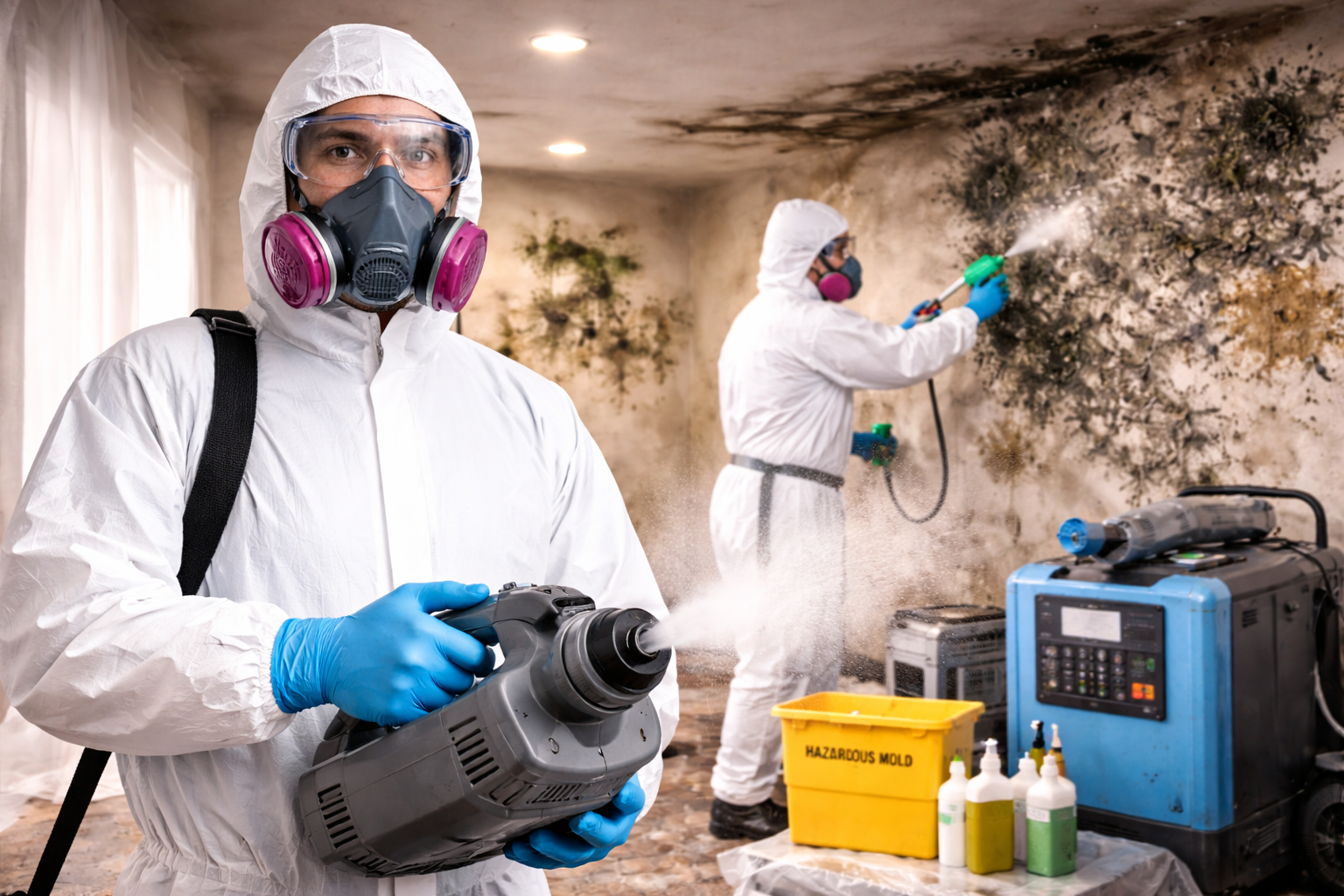
- Body Coverage: Technicians wear disposable full-body suits made of spunbond olefin fabric (such as Tyvek) with elasticized hoods and ankles. The suit prevents fungal spores from clinging to personal clothing or body surfaces.
- Hand and Eye Protection: Outer nitrile or heavy-duty neoprene gloves are taped directly to the sleeves of the protective suit. Goggles with indirect ventilation protect eyes from airborne spores and liquid chemical disinfectants.
Before exiting full containment zones, technicians enter the decontamination airlock, HEPA-vacuum their protective suits, remove outerwear, and seal disposable gear in hazardous material bags to avoid carrying contaminants outside the work area.
Step 4: Material Removal, Surface Cleaning, and Decontamination
With physical barriers and negative air filtration functioning, technicians proceed with structural remediation. How a building material is handled depends on its porosity and structural role.
Building Material Porosity Matrix:
| Porous (Remove & Replace) | Semi/Non-Porous (Remediate) |
|---|---|
| Drywall & Plaster | Structural Framing Timber |
| Fibrous Insulation | Concrete & Brick |
| Acoustic Ceiling Tiles | Glass & Metals |
| Carpeting & Carpet Padding | Hard Plastics & Tile |
Handling Porous Materials
Porous materials absorbed water and colonized by fungal hyphae cannot be reliably disinfected. Remediators remove and discard:
- Gypsum drywall and plasterboards (cut out at least 12 to 24 inches beyond the last visible sign of fungal growth or moisture damage).
- Fiberglass batts, cellulose insulation, and spray foam insulation.
- Underlayments, carpet padding, and heavily contaminated wall-to-wall carpeting.
- Acoustic drop-ceiling tiles.
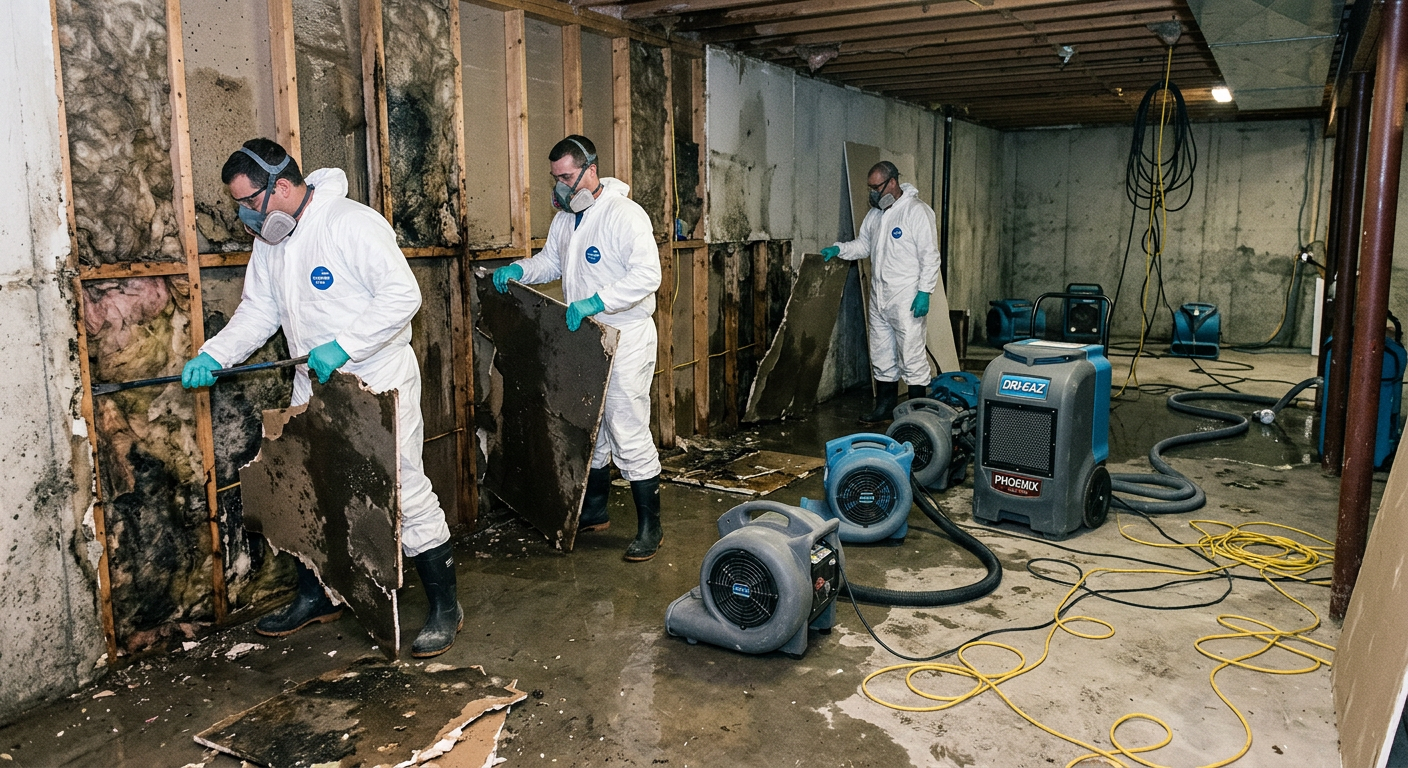
Demolition is carried out carefully to suppress dust generation. Materials are sprayed with a light mist of water or specialized encapsulant before cutting, wrapped immediately in heavy 6-mil plastic bags inside the containment zone, wiped down externally, and transported off-site for disposal in accordance with local solid waste regulations.
Treating Semi-Porous and Non-Porous Materials
Structural wood framing (studs, joists, subflooring), concrete foundations, and non-porous metals cannot simply be torn out without compromising structural stability. Remediators apply localized physical removal techniques to these surfaces:
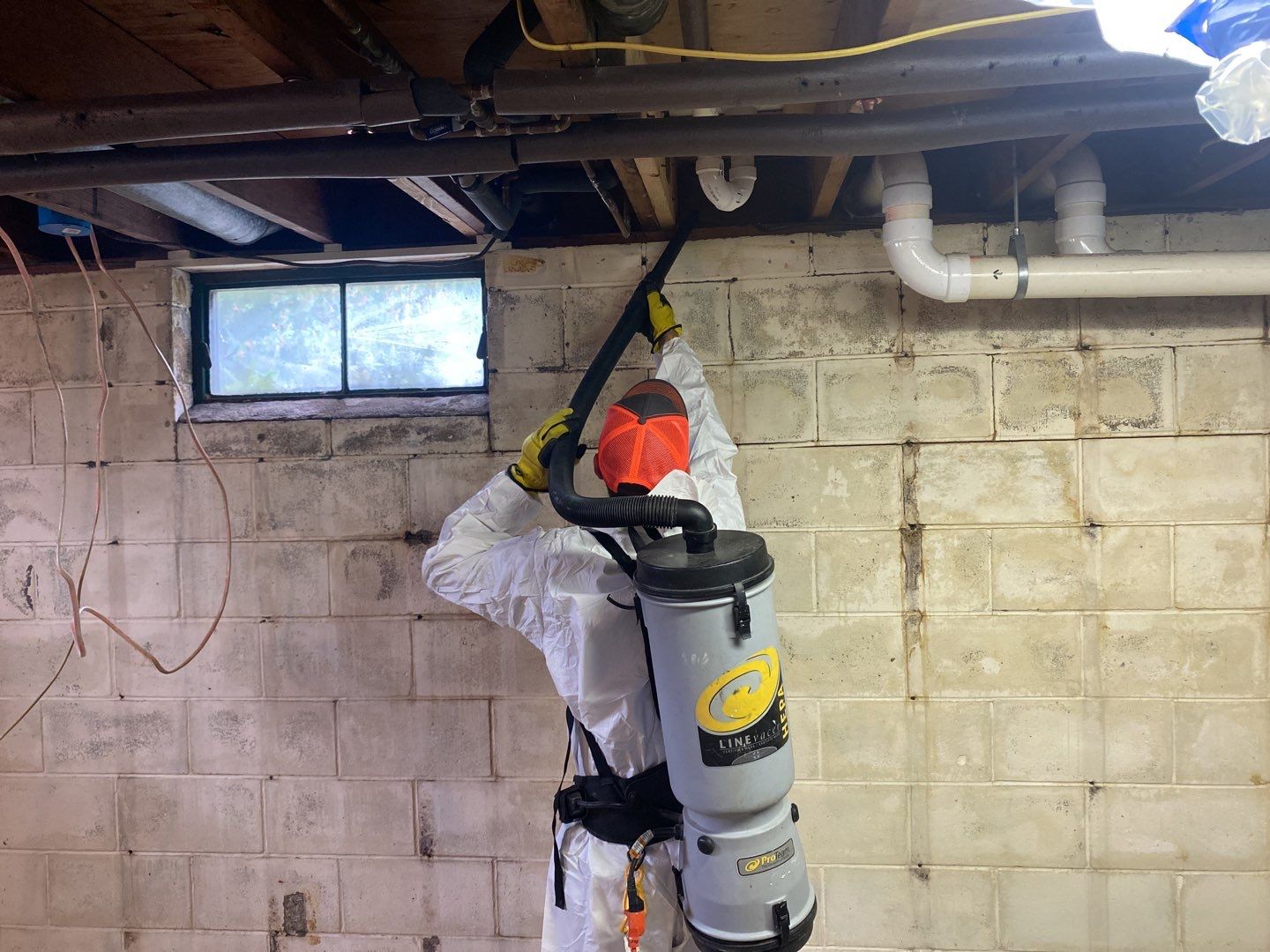
- HEPA Vacuuming: Initial pass over all exposed surfaces using industrial vacuums with sealed HEPA exhaust filtration to remove loose surface spores and dust.
- Mechanical Abatement: Technicians use wire brushes, power sanders fitted with HEPA vacuum shrouds, or abrasive media blasting (such as dry-ice blasting or soda blasting). Dry-ice blasting freezes and shatters fungal structures on wood framing without generating secondary liquid waste streams.
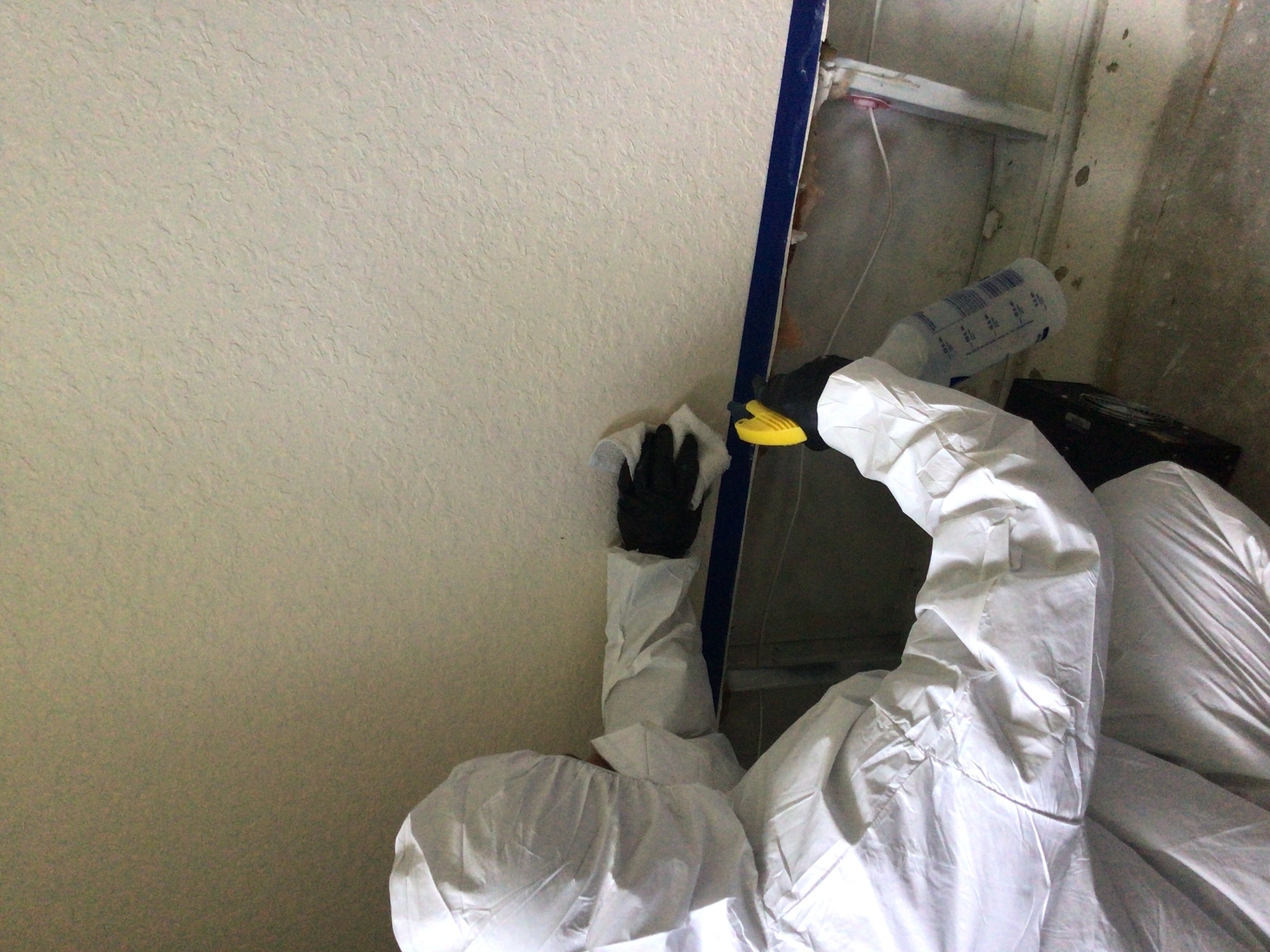
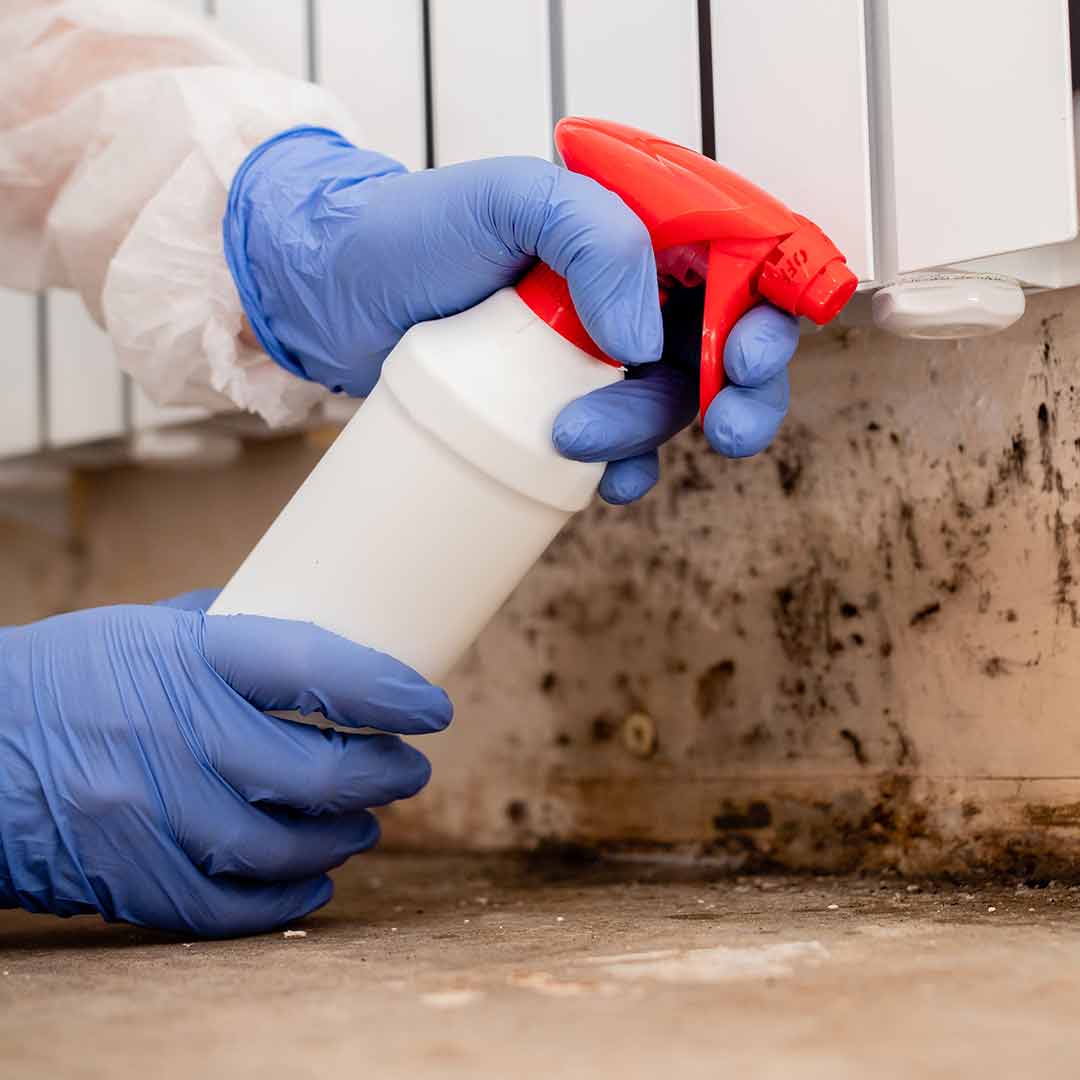
- Damp Wiping and Antimicrobial Application: Surfaces are thoroughly scrubbed using an EPA-registered fungicide, disinfectant, or biocidal detergent. Technicians clean using a multi-bucket "sandwich" method or single-use microfiber cloths to avoid re-contaminating cleaned surfaces.
- Surface Encapsulation: After structural wood framing has been cleaned and dried, remediators may apply a breathable, clear, or white antimicrobial coating/encapsulant. This protective sealant locks down any trace microscopic particles and inhibits future fungal growth should temporary moisture fluctuations occur later.
Step 5: Structural Drying, Dehumidification, and Air Clearance
Cleaning alone does not complete remediation. If structural wood framing or concrete retains elevated moisture levels, fungal growth will re-establish within 24 to 48 hours after containment is dismantled.
Commercial Drying Protocols
Remediators utilize commercial drying equipment to extract structural moisture:
- Low Grain Refrigerant (LGR) Dehumidifiers: LGR units remove water vapor from the air even in low-humidity conditions by pre-cooling incoming air before it reaches the evaporator coils. They drive relative humidity levels below 40%, creating a dry atmosphere that pulls bound moisture out of deep wood fibers.
- High-Velocity Air Movers: Centrifugal and axial air movers direct targeted, high-velocity airflow across subfloors, wall studs, and joists to accelerate liquid surface evaporation.
- Desiccant Dehumidifiers: Used primarily in cold climates or dense structural applications, desiccant units use chemical adsorbents (silica gel wheels) to produce air with ultra-low dew points.
Technicians record daily psychrometric readings (temperature, relative humidity, specific humidity in grains per pound) and track moisture content readings until structural components return to baseline dry standards—typically below 16% wood moisture content.
Step 6: Post-Remediation Verification (PRV) and Third-Party Testing
To ensure objectivity, professional protocols mandate that the remediation contractor should not perform their own final clearance testing. Instead, an independent Indoor Environmental Professional (IEP), certified mold inspector, or certified industrial hygienist (CIH) performs a Post-Remediation Verification (PRV) before containment barriers are removed.
Clearance Protocol Workflow:
- Physical Cleaning Complete
- 24-48 Hr Air Scrubbing
- Third-Party IEP Inspection
- Pass PRV Clearance
- Dismantle Containment
- Fail PRV Clearance
- Re-Clean Specific Zone
- Pass PRV Clearance
The PRV Clearance Process
- Visual Inspection: The IEP enters containment and verifies that all specified materials have been removed, surfaces are visibly free of dust, debris, and fungal growth, and no elevated moisture sources remain.
- Surface and Air Sampling: The IEP collects air samples (spore trap cassettes) within the containment zone as well as baseline comparison samples outdoors and in unaffected areas of the building. Surface swabs or tape lifts may also be taken from cleaned structural components.
- Laboratory Analysis: An independent, AIHA-accredited laboratory analyzes the samples via direct microscopic examination.
- Clearance Criteria: To achieve clearance, the indoor sample within containment must show:
- Overall airborne spore concentrations significantly lower than or comparable to outdoor baseline controls.
- Absence of target indicator fungi associated with water intrusion (such as Stachybotrys, Chaetomium, or elevated Aspergillus/Penicillium strains).
- Absence of visible particulate residue or active moisture.
If the site fails PRV, the remediation team must re-clean, HEPA-vacuum, and air-scrub the containment area at their own expense until satisfactory clearance levels are obtained.
Summary of the Professional Mold Remediation Process
| Remediation Phase | Key Equipment & Materials Used | Primary Technical Objective | Standard Compliance / Benchmark |
|---|---|---|---|
| 1. Assessment & Moisture Mapping | Pin/Pinless moisture meters, Infrared thermal cameras, Thermohygrometers | Locate water intrusion sources, establish boundary of contamination, write remediation protocol | IICRC S520 assessment criteria; target < 16% Wood Moisture Content |
| 2. Containment Setup | 6-mil polyethylene plastic, heavy-duty duct tape, tension poles, zippered doors | Isolate affected space to prevent cross-contamination to clean zones | IICRC S520 Source, Limited, or Full Containment protocols |
| 3. Negative Pressure Control | HEPA-filtered negative air machines, digital manometers, flex ducting | Maintain inward continuous airflow (-5 to -10 Pascals pressure differential) | OSHA ventilation guidelines; 4 to 8 air changes per hour (ACH) |
| 4. Structural Demolition & Removal | HEPA vacuums, dust-suppression sprayers, 6-mil disposal bags, hand tools | Remove un-restorable porous structural materials (drywall, carpet, insulation) | EPA Mold Remediation Guidelines for disposal |
| 5. Surface Cleaning & Abatement | Wire brushes, media blasters, EPA-registered antimicrobial cleaners, HEPA vacuums | Scrub and decontaminate structural wood, framing, concrete, and semi-porous surfaces | "Sandwich" cleaning method; HEPA vacuuming before and after damp wiping |
| 6. Structural Drying | Low Grain Refrigerant (LGR) or Desiccant dehumidifiers, high-velocity air movers | Extract structural moisture trapped inside remaining framing timbers | Relative humidity < 50%; WMC brought to baseline levels |
| 7. Post-Remediation Verification | Spore trap cassettes, air sampling pumps, surface tape-lifts | Verify airborne spore counts have returned to normal background fungal ecology | Conducted by independent third-party IEP; AIHA lab accredited |
DIY Mold Removal vs. Hiring a Professional
Small instances of surface mold caused by minor condensation—such as localized growth on bathroom tile grout or window sills—can generally be handled by property owners using standard domestic safety precautions. However, extensive or structural mold requires specialized containment and equipment.
- Is the mold area over 10 sq ft?
- YES: Professional Remediation (Requires Engineering Containment & HEPA NAMs)
- NO: Is water source active/hidden?
- YES: Call Professional
- NO: DIY Surface Clean
The United States Environmental Protection Agency (EPA) advises that if the total area of mold contamination exceeds 10 square feet (roughly a 3-foot by 3-foot section), a trained professional mold remediator should perform the cleanup.
Circumstances Demanding Professional Remediation
- Contamination Exceeding 10 Square Feet: Large surface areas generate high concentrations of airborne spores during removal, making uncontained DIY removal unsafe.
- Contamination inside HVAC Systems: Fungi growing inside air ducts or mechanical air handlers require specialized duct containment, vacuuming, and mechanical cleaning tools to avoid blowing spores throughout the entire building.
- Contamination Driven by Sewage Spills: Blackwater intrusions carry pathogenic bacteria, viruses, and hazardous parasites alongside fungal growth, requiring certified biohazard and mold mitigation protocols.
- Hidden Mold Behind Structural Elements: Fungal growth concealed within wall cavities, beneath structural subfloors, or inside crawl spaces requires controlled structural opening under negative pressure.
- High-Risk Building Occupants: When property occupants suffer from compromised immune systems, severe asthma, chronic respiratory disease, or mold allergies, professional containment and third-party clearance are necessary to ensure safety.
Cost Factors in Professional Mold Remediation
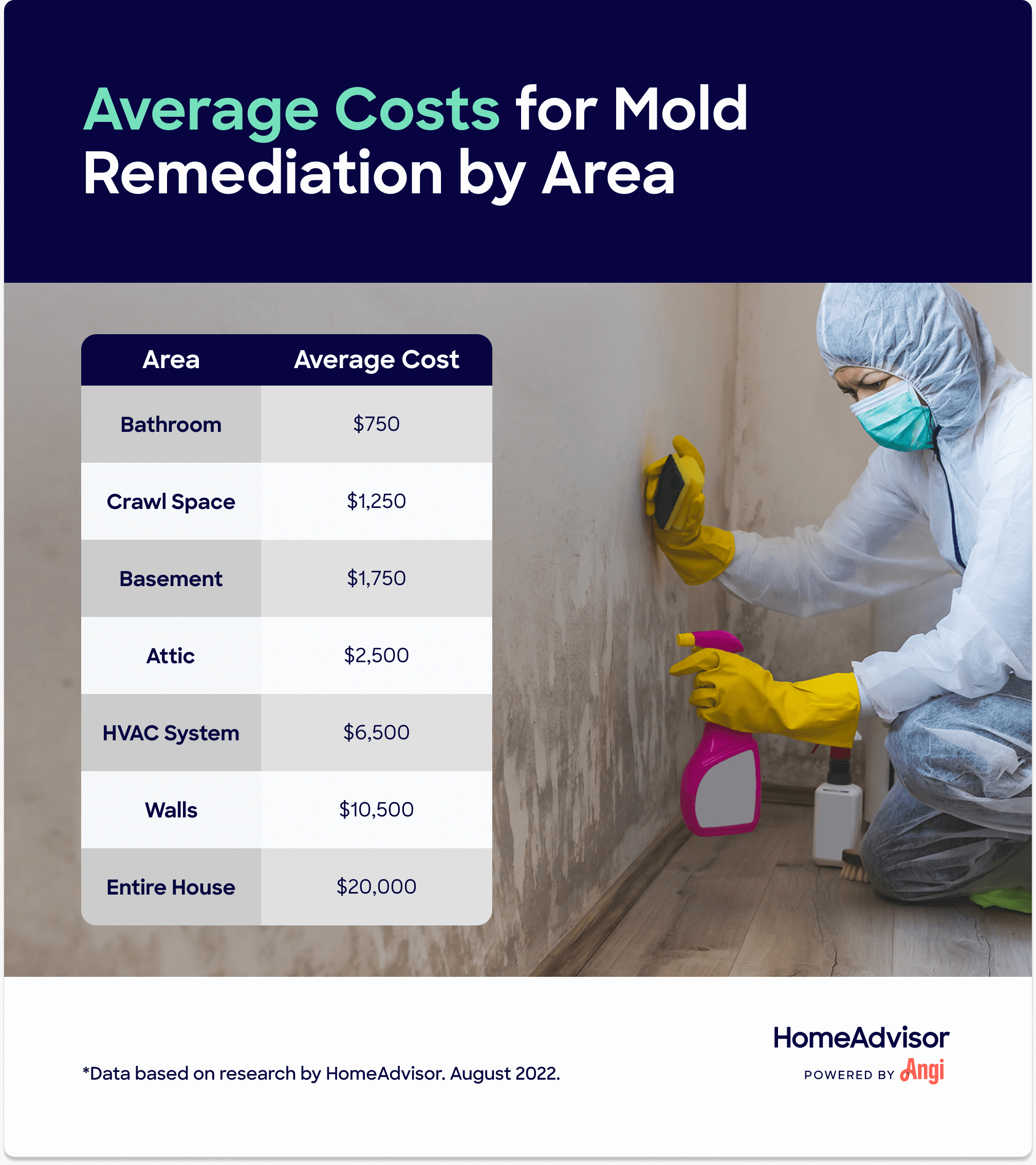
The total cost of professional mold remediation varies significantly based on project scope, accessibility, structural materials involved, and necessary reconstruction.
- Square Footage and Severity: Larger containment zones require more plastic containment material, higher capacity air scrubbing equipment, expanded technician labor hours, and higher waste disposal fees.
- Location and Accessibility: Remediating a square foot of open drywall in a living room requires far less labor than accessing tight crawl spaces, high-pitch attics, or confined subfloor spaces where technicians operate in full protective suits under restricted mobility.
- Extent of Structural Demolition: Removing structural flooring, ceiling plaster, or built-in cabinetry increases labor hours and containment complexity compared to treating exposed garage framing.
- Reconstruction and Repair Requirements: Pure remediation brings structural elements to a clean, dry baseline, but does not automatically include rebuilding drywall, re-painting, or laying down new flooring. Rebuilding contractor costs are typically itemized separately from the initial decontamination phase.
- Geographic Region and Local Licensing: Costs reflect local labor rates, commercial dumping fees, and regional regulatory compliance rules. Certain states (such as Florida, Texas, New York, and Louisiana) enforce strict state licensing frameworks for mold remediators and assessors.
Frequently Asked Questions
How long does a typical professional mold remediation job take?
For a standard residential project, professional mold remediation typically takes 1 to 3 days for small to mid-sized containment areas, and 3 to 7 days for extensive multi-room or whole-house projects. The timeframe depends heavily on how long structural drying takes; dehumidifiers and air movers often run continuously for 48 to 72 hours to bring wood moisture content to safe levels before final clearance testing occurs.
Is professional mold remediation covered by standard homeowners insurance?
Insurance coverage depends on the underlying cause of the moisture intrusion. Standard homeowners insurance policies generally cover mold remediation if the growth resulted directly from a covered "sudden and accidental" peril—such as a burst plumbing pipe, water heater rupture, or appliance line failure. Coverage is typically denied or capped if the mold resulted from long-term deferred maintenance, unaddressed roof leaks, chronic foundation seepage, or unmanaged indoor humidity.
Can occupants remain in the home during mold remediation?
For localized remediation projects involving small rooms (such as an isolated bathroom or laundry room), occupants can often remain in other areas of the home, provided containment barriers maintain structural isolation and negative air pressure. However, for full-house remediations, HVAC system disruptions, or extensive contamination involving Stachybotrys or high fungal concentrations, contractors recommend vacating the property until final third-party Post-Remediation Verification (PRV) clearance is achieved.
What is the technical difference between mold removal and mold remediation?
While many consumers use the terms interchangeably, "mold removal" implies eradicating all mold spores from an area—an impossible standard since microscopic mold spores exist naturally in all indoor and outdoor air. "Mold remediation" focuses on managing indoor fungal ecology: physically removing colonized growth and contaminated materials, cleaning settled spores, lowering moisture content, and returning indoor air quality to safe, normal baseline levels (Condition 1).
Why is third-party clearance testing so important?
Third-party clearance testing ensures an unbiased evaluation of the remediation work. When an independent Indoor Environmental Professional (IEP) conducts the Post-Remediation Verification (PRV) and sends samples to an accredited laboratory, property owners gain objective proof that the space is safe and clean. Independent verification protects owners from incomplete work and ensures contractors meet established safety standards.
Recommended Next Steps for Property Owners
If you suspect active mold contamination within your property, follow these initial action steps to control the damage and ensure proper restoration:
- Stop the Water Source: Immediately locate and repair active plumbing leaks, roof breaches, or drainage issues. Mold cannot grow without moisture.
- Avoid Disturbing the Growth: Do not run dry household fans across visible mold or attempt to scrub large infested drywall areas with dry brushes, which releases millions of spores into the air.
- Hire Certified Professionals: Search for remediation firms certified by recognized industry standards bodies, such as the IICRC (Institute of Inspection, Cleaning and Restoration Certification) or the RIA (Restoration Industry Association).
- Verify Licensing and Insurance: Ensure the remediation contractor carries specific pollution liability insurance, general liability insurance, and any state-mandated mold remediation licenses.
- Require Independent Third-Party Testing: Insist that final clearance air sampling be conducted by an independent industrial hygienist or mold inspector who is financially separate from the remediation company.
Disclaimer: This article provides operational and technical information about professional mold remediation procedures and should not replace tailored guidance from qualified environmental professionals, industrial hygienists, or licensed structural contractors. Local building codes, legal requirements, and health regulations vary by jurisdiction.
EDITORIAL CATEGORY METADATA:
Image Gallery