Idaho Business Registration System: How It Shapes Your Startup's Future
The Idaho business registration system provides the legal framework that transforms an entrepreneurial concept into a recognized entity. Through the SOSBiz portal, the state facilitates entity formation, name protection, and compliance...
The Idaho business registration system provides the legal framework that transforms an entrepreneurial concept into a recognized entity. Through the SOSBiz portal, the state facilitates entity formation, name protection, and compliance tracking, directly influencing a startup's liability protection, tax structure, and ability to secure professional financing or contracts.
Contents
In 2026, Idaho remains one of the most streamlined states for business formation. The Idaho Secretary of State’s (SOS) registration system is not merely a bureaucratic hurdle; it is a strategic tool that dictates the operational boundaries and legal safeguards of your new venture. Understanding how this system functions is critical for any founder looking to leverage Idaho’s business-friendly environment to its full potential.
The SOSBiz Ecosystem: More Than Just a Filing Portal
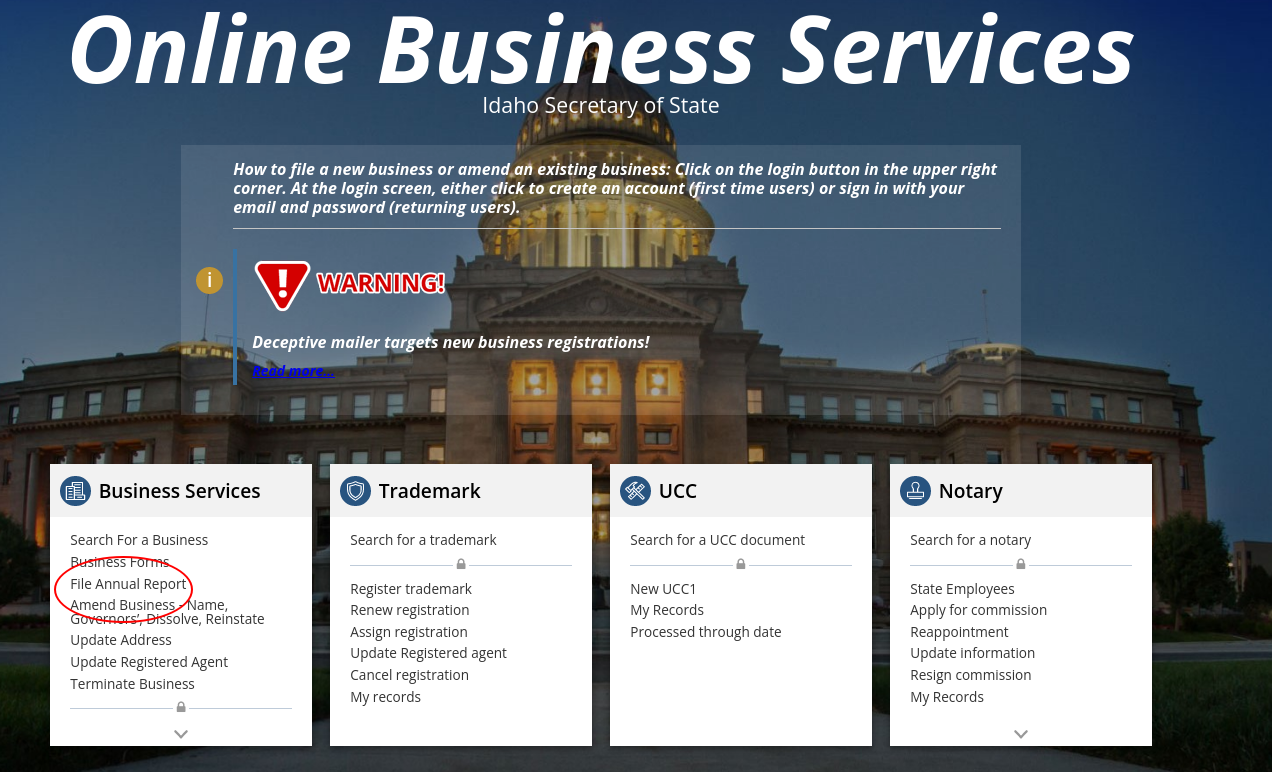
The heart of Idaho’s registration process is the SOSBiz platform. Managed by the Secretary of State, this digital interface serves as the primary gateway for all domestic and foreign entities operating within the state. For a startup, the system’s architecture shapes your early days by centralizing essential functions: name availability searches, organizational filings, and the appointment of registered agents.
The efficiency of this system is a significant factor in a startup’s "time-to-market." Unlike jurisdictions that require weeks of manual processing, Idaho’s digital-first approach allows for near-instantaneous business formation. When you submit your Articles of Organization or Articles of Incorporation through SOSBiz, the system performs real-time validation, reducing the likelihood of rejection due to clerical errors. This immediacy allows founders to move quickly to secondary steps, such as opening a commercial bank account or signing a commercial lease, both of which require proof of state registration.
Selecting Your Entity: The First Strategic Decision
How you interact with the Idaho registration system depends entirely on the business structure you select. This choice is the most consequential decision a founder makes, as it dictates personal liability, tax treatment, and the complexity of future filings.
Limited Liability Company (LLC)
The LLC is the most popular choice for Idaho startups. The registration system is optimized for LLCs, offering a flexible structure that shields personal assets from business debts. In Idaho, an LLC is viewed as a "pass-through" entity for tax purposes by default, meaning the business itself does not pay income tax; instead, profits and losses flow through to the members' personal tax returns.
Business Corporations
If your startup intends to seek venture capital or eventually go public, the corporate structure is often required. The registration system for corporations in Idaho involves more rigorous documentation, including the designation of authorized shares and the appointment of a Board of Directors. While more complex, this structure is shaped by the system to accommodate sophisticated investment rounds and equity distribution.
Sole Proprietorships and General Partnerships
Interestingly, the Idaho Secretary of State does not technically "register" sole proprietorships or general partnerships unless they choose to operate under an Assumed Business Name (ABN). However, most experts advise against these structures for startups due to the lack of liability protection. The registration system "shapes" your startup by incentivizing the move toward formal entities (LLCs or Corporations) to gain legal standing.
The Role of the Registered Agent in Startup Stability
A cornerstone of the Idaho registration system is the requirement for a Registered Agent. Every business entity registered in Idaho must designate an individual or a commercial service to receive legal documents and official government correspondence on behalf of the company.
This requirement shapes your startup’s operational presence. The Registered Agent must have a physical street address in Idaho (a P.O. Box is insufficient). For out-of-state founders starting an Idaho-based company, this necessitates hiring a commercial registered agent service. This ensures that the startup remains in good standing and never misses a "Service of Process" (notice of a lawsuit) or an annual report deadline. Failure to maintain an active registered agent can lead to administrative dissolution, a process where the SOSBiz system automatically shuts down your entity's legal status.
Step-by-Step Guide to Idaho Business Registration in 2026
Navigating the registration system requires a logical progression. Missing a step can lead to delays that ripple through your entire business launch timeline.
- Business Name Availability: Before filing, use the SOSBiz search tool to ensure your desired name is "distinguishable" from existing entities. Idaho law prevents the registration of names that are deceptively similar to others.
- Appointment of Registered Agent: Secure your agent’s consent before listing them on your formation documents.
- Filing Articles of Organization/Incorporation: This is the formal "birth certificate" of your startup. You will provide the business name, the names of governors (members/managers or directors), and the principal office address.
- Obtaining an EIN: Once the state approves your filing, you must obtain an Employer Identification Number (EIN) from the IRS. While this is a federal step, your state-approved name is a prerequisite.
- State Tax Registration: After the SOSBiz filing, you must register with the Idaho State Tax Commission through the Taxpayer Access Point (TAP) if you plan to have employees or sell taxable goods.
Comparing Idaho Business Structures
The following table outlines the primary differences in how the Idaho registration system treats various entities in 2026.
| Feature | Limited Liability Company (LLC) | C-Corporation | Assumed Business Name (ABN) |
|---|---|---|---|
| Initial Filing Fee (Online) | $100 | $100 | $25 |
| Annual Report Fee | $0 (if on time) | $0 (if on time) | N/A (Renewal every 5 years) |
| Liability Protection | High (Asset Shield) | High (Corporate Veil) | None (Personal Liability) |
| Management Structure | Flexible (Member/Manager) | Rigid (Board/Officers) | Informal |
| Tax Treatment | Pass-through | Double Taxation (unless S-Corp) | Pass-through |
| Ease of Registration | Very High | Moderate | High |
Post-Registration Obligations: Maintaining Your Entity
Registering your startup is not a one-time event; the Idaho system requires ongoing maintenance to keep your "Certificate of Existence" valid. This certificate is often required by lenders and investors to prove your company is in good standing.
The Annual Report
Idaho is unique in that it does not charge a fee for the annual report if it is filed online and on time. However, the system is strict regarding deadlines. Every entity must file an annual report during the anniversary month of its formation. If you fail to file, the SOSBiz system will flag your business as "Delinquent" and eventually move it to "Administratively Dissolved" status. Reinstating a dissolved business is more expensive and time-consuming than filing the annual report.
Professional and Local Licensing
It is a common misconception that registering with the Secretary of State grants you a "business license." Idaho does not have a single, statewide general business license. Instead, the registration system shapes your startup by acting as the foundational layer upon which you must add specific professional or local permits. For example, a startup in Boise may need a city-specific license, while a construction startup will need to register with the Idaho Contractors Board.
Common Registration Errors to Avoid
The Idaho registration system is user-friendly, but certain errors can "shape" your startup negatively by causing legal or financial friction.
- Vague Business Purposes: While Idaho allows you to state a "general" business purpose, being too specific can sometimes limit your future activities unless you file an amendment.
- Mixing Personal and Business Addresses: Using your home address for public filings can lead to privacy concerns, as the SOSBiz database is public. Many startups use their Registered Agent’s address or a virtual office to maintain privacy.
- Failure to File the Assumed Business Name (ABN): If your LLC is "Northwest Tech Solutions LLC" but you do business as "NW Tech," the system requires you to register that DBA (Doing Business As) name. Operating under an unregistered name can lead to contract disputes and issues with bank accounts.
Frequently Asked Questions
1. How long does it take for my business registration to be approved in Idaho?
When filing online through the SOSBiz portal in 2026, approval is typically instantaneous or occurs within one business day. If you choose to file via paper or mail, the process can take 7–10 business days. Expedited services are available for an additional fee of $40 (24-hour) or $100 (same-day) if manual review is required.
2. Do I need an attorney to register my business in Idaho?
While the SOSBiz system is designed for self-service, consulting an attorney is recommended for startups with complex ownership structures or those seeking significant outside investment. An attorney can help draft customized Operating Agreements or Bylaws that go beyond the basic information collected by the state’s registration system.
3. What is a Certificate of Existence, and why do I need it?
A Certificate of Existence (often called a Certificate of Good Standing in other states) is an official document issued by the Idaho Secretary of State. It proves that your startup is authorized to do business in the state and has complied with all filing requirements. You will typically need this for securing a business loan, opening a bank account, or registering to do business in another state.
4. Can I change my business structure after I have already registered?
Yes, the Idaho registration system allows for "conversions." For example, you can convert an LLC into a Corporation if your growth strategy changes. This requires filing Articles of Conversion and new organizational documents. While possible, it is more complex than selecting the correct structure initially, as it may have significant tax implications.
5. Is the information I provide to the Idaho Secretary of State public?
Yes. The Idaho business registration system is a public record. This includes the name of the business, the registered agent, the principal address, and the names of the governors. Startups concerned about privacy should consider using a commercial registered agent and a professional business address rather than a home address.
Strategic Recommendation
For most startups entering the Idaho market in 2026, the Limited Liability Company (LLC) remains the most efficient and protective structure. To ensure your startup is shaped for success, perform a thorough name search on SOSBiz before any branding efforts, and immediately appoint a reliable Registered Agent. Once registered, set a recurring calendar alert for your annual report filing month—staying in good standing is the simplest way to protect the "Certificate of Existence" that your business relies on for growth and credibility.
Image Gallery