Navigating the Landscape of Ecommerce Services for Business Scalability
Ecommerce services encompass the diverse range of technical, operational, and strategic solutions required to build, manage, and scale online retail businesses. These services typically include platform infrastructure, payment processi...
Ecommerce services encompass the diverse range of technical, operational, and strategic solutions required to build, manage, and scale online retail businesses. These services typically include platform infrastructure, payment processing, inventory management, logistics fulfillment, digital marketing, and cybersecurity, all working in concert to convert online visitors into loyal customers while maintaining secure transaction environments.
Contents
The Role of Ecommerce Service Providers
Ecommerce services have evolved from basic website building into sophisticated ecosystems that integrate complex supply chain logistics with customer experience tools. For a modern business, these services are not merely about having a storefront; they are about orchestrating a digital architecture that handles high-traffic volume, ensures data privacy under regulations like the GDPR or CCPA, and synchronizes real-time stock levels with global demand.
Service providers generally fall into two categories: All-in-one SaaS (Software as a Service) platforms and modular, custom-built architectures. SaaS platforms provide a bundled experience, offering hosting, security, and design tools within a single subscription. In contrast, modular services allow businesses to pick and choose specialized vendors—such as choosing a dedicated third-party logistics (3PL) provider over a platform’s native fulfillment tools—to gain more granular control over costs and operational speed.
Core Categories of Ecommerce Services
To understand how to deploy these services effectively, it is helpful to segment them by their functional contribution to the business lifecycle.
1. Infrastructure and Platform Services
The foundation of any ecommerce operation is the platform itself. This includes the Content Management System (CMS), hosting, and the underlying database structure. Platforms handle the "shopping cart" logic, product catalogs, and the checkout interface. As of 2026, the trend has shifted toward headless commerce, where the frontend presentation layer is decoupled from the backend commerce logic, allowing developers to build faster, more customized user interfaces.
2. Payment Gateway and Financial Services
These services manage the intake of funds, fraud detection, and currency conversion. Reliability here is critical; a failure in the payment gateway translates directly to lost revenue. Integration with digital wallets (such as Apple Pay or Google Pay) and local payment methods is now a requirement for global reach.
3. Fulfillment and Logistics (3PL)
Once an order is placed, the physical movement of goods takes precedence. Logistics services manage warehousing, order picking, packing, and last-mile delivery. Outsourcing these tasks to 3PL providers allows businesses to store inventory closer to the end consumer, drastically reducing shipping times and costs.
4. Digital Marketing and Analytics
Data-driven services provide the insights necessary for customer acquisition. These include Customer Relationship Management (CRM) tools, email automation, search engine optimization (SEO) services, and paid media management. Analytics services aggregate data from various touchpoints to track key performance indicators (KPIs) like customer lifetime value (CLV) and cart abandonment rates.
Comparing Ecommerce Service Models
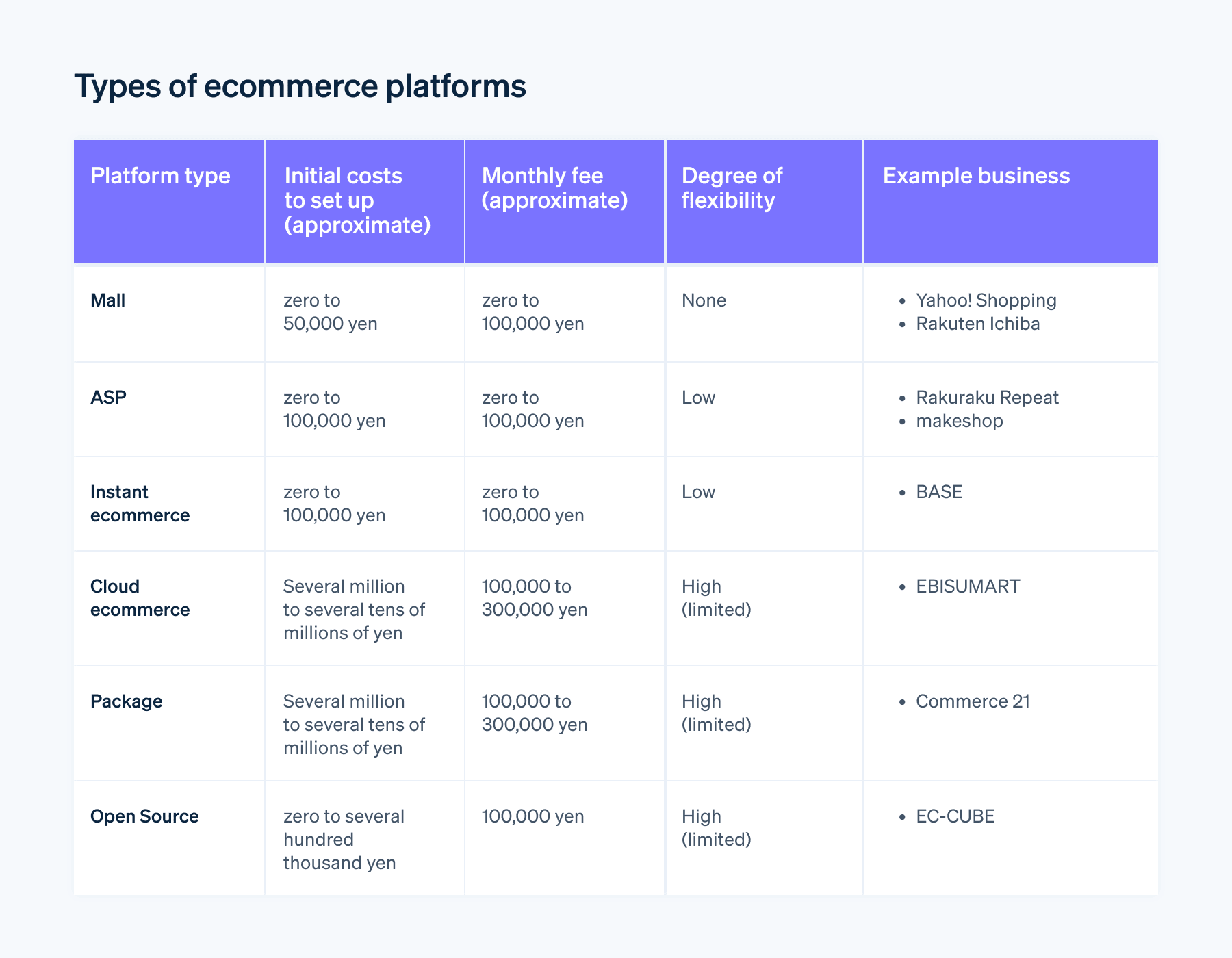
Selecting the right service model depends on the scale, budget, and internal technical expertise of the business.
| Feature | SaaS Platform | Custom/Open Source |
|---|---|---|
| Initial Setup | Rapid; low technical barrier | Slow; high development requirement |
| Scalability | Tiered; managed by provider | Unlimited; requires server management |
| Customization | Limited to available modules/APIs | Total control over every feature |
| Maintenance | Included in subscription | Internal or agency responsibility |
| Cost Structure | Monthly fee + transaction fees | High upfront + recurring server/dev costs |
Prerequisites for Implementing Ecommerce Services
Before engaging with a service provider, businesses must define their requirements. Attempting to implement advanced services without clear operational goals often leads to "feature bloat," where companies pay for tools they do not use.
First, establish your inventory management strategy. If you handle physical goods, ensure your chosen platform integrates seamlessly with your warehouse management system (WMS). Second, assess your compliance needs. If you operate internationally, your services must support multi-currency, multi-language, and region-specific tax calculation tools (e.g., VAT or sales tax automation). Finally, evaluate the technical support level. In 2026, 24/7 technical support is standard for enterprise-grade services, but verify the response times and communication channels before signing long-term contracts.
Common Challenges and Troubleshooting
The most frequent point of failure in ecommerce services is poor integration between systems. For example, when a marketing platform does not correctly sync with inventory data, you may inadvertently advertise products that are out of stock.
- API Bottlenecks: If your store relies on multiple third-party plugins, ensure the platform's API can handle the data load. High latency in API communication results in slow site performance.
- Payment Failures: Always perform stress tests on your checkout flow. If customers report payment errors, investigate whether the gateway is experiencing downtime or if there are configuration issues with SSL certificates.
- Security Vulnerabilities: As cyber threats grow more sophisticated, ensure your services provide regular security audits and PCI-DSS compliance verification. Never store sensitive credit card data on your own servers if you can offload that responsibility to a certified payment processor.
Frequently Asked Questions
What is the difference between a storefront provider and a payment processor? A storefront provider acts as the digital venue where customers browse products and manage their carts. A payment processor is a specialized service that validates, authorizes, and secures the movement of money from the customer's bank to yours.
Do I need a custom developer to manage ecommerce services? For small, entry-level businesses, SaaS platforms are designed to be managed without custom coding. However, as you scale or require unique functionalities, employing a developer or a specialized agency becomes necessary to manage API integrations and custom theme adjustments.
How do 3PL services affect my shipping costs? 3PL providers use volume-based discounts with major carriers (like FedEx, UPS, or DHL). By aggregating shipments from many clients, they secure rates lower than what a single small business could negotiate independently.
Is headless commerce right for every business? Headless commerce is ideal for large brands that need a highly personalized customer experience across multiple channels (web, mobile app, kiosk). For smaller businesses, the increased development cost and complexity often outweigh the benefits of decoupling the frontend.
How often should I review my ecommerce service contracts? It is recommended to conduct a performance audit every 12 to 18 months. Evaluate whether your current providers are still meeting your growth needs, analyze your transaction fee structures, and compare their performance against newer, potentially more cost-effective technologies.
Next Steps for Your Business
To begin optimizing your ecommerce presence, first audit your current stack. List every service currently in use and identify which ones are underperforming or creating data silos. If you are starting from scratch, focus on selecting a core platform that offers the best integration ecosystem for your specific industry. Once the core platform is chosen, layer on specialized services—starting with payments and fulfillment—before expanding into advanced marketing and personalization tools. Focus on building an architecture that prioritizes site speed and data integrity, as these are the primary drivers of long-term conversion.
Image Gallery