Understanding General Liability Insurance Coverage for Contractors in 2026
General liability insurance for contractors is a foundational commercial policy designed to protect construction professionals from the financial fallout of third-party claims involving bodily injury, property damage, and personal or a...
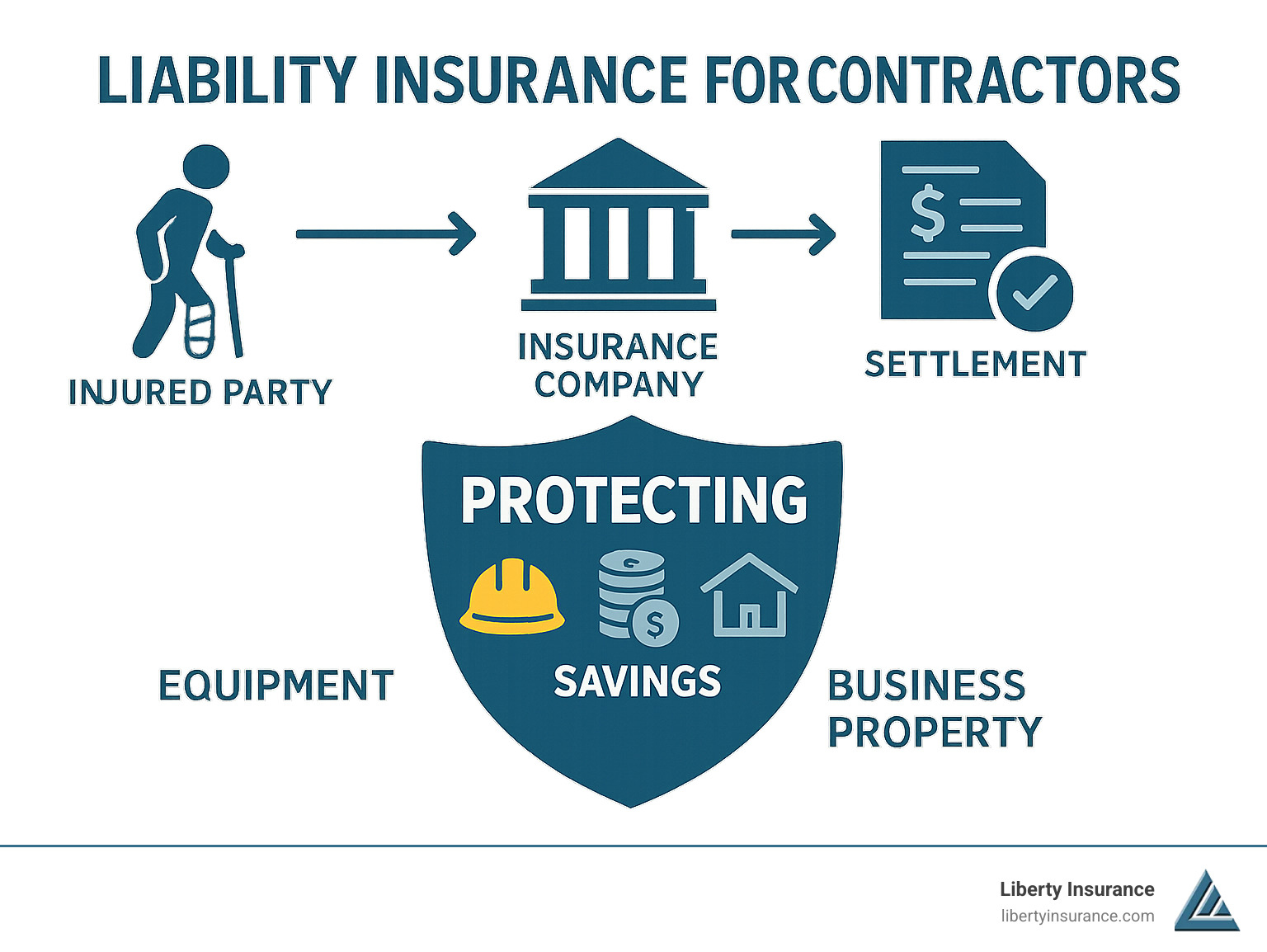
General liability insurance for contractors is a foundational commercial policy designed to protect construction professionals from the financial fallout of third-party claims involving bodily injury, property damage, and personal or advertising injury. This coverage handles legal defense costs, settlements, and judgments, serving as a critical requirement for obtaining state licenses and securing client contracts in the modern construction landscape.
Contents
In 2026, the construction industry faces more complex risks than ever before, ranging from sophisticated urban density projects to the integration of smart-home technologies. For a contractor—whether a sole proprietor, a specialized subcontractor, or a general contractor—general liability insurance (GLI) acts as the first line of defense against the unpredictable nature of job sites. Without this coverage, a single mishap, such as a visitor tripping over a power cord or a structural error causing damage to a neighboring building, could result in litigation costs capable of bankrupting a firm.
The Core Components of General Liability Coverage
To fully grasp what general liability insurance offers, it is necessary to break down the specific protections included in a standard policy. Most policies are built upon the Insurance Services Office (ISO) standard forms, which provide a consistent framework for coverage across the United States.
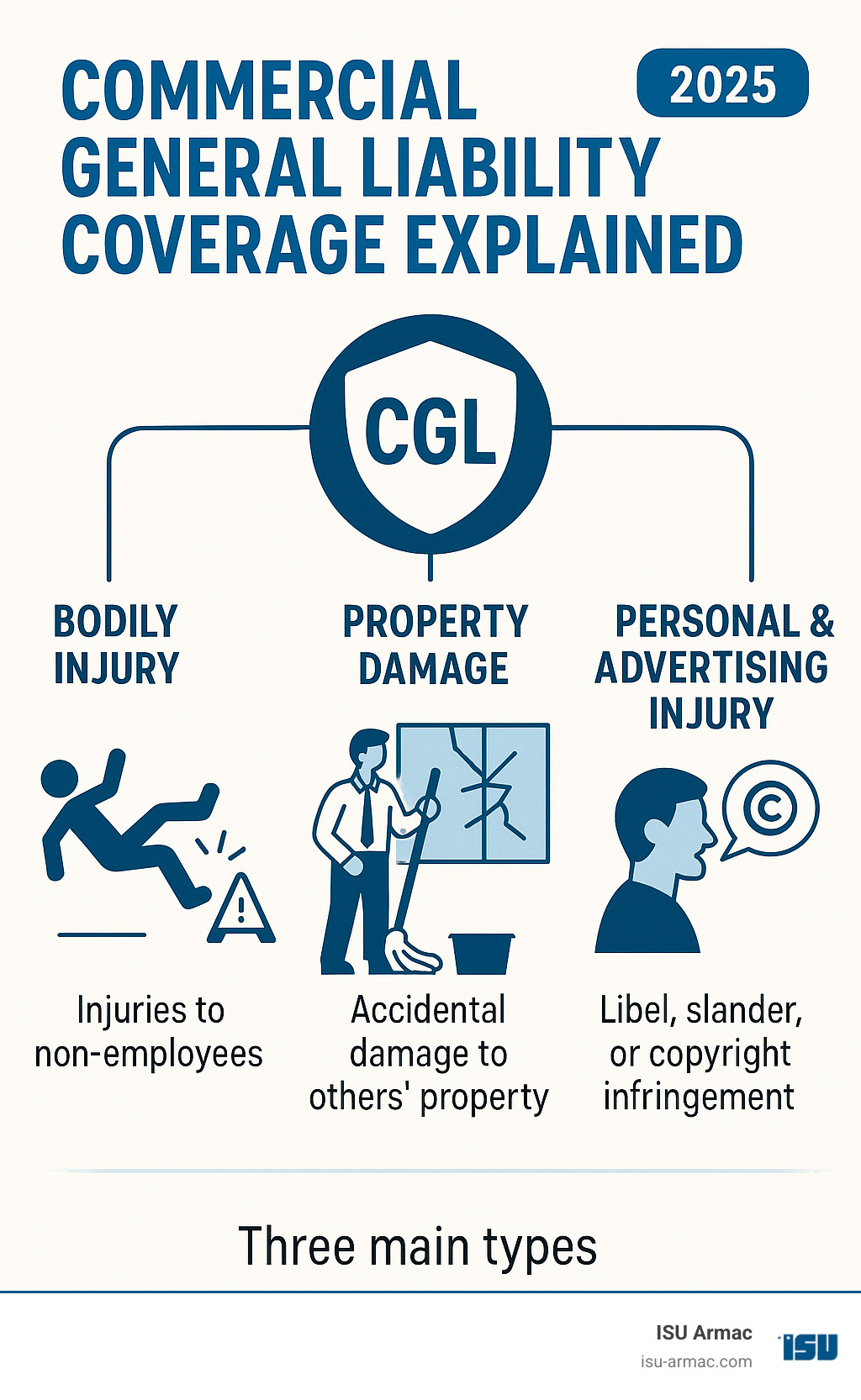
Bodily Injury and Property Damage Liability
This is the primary section of the policy. It covers instances where your business operations cause physical harm to someone who is not an employee or damage to someone else's property. For example, if a roofing contractor accidentally drops a bundle of shingles through a client’s skylight, the property damage portion of the GLI would cover the repairs. Similarly, if a client visits a job site and breaks an arm after tripping on debris, the bodily injury coverage would address their medical expenses and your legal defense if they sue.
Products-Completed Operations
For contractors, this is perhaps the most vital aspect of a GLI policy. It provides coverage for damages or injuries that occur after a project is finished and handed over to the owner. If a plumber installs a pipe that bursts six months later, causing extensive water damage to a finished basement, the "completed operations" portion of the policy handles the claim. It is important to note that this generally covers the resultant damage (the ruined drywall and flooring), not necessarily the cost to repair the faulty pipe itself, which is often considered a business risk rather than a liability event.
Personal and Advertising Injury
This section protects your business against non-physical damages. In an era where digital marketing and social media presence are mandatory for contractors, this coverage is essential. It protects against claims of libel, slander, copyright infringement in your advertising, or even "wrongful eviction" if you are involved in property management. If a competitor claims your social media ads disparage their work, this part of your GLI policy provides the legal shield you need.
Medical Payments
Often referred to as "no-fault" coverage, this allows for the immediate payment of small medical bills if someone is injured on your premises or job site, regardless of who was at fault. This is typically a lower limit (often $5,000 to $10,000) and is designed to settle minor injuries quickly to prevent them from escalating into larger lawsuits.
Why Contractors Require Specific General Liability Limits
In 2026, the standard "1 million / 2 million" policy remains the benchmark for most small to mid-sized contractors. These numbers represent two distinct types of limits:
- Occurrence Limit ($1,000,000): This is the maximum amount the insurer will pay for a single claim or incident.
- Aggregate Limit ($2,000,000): This is the maximum amount the insurer will pay for all claims combined during the one-year policy period.
Contractors often need higher limits depending on the scale of their projects. High-rise developers or infrastructure contractors may carry "Umbrella" or "Excess Liability" policies that sit on top of their general liability, extending coverage to $5 million, $10 million, or more. Furthermore, many modern contracts require "Per Project Aggregates," ensuring that the full limit of the policy is available for each individual job site rather than being shared across all the contractor's ongoing projects.
Common Exclusions: What General Liability Does Not Cover
A frequent mistake among contractors is assuming that general liability is a "catch-all" for every business problem. To maintain a healthy risk management strategy, it is essential to identify the gaps where other policies must take over.
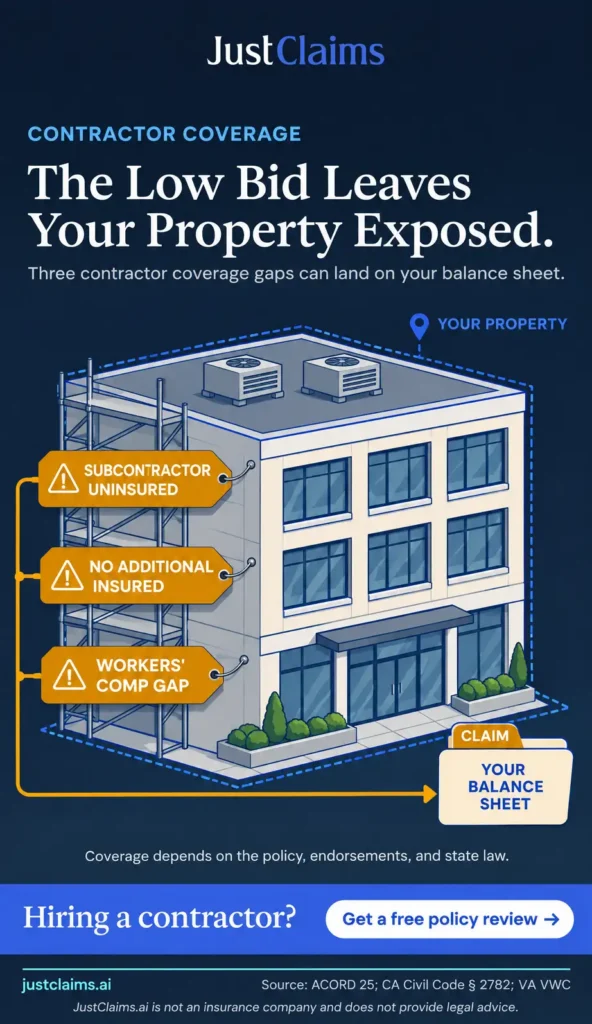
- Employee Injuries: General liability explicitly excludes injuries to your own workers. This is the domain of Workers' Compensation, which is legally mandated in nearly every state.
- Professional Errors: If a contractor provides design-build services and a structural calculation error leads to a project delay or financial loss without causing physical damage, GLI will not cover it. This requires Professional Liability (Errors & Omissions).
- Business Property and Tools: GLI covers damage you cause to others, not damage to your own equipment. For tools stolen from a van or a backhoe damaged on-site, you need Inland Marine Insurance.
- Vehicles: Accidents involving company trucks or vans must be covered by a Commercial Auto policy.
- Faulty Workmanship: As mentioned previously, GLI generally does not pay to fix your own poor work. It pays for the damage your poor work causes to other things.
Comparing Essential Insurance Types for Contractors
| Insurance Type | Primary Protection | Example Scenario |
|---|---|---|
| General Liability | Third-party injury & property damage | A passerby is hit by falling debris from your scaffolding. |
| Workers' Compensation | Employee medical bills & lost wages | A carpenter falls from a ladder and breaks their leg. |
| Professional Liability | Design and consultation errors | An architect/contractor’s faulty layout leads to a $50k redesign. |
| Inland Marine | Tools, equipment, and materials in transit | A specialized saw is stolen from the back of a truck at a hotel. |
| Pollution Liability | Environmental damage and cleanup | An excavator hits an old oil tank, contaminating the soil. |
| Commercial Auto | Liability and physical damage for vehicles | A company van rear-ends a sedan while driving between sites. |
The Role of Certificates of Insurance (COI) in 2026
In the current construction environment, the "Certificate of Insurance" is the currency of trust. A COI is a one-page document issued by your insurance broker that summarizes your coverage. You will almost certainly be asked to provide one before stepping onto a job site or signing a contract.
Clients in 2026 frequently require being named as an Additional Insured on your policy. This gives the client direct protection under your policy for claims arising from your work. Modern digital procurement systems now automatically verify COIs against contract requirements, often flagging policies that are set to expire or that lack specific endorsements like "Waiver of Subrogation" or "Primary and Non-Contributory" language.
Factors Influencing the Cost of Contractor General Liability
The premium for a general liability policy is not a flat fee; it is calculated based on several risk variables. In 2026, underwriters use more granular data than ever to determine pricing.
- Type of Trade: High-risk trades, such as roofing, structural steelwork, or demolition, pay significantly higher premiums than interior painters or flooring installers because the potential for a catastrophic claim is much higher.
- Revenue and Payroll: Most GLI policies are "auditable." The insurer sets an initial premium based on your projected gross revenue or payroll for the year. If you grow significantly during the year, an end-of-year audit may result in an additional premium charge.
- Location: Contractors working in litigious jurisdictions or high-density urban areas like New York City or Los Angeles will face higher rates due to the increased cost of legal defense and higher settlement values.
- Subcontractor Usage: If you hire subcontractors, your insurer will want to see that those subs carry their own insurance. If you cannot prove your subs are insured, your own insurance company will likely charge you for their exposure during your annual audit.
- Claims History: A "clean" loss run (a report showing no claims for the last 3-5 years) is the best way to secure competitive rates. Conversely, even a few small claims can lead to "non-renewal" or a move to the high-cost surplus lines market.
Practical Steps for Obtaining Coverage
When seeking general liability insurance, do not simply look for the lowest price. A policy that lacks the necessary endorsements might be rejected by a general contractor, costing you a lucrative job.
- Consult a Specialist Broker: Work with an agent who understands the construction industry. They will know which carriers are currently "appetite-friendly" for your specific trade.
- Review Contract Requirements First: Before buying a policy, look at the insurance requirements in your typical contracts. Ensure your policy can accommodate "Additional Insured" and "Completed Operations" requirements.
- Bundle for Savings: Many small contractors qualify for a Business Owner's Policy (BOP), which bundles general liability with commercial property insurance at a discounted rate.
- Document Your Safety Protocols: In 2026, insurers often offer better rates to contractors who can demonstrate formal safety programs, regular "toolbox talks," and the use of site-monitoring technology.
Frequently Asked Questions
Is general liability insurance required by law for contractors? While not always a federal mandate, most states require proof of general liability insurance to issue or renew a professional contractor's license. Furthermore, almost all commercial clients and many residential homeowners will require a Certificate of Insurance (COI) before allowing work to begin. Skipping coverage often means you cannot legally operate or bid on reputable projects.
Does general liability cover my tools if they are stolen from a job site? No. General liability insurance is designed to cover your liability toward others. Theft or damage to your own tools and equipment is covered under an Inland Marine policy (also known as a tool and equipment floater). Many contractors add this as an endorsement to their general liability policy for an additional fee.
What is the difference between "occurrence" and "claims-made" policies? An occurrence policy covers claims based on when the incident happened, even if the claim is filed years later after the policy has expired. A claims-made policy only covers claims if the policy is active both when the incident occurred and when the claim is filed. Most contractors prefer occurrence policies because of the long-tail nature of construction defects.
If I am a 1099 subcontractor, do I still need my own general liability insurance? Yes. Even if the general contractor has a policy, their insurance company will often seek to "subrogate" (recover costs) from you if your work caused a claim. Additionally, most general contractors will withhold a portion of your pay or refuse to hire you if you cannot provide your own COI, as your lack of insurance increases their own premium costs.
Final Recommendation: For any contractor operating in 2026, general liability insurance should be viewed as a non-negotiable cost of doing business. Begin by securing a policy with at least $1 million per occurrence and ensure it includes Products-Completed Operations coverage. Regularly review your policy limits as your project sizes increase, and always maintain a digital folder of your insurance documents to respond quickly to client requests.
Disclaimer: This article provides general information and is not intended as legal, financial, or professional insurance advice. Insurance requirements and regulations vary by jurisdiction. Always consult with a licensed insurance professional or legal counsel regarding your specific business needs.
Image Gallery