The Most Broken Artifacts in Magic: The Gathering History
In Magic: The Gathering, "broken" artifacts are cards that provide an overwhelming advantage—typically through explosive mana acceleration, extreme card draw, or oppressive board control—at a mana cost significantly lower than their ac...
In Magic: The Gathering, "broken" artifacts are cards that provide an overwhelming advantage—typically through explosive mana acceleration, extreme card draw, or oppressive board control—at a mana cost significantly lower than their actual value. These cards often bypass the game's fundamental resource constraints, leading to many being restricted or banned across multiple competitive formats.
Contents
The Design Philosophy of "Broken" Artifacts
To understand why artifacts are historically the most "broken" card type in Magic: The Gathering (MTG), one must look at their colorless nature. Unlike spells tied to specific colors of mana, most artifacts can be played in any deck. This universal accessibility means that if an artifact is slightly too powerful, it doesn't just improve one archetype; it homogenizes the entire meta-game.
The primary culprit behind broken artifacts is the violation of the "mana curve." In a balanced game, a player’s power level should scale linearly with the number of turns passed. Artifacts like Black Lotus or Mana Crypt shatter this progression by allowing players to access mid-to-late-game threats on turn one. When a player can generate three or four mana before their opponent has even played a land, the strategic depth of the game evaporates in favor of raw statistical advantage. This is why the history of MTG development is littered with artifact-based "mistakes" that developers at Wizards of the Coast (WotC) have had to manage through aggressive ban lists and power-level errata.
The Gold Standard: Fast Mana and the Power Nine
The conversation regarding broken artifacts must begin with the "Fast Mana" category. These are cards that produce more mana than they cost to cast, essentially providing "free" resources that accelerate the game’s pace beyond its intended limits.
Black Lotus and the Moxen
The most iconic examples are the artifacts within the Power Nine. Black Lotus is widely considered the most powerful card ever printed because it costs zero mana and provides three mana of any color. This allows for "turn zero" wins or the casting of four-mana spells on the very first turn of the game. Similarly, the original Moxen (Mox Pearl, Sapphire, Jet, Ruby, and Emerald) function as additional lands that do not count toward the one-land-per-turn limit. In any format where these are legal, such as Vintage, the game is decided almost entirely by who draws their fast mana first.
Mana Crypt and Mana Vault
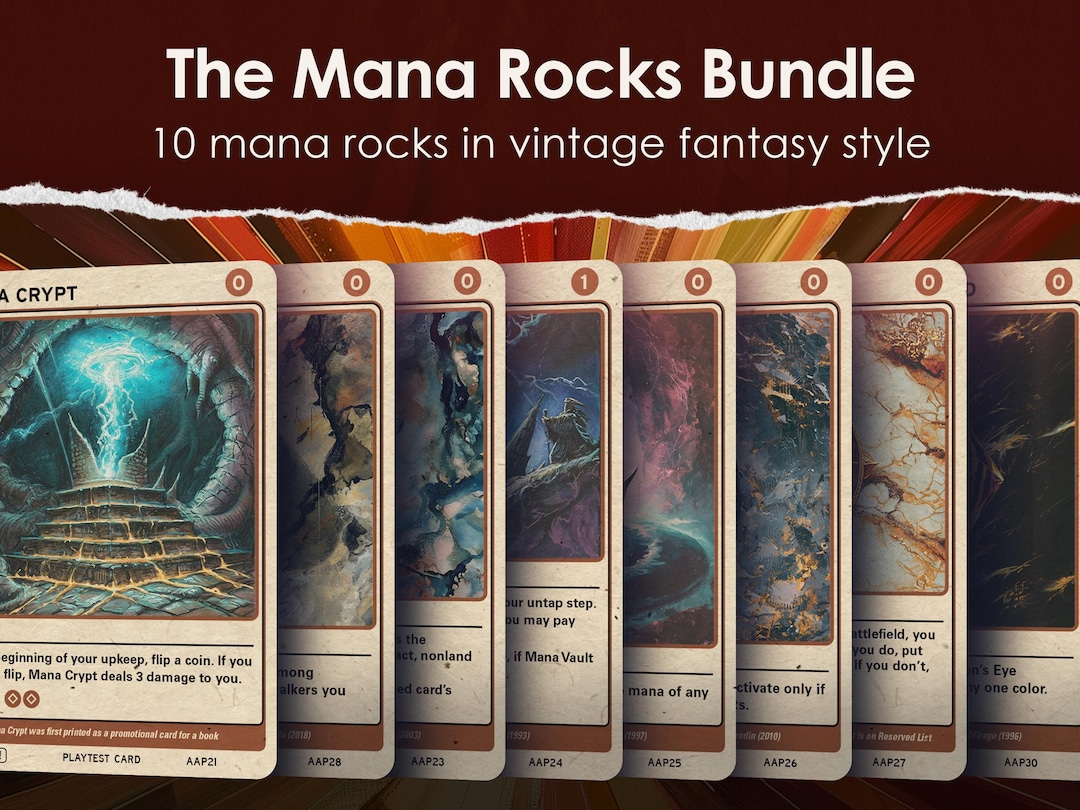
Beyond the Power Nine, Mana Crypt and Mana Vault represent the pinnacle of broken acceleration. Mana Crypt, in particular, remained a staple of the Commander (EDH) format for decades until the seismic shifts in the ban list in late 2024. The ability to generate two colorless mana for a zero-mana investment is fundamentally unbalanceable in a vacuum. While these cards often carry "downsides"—such as taking damage or failing to untap—the sheer tempo gain they provide usually ensures the game ends before those downsides ever become relevant.
Card Advantage Engines: Efficiency Gone Wrong
Mana is only one half of the equation; the other is card advantage. When an artifact allows a player to see or draw their entire library for a negligible cost, it is labeled as broken.
Skullclamp: The "Happy Accident"
Skullclamp is perhaps the most famous design mistake in MTG history. Originally intended to be a minor buff for creatures, a last-minute change to its stats (giving the equipped creature -1 toughness) turned it into a repetitive drawing machine. By attaching it to 1/1 tokens, players could pay one mana to "sacrifice" a creature and draw two cards. In the 2004 Standard environment and modern-day Legacy/Commander, Skullclamp can draw dozens of cards in a single turn, providing an engine that no other card type can match for the same efficiency.
Sensei’s Divining Top
While not as explosive as Skullclamp, Sensei’s Divining Top was broken due to its interaction with the "miracle" mechanic and its ability to grind competitive play to a halt. The "Top" allowed players to manipulate the top of their library constantly. In the hands of a skilled player, it provided perfect card selection; in the hands of a slow player, it led to unintentional draws and logistical nightmares for tournament organizers. Its banning in Legacy was a testament to the fact that a card can be "broken" not just for its power, but for its impact on the physical flow of the game.
The One Ring
As we look back from 2026, The One Ring stands as the modern era's most significant artifact error. Released in the Lord of the Rings: Tales of Middle-earth set, it combined protection from everything with an exponential card-draw engine. Unlike previous artifacts that required synergies, The One Ring was a self-contained win condition that fit into nearly every deck in Modern and Legacy. Its ability to reset its "burden counters" through flickering or legend-rule manipulation made its supposed life-loss drawback trivial.
The Impact of Artifact-Centric Mechanics
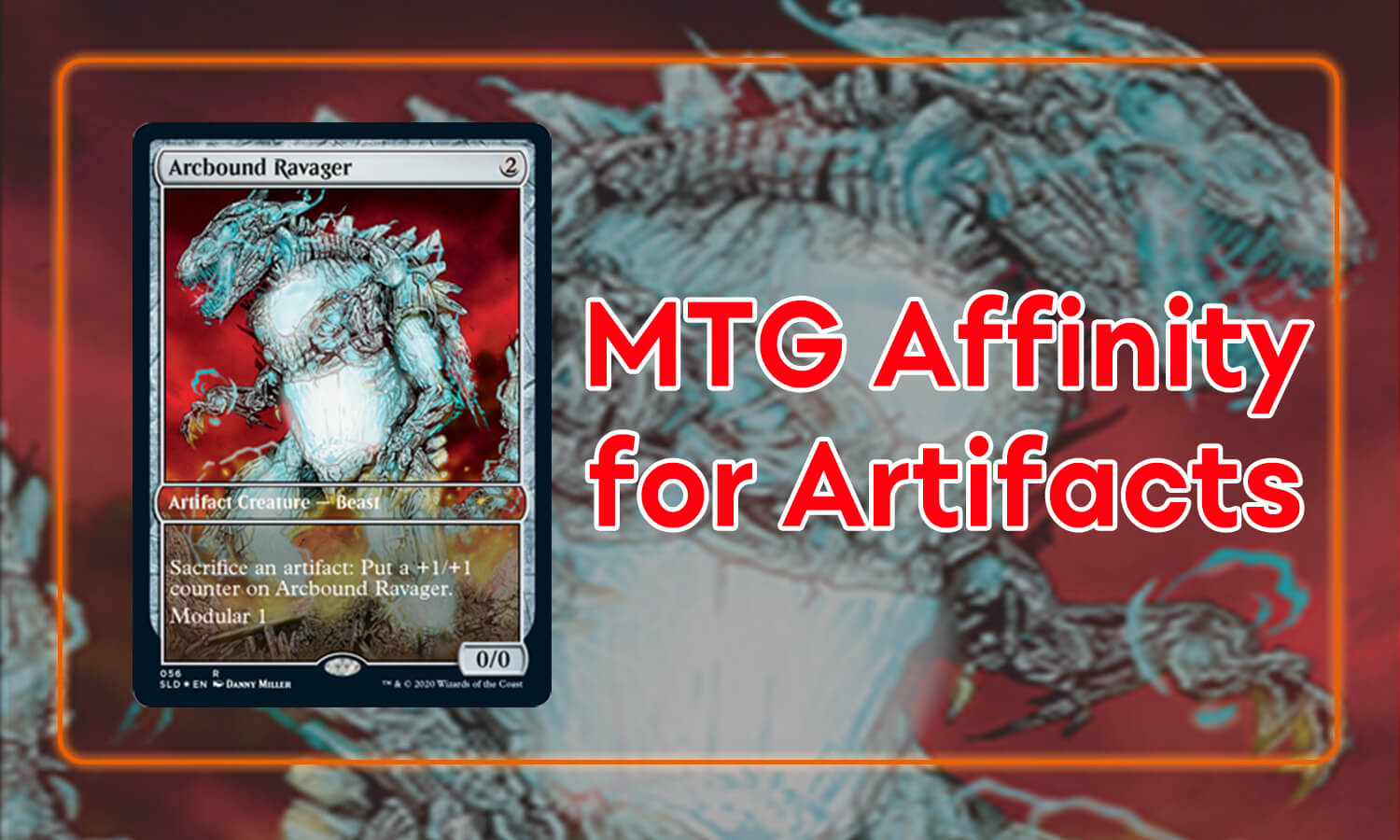
Sometimes, an artifact isn't broken because of what it does individually, but because of the mechanics that support it. The Affinity for Artifacts mechanic is the most notorious example. By reducing the cost of spells for every artifact on the battlefield, Affinity allowed players to dump their entire hands by turn two. This led to the "Mirrodin Winter," where almost every deck in the competitive circuit was an artifact-based aggro deck, forcing WotC to issue a massive wave of bans to save the game’s player base.
Similarly, the Metalcraft and Improvise mechanics have pushed otherwise fair artifacts into broken territory. When cards like Mox Opal were legal in Modern, they enabled hyper-consistent combo decks that could ignore the opponent's strategy entirely. The power of these mechanics stems from the fact that artifacts often provide utility (like the mana from a Bauble) while simultaneously acting as a discount for the next spell.
Prison Pieces: Preventing the Opponent from Playing
A subset of broken artifacts focuses on "stax" or "prison" strategies, which aim to prevent the opponent from casting spells entirely.
- Chalice of the Void: By setting this to one or two, a player can effectively counter every relevant spell in an opponent’s deck for the rest of the game.
- Trinisphere: This card forces every spell to cost at least three mana. Against decks built on low-cost efficiency, this is a hard lock that prevents any game actions from being taken.
- Ensnaring Bridge: By keeping their hand empty, a player can use this artifact to prevent any creatures from attacking, creating a "locked" board state where the opponent is powerless to win through combat.
These cards are considered broken because they do not interact with the opponent's strategy; they simply remove the opponent's ability to have a strategy.
Comparison of Historically Broken Artifacts
The following table compares some of the most influential broken artifacts based on their primary function and their current status in major competitive formats as of 2026.
| Artifact Name | Primary Role | Why It Is Broken | Primary Format Status (2026) |
|---|---|---|---|
| Black Lotus | Fast Mana | 0 cost for +3 mana; ultimate tempo | Restricted in Vintage; Banned elsewhere |
| Mana Crypt | Fast Mana | 0 cost for +2 mana every turn | Banned in Commander & Legacy |
| Skullclamp | Card Draw | Turns 1/1 tokens into a 1-mana "Draw 2" | Banned in Modern & Legacy |
| The One Ring | Value Engine | Protection + Indestructible + Infinite Draw | Heavily Played / Watchlist in Modern |
| Time Vault | Combo Piece | Enables infinite turns with minimal setup | Restricted in Vintage |
| Mox Opal | Fast Mana | Enables Turn 1/2 explosive plays in artifact decks | Banned in Modern |
| Sensei's Top | Selection | Perfect top-deck control; slows down play | Banned in Legacy & Modern |
Frequently Asked Questions
Is Sol Ring considered a broken artifact?
By any objective metric of power, Sol Ring is one of the most broken cards ever printed. It provides two mana for a one-mana investment, a ratio only surpassed by Black Lotus and Mana Crypt. However, it is the "face" of the Commander format. While it is banned in Legacy and restricted in Vintage, it remains legal in Commander because it is considered a foundational part of the format's identity, despite its massive power imbalance.
Why was Mana Crypt banned in Commander recently?
The 2024 ban of Mana Crypt (along with Jeweled Lotus) was a turning point for the Commander format. The Rules Committee and WotC determined that the "fast mana" meta had become too efficient, leading to games ending before social interaction could occur. By removing the zero-mana accelerators, the format shifted back toward a mid-range pace, though the decision remains a point of contention among high-power players in 2026.
Can an artifact be broken even if it has a high mana cost?
Yes, though it is rarer. Bolas’s Citadel is a prime example. Even at six mana, the ability to play cards off the top of your library by paying life instead of mana is so powerful that it can win the game the moment it resolves. In formats with high starting life totals, like Commander, high-cost artifacts can be just as broken as low-cost ones if their effect allows the player to "storm off" or ignore mana costs.
What makes an artifact "un-ban-able" in certain formats?
In Vintage, cards are almost never banned for power level; they are restricted to one copy per deck. This is because Vintage is designed to be the place where players can use their "broken" cards. In other formats, like Modern or Standard, the barrier for banning is lower. If a single artifact appears in more than 30-40% of the top-performing decks, it is usually targeted for a ban to ensure deck diversity.
Practical Recommendations for Players
If you are playing in a format where these broken artifacts are legal, your deckbuilding must account for them. In Vintage, you must play "Null Rod" effects or your own fast mana to compete. In Commander, even with the 2024 bans, artifacts like Arcane Signet and Talismans remain essential for keeping pace with the table.
When evaluating new artifacts released in 2026 and beyond, look for cards that generate mana for less than they cost or cards that provide card draw without a "once per turn" restriction. These are the hallmarks of broken design. To protect your collection value, be wary of "universal" artifacts that fit into every deck, as these are the most likely candidates for future bans.
Image Gallery