At What Time Is Sunset Today: Accurate Calculations and Viewing Guide for 2026
Determining the exact time of sunset today requires understanding your precise geographic coordinates, time zone offsets, and atmospheric refraction principles. Because Earth rotates continuously while orbiting the sun, sunset is never...
Determining the exact time of sunset today requires understanding your precise geographic coordinates, time zone offsets, and atmospheric refraction principles. Because Earth rotates continuously while orbiting the sun, sunset is never a universal timestamp; it shifts progressively westward, varying by minutes each day depending on your latitude and the time of year.
Contents
Understanding the Mechanics of Sunset
Sunset is formally defined as the moment the upper edge of the sun's disk disappears below the western horizon. While it appears to be a simple visual phenomenon, it is governed by complex celestial mechanics involving Earth's axial tilt of approximately 23.44 degrees and its elliptical orbit around the sun.
Why Sunset Times Change Daily
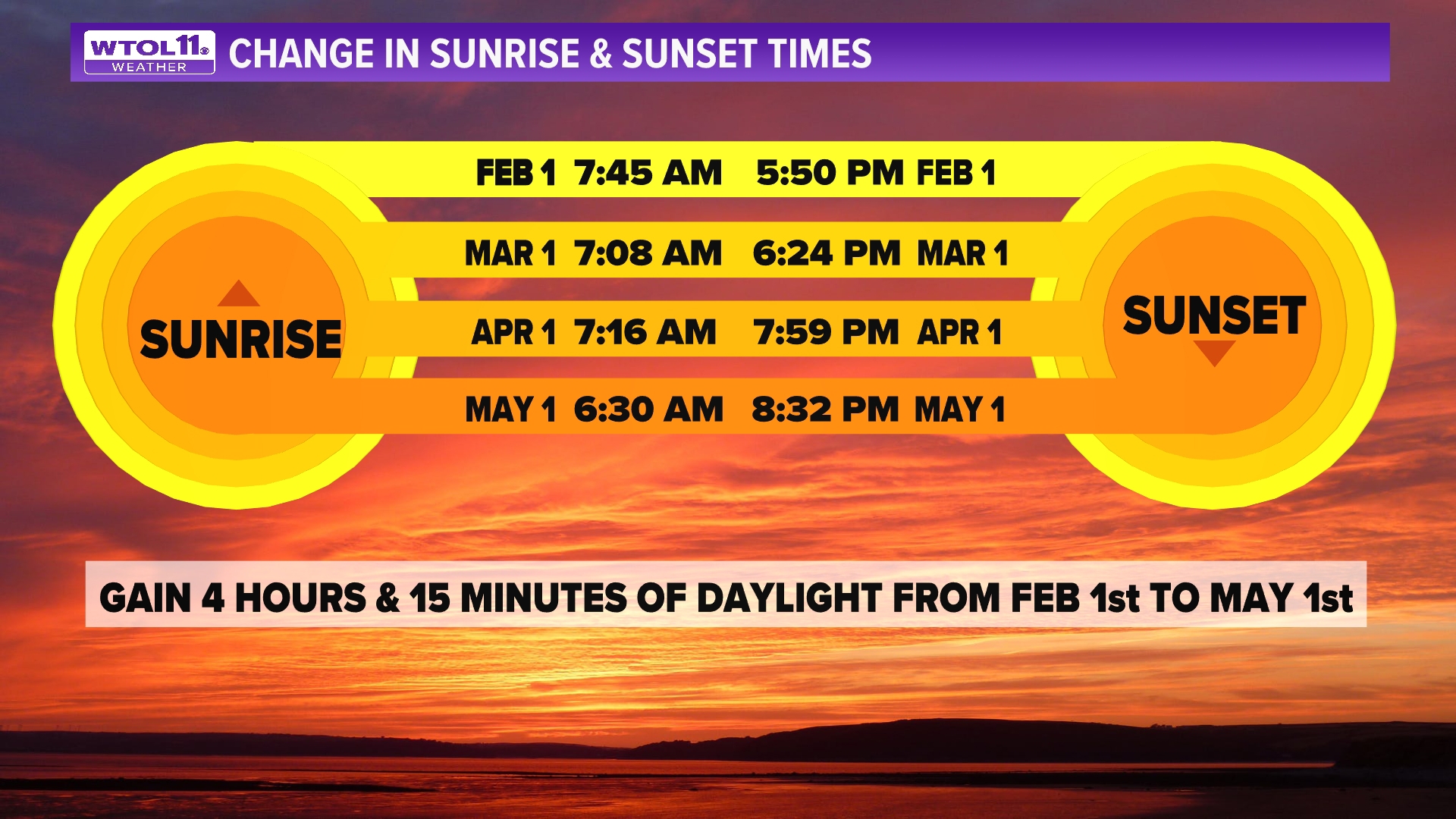
As Earth travels along its orbit, the apparent position of the sun moves north and south across the sky over the course of a year. This shifting angle alters the length of the day. During the summer months in the Northern Hemisphere, the tilt leans toward the sun, creating longer days and later sunsets. Conversely, winter tilts the hemisphere away, resulting in early evening darkness.
The Role of Atmospheric Refraction
Earth's atmosphere bends sunlight. When you watch the sun touch the horizon, it has actually already set geometrically; atmospheric refraction lifts the apparent image of the sun by about half a degree. This optical illusion adds roughly two to three minutes of daylight to your evening, depending on atmospheric pressure, temperature, and humidity levels at your specific observation point.
Geographic Variables That Dictate Your Local Sunset
Your exact location on the globe is the primary factor determining when the sun will set for you today. Two locations on the same longitude will experience different sunset times if they sit at different latitudes, particularly during solstices and equinoxes.
Latitude and Longitude Impact
- Latitude (North/South): The further you move away from the equator toward the poles, the more extreme the seasonal variations in sunset times become. During summer, high-latitude regions experience very late sunsets or even midnight sun, while winter brings remarkably early twilight.
- Longitude (East/West): Within a single time zone, locations further east experience sunrise and sunset earlier than locations further west. Even a fifty-mile westward shift can delay your sunset by several minutes.
- Elevation Above Sea Level: Standing on a high mountain or a tall building expands your visual horizon. This elevation allows you to see the sun for a slightly longer duration, pushing your literal sunset time back by a minute or two compared to someone standing at sea level directly below you.
Comparing Daylight Metrics Across Seasons
The timing of sunset does not change at a uniform rate throughout the year. The table below illustrates how solar positioning affects daylight metrics across different seasonal milestones.
| Season Phase | Solar Positioning | Daylight Duration Trend | Twilight Length |
|---|---|---|---|
| Spring Equinox | Directly over the equator | Increasing rapidly day by day | Moderate and steady |
| Summer Solstice | Maximum tilt toward the sun | Longest days, latest sunsets | Longest twilight duration |
| Autumn Equinox | Directly over the equator | Decreasing rapidly day by day | Moderate and steady |
| Winter Solstice | Maximum tilt away from the sun | Shortest days, earliest sunsets | Shortest twilight duration |
How to Calculate Your Exact Local Sunset Time
Calculating or finding your exact local sunset time requires reliable data sources and an awareness of standard versus daylight saving time adjustments.
Step-by-Step Verification Process
- Identify Your Precise Coordinates: Note your city, ZIP code, or latitude and longitude coordinates. Online astronomical databases require this granularity to provide down-to-the-minute accuracy.
- Check Current Time Regulations: Ensure you account for Daylight Saving Time (DST) if it is currently active in your region, as official solar noon shifts by one hour during these periods.
- Consult Ephemeris Tables or APIs: Utilize trusted astronomical tracking sources, such as the United States Naval Observatory (USNO) or global meteorological services, which factor in solar coordinates and atmospheric conditions.
- Account for Topographical Obstructions: Keep in mind that mountains, tall urban architecture, or dense tree lines to your west will block the visible sun before the actual astronomical sunset time.
Advantages and Disadvantages of Relying on Digital Sunset Trackers
| Approach | Advantages | Disadvantages |
|---|---|---|
| Weather Apps & Smartphones | Instant access, automatic GPS location tracking, highly convenient for daily planning. | May rely on coarse regional approximations rather than hyper-local topographical horizons. |
| Astronomical Tables (USNO) | Scientifically rigorous, highly accurate mathematical models, accounts for atmospheric refraction. | Requires manual coordinate input and understanding of time zone offsets. |
Common Mistakes When Checking Sunset Times
- Ignoring Time Zone Edges: If you live near the western border of a time zone, your sunset will occur significantly later on the clock than someone on the eastern edge of the same time zone.
- Confusing Sunset with Twilight: Sunset is the moment the sun disappears, whereas civil, nautical, and astronomical twilight provide varying periods of lingering ambient light afterward. Do not plan outdoor photography or navigation tasks assuming total darkness occurs the exact minute the sun sets.
- Neglecting Seasonal Time Changes: Forgetting to adjust for the transition into or out of Daylight Saving Time leads to a full one-hour error in planning evening activities.
Frequently Asked Questions
What is the exact difference between sunset and twilight?
Sunset is the precise instant the sun dips below the horizon, while twilight is the illuminated period of partial darkness that follows before complete night sets in. Twilight is further divided into civil, nautical, and astronomical phases depending on how far the sun is below the horizon.
Why does the earliest sunset not happen on the winter solstice?
Due to the eccentricity of Earth's elliptical orbit and the tilt of its axis—known as the equation of time—the earliest sunset actually occurs a couple of weeks before the winter solstice, while the latest sunrise happens a couple of weeks after the new year.
Does elevation significantly change when the sun sets?
Yes, climbing higher increases the dip of the horizon, allowing you to see over the curvature of the Earth for a slightly longer duration. Standing on a 1,000-foot skyscraper can delay your visual sunset by a minute or more compared to sea level.
How can I find the sunset time for a remote location?
You can use dedicated online solar calculators, geographic coordinate mapping tools, or astronomical software that inputs specific latitude, longitude, and elevation parameters to compute precise solar events anywhere on Earth.
Does weather affect the timing of sunset?
Heavy cloud cover, dense fog, or storms will obscure the sun before it officially reaches the geometric horizon, making it seem like sunset happened earlier than scheduled, though the astronomical calculation remains unchanged.
Plan Your Evening With Precision
Accurately knowing the sunset time for today allows you to optimize your outdoor schedules, coordinate photography lighting, and manage evening travel safely. Check your local coordinates against trusted astronomical data sources to ensure you never miss the golden hour.
Image Gallery