Determining Nightfall and Sunset Times in 2026
Nightfall, technically defined as the end of civil twilight, occurs when the sun reaches 6 degrees below the horizon, signaling that artificial lighting is typically required for outdoor activities. Because this time shifts daily based...
Nightfall, technically defined as the end of civil twilight, occurs when the sun reaches 6 degrees below the horizon, signaling that artificial lighting is typically required for outdoor activities. Because this time shifts daily based on your specific latitude, longitude, and the current date in 2026, there is no single universal time for nightfall; you must calculate it based on your precise local coordinates.
Contents
Understanding the Astronomical Mechanics of Nightfall
To understand why "nightfall" fluctuates, one must distinguish between sunset and the various stages of twilight. Sunset is the exact moment the upper limb of the sun disappears below the horizon, but it is not yet dark. Nightfall is a subjective term that usually aligns with the conclusion of civil twilight.
The Earth’s axial tilt of approximately 23.5 degrees is the primary driver of these temporal changes throughout the year. As the Earth orbits the Sun, the angle of incoming sunlight changes, which dictates how long the sun lingers at or below the horizon. In 2026, these cycles remain constant, governed by the same orbital mechanics that have dictated solar patterns for millennia.
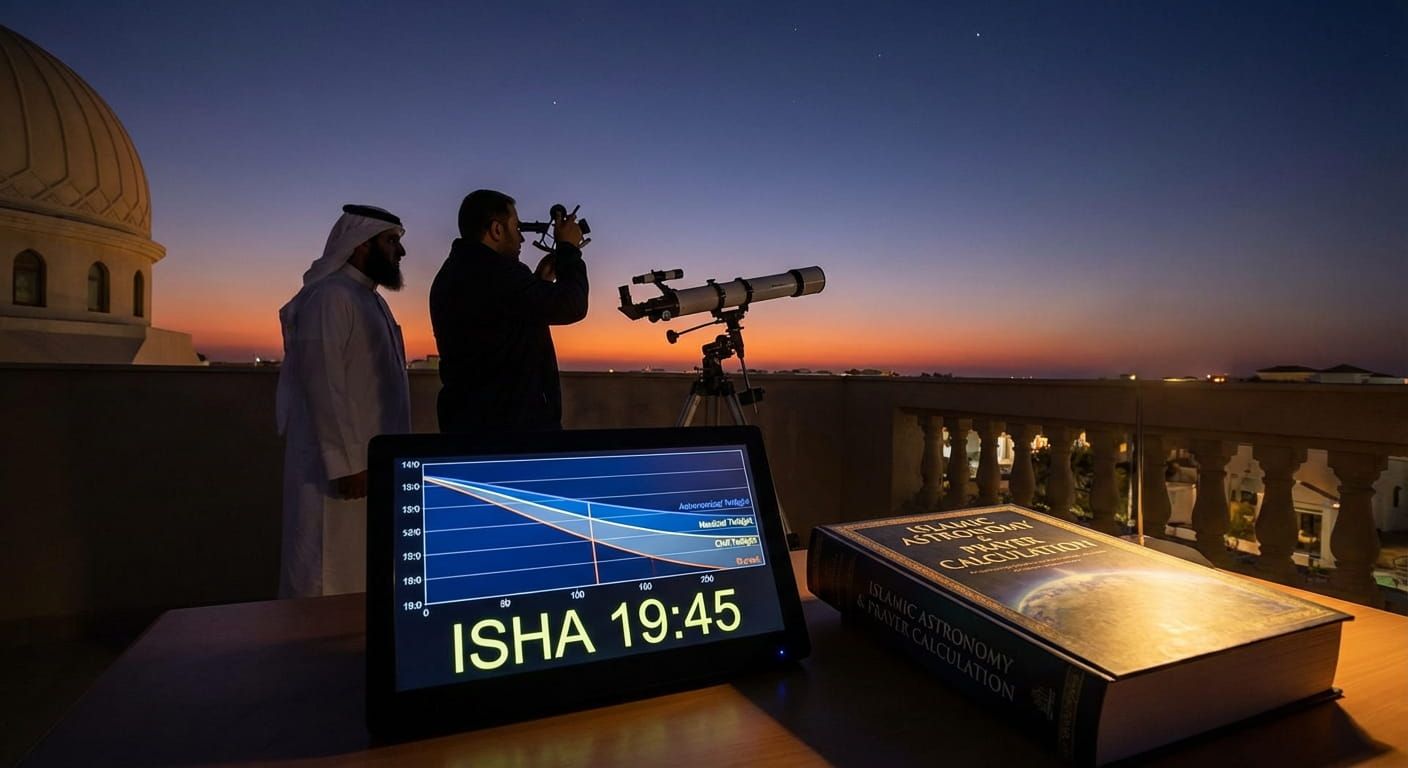
Defining the Three Stages of Twilight
Understanding the technical progression of light is essential for planning outdoor logistics or photography. Each stage represents the sun's position in degrees below the horizon:
- Civil Twilight (0 to 6 degrees below): This is the period when there is enough natural light for terrestrial objects to be clearly distinguished. Standard legal definitions of "night" often begin after this phase concludes.
- Nautical Twilight (6 to 12 degrees below): The horizon is still visible at sea, but artificial light is required for most outdoor tasks. Navigation by stars becomes possible.
- Astronomical Twilight (12 to 18 degrees below): The sky is dark enough for faint astronomical observations, though some ambient atmospheric glow may persist.
Factors Influencing Local Solar Calculations
Your specific geographic position is the most critical variable in determining when nightfall occurs. Two observers in the same time zone but at different latitudes will experience significantly different twilight durations.
Geographic Variables
- Latitude: The further you move toward the poles, the longer twilight lasts. Near the equator, the sun sets at a steep angle, causing a rapid transition from day to night.
- Longitude: Within a single time zone, the sun hits the meridian at different times. If you are on the western edge of a time zone, your nightfall will be later than someone on the eastern edge.
- Atmospheric Conditions: While refraction does not change the geometric time of sunset, local haze, pollution, or cloud cover can significantly shorten the perception of dusk, making it seem as though "nightfall" has arrived earlier than the astronomical calculations suggest.
Comparison of Solar Events by Latitude (Estimates for 2026)
The following table demonstrates how latitude influences the duration of twilight. These figures represent the approximate time gap between sunset and the end of civil twilight (nightfall) during the mid-year period.
| Latitude | Typical Duration (Min) | Impact on Visibility |
|---|---|---|
| 0° (Equator) | 20–25 Minutes | Rapid transition; very short twilight. |
| 30° (Subtropical) | 25–30 Minutes | Standard dusk; moderate transition. |
| 45° (Mid-Latitude) | 30–40 Minutes | Extended dusk; common in most of the US/Europe. |
| 60° (High-Latitude) | 50–90 Minutes | Extremely long transition; "White nights" in summer. |
Precise Methodology for Calculating Local Nightfall
For professional, military, or recreational accuracy, you should rely on high-precision algorithms rather than generalized forecasts. The Naval Observatory and standardized solar calculators utilize the following inputs to provide the exact moment of nightfall for your specific location in 2026:
- Acquire your precise GPS coordinates (Latitude and Decimal Longitude).
- Account for your specific time zone offset from Coordinated Universal Time (UTC).
- Apply the Earth's orbital ephemeris for the target date in 2026 to determine the solar zenith angle.
- Calculate the time where the solar zenith angle equals 96 degrees (the sum of 90 degrees for the horizon and 6 degrees for civil twilight).
Frequently Asked Questions Regarding Nightfall
Is there a legal definition for nightfall?
Legally, "night" is often defined by statutes related to driving, hunting, or labor laws. In many jurisdictions, "night" is defined as the period between 30 minutes after sunset and 30 minutes before sunrise. Always consult your local Department of Transportation or Fish and Wildlife agency for specific legal requirements.
Does nightfall happen at the same time as sunset?
No, sunset marks the moment the sun disappears, while nightfall occurs when the sun is 6 degrees below the horizon. The gap between these two events can range from 20 minutes to several hours depending on your latitude and the time of year.
How does Daylight Saving Time affect nightfall?
Daylight Saving Time (DST) shifts the clock but not the solar position. By moving the clock forward by one hour in the spring, we shift the timing of sunset and nightfall relative to the clock, making it appear that nightfall occurs later in the evening during the warmer months of 2026.
Can I predict nightfall without an app?
While you can approximate based on the sun's position, the human eye is poor at estimating the 6-degree threshold. Relying on verified solar ephemeris data provided by national meteorological services is the only way to ensure accuracy for time-sensitive operations.
Why is it still light outside after the sun has set?
This is caused by atmospheric refraction and scattering. The Earth's atmosphere bends sunlight over the horizon, and dust and moisture in the air continue to scatter light, keeping the sky illuminated well after the sun is technically "down."
Practical Recommendations for Planning
If you are planning activities that require natural light, such as construction, maritime travel, or photography, adhere to the following best practices:
- Buffer Zones: Always add a 15-minute safety buffer to your planned end-time. Even if the calculation says nightfall is at 8:00 PM, visibility may be significantly reduced by 7:45 PM.
- Use Trusted Sources: Rely on official government astronomical data, such as the data provided by the U.S. Naval Observatory (USNO) or equivalent national agencies in your region.
- Equipment Prep: If your work continues through nightfall, ensure that high-visibility gear or professional-grade artificial lighting is staged and tested before the civil twilight threshold is reached.
For the most accurate assessment of nightfall in your area, visit your local meteorological service website or use a verified solar calculator to input your specific 2026 location coordinates.
Image Gallery