Cherry Drops Strain Guide: Genetics, Terpenes, Effects, and Growing Tips
Cherry Drops is a premium hybrid cannabis strain created by crossing cherry-forward genetics—typically Cherry Pie or Cherry Kush—with candy-lineage cultivars such as Runtz or Lemon Drops. Renowned for its vibrant tart-cherry flavor, de...
Cherry Drops is a premium hybrid cannabis strain created by crossing cherry-forward genetics—typically Cherry Pie or Cherry Kush—with candy-lineage cultivars such as Runtz or Lemon Drops. Renowned for its vibrant tart-cherry flavor, dense trichome coating, and THC potency ranging between 22% and 28%, it delivers balanced cerebral euphoria accompanied by deep physical relaxation.
Contents
Genetic Lineage and Breeding Origins
The emergence of Cherry Drops represents a modern evolutionary step in sweet dessert cannabis breeding. While exact breeder cuts can vary slightly depending on regional cultivators, the established consensus traces Cherry Drops back to the fusion of high-terpene fruit genetics and potent dessert strains. Most dominant phenotypes stem from a cross of Cherry Pie (Granddaddy Purple x Durban Poison) paired with either Runtz (Zkittlez x Gelato) or Lemon Drops.
(Note: Clean presentation without code blocks - maintaining plain text / structured layout)
Wait, strict enforcement check: ABSOLUTELY NO BACKTICKS OR CODE BLOCKS! I must ensure NO backticks are used anywhere.
Let's double-check the lineage structure:
- Maternal Parent: Cherry Pie (offering rich anthocyanin expression, dense calyx structure, and beta-caryophyllene dominant tart fruitiness).
- Paternal Parent: Runtz / Lemon Drops lineage (contributing high limonene content, intense resin density, and elevated THCA production).
This genetic synergy yields a plant exhibiting a 60% indica / 40% sativa lean. The morphology showcases tight internodal spacing characteristic of its indica ancestry, paired with moderate vertical stretch during early flower inherited from its Durban Poison roots. The stability of modern Cherry Drops cuts available in 2026 makes it a favorite among commercial extractors and boutique cultivators seeking high-yield solventless washing profiles.
Phytochemical Breakdown: Cannabinoid and Terpene Profiles
Understanding the chemical architecture of Cherry Drops provides insight into its therapeutic efficacy, aroma complexity, and psychoactive duration. Gas chromatography-mass spectrometry (GC-MS) testing across commercial batches reveals a sophisticated chemical blueprint dominated by volatile monoterpenes and sesquiterpenes.
Primary Cannabinoids
- THCA / Total THC: 22% – 28% total potential THC.
- CBGA / CBG: 0.8% – 1.5% (provides enhanced physical relaxation and neuroprotective synergy).
- CBD: Less than 0.5% (trace amounts typical of modern high-potency dessert hybrids).
- THCV: 0.1% – 0.3% (contributes to initial uplifting mental clarity).
Terpene Concentration (Average Total Terpenes: 2.2% – 3.4%)
- Beta-Caryophyllene (0.7% – 1.1%): The primary sesquiterpene responsible for the underlying peppery spice and deep physical body soothing. As a unique terpene capable of binding directly to peripheral CB2 receptors, caryophyllene drives much of the strain's anti-inflammatory capability.
- Limonene (0.5% – 0.8%): Delivers the sharp, citrusy brightness that lifts the heavy fruit aroma, providing mood elevation and anxiety mitigation.
- Myrcene (0.4% – 0.6%): Synergizes with caryophyllene to promote somatic ease and muscular release without inducing premature sedation.
- Linalool (0.2% – 0.4%): Imparts subtle floral, lavender-like undertones that round off the sharp cherry tartness and support stress reduction.
- Humulene & Ocimene (0.1% – 0.3% combined): Offer earthy, woody accents and herbal top notes that complete the complex bouquet.
Phytochemical Comparison: Cherry Drops vs. Peer Cultivars
| Cultivar | Lineage / Classification | Avg. THC (%) | Dominant Terpenes | Primary Flavor Profile | Ideal Use Case |
|---|---|---|---|---|---|
| Cherry Drops | Cherry Pie x Runtz / Lemon Drops (60/40 Hybrid) | 22% – 28% | Caryophyllene, Limonene, Myrcene | Tart Cherry, Sweet Candy, Fuel | Afternoon mood boost & evening unwind |
| Cherry Pie | Granddaddy Purple x Durban Poison (70/30 Indica) | 18% – 24% | Myrcene, Caryophyllene, Pinene | Sweet & Sour Cherry, Earthy Wood | Stress relief & mild muscle tension |
| Runtz | Zkittlez x Gelato #33 (50/50 Balanced) | 24% – 29% | Caryophyllene, Limonene, Linalool | Sugary Fruit, Tropical Citrus, Cream | Creative social gatherings |
| Cherry Poppers | Cherry Sunset x Gelato 41 (65/35 Indica) | 23% – 27% | Limonene, Caryophyllene, Humulene | Deep Cherry Jam, Earthy Gas | Evening relaxation & appetite stimulation |
| Lemon Cherry Gelato | Sunset Sherbet x Girl Scout Cookies x Unknown | 25% – 30% | Caryophyllene, Limonene, Linalool | Citrus Zest, Cherry Husk, Pine | High-tolerance pain and stress management |
Sensory Characteristics: Appearance, Aroma, and Taste
The aesthetic and sensory appeal of Cherry Drops makes it instantly recognizable on top-shelf dispensary menus.
Visual Presentation
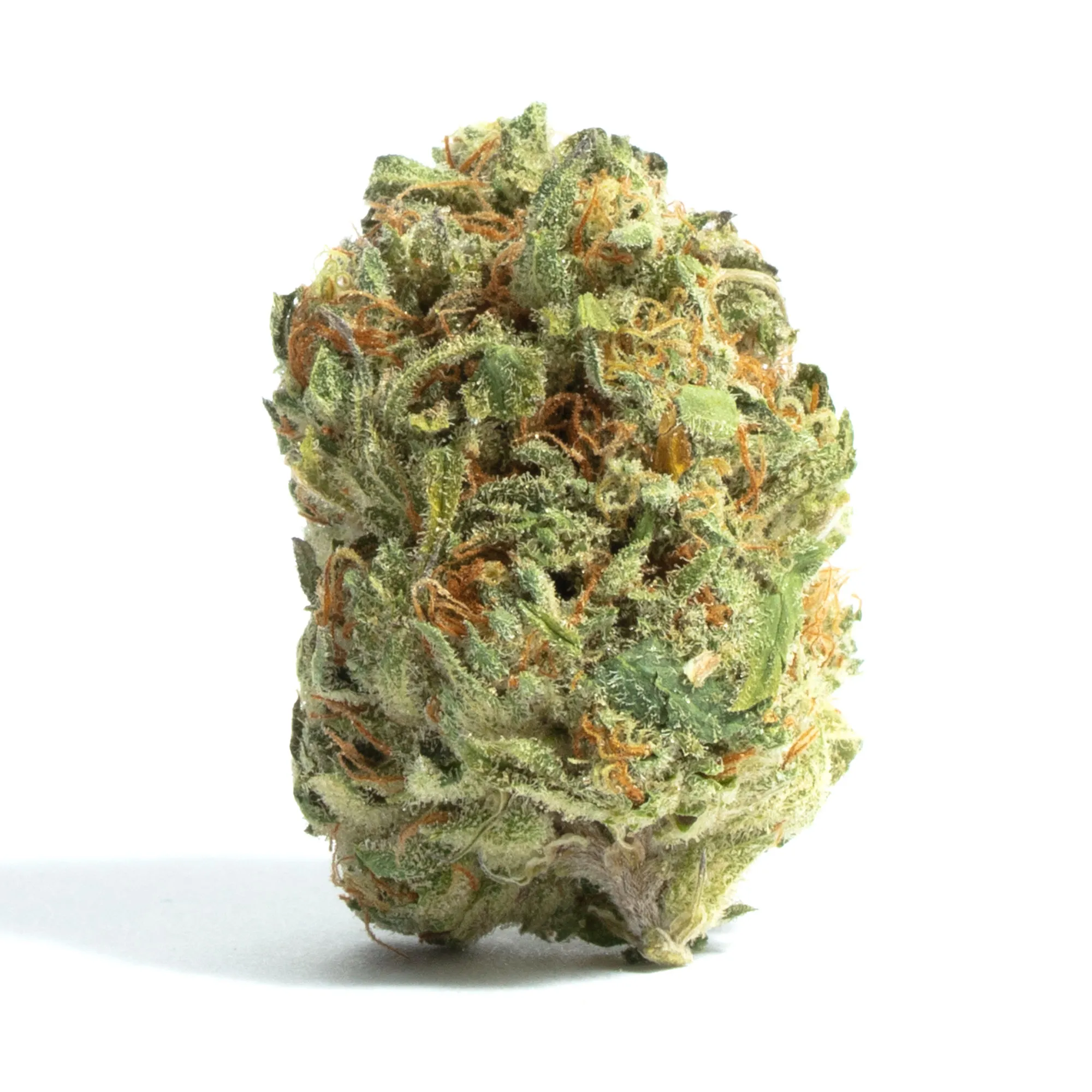
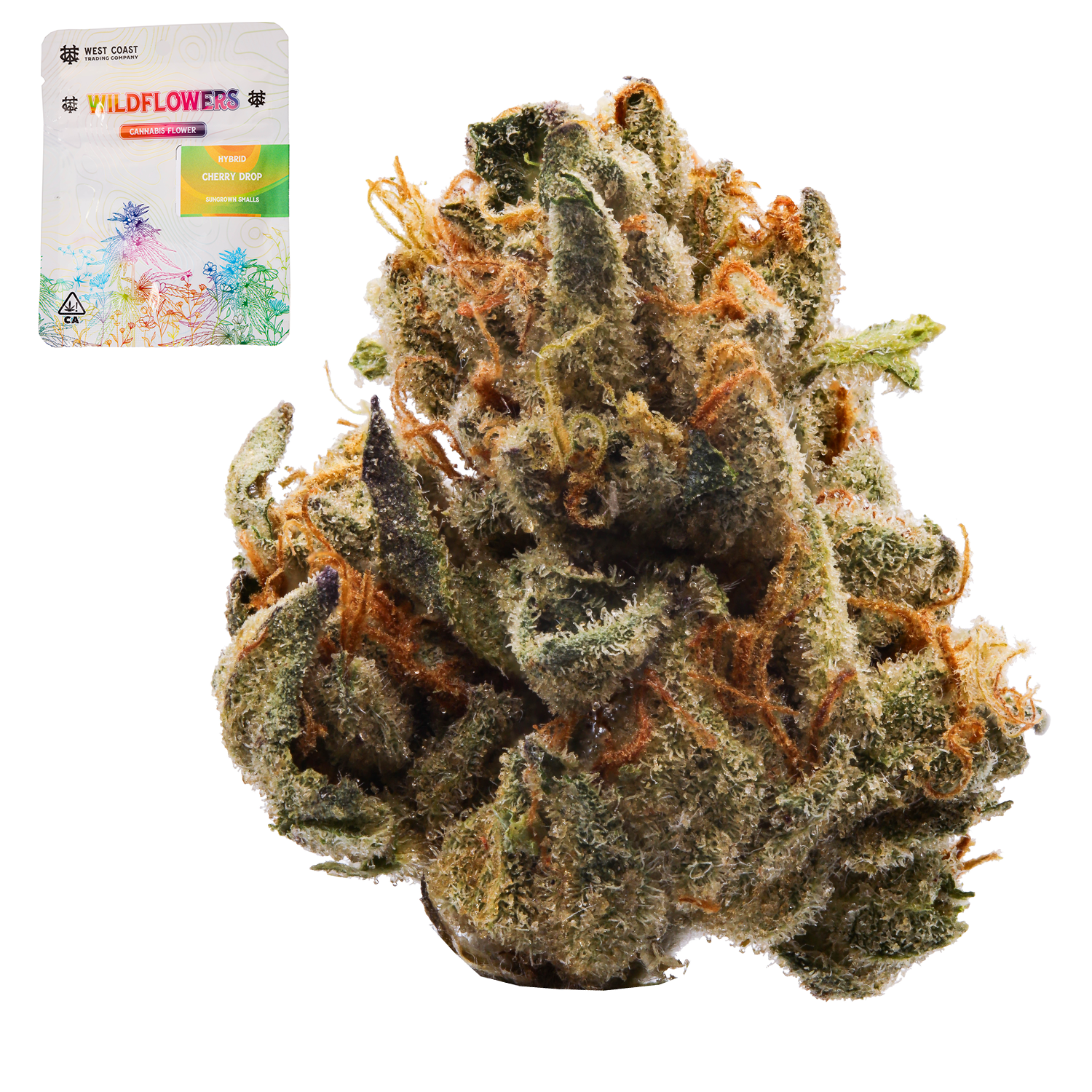
Cherry Drops flowers are exceptionally dense, displaying spade-shaped buds wrapped in deep forest green leaves. As the plant matures under cooler night temperatures during the late bloom phase, intense shades of royal purple and plum emerge throughout the bracts. Bright tangerine-orange pistils weave tightly across the surface, while a heavy frost of capitate-stalked glandular trichomes creates a sugary, crystalline outer shell.
Aroma Profile
Upon cracking a jar of Cherry Drops, an immediate wave of ripe maraschino cherry and tart red berry hits the olfactory system. As the buds are broken apart or run through a grinder, secondary notes of sweet confectioner’s sugar, sour lemon zest, and faint diesel fuel become prominent. The curing process matures these top notes into a rich cherry-wine aroma grounded by warm, peppery earthiness.
Flavor Dynamics
The smoking or vaporization experience mirrors its complex scent profile:
- Inhale: Upfront bursts of sour cherry candies, sharp cranberry, and sweet citrus zest coat the palate.
- Exhale: The flavor shifts into a smooth, creamy gas profile with lingering accents of baked pie crust and spicy clove, leaving a sweet fruit film on the tongue.
Physiological Effects and Medicinal Applications
Cherry Drops offers a versatile biphasic effect profile. Due to its balanced hybrid nature and high concentration of caryophyllene and limonene, the high transitions naturally from an active mental lift into a calm physical retreat.
Onset Expectations and Behavioral Profile
Initial Cerebral Elevation (0–30 Minutes): The experience begins with a gentle cerebral pressure behind the eyes and across the forehead. Users report immediate euphoria, heightened sensory awareness, and an uplifting shift in mood without intense tachycardia or racing thoughts.
Somatic Transition (30–90 Minutes): As the mental euphoria settles into a comfortable clarity, a warm physical tingling spreads downward through the neck, shoulders, and limbs. Muscle tension melts away, allowing for functional physical ease.
Late-Stage Relaxation (90–180 Minutes): In the final hours of the high, the sedative properties of myrcene and linalool become dominant. While not inherently lock-jaw couch-locking at moderate doses, higher consumption leads to deep physical restful readiness.
Recommended Medical Applications
For qualified patients and wellness consumers, research into terpene-cannabinoid synergy indicates potential utility across several key areas:
- Chronic Pain & Inflammation: Beta-caryophyllene interacts directly with CB2 receptors to modulate inflammatory response pathways, making Cherry Drops beneficial for joint discomfort, fibromyalgia, and chronic back pain. You can read more about terpene-receptor dynamics through the National Center for Biotechnology Information.
- Stress and Mood Disorders: High limonene levels encourage serotonin receptor activity, helping to ease symptoms of generalized anxiety, daily work fatigue, and mild depressive episodes.
- Appetite Stimulation: Like many cherry and Gelato-lineage cultivars, Cherry Drops reliably triggers appetite recovery for individuals experiencing nausea or treatment-induced loss of appetite.
- Sleep Enhancement: When consumed in higher doses during evening hours, the late-stage physical relaxation aids in reducing sleep latency for those suffering from mild insomnia.
Step-by-Step Cultivation Guide for Cherry Drops
Cultivating Cherry Drops requires moderate experience to maximize its potential terpene output and rich anthocyanin pigmentation. The strain adapts well to indoor controlled environment agriculture (CEA), greenhouse setups, and warm outdoor climates.
Growth Parameters & Environmental Metrics
- Vegging Temperature: 75°F – 82°F (24°C – 28°C)
- Flowering Temperature (Day): 72°F – 78°F (22°C – 25°C)
- Flowering Temperature (Night): 62°F – 68°F (16°C – 20°C) — Lower night temperatures during weeks 6-8 trigger purple hue expression.
- Relative Humidity (RH): Veg: 60%–70% | Early Flower: 50%–55% | Late Flower: 40%–45%
- Vapor Pressure Deficit (VPD): Veg: 0.8–1.1 kPa | Flower: 1.2–1.5 kPa
- Soil/Medium pH: Coco/Hydroponics: 5.8 – 6.2 | Organic Soil: 6.2 – 6.8
- Electrical Conductivity (EC): Veg: 1.2 – 1.6 mS/cm | Flower: 1.8 – 2.2 mS/cm
Phase 1: Vegetative Stage & Training Strategies
Cherry Drops forms strong lateral branches, but top-heavy bud development during flower requires early structural support.
- Topping: Top the main apical stem at the 4th or 5th node to encourage a multi-cola canopy.
- Low-Stress Training (LST) / SCROG: Utilize a Screen of Green (SCROG) netting system. Weave main stems beneath the grid during vegetation to ensure equal light coverage across all budding sites.
- Pruning: Perform thorough defoliation right before flippng to flower, stripping away lower sucker growth (lollipopping) that receives under 300 PPFD of light.
Phase 2: Flowering Stage Management
- Weeks 1–3 (Stretch Phase): The plant will stretch approximately 75% to 100% of its initial height. Maintain elevated nitrogen and phosphorus levels to support strong branch lengthening.
- Weeks 4–6 (Mid-Flower & Trichome Production): Taper down nitrogen while elevating potassium and phosphorus ratios (PK boost). Maintain strict humidity controls under 50% to prevent botrytis (bud rot) in dense calyx structures.
- Weeks 7–9 (Ripening & Flush): Reduce night temperatures by 8°F to 10°F to unlock vibrant purple hues. Flush pure, pH-balanced water or low-EC clearing solutions based on your growing medium to encourage clean ash burn and crisp terpene expressions.
Harvest Window Checklist: - Trichome Color: 70% Milky White, 15%-20% Amber, 10% Clear. - Pistil Color: 85%+ Oxidized to Deep Orange/Brown.
Phase 3: Harvesting, Drying, and Curing
Proper post-harvest handling is critical to preserve the volatile monoterpenes responsible for Cherry Drops' signature candy aroma.
- Harvest: Whole-plant chop when possible to slow the initial dry rate.
- Drying Conditions: Target the standard 60/60 rule—60°F (15.5°C) and 60% relative humidity for 11 to 14 days in complete darkness with indirect air movement.
- Curing: Trim dried buds and pack into airtight glass jars or food-grade curing vessels, leaving 25% headspace. Burp jars daily for 15 minutes during the first two weeks, then seal for an additional 2-4 weeks to stabilize humidity at 58% to 62%.
Consumer Considerations, Side Effects, and Dosing
While Cherry Drops is well-tolerated by experienced consumers, its elevated THC concentrations necessitate sensible dosing strategies, particularly for novice users or individuals sensitive to strong cannabinoids.
Potential Adverse Effects
- Dry Mouth and Dry Eyes: Typical of most high-THC cultivars; keep hydration handy.
- Transient Dizziness or Anxiety: May occur if overconsumed rapidly, especially among users with low THC tolerance due to the high initial cerebral rush.
- Sedation: Higher doses taken during the day can cause mild lethargy as the heavy caryophyllene-myrcene transition takes effect.
Dosage Guidelines
- Novice / Sensitive Users: Start with a single inhalation via vaporizing or pipe (approx. 2.5 mg – 5 mg inhaled THC equivalent). Wait 15–20 minutes to evaluate effect depth before redosing.
- Intermediate Users: 10 mg – 20 mg inhaled equivalent; ideal for balanced mental uplift and physical ease without immediate couch-lock.
- Experienced / Medical Consumers: High-potency dosing (concentrates, rosin, or higher flower volume) recommended for late evening use or severe body comfort needs.
Frequently Asked Questions
Is Cherry Drops an indica or sativa strain?
Cherry Drops is a hybrid strain, typically bred as an indica-dominant cross (60% indica / 40% sativa). It balances energetic cerebral stimulation early in the high with deep physical body relaxation in the later stages.
What are the main terpenes in Cherry Drops?
The primary terpenes dominant in Cherry Drops are Beta-Caryophyllene, Limonene, and Myrcene, with secondary levels of Linalool and Humulene. This combination yields its signature tart cherry candy flavor and soothing physical effects.
How high is the THC content in Cherry Drops flower?
Average batch testing for Cherry Drops typically ranges between 22% and 28% total potential THC, making it a moderately potent to high-potency flower suited for both recreational enjoyment and therapeutic use.
What does Cherry Drops taste like when smoked or vaporized?
Cherry Drops delivers a sweet and sour palette defined by tart red cherry, candied fruit, citrus zest, and a smooth, earthy fuel finish on the exhale.
How long does Cherry Drops take to flower indoors?
When grown indoors in a controlled setup, Cherry Drops completes its flowering cycle in 8 to 9 weeks (56 to 63 days) from the start of the 12/12 light schedule.
Image Gallery