What the Lean Transformation Summit Revealed: The Future of Operational Excellence
The Lean Transformation Summit revealed that modern operational excellence is no longer just about removing physical waste from a factory floor; it is a holistic management philosophy that integrates generative AI, sustainability manda...
The Lean Transformation Summit revealed that modern operational excellence is no longer just about removing physical waste from a factory floor; it is a holistic management philosophy that integrates generative AI, sustainability mandates, and psychological safety. In 2026, the core revelation is that Lean serves as the essential "operating system" for digital agility and resilient leadership in an increasingly volatile global economy.
Contents
The Lean Transformation Summit, hosted annually by the Lean Enterprise Institute (LEI), has long been the primary gathering for practitioners seeking to apply the principles of the Toyota Production System to diverse industries. However, the most recent iterations of the summit have signaled a massive shift in how these principles are applied. As organizations navigate the complexities of 2026, the insights shared by global leaders have highlighted a move away from "Lean tools" toward a comprehensive "Lean culture" that prioritizes human capability alongside technological advancement.
The Integration of Lean and Artificial Intelligence
One of the most significant revelations from the summit was the symbiotic relationship between Lean methodology and artificial intelligence. For years, there was a fear that automation and AI would render Lean’s manual problem-solving obsolete. The summit participants resoundingly rejected this notion, revealing that AI actually requires Lean more than ever to be effective.
The summit showcased that automating a wasteful process only results in "faster waste." By applying Value Stream Mapping (VSM) to AI implementation, companies are identifying where data bottlenecks occur before they ever write a line of code. This prevents the "black box" problem, where AI models produce results that staff cannot interpret or improve upon. The concept of Jidoka—autonomation with a human touch—has been redefined for the digital age. It now refers to the ability of AI systems to detect anomalies and stop a digital process, signaling a human operator to intervene and solve the root cause of the error.
Furthermore, the summit revealed how generative AI is being used to democratize data. Instead of waiting for a data scientist, a frontline supervisor can now use natural language queries to identify trends in defect rates or supply chain delays. This shifts the focus from gathering data to acting on it, which is the heart of the Plan-Do-Check-Act (PDCA) cycle.
Lean for a Sustainable Planet: The "Green Stream"
Another core revelation involves the intersection of Lean and Environmental, Social, and Governance (ESG) goals. Historically, Lean focused on "Muda" (waste) in terms of time, motion, and materials to improve profitability. The summit revealed a paradigm shift where waste is now also viewed through the lens of carbon footprint and resource depletion.
The "Green Stream" approach was a standout topic, demonstrating how traditional Value Stream Mapping has evolved to include energy consumption and CO2 emissions at every step of the process. By reducing lead times and eliminating overproduction, companies are naturally reducing their environmental impact. The summit provided evidence that Lean organizations are reaching "Net Zero" targets 20-30% faster than their peers because they possess the granular problem-solving skills necessary to tackle complex resource inefficiencies.
This transition has practical implications for supply chain management. The summit highlighted that "local-for-local" production—a Lean staple—is now a sustainability requirement. Reducing the physical distance goods travel minimizes transportation waste and supports the circular economy, proving that what is good for the balance sheet is increasingly what is necessary for the planet.
The "Respect for People" Pillar as a Strategic Moat
While the technical aspects of Lean often get the most attention, the summit placed a heavy emphasis on the "Respect for People" pillar. In the labor market of 2026, where talent retention is a primary competitive advantage, the summit revealed that Lean is a powerful tool for employee engagement.
The revelation here is that Lean is fundamentally an "anti-burnout" methodology. When employees are empowered to fix the things that frustrate them through Kaizen (continuous improvement), their sense of agency increases. The summit showcased several case studies from the healthcare and service sectors where Lean practices led to a measurable reduction in staff turnover.
Psychological safety was identified as a prerequisite for any successful Lean transformation. If workers fear that identifying a problem will lead to punishment, they will hide the waste, and the system will stagnate. Leaders at the summit emphasized that the role of a manager has shifted from "the person with the answers" to "the person who asks the best questions," fostering a culture of curiosity rather than compliance.
Comparing Traditional Lean vs. Modern Lean Revelations
To understand the depth of what the summit revealed, it is helpful to contrast the "old way" of thinking with the current 2026 standards.
| Feature | Traditional Lean (20th Century) | Modern Lean (Post-Summit 2026) |
|---|---|---|
| Primary Goal | Cost reduction and efficiency. | Agility, resilience, and sustainability. |
| Technology Role | Minimal; focus on manual tools. | High; AI and data used to augment humans. |
| Scope | Manufacturing/Factory floor. | Enterprise-wide (HR, IT, Sales, Legal). |
| Sustainability | An incidental byproduct. | A core metric of Value Stream success. |
| Problem Solving | Specialized "Black Belts" or experts. | Democratized; every employee is a solver. |
| Leadership | Command and control; oversight. | Coaching, enabling, and providing safety. |
Sector-Specific Breakthroughs: Beyond Manufacturing
The summit moved significantly beyond the automotive and manufacturing roots of Lean. The revelations in "Knowledge Work" and healthcare were particularly profound.
Lean in Healthcare
The summit revealed that healthcare systems are finally moving past "Lean projects" toward a total "Lean management system." This involves the use of Hoshin Kanri (Strategy Deployment) to align the goals of a surgeon with the goals of the billing department and the patient experience. By focusing on the "patient journey" as a value stream, hospitals are reducing wait times in emergency departments not by working harder, but by eliminating the "hidden waste" of paperwork and redundant handoffs.
Lean in Software and Services
In the tech sector, the summit highlighted the convergence of Lean, Agile, and DevOps. The revelation was that "Agile" often focuses on how a team works, while "Lean" focuses on how the value flows through the entire organization. By combining the two, companies are achieving faster "Concept to Cash" cycles. The summit introduced the concept of the "Digital Gemba," where leaders "walk" through digital processes and code deployment pipelines to identify friction points that slow down innovation.
Practical Steps to Implement Summit Revelations
For organizations looking to act on what the summit revealed, the path forward involves several specific requirements and steps.
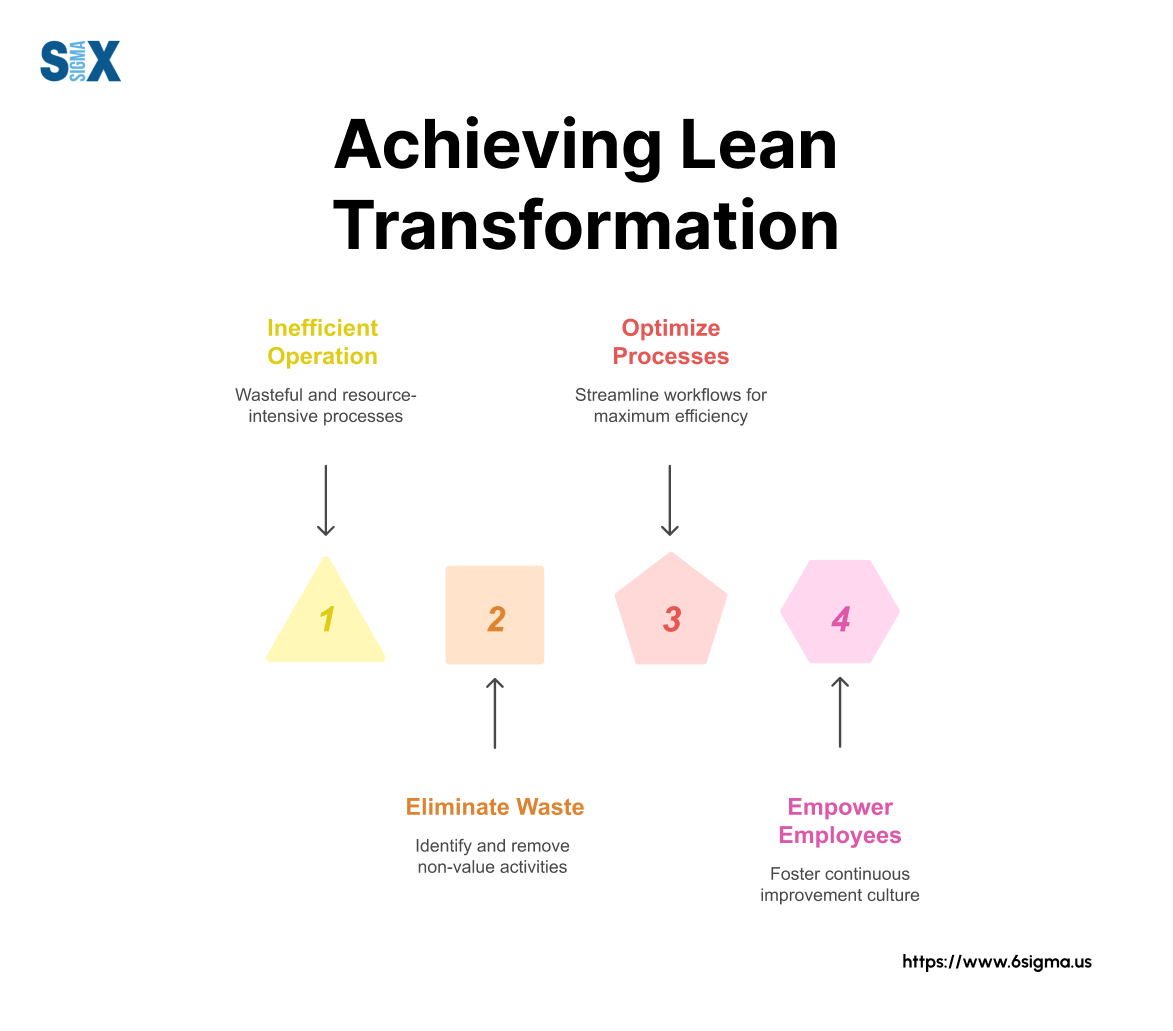
- Re-evaluate the Value Stream: Do not just look at time and cost. Re-map your core processes to include digital data flow and carbon impact.
- Invest in "Human-Centric" AI: Before purchasing AI tools, identify the specific waste they are intended to eliminate. Ensure the tool provides transparency for the people using it.
- Standardize the Leadership Approach: Move toward a "coaching" model. This requires training leaders in active listening and the "Five Whys" of problem-solving.
- Establish a Daily Management System: The summit revealed that the most successful companies have a tiered huddle system that allows problems to escalate from the frontline to senior leadership in minutes, not weeks.
- Measure What Matters: Shift KPIs from local efficiencies (how fast a machine runs) to global lead times and customer value.
Common Pitfalls and Troubleshooting
Despite the clear roadmap provided at the summit, many organizations still struggle. The summit's workshops identified three primary reasons for failure:
- The "Toolbox" Trap: Treating Lean as a set of tools (5S, Kanban) rather than a mindset. Without the cultural shift, the tools eventually rust and are abandoned.
- Lack of Top-Down Commitment: Lean cannot be delegated to a "Continuous Improvement" department. It must be lived by the CEO and the executive team.
- Over-complicating the Digital Shift: Companies often try to implement complex AI solutions before they have a stable, standardized manual process. If a process is chaotic, AI will only make it more expensive and harder to manage.
To troubleshoot a stalled transformation, the summit experts suggest returning to the Gemba (the actual place where work happens). Observe the work without judgment, identify the single largest bottleneck, and empower the team to run a small experiment to fix it.
Frequently Asked Questions
What was the single biggest revelation regarding Lean in 2026?
The most significant revelation was that Lean is the prerequisite for successful digital transformation. Organizations that lack a Lean foundation—meaning they don't have standardized processes or a problem-solving culture—consistently fail to realize a return on their AI and automation investments.
Does Lean methodology apply to remote or hybrid work?
Yes. The summit revealed that the "Digital Gemba" is essential for remote teams. This involves using visual management tools (like digital Kanban boards) and structured communication rituals to make invisible work visible. Lean helps remote teams reduce the waste of "over-communication" (too many meetings) and "waiting" (delayed approvals).
How does the "Respect for People" pillar impact profitability?
By focusing on psychological safety and employee engagement, companies reduce the massive costs associated with turnover, retraining, and "quiet quitting." Furthermore, when every employee is trained to see and eliminate waste, the cumulative effect on the bottom line is far greater than any top-down cost-cutting initiative.
Is Lean still relevant for small businesses?
The summit showcased that Lean is actually more accessible for small businesses because they have less bureaucracy. Small firms can implement changes faster and see the results of their Kaizen efforts almost immediately, allowing them to compete with much larger, less agile competitors.
What is the difference between Lean and Six Sigma in 2026?
While they are often grouped together as Lean Six Sigma, the summit revealed a renewed focus on Lean’s speed and flow. Six Sigma is still used for reducing variation in highly complex processes, but Lean is the preferred method for overall management and agility in a rapidly changing market.
Recommendation for Next Actions
To capitalize on what the Lean Transformation Summit revealed, organizations should start by conducting a "State of the Value Stream" audit. Do not focus on financial metrics alone. Instead, measure your Lead Time (the time from customer request to delivery) and your First-Pass Yield (the percentage of work done correctly the first time). Identify one "Green Stream" opportunity where reducing waste also reduces your carbon footprint. Finally, commit to a "No-Blame" culture by retraining your managers to be coaches. The future of Lean is human-centric, digitally empowered, and environmentally conscious; the sooner your organization aligns with these revelations, the more resilient it will become.
Image Gallery