Why Did the US Have Prohibition? The History and Causes of the 18th Amendment
The United States instituted Prohibition to address perceived societal harms caused by alcohol consumption, including domestic violence, poverty, and political corruption. Driven by a powerful coalition of religious groups, progressive...
The United States instituted Prohibition to address perceived societal harms caused by alcohol consumption, including domestic violence, poverty, and political corruption. Driven by a powerful coalition of religious groups, progressive reformers, and industrialists, this movement culminated in the ratification of the 18th Amendment in 1919, which banned the manufacture, sale, and transportation of alcoholic beverages nationwide.
Contents
The Ideological Roots of the Temperance Movement
The path to the 18th Amendment was not a sudden political reaction; it was the result of a century-long cultural and social crusade known as the temperance movement. Beginning in the early 19th century, religious revivals associated with the Second Great Awakening swept across the United States. These religious movements emphasized personal moral reform and perfectionism, framing heavy drinking not merely as a personal vice, but as a grave societal sin that threatened the spiritual health of the republic.
As industrialization accelerated in the mid-to-late 1800s, economic factors began to amplify these moral arguments. Factory owners and industrialists grew increasingly intolerant of alcohol consumption among their workforce. Precision manufacturing, heavy machinery, and the demands of assembly-line production required sober, reliable workers. Drunkenness on or off the job led to severe industrial accidents, decreased productivity, and high absenteeism. Consequently, business leaders frequently aligned with religious reformers, providing financial backing to temperance organizations in the belief that sobriety would create a more orderly, efficient labor force.
Furthermore, the late 19th and early 20th centuries saw the rise of organizations like the Woman's Christian Temperance Union (WCTU) and the Anti-Saloon League (ASL). Founded in 1874, the WCTU used domestic arguments to mobilize women—who lacked the right to vote—into political action. They argued that alcohol was the primary destroyer of the American home, linking excessive drinking directly to domestic abuse, poverty, and the abandonment of wives and children. By framing prohibition as a defense of women and children, the movement gained immense moral authority and a broad grassroots following.
Political Strategy and the Anti-Saloon League
While the WCTU built a powerful cultural foundation, the Anti-Saloon League transformed temperance into a ruthless, highly organized political machine. Established in 1893, the ASL abandoned the older temperance strategy of trying to reform individual drinkers. Instead, it adopted a single-issue, pragmatic political approach led by figures like Wayne Wheeler. The ASL pressured politicians regardless of party affiliation, rewarding candidates who supported prohibition and aggressively targeting those who opposed it.
The ASL operated under the slogan "The Saloon Must Go!" and successfully linked the traditional neighborhood saloon to a host of urban social ills. Saloons were viewed by reformers as centers of political corruption, where ward bosses bought votes with cheap beer and orchestrated illicit deals away from public scrutiny. To the largely rural, Protestant base of the ASL, the urban saloon represented everything that was changing—and, in their view, decaying—in American culture.
This cultural anxiety was further fueled by massive waves of immigration from Southern and Eastern Europe during the late 19th and early 20th centuries. Many of these new immigrants came from cultural backgrounds where beer, wine, and spirits were integrated into daily meals and social celebrations. Native-born, Protestant reformers often viewed these drinking customs with deep suspicion, weaponizing prohibition as a tool of cultural assimilation and social control. By restricting alcohol, reformers hoped to curb the political influence of urban immigrant populations and enforce a homogenous, traditional American lifestyle.
The Catalyst of World War I
While social, economic, and political factors laid the groundwork for nationwide prohibition, the entry of the United States into World War I in 1917 provided the final, decisive catalyst. The war emergency transformed the debate over alcohol from a moral crusade into a matter of urgent national security and patriotic duty.
The federal government needed to maximize agricultural output and industrial efficiency to support the war effort in Europe. Grain was identified as a critical resource that should be conserved to feed starving populations abroad and supply domestic troops, rather than being diverted to breweries and distilleries. President Woodrow Wilson instituted temporary wartime restrictions on brewing, arguing that grain used for alcohol detracted from the nation's military readiness.
| Factor Contributing to Prohibition | Primary Proponents | Core Argument or Justification |
|---|---|---|
| Religious Moralism | Protestant Churches, Second Great Awakening | Alcohol is a sin that destroys spiritual health and moral character. |
| Industrial Efficiency | Factory Owners, Business Leaders | Sobriety increases workplace safety, decreases absenteeism, and boosts output. |
| Domestic Protection | Woman's Christian Temperance Union | Drinking causes domestic violence, family poverty, and the ruin of households. |
| Political Reform | Anti-Saloon League | Saloons are centers of voter fraud, corruption, and un-American behavior. |
| Wartime Necessity | Federal Government, Wilson Administration | Grain must be conserved for food supplies rather than alcohol production during World War I. |
Anti-German sentiment during the war also played a surprisingly significant role in accelerating the dry movement. The American brewing industry was heavily dominated by German-American families and entrepreneurs, such as Busch, Pabst, Schlitz, and Miller. As anti-German hysteria mounted across the country following U.S. entry into the war, brewers were frequently painted by prohibitionists as unpatriotic or even sympathetic to the German enemy. Consequently, opposing the brewing industry became equated with supporting the American war effort, making it politically difficult for lawmakers to vote against alcohol restrictions.
Ratification of the 18th Amendment and the Volstead Act
Capitalizing on wartime fervor and decades of grassroots organizing, the U.S. Congress passed the 18th Amendment in December 1917. The amendment required ratification by three-fourths of the state legislatures within seven years. Remarkably, the process moved with unprecedented speed. By January 1919, the 36th state ratified the amendment, and it officially went into effect nationwide in January 1920.
To enforce the new constitutional ban, Congress passed the National Prohibition Act of 1919, commonly known as the Volstead Act, overriding President Wilson’s veto. Authored by Representative Andrew Volstead, the act defined what constituted an "intoxicating liquor" (anything containing more than 0.5% alcohol by volume), established penalties for violating the ban, and outlined exceptions—such as sacramental wine for religious ceremonies and medicinal whiskey prescribed by a licensed physician.
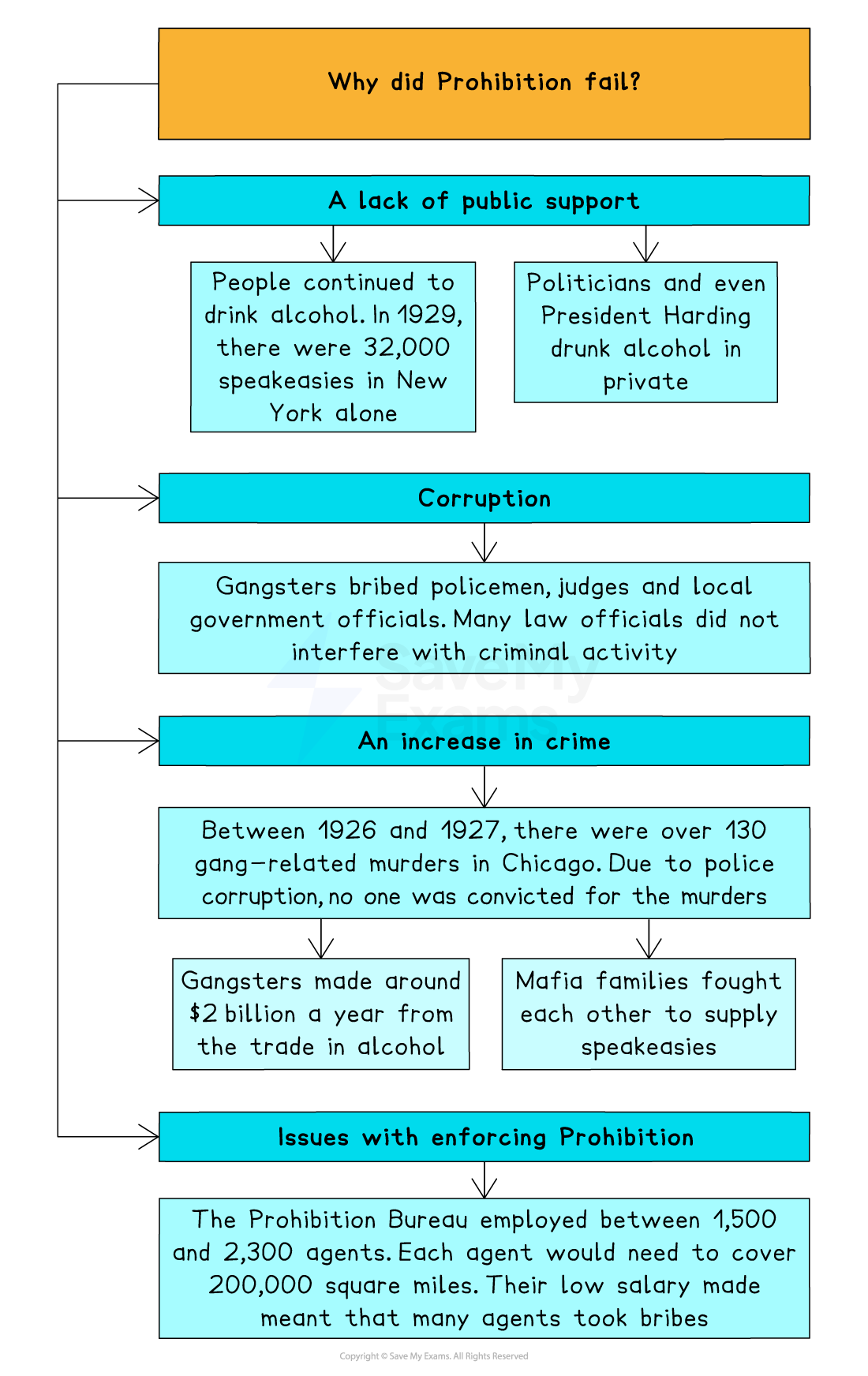
However, the federal government fundamentally underestimated the scale and enforcement challenges of policing the appetites of millions of Americans. The Prohibition Bureau was notoriously underfunded, understaffed, and plagued by rampant corruption from its inception. A few thousand federal agents were tasked with patrolling thousands of miles of borders, coastline, and internal trade routes.
Unintended Consequences and the Repeal of Prohibition
Rather than creating a sober, crime-free utopia, Prohibition spawned an era of unprecedented lawlessness, public corruption, and social upheaval. The immense consumer demand for alcohol did not disappear; it merely shifted from the legal market to an underground economy controlled by organized crime syndicates. Bootlegging operations, clandestine home brewing, and illegal drinking establishments known as speakeasies flourished in every major American city.
Criminal masterminds like Al Capone in Chicago built sprawling, violent empires by monopolizing the manufacture and distribution of illicit alcohol. Turf wars between rival gangs resulted in a dramatic spike in violent crime, most notoriously illustrated by the St. Valentine's Day Massacre in 1929. Furthermore, because unregulated, illegally produced alcohol (often called "moonshine" or "bathtub gin") lacked any quality control, thousands of Americans suffered from severe poisoning, blindness, and paralysis.
As the 1920s progressed, public opinion shifted dramatically. The onset of the Great Depression in 1929 solidified opposition to Prohibition, as the federal government desperately needed new tax revenues, and the country sought to create legitimate jobs in brewing, distilling, and agriculture. The argument that prohibition protected the economy lost all credibility in the face of widespread financial collapse.
Recognizing that the experiment had failed, Congress passed the 21st Amendment in February 1933, proposing the repeal of the 18th Amendment. By December 1933, state conventions ratified the 21st Amendment, officially ending the federal prohibition era and returning the regulation of alcohol back to state and local governments.
Frequently Asked Questions
Why did the temperance movement target alcohol specifically?
Temperance reformers targeted alcohol because they viewed it as the root cause of widespread social decay, including domestic abuse, poverty, workplace accidents, and urban political corruption. They believed eliminating alcohol would immediately improve public health, morality, and economic productivity across the nation.
Did the 18th Amendment completely outlaw drinking alcohol?
No, the 18th Amendment and the Volstead Act banned the manufacture, sale, and transportation of intoxicating liquors, but they did not explicitly make the consumption or private possession of alcohol illegal. Individuals who had stocked up on private cellars before January 1920 could legally consume their remaining supply.
How did World War I influence the passage of Prohibition?
World War I created urgent demands to conserve grain for food supplies rather than alcohol production. Additionally, intense anti-German sentiment associated the heavily German-American brewing industry with the enemy, making prohibition politically tied to wartime patriotism.
What was the Volstead Act?
The Volstead Act was the federal legislation enacted in 1919 to enforce the 18th Amendment. It defined intoxicating beverages, established criminal penalties for violations, and detailed limited legal exemptions for religious, medicinal, and industrial uses of alcohol.
Why was Prohibition ultimately repealed?
Prohibition was repealed because it failed to curb alcohol consumption, fostered a massive wave of violent organized crime, and bred widespread corruption among law enforcement and government officials. Additionally, the Great Depression created an urgent national need for legal tax revenues and employment opportunities in the alcohol industry.
Image Gallery