The History of Taco Bell: From Humble Beginnings to Global Fast-Food Empire
The history of Taco Bell spans over seven decades, evolving from Glen Bell's modest hot dog stand in San Bernardino, California, in 1946 into a worldwide fast-food phenomenon known for its American-style Mexican cuisine, iconic marketi...
The history of Taco Bell spans over seven decades, evolving from Glen Bell's modest hot dog stand in San Bernardino, California, in 1946 into a worldwide fast-food phenomenon known for its American-style Mexican cuisine, iconic marketing campaigns, and rapid menu innovation.
Contents
The Origins: Glen Bell and Early Ventures (1946–1961)
The story of Taco Bell begins with an entrepreneur named Glen Bell, who recognized a growing post-World War II appetite for diverse, affordable foods in Southern California. Long before the first taco ever bore his name, Bell operated several independent food stands. His entry into the food service industry started in 1946 with a roadside hot dog stand called Bell's Drive-In in San Bernardino.
Operating in an intensely competitive local market, Bell observed long queues forming outside a Mexican restaurant across the street, a popular local joint called the Mitla Cafe, which was famous for its hard-shell tacos. Intrigued by the appeal and efficiency of the food item, Bell spent hours studying how the Mitla Cafe prepared their tacos—specifically their crispy fried corn tortillas filled with seasoned meat, lettuce, and cheese.
Realizing that tacos could be prepared quickly and served as a portable meal, Bell approached the owners of the Mitla Cafe to learn their recipes and techniques. In 1951, he launched a new stand called Taco-Tia, where he sold his version of the crispy-shell taco for just 19 cents. Taco-Tia was an immediate success, prompting Bell to expand his operations. Over the next few years, he partnered with various investors and opened several new stands, including El Taco locations in the Los Angeles area. However, wanting total control over his business model, Bell eventually sold his share of El Taco to his partners and prepared to launch a brand of his own.
Founding Taco Bell and Early Franchising (1962–1977)
In March 1962, Glen Bell opened the very first official Taco Bell restaurant in Downey, California. The building was small—a modified walk-up taco stand measuring just 400 square feet—with no indoor seating, just outdoor walk-up windows and a few parking stalls. The menu featured a simple lineup: tacos, tostadas, burritos, and chilitos (later known as chili cheese burritos), all priced affordably to appeal to working-class families and post-war baby boomers.
| Year | Milestone |
|---|---|
| 1946 | Glen Bell opens Bell's Drive-In in San Bernardino. |
| 1951 | Bell launches Taco-Tia, selling 19-cent tacos. |
| 1962 | The first official Taco Bell opens in Downey, CA. |
| 1970 | Taco Bell goes public, operating over 300 restaurants. |
| 1978 | PepsiCo acquires Taco Bell. |
| 1995 | Introduction of the Chihuahua mascot and "Yo Quiero". |
| 2012 | Launch of the Doritos Locos Tacos. |
The concept of fast-food Mexican fare was still relatively novel outside of the Southwest, but Bell’s standardized assembly-line preparation allowed for rapid scaling. Ingredients were pre-portioned and prepared quickly, cutting down wait times significantly compared to traditional sit-down Mexican restaurants.
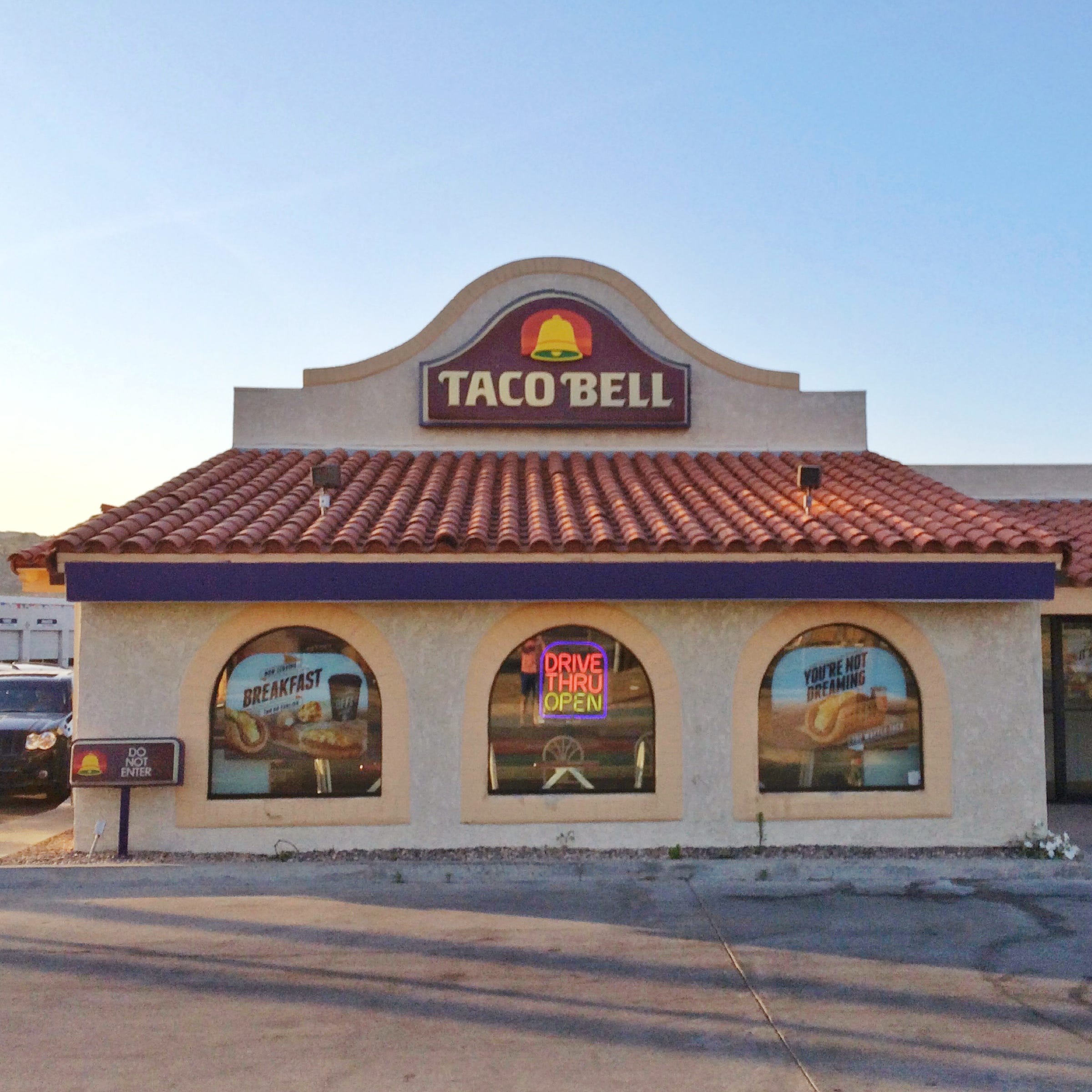
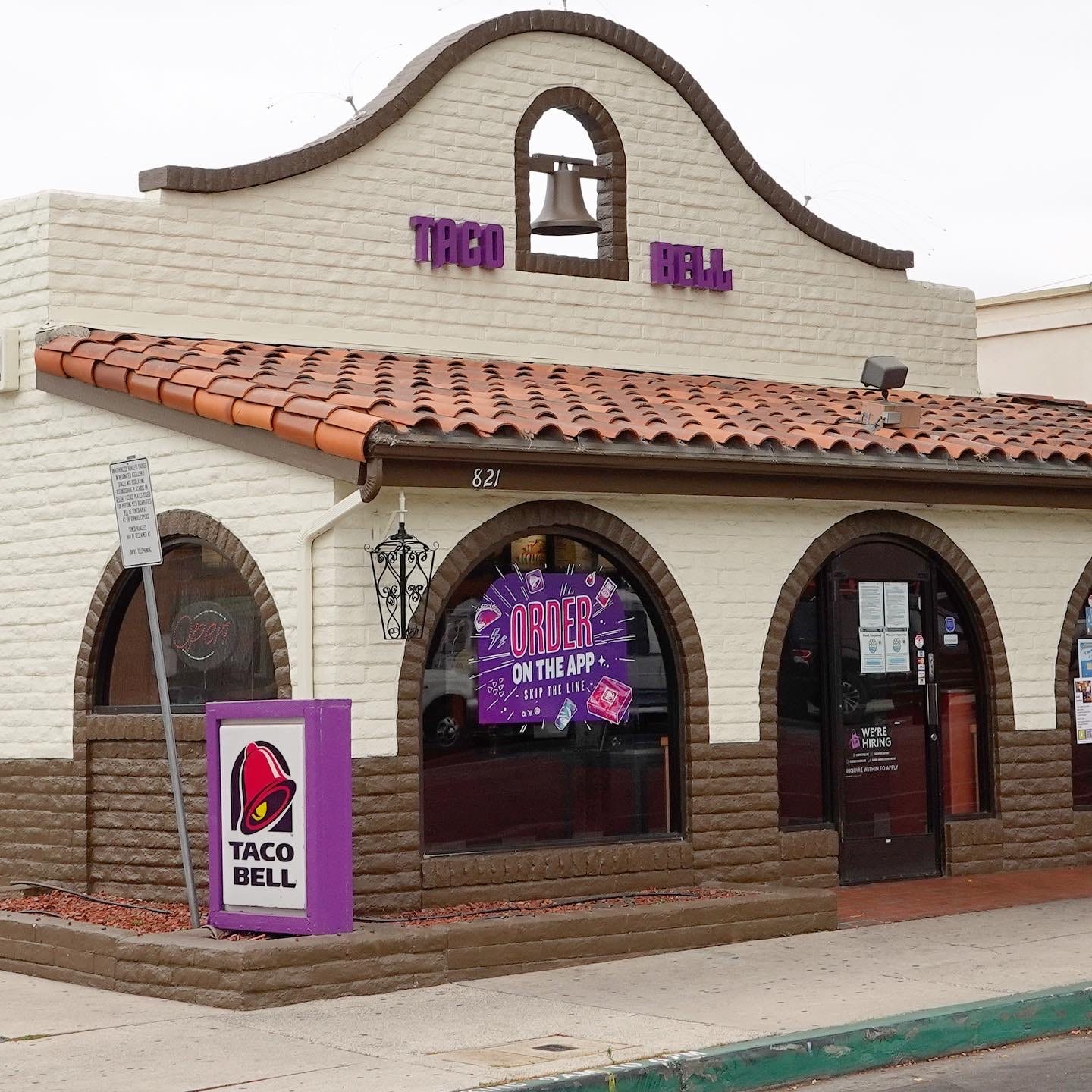
By 1967, the 100th Taco Bell restaurant opened in Anaheim, California. Rapid growth necessitated corporate structuring, and in 1970, Taco Bell went public with 325 restaurants nationwide. During this era, the brand refined its distinctive architectural identity, most notably introducing the iconic Spanish mission-style architectural design featuring arched service windows, vibrant orange-and-brown color schemes, and massive mission bells that hung outside the restaurants.
The PepsiCo Era and Corporate Evolution (1978–1999)
In 1978, facing intense competition and seeking capital for broader expansion, Glen Bell sold the Taco Bell chain—consisting of roughly 868 restaurants at the time—to beverage giant PepsiCo. Under PepsiCo’s ownership, Taco Bell underwent a massive modernization phase aimed at streamlining operations and cutting costs.
One of the most consequential changes during the 1980s was the transition from franchised operations with varied localized menus to a highly centralized corporate structure. Taco Bell introduced the "Value Menu" in the late 1980s, pricing core items at 59, 79, and 99 cents. This strategy transformed the fast-food industry by driving unprecedented transaction volumes and forcing competitors to adopt similar value-pricing tiers.
The 1990s marked a creative and cultural peak for the brand under the leadership of CEO John Martin. Taco Bell shifted its marketing strategy from traditional product-focused advertising to lifestyle-oriented campaigns.
- Value and Convenience: The brand pioneered shared-space concepts, partnering with PepsiCo sister companies KFC and Pizza Hut to open multi-brand restaurants.
- Pop Culture Marketing: In 1997, Taco Bell debuted its iconic Chihuahua mascot, voiced by actor Carlos Alazraqui, uttering the catchphrase "Yo quiero Taco Bell!" The campaign became a massive pop-up culture sensation, driving merchandise sales and brand awareness to historic highs, though it was eventually retired in 2000.
- The Star Wars Partnership: In 1997, Taco Bell coordinated a massive promotional partnership with Lucasfilm for the theatrical re-release of the Star Wars Original Trilogy, alongside KFC and Pizza Hut, offering collectible items that broke fast-food promotion records.
In 1997, PepsiCo spun off its restaurant division—consisting of Taco Bell, KFC, and Pizza Hut—into an independent publicly traded company named Tricon Global Restaurants, which was later renamed Yum! Brands in 2002.
The 21st Century: Innovation, Marketing, and the Doritos Partnership (2000–Present)
Entering the 21st century, Taco Bell focused heavily on product experimentation and late-night marketing. The introduction of the Doritos Locos Tacos in March 2012 stands as one of the most successful product launches in fast-food history. Developed in partnership with Frito-Lay, the taco featured a traditional taco shell made entirely out of Nacho Cheese Doritos flavoring. Within ten weeks of its launch, over 100 million Doritos Locos Tacos were sold, cementing a blueprint for future cross-brand food collaborations.
The brand also capitalized on digital transformation. Taco Bell was an early fast-food adopter of mobile ordering, launching its dedicated mobile application in 2014. The app allowed customers to customize nearly every ingredient, store payment methods, and bypass lines via in-store pickup lanes.
To maintain cultural relevance, Taco Bell launched the "Live Mas" brand tagline in 2012, pivoting away from pure price-driven marketing toward experiences, lifestyle merchandise, music partnerships, and the creation of the Taco Bell Hotel pop-up resort in Palm Springs, California, in 2019. Furthermore, the company modernized its physical restaurant design with urban concepts featuring open kitchens, digital kiosks, touchless pickup lockers, and sleek, contemporary aesthetics.
Frequently Asked Questions
When and where was the first Taco Bell opened?
The first official Taco Bell opened in March 1962 in Downey, California, founded by entrepreneur Glen Bell. It operated as a walk-up taco stand serving basic items like tacos, burritos, and tostadas for under 20 cents.
Who founded Taco Bell?
Taco Bell was founded by Glen Bell, who had previously operated several independent food ventures in Southern California, including Bell's Drive-In and Taco-Tia, after studying the hard-shell taco preparation techniques of the Mitla Cafe in San Bernardino.
When did PepsiCo own Taco Bell?
PepsiCo acquired Taco Bell in 1978 when the chain had fewer than 900 restaurants. PepsiCo owned the brand until 1997, when it spun off its restaurant divisions into Tricon Global Restaurants, which later became Yum! Brands.
What was the most successful product launch in Taco Bell history?
The Doritos Locos Tacos, launched in March 2012 in partnership with Frito-Lay, is widely considered the brand's most successful product launch, selling over 100 million units in its first ten weeks on the market.
What does "Live Mas" mean for the brand?
"Live Mas" (Live More) is Taco Bell's long-running marketing and brand ethos introduced in 2012. It represents a pivot from traditional value-pricing messaging toward an experiential lifestyle brand focusing on customization, digital culture, and youth-oriented marketing.
Next Actions and Further Exploration
To deepen your understanding of fast-food industry history and corporate evolution, examine the corporate filings and investor relations archives of Yum! Brands. For a firsthand look at the brand's historical roots, travelers to Southern California can visit the relocated original 1962 Downey Taco Bell building, which was preserved and moved to the Yum! Brands corporate headquarters campus in Irvine, California, in 2015.
Image Gallery