Credit Score in California Auto Insurance: How Your Rating is Really Determined in 2026
In California, your credit score has zero impact on your auto insurance premiums. State law, specifically Proposition 103 and subsequent regulations enforced by the California Department of Insurance, prohibits insurance companies from...
In California, your credit score has zero impact on your auto insurance premiums. State law, specifically Proposition 103 and subsequent regulations enforced by the California Department of Insurance, prohibits insurance companies from using credit history to set rates or determine eligibility. Instead, California insurers must prioritize your driving record, years of experience, and miles driven.
Contents
The relationship between credit scores and insurance is a major point of confusion for drivers moving to the Golden State. In most other U.S. jurisdictions, "credit-based insurance scores" are a primary factor in determining what a driver pays. However, California remains one of the few states where the law explicitly protects consumers from being penalized for their financial history when seeking mandatory vehicle coverage. As of 2026, this consumer protection remains a cornerstone of the state's insurance market, ensuring that premiums are based on how you drive, not how you manage your debt.
The Legal Framework: Proposition 103 and the Ban on Credit Scoring
To understand why California excludes credit scores, one must look back at Proposition 103, a landmark piece of legislation passed by voters in 1988. Before this initiative, the insurance industry operated under an "open competition" system, where companies could set rates based on a wide array of demographic and financial data points.
Proposition 103 fundamentally shifted the power dynamic from insurance carriers to the state's elected Insurance Commissioner. It mandated that all auto insurance rates be approved by the California Department of Insurance (CDI) before they could be implemented. Most importantly, it established a hierarchy of "rating factors" that insurers are legally required to follow.
The California Code of Regulations, Title 10, Section 2632.5, outlines these factors. Because credit score is not listed as an approved factor, its use is effectively illegal for auto insurance rating. The legislative intent was to prevent "redlining" and socioeconomic discrimination, ensuring that low-income drivers with clean driving records are not priced out of the market due to their credit standing.
How California Auto Insurance Rates are Actually Calculated
Since credit scores are off the table, how do insurance companies in California determine your premium in 2026? The law requires that premiums be based on three "Mandatory Rating Factors," which must be weighted in the following order of importance:
1. Driving Safety Record
This is the most critical factor. It includes any at-fault accidents, moving violations (such as speeding tickets or DUIs), and other traffic-related convictions. Under the California Good Driver Discount rules, if you have been licensed for at least three years and have no more than one "point" on your record, insurers are legally required to give you a discount of at least 20% and must offer you a policy.
2. Number of Miles Driven Annually
California law operates on the principle that the more time you spend on the road, the higher your statistical risk of an accident. When applying for coverage, you must provide an estimate of your annual mileage. In 2026, many insurers verify this data through various means, including maintenance records (like smog checks) or optional telematics programs.
3. Years of Driving Experience
This factor accounts for the driver's experience level rather than their chronological age. A 40-year-old who just received their first driver's license may be rated similarly to a teenager because both lack the "years of experience" that correlate with lower accident rates.
Optional Secondary Rating Factors
Once the mandatory factors are applied, the CDI allows insurers to use secondary factors, provided they have a proven correlation to risk and have been approved by the Commissioner. These include:
- Vehicle Type: The safety features, repair costs, and performance capabilities of your car.
- Location: The "garaging ZIP code" where the vehicle is primarily kept. This accounts for local traffic density and theft rates.
- Multi-Vehicle Policies: Discounts for insuring more than one car with the same company.
- Academic Standing: Discounts for students with high GPAs.
- Occupation and Education: Some insurers offer discounts for specific professional groups (e.g., teachers, engineers, or scientists), though this has been a subject of ongoing regulatory scrutiny in the mid-2020s.
Comparing California to Other States
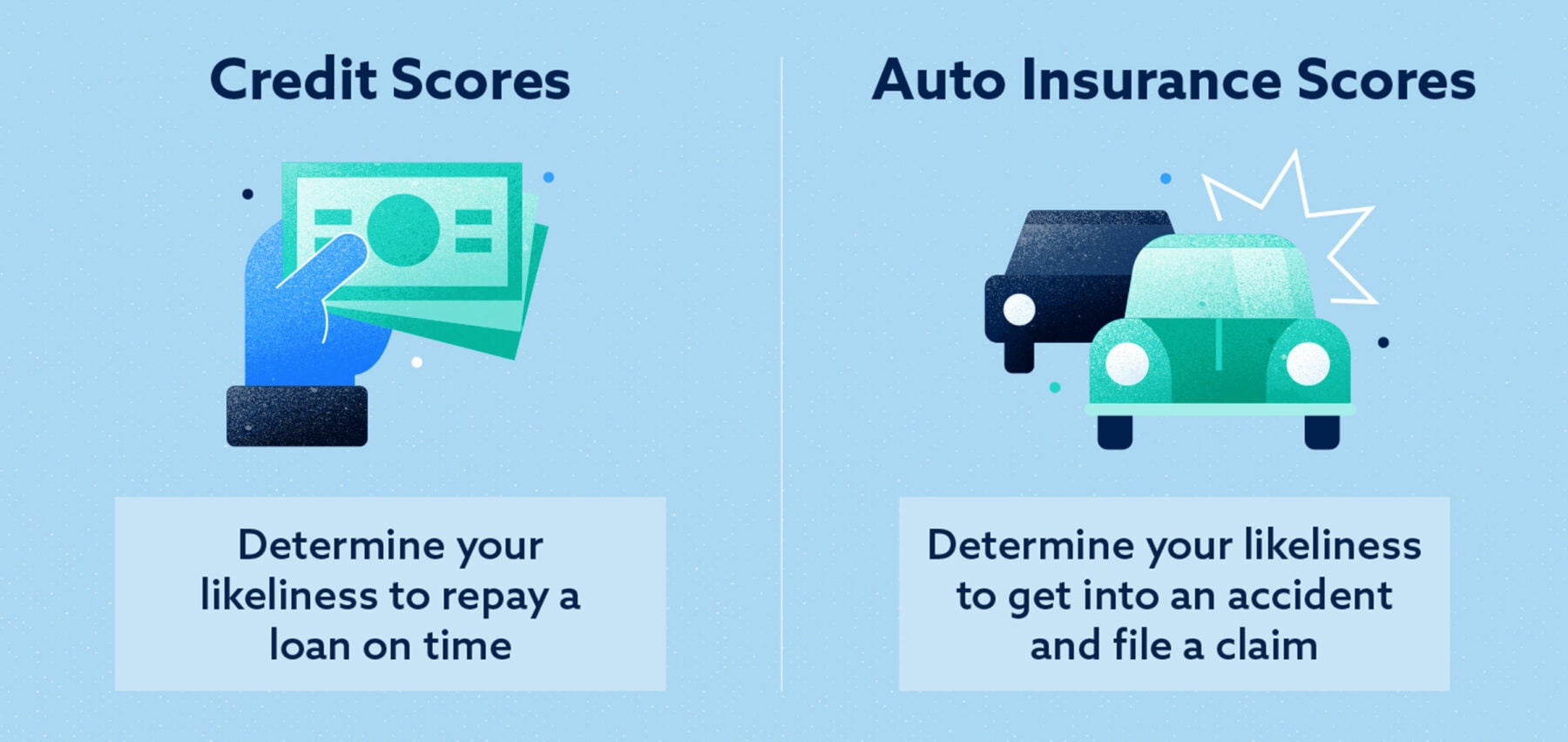
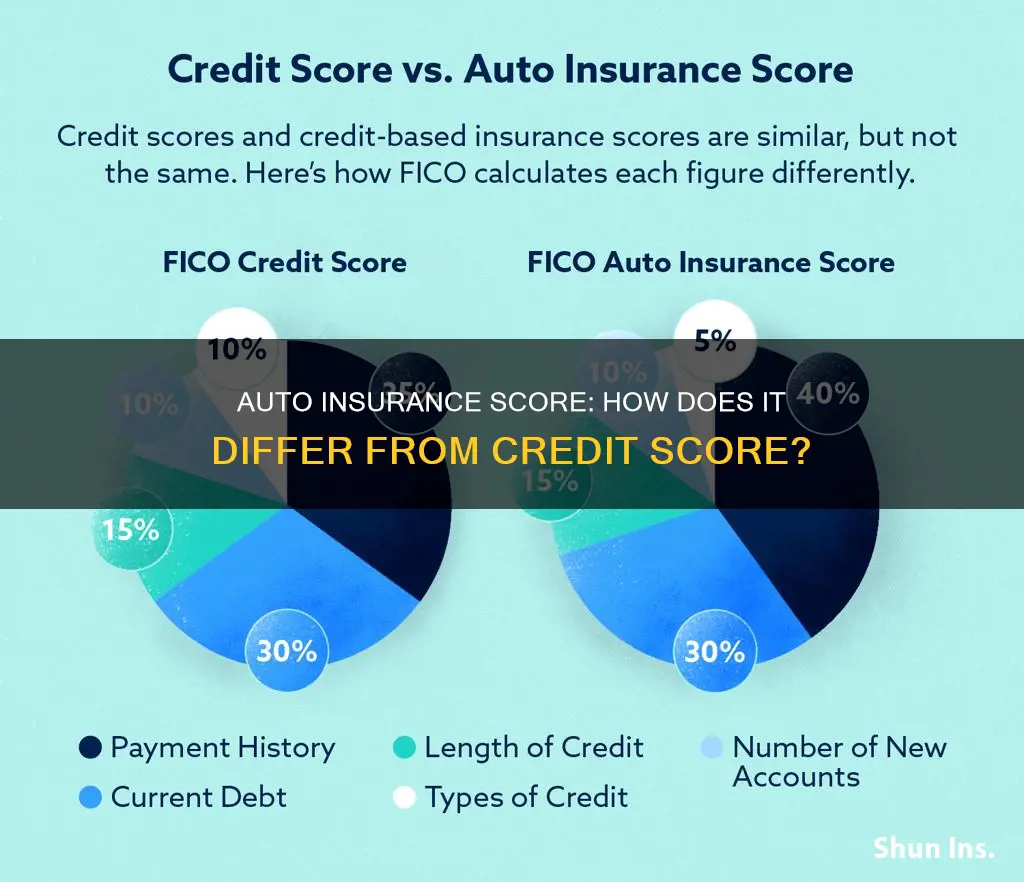
To appreciate the impact of California's stance, it is helpful to compare it with the majority of the United States. In 2026, most states allow "Credit-Based Insurance Scores" (CBIS). These are not exactly the same as the FICO score used by lenders, but they are derived from the same credit report data.
| Feature | California | Most Other U.S. States |
|---|---|---|
| Credit Score Use | Prohibited for Auto Insurance | Widely Used and Highly Weighted |
| Primary Factor | Driving Safety Record | Credit-Based Insurance Score |
| Rate Regulation | Prior Approval by State Commissioner | File-and-Use or Open Competition |
| Good Driver Discount | Mandatory 20% for eligible drivers | Optional/Discretionary |
| Telematics | High Privacy Protections | Wide Usage for Dynamic Pricing |
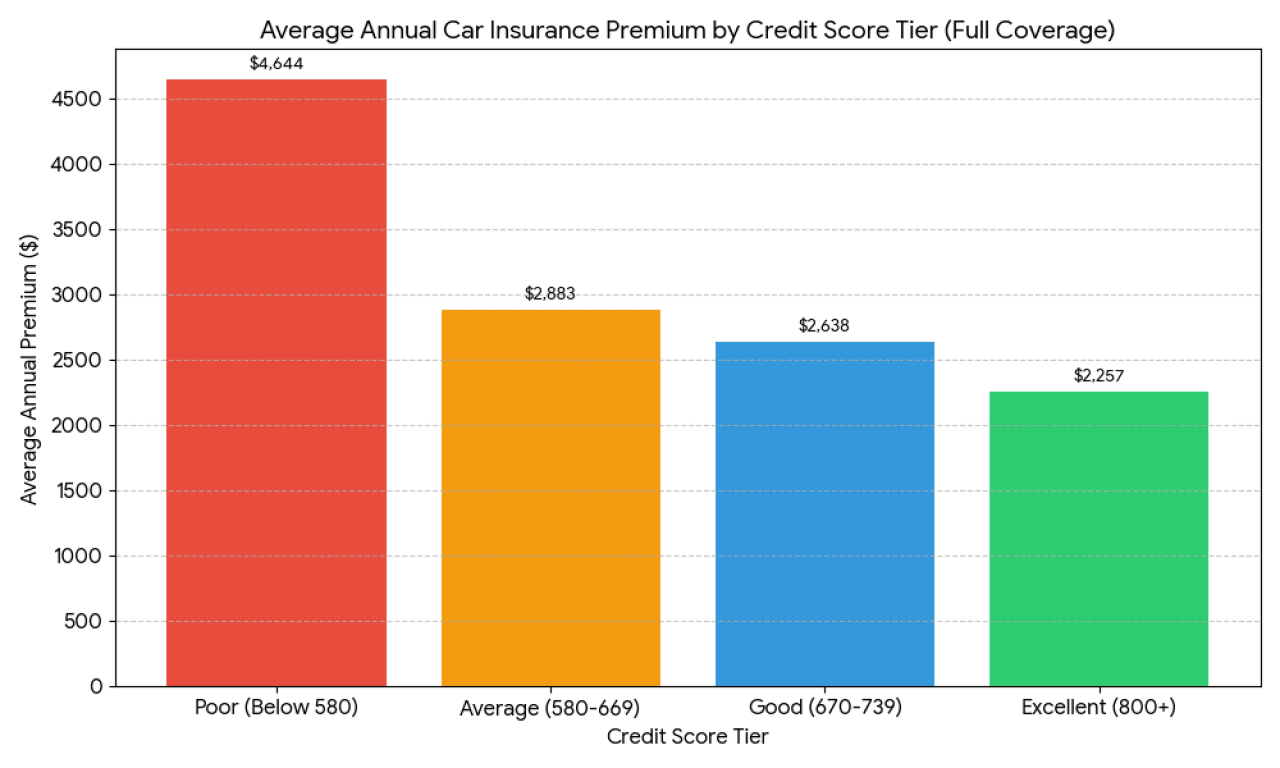
In states that allow credit scoring, a driver with a poor credit score but a perfect driving record might pay significantly more than a driver with a DUI but an excellent credit score. California’s regulations prevent this outcome, focusing purely on road safety metrics.
The Role of Telematics and Usage-Based Insurance (UBI) in 2026
By 2026, telematics—technology that monitors driving behavior via smartphone apps or plug-in devices—has become a dominant alternative to traditional rating. While credit scores are banned, Usage-Based Insurance (UBI) is permitted in California, but with strict limitations.
In California, telematics data is primarily used to verify annual mileage, which is a mandatory rating factor. However, the use of "driving behavior" data (such as hard braking, rapid acceleration, or cornering speeds) to set rates has faced significant hurdles from California regulators. Unlike other states where these metrics can fluctuate your premium monthly, California ensures that telematics is used in a way that respects the hierarchy of the mandatory factors set by Proposition 103.
Why Do Insurers Still Ask for a Social Security Number?
If your credit score cannot be used for your auto insurance quote, you might wonder why a California insurance agent still asks for your Social Security Number (SSN). There are several legitimate reasons for this that do not involve credit-based rating:
- Identity Verification: To ensure the person applying for the policy is who they say they are and to prevent insurance fraud.
- Claims History (CLUE Report): Insurers use your SSN to pull a Comprehensive Loss Underwriting Exchange (CLUE) report. This report shows your history of previous auto insurance claims, which is a legal rating factor.
- Bundling Products: If you are seeking a bundle that includes home or life insurance, the insurer may use your credit score for those specific products (where regulations differ), even though it won't touch the auto portion of the premium.
- Soft Inquiries: The insurer may perform a "soft pull" of your credit report for administrative purposes. A soft pull does not affect your credit score, unlike a "hard inquiry" used for loan applications.
Common Misconceptions About Insurance and Credit in California
Despite the clarity of the law, several myths persist among California drivers.
Myth: Improving my credit score will lower my car insurance rate. Reality: Not in California. While a better credit score will help you secure better rates on a mortgage or car loan, it will have zero impact on your auto insurance premium. To lower your insurance rate, you should focus on maintaining a clean driving record and reducing your annual mileage.
Myth: A low credit score makes me a "high-risk" driver in the eyes of California insurers. Reality: State law forbids insurers from defining "risk" through financial status. You are only considered high-risk if you have multiple at-fault accidents, serious traffic violations, or a lapse in coverage.
Myth: Only California bans credit scoring. Reality: California was a pioneer, but it is not alone. Hawaii and Massachusetts also prohibit the use of credit scores in auto insurance rating. Several other states have introduced various limitations, but California’s ban remains among the strictest and most well-established.
Practical Steps to Lower Your Rates in 2026
Since you cannot use a high credit score to your advantage, you must use other strategies to manage insurance costs in California's unique market.
- Maintain Your "Good Driver" Status: Avoid tickets and accidents. The 20% mandatory discount is the single most effective way to keep costs down.
- Audit Your Mileage: In 2026, with more people working hybrid or remote schedules, many drivers are overestimating their mileage. Ensure your insurer has an accurate (and lower) mileage count to trigger lower rates.
- Review Your ZIP Code: If you move, even a few miles away, your rate may change. Always update your garaging address immediately.
- Inquire About Group Discounts: Check if your employer, alumni association, or professional organization (like a Bar Association or Medical Society) qualifies for a secondary rating factor discount.
- Increase Your Deductible: If you have an emergency fund, raising your deductible from $500 to $1,000 can significantly reduce your monthly premium.
Frequently Asked Questions
Can an insurance company deny me coverage because of a poor credit score in California?
No. In California, an insurance company cannot deny you coverage or refuse to renew your policy based on your credit score. They must offer you a policy if you meet the "Good Driver" criteria, and they can only deny coverage based on approved risk factors like a poor driving record or failing to pay your premiums.
Does California allow credit scores for homeowners insurance?
The regulations for homeowners insurance are slightly different than auto insurance. While the CDI heavily regulates all lines of insurance, the absolute ban on credit scoring found in Proposition 103's auto-specific sections is more stringent for vehicles. However, even in homeowners insurance, California remains far more restrictive regarding credit use than most other states.
What happens to my rate if I move to California from a state that uses credit scores?
When you move to California, your previous insurance company (if they operate in CA) or your new insurer must recalculate your rate using California-approved factors. This means your credit score will be dropped from the calculation entirely. Depending on your driving record and the specific ZIP code you move to, your rates could go up or down regardless of your credit history.
Is the California Department of Insurance planning to allow credit scores in the future?
As of 2026, there is no significant movement or legislative appetite to allow credit-based insurance scoring for auto insurance. The CDI remains committed to the principles of Proposition 103, which prioritize driving behavior over financial behavior.
Does a "soft pull" by an insurance company hurt my credit score?
No. Even if an insurer pulls your credit report for identity verification or for a different type of policy (like life insurance), it is considered a soft inquiry. Soft inquiries are not visible to other lenders and do not result in a reduction of your credit score.
Summary of California Rating Factors vs. Credit-Based States
The following table summarizes the weight of different factors in California compared to states that allow credit-based scoring.
| Factor | California Weight | Typical Credit-Based State Weight |
|---|---|---|
| Driving History | Highest (Mandatory) | High |
| Credit Score | Non-Existent (Prohibited) | Very High |
| Years of Experience | Mandatory | Moderate |
| Annual Mileage | Mandatory | Low to Moderate |
| Age | Prohibited (Uses Years Licensed) | High |
For California drivers, the path to affordable insurance is clear: focus on safety and accuracy in reporting your vehicle usage. While the financial world may revolve around credit scores, the California auto insurance market remains an island of consumer protection where your ability to handle a vehicle is the only thing that truly matters to your premium.
Image Gallery