Understanding the Size of Iran's Military: Personnel, Structure, and Capabilities
Iran maintains one of the largest active military forces in the Middle East, with approximately 610,000 active-duty personnel across its armed forces. This manpower is divided between two distinct military institutions: the conventiona...
Iran maintains one of the largest active military forces in the Middle East, with approximately 610,000 active-duty personnel across its armed forces. This manpower is divided between two distinct military institutions: the conventional regular armed forces (Artesh) and the Islamic Revolutionary Guard Corps (IRGC), supplemented by hundreds of thousands of trained reserves and paramilitary volunteers.
Contents
The Dual Military Architecture: Artesh vs. IRGC
To accurately assess the scale of Iran's military force, defense analysts must evaluate its unique parallel military system. Established following the 1979 revolution, Iran's armed forces were deliberately split into two independent branches to prevent internal military coups and divide territorial defense responsibility. Both branches operate under the coordination of the Armed Forces General Staff (AFGS) and report ultimately to the Supreme Leader, who serves as Commander-in-Chief.
- Supreme Leader
- Armed Forces General Staff
- Artesh (Conventional)
- IRGC (Revolutionary)
- Armed Forces General Staff
The Islamic Republic of Iran Army (Artesh)
The Artesh is the traditional, conventional defense institution of Iran. Its primary objective is maintaining territorial integrity and defending state borders against external military aggression. The Artesh commands roughly 350,000 to 370,000 active personnel. It operates standard military services including ground forces, a navy, an air force, and a separate air defense force. The Artesh relies largely on mandatory national conscription, where Iranian males serve approximately 24 months of active service.
The Islamic Revolutionary Guard Corps (IRGC / Sepah)
The IRGC (Sepah-e Pasdaran-e Enqelab-e Eslami) operates as a political-military organization charged primarily with defending the ideological regime and maintaining internal security, alongside power-projection operations abroad. Numbering between 190,000 and 210,000 active personnel, the IRGC features its own ground, naval, aerospace, and intelligence branches. In addition, the IRGC exercises authority over the Quds Force (its international expeditionary wing) and the Basij Resistance Force (a national volunteer paramilitary organization).
Detailed Personnel Breakdown Across Military Branches
Understanding the military capacity of Iran requires analyzing personnel deployment across conventional and asymmetric formations.
Iran's Active Personnel Distribution (~610,000 Total)
| Military Branch | Personnel | Share |
|---|---|---|
| Artesh Ground Forces | 300,000 | 49.2% |
| IRGC Ground Forces | 100,000-150,000 | 20.5% |
| Artesh Air Force & Defense | 52,000 | 8.5% |
| IRGC Aerospace Force | 15,000-20,000 | 2.9% |
| Artesh Navy | 18,000 | 3.0% |
| IRGC Navy | 20,000 | 3.3% |
| IRGC Quds Force & Specialized Arms | 15,000 | 2.5% |
| Law Enforcement / Internal | 60,000+ | 10.1% |
Ground Forces
Ground combat forces constitute the vast majority of Iran's standing military personnel.
- Artesh Ground Forces (NEZAJA): Comprising over 300,000 active personnel (including roughly 220,000 conscripts), this force is structured into regional corps, armored divisions, mechanized infantry divisions, and artillery brigades.
- IRGC Ground Forces (NEZSA): Estimated at 100,000 to 150,000 personnel. Unlike the conventional Artesh, the IRGC ground unit structure emphasizes counterinsurgency, internal security operations, border defense, and asymmetric warfare capabilities.
Air Capabilities and Air Defense Architecture
Iran separates its conventional aerial operations from its strategic missile systems and air defense networks.
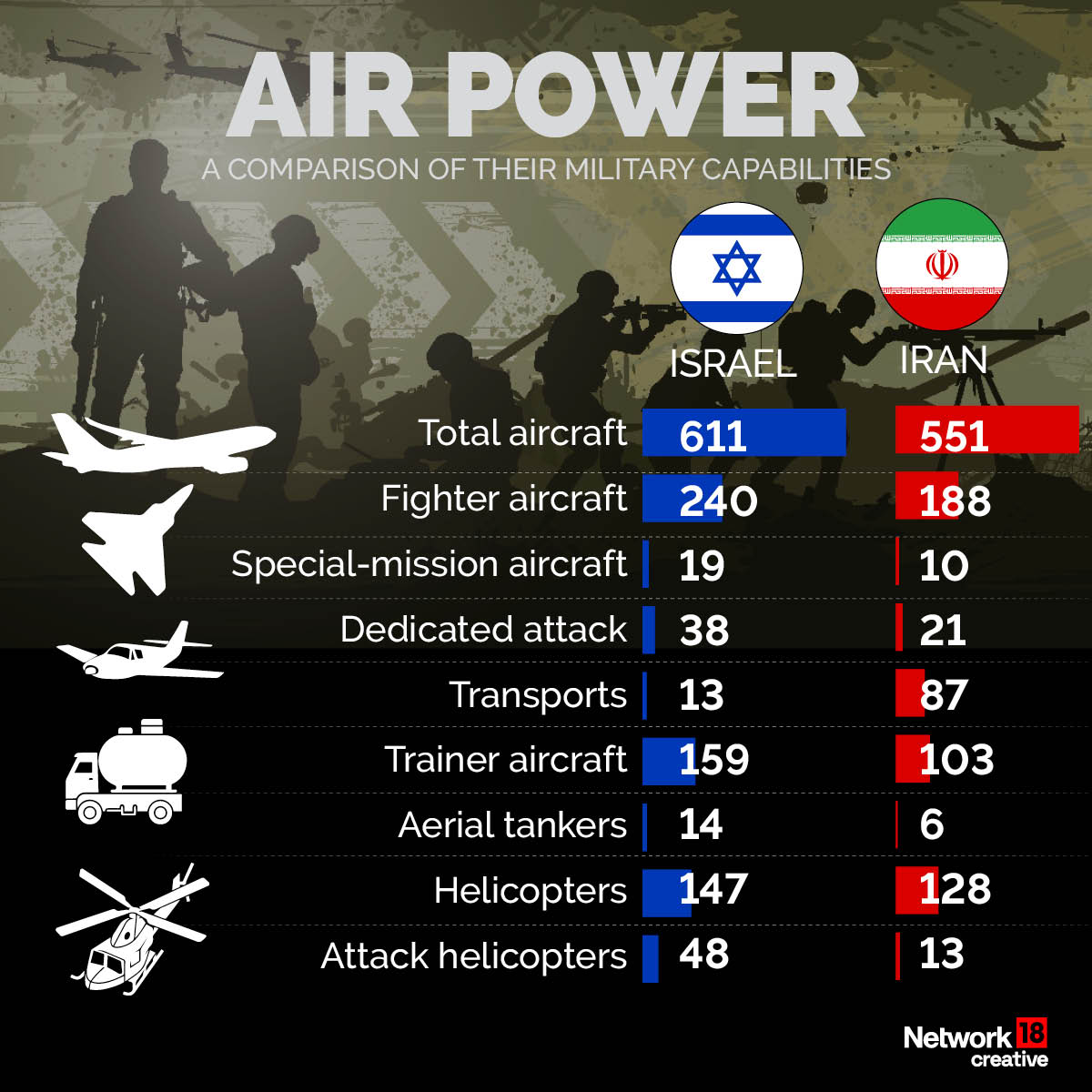
- Artesh Air Force (IRIAF): Operates approximately 37,000 personnel. The air force relies heavily on modernized legacy American airframes acquired prior to 1979 (such as F-4 Phantom IIs, F-14 Tomcats, and F-5 Tigers) alongside older Russian aircraft (such as MiG-29s and Su-24s).
- Air Defense Force (IRIADF): Formed as an independent service branch within the Artesh in 2008, this branch employs roughly 15,000 personnel who manage static and mobile surface-to-air missile (SAM) networks across the country.
- IRGC Aerospace Force (NEZHA): Maintains an estimated 15,000 to 20,000 personnel. This branch controls Iran’s strategic ballistic missile inventory, cruise missile programs, and operational command of long-range Unmanned Aerial Vehicle (UAV) units.
Naval Division
Iran maintains two distinct navies operating with differing operational mandates and geographic areas of responsibility.
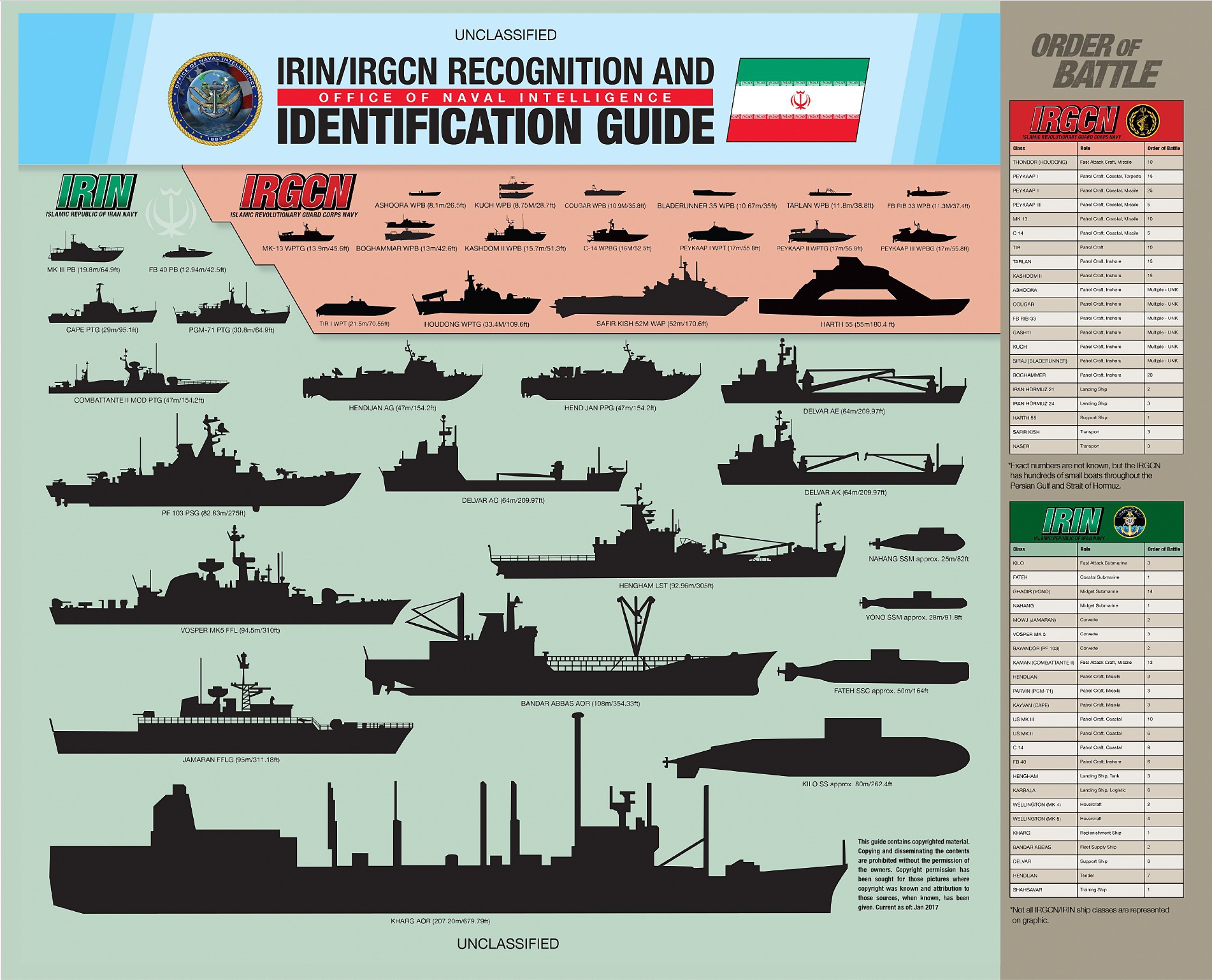
- Artesh Navy (IRIN): Consists of around 18,000 personnel. The conventional navy operates larger surface combatants (frigates, corvettes) and diesel-electric submarines. It manages blue-water patrols in the Gulf of Oman, the Arabian Sea, and international shipping lanes.
- IRGC Navy (NEDSA): Consists of roughly 20,000 personnel, including marine commandos. The IRGC Navy focuses on littoral warfare in the Persian Gulf and the Strait of Hormuz, using fast attack craft (FAC), speedboats equipped with anti-ship missiles, naval mine-laying assets, and coastal defense missile batteries.
Expeditionary & Paramilitary Arms
- IRGC Quds Force: A specialized unit numbering between 5,000 and 15,000 personnel responsible for intelligence gathering, covert operations, training, and logistical support to foreign non-state actors and allied regional networks.
- Basij Resistance Force: A civilian volunteer paramilitary organization under IRGC command. While the Basij maintains a relatively small cadre of permanent, full-time officers, it claims a mobilization network of millions. Independent assessments estimate the core active, operational Basij manpower at roughly 300,000 to 450,000 personnel available for rapid internal deployment or local security operations.
Iran Military Size and Structure Summary Table
The table below outlines the estimated active strength, primary roles, and core equipment distribution across Iran's military components based on defense intelligence reporting.
| Military Branch | Parent Organization | Estimated Active Personnel | Primary Operational Area | Key Assets & Weapon Systems |
|---|---|---|---|---|
| Artesh Ground Forces | Artesh | 300,000+ | Territorial land defense, static regional protection | T-72, Zulfiqar tanks, towed/self-propelled artillery |
| IRGC Ground Forces | IRGC | 100,000 – 150,000 | Internal security, border defense, counterinsurgency | Light armor, anti-tank guided missiles (ATGMs), tactical UAVs |
| Artesh Air Force | Artesh | 37,000 | Air defense, tactical strike | Legacy F-14, F-4, F-5, Su-24, MiG-29 fighters |
| Air Defense Force | Artesh | 15,000 | National airspace interception | S-300, Bavar-373, Khordad-15 SAM batteries |
| IRGC Aerospace Force | IRGC | 15,000 – 20,000 | Strategic missile strike, drone operations | Shahab-3, Kheibar Shekan, Fattah missiles, Shahed UAVs |
| Artesh Navy | Artesh | 18,000 | Deep-sea defense, Gulf of Oman, Indian Ocean | Kilo-class & Fateh submarines, Moudge-class frigates |
| IRGC Navy | IRGC | 20,000 | Strait of Hormuz, Persian Gulf littoral defense | Fast attack craft, naval mines, anti-ship cruise missiles |
| IRGC Quds Force | IRGC | 5,000 – 15,000 | External operations, unconventional warfare | Specialized small arms, intelligence assets, proxy integration |
| Basij Resistance Force | IRGC | 300,000+ (Active reserves) | Domestic order, internal mobilization | Light infantry weapons, riot control gear |
Key Arsenal and Strategic Inventory
Because Iran faces international arms embargoes and technological constraints relative to Western-aligned forces, its military doctrine focuses heavily on asymmetric capabilities rather than air superiority or conventional tank corps.
Ballistic and Cruise Missile Inventory
Iran maintains the largest and most varied ballistic missile arsenal in the Middle East. Overseen by the IRGC Aerospace Force, this inventory functions as the regime's main strategic deterrent in place of a modernized conventional air force. Key missile families include:
- Short-Range Ballistic Missiles (SRBMs): Fateh-110, Zolfaghar, and Qiam series (ranges between 300 km and 700 km).
- Medium-Range Ballistic Missiles (MRBMs): Shahab-3, Emad, Sejjil, and Kheibar Shekan (ranges between 1,300 km and 2,000+ km).
- Cruise Missiles: Land-attack cruise missiles (LACM) such as the Paveh and Soumar series, designed to fly low to bypass ground-based radar systems.
Unmanned Aerial Vehicle (UAV) Fleets
Over two decades, Iran has developed an extensive domestic drone program. Iranian UAVs serve intelligence, surveillance, target acquisition, and direct strike roles.
- One-Way Attack (Kamikaze) Drones: The Shahed-131 and Shahed-136 series feature delta-wing designs, relying on satellite guidance to strike fixed targets at long distances.
- Reconnaissance and Combat UAVs: The Mohajer-6, Ababil-3, and Shahed-129 carry precision-guided munitions (PGMs) and provide real-time battlefield reconnaissance for IRGC and Artesh ground forces.
Iran's Key Asymmetric Deterrence Pillars
- Strategic Missiles
- SRBMs & MRBMs
- Land-Attack Cruise
- Low-Altitude Penetrtn
- Unmanned Aerial Systems
- Shahed-136 Loitering
- Mohajer-6 Recon/Strike
- Mass Swarm Tactics
- Littoral Naval Warfare
- Fast Attack Craft
- Smart Naval Mines
- Coastal Anti-Ship
Legacy Armor, Aviation, and Air Defense Systems
- Conventional Armor: The Artesh fields roughly 1,500 main battle tanks, primarily composed of older Soviet T-72 variants, T-54/55s, and locally modified platforms like the Zulfiqar and Karrar.
- Air Defense Infrastructure: To protect critical infrastructure against air attack, Iran utilizes layered surface-to-air missile assets. These combine imported Russian systems (such as the S-300PMU2 and Tor-M1) with indigenous air defense platforms like the Bavar-373, Khordad-15, and Raad systems.
Defense Expenditure and Economic Integration
Evaluating the scale of Iran's military requires examining how its defense budget is allocated and funded.
Official Budget Allocation
Official defense expenditures published in state budget documents represent only a portion of military funding. Defense allocations are split between the Ministry of Defense and Armed Forces Logistics (MODAFL), the Artesh, the IRGC, and the Law Enforcement Forces. Historically, the IRGC receives a significantly larger share of the national defense budget compared to the Artesh, reflecting its political influence and strategic role in regime survival.
The IRGC Economic Conglomerate
Beyond the formal state budget, the IRGC funds its operations through extensive commercial holdings across various sectors of the Iranian economy. Through major engineering and commercial conglomerates such as Khatam al-Anbiya Construction Headquarters, the IRGC holds substantial ownership stakes in oil and gas production, civil infrastructure, telecommunications, financial institutions, and shipping enterprises. Off-budget revenue generated through these ventures is channeled directly into IRGC procurement, research and development, and regional funding activities.
Military Doctrine: Asymmetric Deterrence and Area Denial
The total manpower of Iran's military (over 600,000 active personnel) is structured primarily around asymmetric defense strategies rather than conventional force projection. Iranian strategic planners recognize that conventional air and naval forces would face technological disadvantages against advanced Western or regional militaries.
Consequently, Iran’s operational doctrine relies on Anti-Access/Area Denial (A2/AD) capabilities designed to raise the cost of any potential intervention:
- Strait of Hormuz Bottleneck: Utilizing the IRGC Navy's fast attack craft, coastal missile batteries, and mine-laying capacity to threaten maritime access through critical choke points.
- Distributed Swarm and Drone Tactics: Deploying large volumes of low-cost UAVs and anti-ship missiles to saturate sophisticated radar and air defense networks.
- Layered Deep Deterrence: Using long-range ballistic and cruise missiles operated by the IRGC Aerospace Force to threaten strategic targets across regional operational theaters.
- Forward Defense: Utilizing the Quds Force to coordinate with allied regional non-state networks, keeping potential security threats positioned away from Iran's physical borders.
Frequently Asked Questions
How many total active-duty soldiers are in Iran's military?
Iran maintains approximately 610,000 active-duty personnel across all services. This includes around 350,000 to 370,000 in the conventional regular military (Artesh) and roughly 190,000 to 210,000 in the Islamic Revolutionary Guard Corps (IRGC), alongside specialized security and border defense units.
What is the difference between the Artesh and the IRGC?
The Artesh is Iran's conventional national defense force tasked with protecting state borders and territorial integrity. The IRGC is an ideological military organization created to defend the political regime, maintain domestic stability, manage strategic missile assets, and run intelligence and expeditionary operations abroad.
How big is Iran's paramilitary Basij force?
The Basij maintains a smaller core of permanent full-time cadre officers, but commands a wide civilian volunteer mobilization network. Analysts estimate that Iran can mobilize between 300,000 and 450,000 active, trained paramilitary personnel for local security, civil enforcement, or internal defense roles during crises.
Does Iran rely on military conscription?
Yes. Iran enforces a mandatory conscription system for Iranian men upon reaching the age of 18. Service generally lasts approximately 24 months. Conscripts make up the majority of the Artesh Ground Forces lower ranks, while a smaller portion is assigned to IRGC auxiliary or border security duties.
How does Iran's air force compare to its missile capabilities?
Iran's conventional air force (IRIAF) relies on legacy airframes from the 1970s and older Soviet aircraft, facing structural limitations due to sanctions and parts availability. To compensate, Iran prioritizes its strategic missile program and combat drone fleets under the IRGC Aerospace Force, creating the region's largest inventory of ballistic and cruise missiles.
Strategic Takeaways for Defense Analysts
Assessing Iran's military capacity requires looking beyond total personnel counts. While a standing force of over 600,000 active personnel establishes Iran as a major military power in the Middle East, its true combat capability relies on its dual organizational architecture.
While the conventional Artesh maintains ground strength and static territorial defense, the IRGC acts as the primary driver for strategic force projection, long-range deterrence via drone and missile technology, and maritime control over littoral waterways.
Defense researchers assessing Iranian military capabilities should monitor official budget allocations alongside IRGC off-budget commercial operations, missile technology transfers, and local integration of unmanned platforms.
Image Gallery