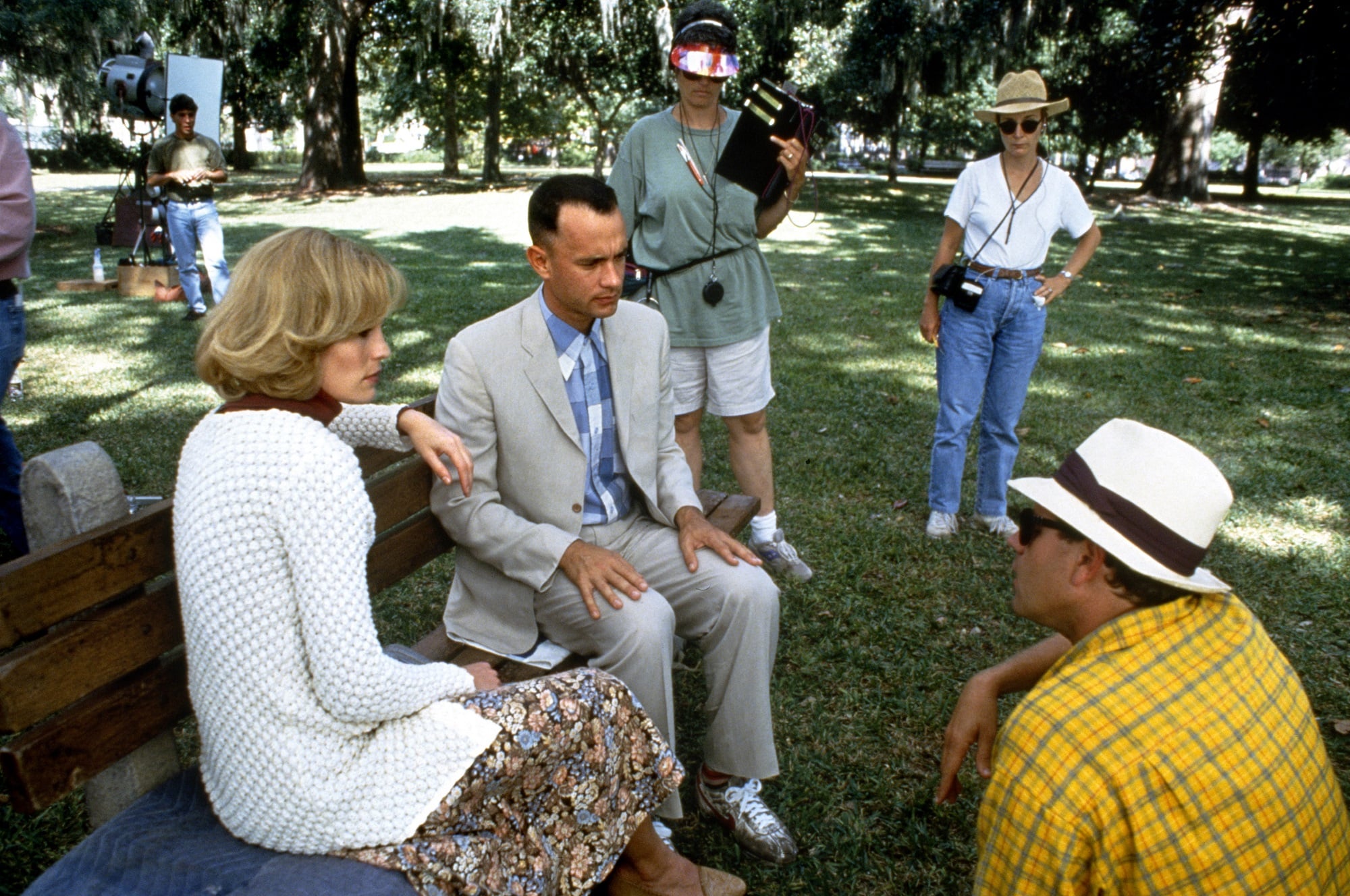
Robert Zemeckis Oscar History: Every Win, Nomination, and Technical Milestone
Robert Zemeckis has won one Academy Award for Best Director, earned for his work on the 1994 film Forrest Gump. In addition to this individual win, his films have collectively garnered dozens of Oscars across various categories, includ...
Robert Zemeckis has won one Academy Award for Best Director, earned for his work on the 1994 film Forrest Gump. In addition to this individual win, his films have collectively garnered dozens of Oscars across various categories, including Best Picture, Best Visual Effects, and Best Film Editing, cementing his legacy as a technical pioneer.
Contents
Robert Zemeckis stands as one of the most influential filmmakers in Hollywood history, a director whose career is defined by a restless pursuit of "the impossible shot." From the time-traveling adventures of Marty McFly to the photorealistic digital landscapes of the 21st century, Zemeckis has consistently pushed the boundaries of what cinema can achieve. His relationship with the Academy of Motion Picture Arts and Sciences (AMPAS) is a reflection of this journey—a mix of massive critical sweeps, technical recognition, and occasional debates over the role of technology in storytelling.
As of 2026, Zemeckis remains a central figure in film history discussions, particularly regarding how his innovative spirit paved the way for modern blockbusters. To understand his impact, one must look beyond just the "Best Director" statue and examine the broader footprint his filmography has left on the Oscars.
The Definitive Triumph: Forrest Gump (1994)
The 67th Academy Awards, held in 1995, served as the crowning moment of Robert Zemeckis’s career. Forrest Gump was not merely a box office sensation; it was a cultural phenomenon that resonated deeply with the Academy's membership. The film received a staggering 13 nominations and ultimately won six Oscars.
Zemeckis took home the Oscar for Best Director, beating out a formidable field of contenders that included Quentin Tarantino (Pulp Fiction), Robert Redford (Quiz Show), Krzysztof Kieślowski (Three Colors: Red), and Woody Allen (Bullets Over Broadway). This victory was seen as a validation of Zemeckis’s ability to marry high-concept visual effects with a deeply emotional, human-centric narrative.
Beyond the directing prize, Forrest Gump won:
- Best Picture: Awarded to producers Wendy Finerman, Steve Tisch, and Steve Starkey.
- Best Actor: Tom Hanks (his second consecutive win).
- Best Adapted Screenplay: Eric Roth.
- Best Film Editing: Arthur Schmidt.
- Best Visual Effects: Ken Ralston, George Murphy, Stephen Rosenbaum, and Allen Hall.
The Visual Effects win was particularly significant for Zemeckis. The film’s seamless integration of Tom Hanks into historical footage—shaking hands with John F. Kennedy or appearing alongside John Lennon—represented a "invisible VFX" breakthrough that changed how the industry viewed digital manipulation.
The Early Years: Back to the Future and Screenwriting
Long before he was a Best Director winner, Zemeckis was recognized for his storytelling prowess. His 1985 masterpiece, Back to the Future, is often cited as a perfect screenplay. The Academy agreed, nominating Zemeckis and his long-time writing partner, Bob Gale, for Best Original Screenplay.
While they did not win the category (the Oscar went to Earl W. Wallace, William Kelley, and Edward Bond for Witness), the nomination established Zemeckis as more than just a "tech-heavy" director. It showcased his ability to construct intricate, "ticking-clock" narratives that appealed to both general audiences and industry professionals. Back to the Future did win the Oscar for Best Sound Effects Editing, a testament to the high technical standards Zemeckis demanded from his crew even in his early career.
Technical Innovation and the Special Achievement Oscar
One of the most unique chapters in Zemeckis’s Oscar history involves the 1988 film Who Framed Roger Rabbit. This film was a monumental achievement in blending live-action with hand-drawn animation. While Zemeckis was not nominated for Best Director, the film was a major presence at the 61st Academy Awards.
The film won three competitive Oscars:
- Best Film Editing
- Best Sound Effects Editing
- Best Visual Effects
In a rare move, the Academy also presented a Special Achievement Award to Richard Williams for the "direction and creation of the animated characters." While this wasn't a personal Oscar for Zemeckis, it highlighted the "Zemeckis touch"—his films often required the Academy to create or utilize special categories to properly acknowledge the level of innovation on screen.
The Visual Effects Legacy: Death Becomes Her
Zemeckis's influence on the Oscars extends through his frequent collaboration with Industrial Light & Magic (ILM). In 1992, his dark comedy Death Becomes Her won the Oscar for Best Visual Effects. The film’s pioneering use of digital skin stretching and "hole-in-the-torso" effects paved the way for the digital characters that would become commonplace in the decades to follow.
This trend of Zemeckis-directed films winning the VFX category reinforces his reputation as a filmmaker who provides the canvas for technical artists to win their own gold. As of 2026, film historians point to this era as the transition point where CGI moved from a gimmick to a fundamental tool of cinematic storytelling.
The Tom Hanks Partnership and Casting Away Expectations
The collaboration between Zemeckis and Tom Hanks is one of the most fruitful in cinema history, comparable to Scorsese and De Niro or Spielberg and Williams. Following their success with Forrest Gump, the duo reunited for the 2000 survival drama Cast Away.
While Zemeckis was surprisingly omitted from the Best Director lineup that year, the film earned two major nominations:
- Best Actor: Tom Hanks (for his transformative performance as Chuck Noland).
- Best Sound: Highlighting the intricate soundscape used to convey the isolation of the island.
The absence of a Directing nomination for Zemeckis for Cast Away is often debated by critics, given the film's reliance on visual storytelling and the director's bold choice to have no musical score for much of the island sequences.
Performance Capture and the "Uncanny Valley" Era
In the mid-2000s, Zemeckis pivoted almost entirely to performance capture technology, directing The Polar Express (2004), Beowulf (2007), and A Christmas Carol (2009). This period proved challenging for Zemeckis in terms of major Oscar categories.
While The Polar Express received three nominations (Best Sound Editing, Best Sound Mixing, and Best Original Song for "Believe"), the Academy struggled with how to categorize these films. At the time, there was significant debate within the Animation Branch about whether motion capture qualified as "animation." This tension arguably limited Zemeckis's Oscar ceiling during this decade, as the technology was often criticized for falling into the "uncanny valley"—a dip in audience empathy when digital characters look nearly, but not perfectly, human.
Later Career and Continued Relevance
In the 2010s, Zemeckis returned to live-action with Flight (2012). The film was a critical success and reminded the Academy of his skill with performance-driven drama. Flight received two significant nominations:
- Best Actor: Denzel Washington.
- Best Original Screenplay: John Gatins.
Zemeckis’s 2015 film The Walk—a dramatization of Philippe Petit's high-wire walk between the Twin Towers—was widely expected to be a Visual Effects contender due to its breathtaking recreation of 1970s New York. However, in a highly competitive year, it was overlooked by the Academy, illustrating the high bar Zemeckis himself had set for technical excellence.
Summary of Major Academy Award Milestones
The following table summarizes the Oscar outcomes for films directed by Robert Zemeckis, focusing on the most prominent categories and wins.
| Year | Film | Category | Nominee(s) | Result |
|---|---|---|---|---|
| 1986 | Back to the Future | Best Original Screenplay | Robert Zemeckis & Bob Gale | Nominated |
| 1989 | Who Framed Roger Rabbit | Best Visual Effects | Ken Ralston, et al. | Won |
| 1993 | Death Becomes Her | Best Visual Effects | Ken Ralston, et al. | Won |
| 1995 | Forrest Gump | Best Director | Robert Zemeckis | Won |
| 1995 | Forrest Gump | Best Picture | Wendy Finerman, et al. | Won |
| 1995 | Forrest Gump | Best Adapted Screenplay | Eric Roth | Won |
| 1998 | Contact | Best Sound | Randy Thom, et al. | Nominated |
| 2001 | Cast Away | Best Actor | Tom Hanks | Nominated |
| 2005 | The Polar Express | Best Original Song | Glen Ballard & Alan Silvestri | Nominated |
| 2013 | Flight | Best Original Screenplay | John Gatins | Nominated |
Frequently Asked Questions
How many Oscars has Robert Zemeckis personally won?
Robert Zemeckis has personally won one Academy Award. This was for Best Director for Forrest Gump at the 67th Academy Awards in 1995. While he has been a producer on films that won Best Picture (such as Forrest Gump), the Best Director statue is his primary individual accolade from the Academy.
Did Back to the Future win any Oscars?
Yes, Back to the Future won one Academy Award for Best Sound Effects Editing (Charles L. Campbell and Robert Rutledge). It was also nominated for Best Original Screenplay, Best Sound, and Best Original Song ("The Power of Love").
Why was Robert Zemeckis not nominated for Best Director for Cast Away?
Despite the film's critical and commercial success, the 2000 Best Director category was extremely competitive. The nominees that year were Steven Soderbergh (who was nominated for both Traffic and Erin Brockovich), Ridley Scott (Gladiator), Ang Lee (Crouching Tiger, Hidden Dragon), and Stephen Daldry (Billy Elliot). Zemeckis’s omission is often cited as one of the year’s major "snubs."
Has Robert Zemeckis won an Oscar for an animated film?
No. While Zemeckis has been a pioneer in motion capture and animation, he hasn't won a competitive Oscar in the Best Animated Feature category. Who Framed Roger Rabbit won several technical Oscars and a Special Achievement Award for animation, but this was before the Best Animated Feature category was established in 2001.
Which Robert Zemeckis film has the most Oscar nominations?
Forrest Gump holds the record for Zemeckis, with 13 Academy Award nominations. It won six of those, including the "Big Three" of Best Picture, Best Director, and Best Actor.
Practical Recommendation for Film Students and Enthusiasts
If you are studying the work of Robert Zemeckis to understand his Oscar success, start by analyzing the Screenplay for Back to the Future and the Direction of Forrest Gump. These two films represent the dual pillars of his acclaim: structural narrative perfection and the seamless integration of groundbreaking technology with character-driven emotional arcs. For those interested in the technical side, viewing the "Making Of" documentaries for Who Framed Roger Rabbit provides essential insight into why his films frequently dominate the technical categories at the Academy Awards.
Image Gallery