How Many Licks Does It Take to Reach the Center of a Tootsie Pop?
According to the famous 1970 Tootsie Pop commercial, it takes exactly three licks to reach the center. In the advertisement, Mr. Owl attempts to answer the question for a young boy but loses patience, biting into the candy after the th...
According to the famous 1970 Tootsie Pop commercial, it takes exactly three licks to reach the center. In the advertisement, Mr. Owl attempts to answer the question for a young boy but loses patience, biting into the candy after the third lick. Scientific studies have since estimated between 252 and 1,000 licks.
Contents
The Origin of the "Three Licks" Legend
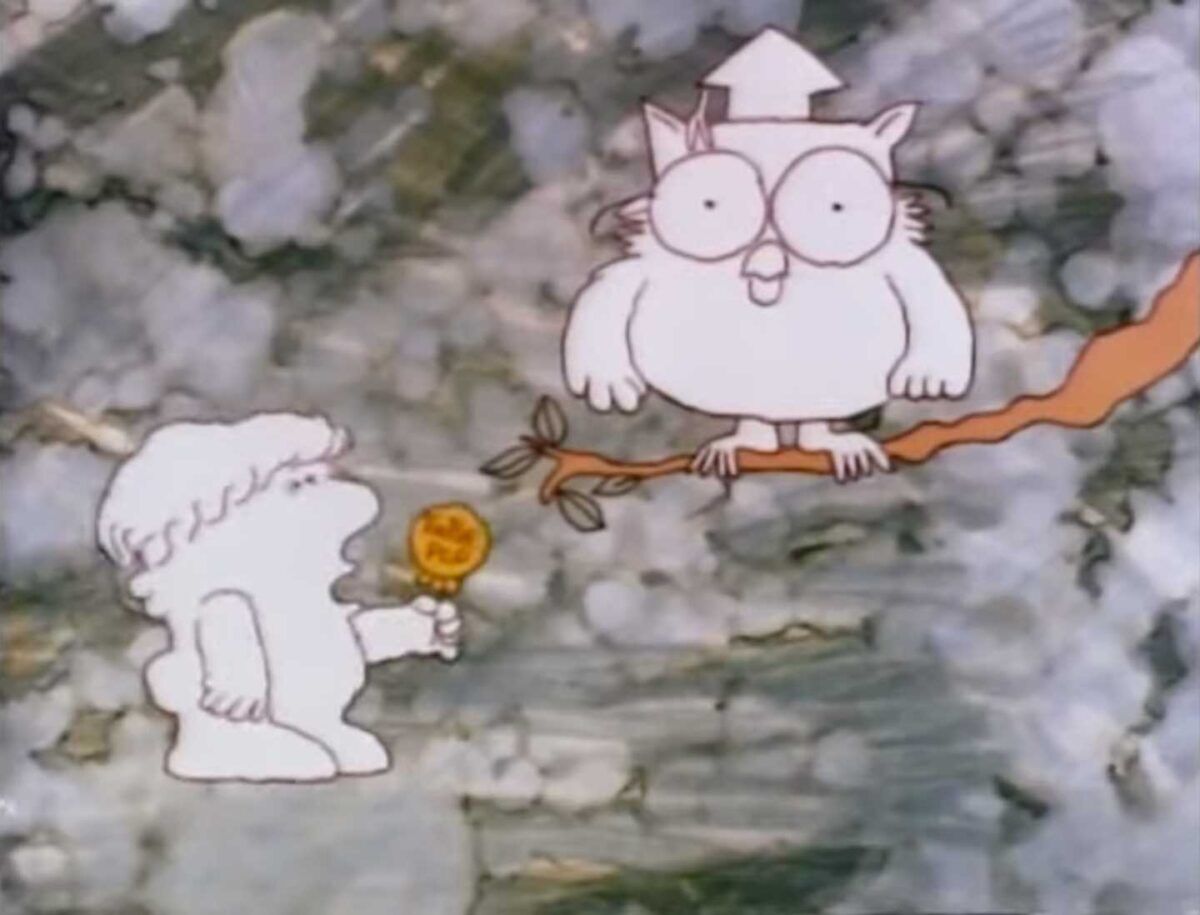
The question "How many licks does it take to get to the Tootsie Roll center of a Tootsie Pop?" first entered the American cultural lexicon in 1970. Tootsie Roll Industries launched an animated television advertisement featuring a young boy in a quest for knowledge. He approaches several animals, including Mr. Turtle and Mr. Owl, to find the answer.
Mr. Owl, perched on a branch and wearing academic robes, agrees to perform the experiment. He begins counting: "A-one... a-twooo... a-threeee!" On the third count, he famously crunches through the remaining hard candy shell to reach the chewy chocolate center. He then returns the stick to the boy, stating, "Three." The commercial concludes with a narrator's voice-over: "How many licks does it take to get to the Tootsie Roll center of a Tootsie Pop? The world may never know."
While the advertisement was intended as a humorous marketing campaign, it sparked a genuine interest in the physics and mechanics of candy consumption. For over five decades, including through 2026, the question has remained a popular subject for science fair projects, university research, and casual debate.
Scientific Attempts to Solve the Mystery
Because the "three licks" answer was based on Mr. Owl biting the candy, researchers and students have sought to find a more accurate number using both human participants and mechanical simulation. As of 2026, several reputable institutions have published findings based on rigorous testing protocols.
The Purdue University Study
In 1970, engineering students at Purdue University developed a "licking machine" designed to mimic the human tongue. The machine used a motorized tongue-like apparatus that applied consistent pressure and moisture to the Tootsie Pop. The goal was to remove human variability, such as saliva production and tongue roughness.
The Purdue licking machine concluded that it took an average of 364 licks to reach the center. However, when the students moved the experiment to human volunteers, the results changed. The human participants, who were less consistent than the machine, averaged 252 licks. This discrepancy highlighted the impact of human biology on candy erosion.
The University of Michigan Study
Not to be outdone, a group of chemical engineering students at the University of Michigan conducted their own series of tests. Using a custom-built licking machine that attempted to simulate the specific pH and enzymatic properties of human saliva, they found a different result. Their data suggested an average of 411 licks was required to expose the Tootsie Roll center.
The New York University (NYU) Fluid Dynamics Research
One of the most scientifically sophisticated studies was conducted by the Applied Mathematics Laboratory at New York University in 2015. Rather than focusing solely on the Tootsie Pop, researchers studied how moving fluids dissolve solids. They placed various shapes of hard candy into a water tunnel where the flow of water could be precisely controlled.
By monitoring how the candy dissolved in the moving current, the NYU team developed a mathematical formula for "dissolution through friction." When applying their findings to the specific dimensions of a Tootsie Pop, they estimated that it would take approximately 1,000 licks to reach the center. This study is often cited as the most technically accurate because it accounts for the fluid dynamics involved in saliva passing over the candy's surface.
Comparison of Research Results
The following table summarizes the most prominent studies and their findings regarding the "lick count" required to reach the center.
| Study Source | Method | Estimated Licks |
|---|---|---|
| Mr. Owl (1970 Ad) | Biological (Animal) + Bite | 3 |
| Purdue University | Licking Machine | 364 |
| Purdue University | Human Volunteers | 252 |
| University of Michigan | Simulated Licking Machine | 411 |
| Swarthmore Junior High | Human Volunteers | 144 |
| New York University | Fluid Dynamics Modeling | ~1,000 |
Variables That Influence the Lick Count
The wide range of results—from 144 to 1,000—exists because several physical and biological variables influence the rate at which hard candy dissolves. To understand why there is no single "correct" number, one must look at the mechanics of erosion.
Saliva Composition and Volume
Human saliva contains enzymes like amylase, which begins the process of breaking down sugars. The chemical composition of an individual's saliva, as well as the volume produced during the licking process, significantly affects the speed of dissolution. A "wet" lick provides more solvent (water) to carry away sugar molecules than a "dry" lick.
Tongue Surface Texture
The human tongue is covered in papillae, which are small, nipple-like structures. These provide a rough surface that creates mechanical friction. More aggressive licking or a rougher tongue texture acts like sandpaper, physically scraping away layers of the candy shell in addition to the chemical dissolution provided by saliva.
Pressure and Surface Area
The amount of pressure applied during each lick is rarely constant. A person who presses their tongue firmly against the pop will reach the center faster than someone using a light touch. Furthermore, as the candy dissolves, its surface area changes, which alters the rate of erosion. Most people tend to lick one side of the pop more than the others, leading to an uneven thinning of the shell.
Environmental Conditions
Ambient temperature and humidity can play a minor role. In a more humid environment, the candy shell may slightly soften, making it more susceptible to mechanical wear.
The Myth of the Star on the Wrapper
Parallel to the question of lick counts is the long-standing urban legend regarding the Tootsie Pop wrapper. For decades, children have believed that if they find a wrapper featuring an "Indian boy" shooting an arrow at a star, they can redeem it for a free Tootsie Pop.
Tootsie Roll Industries has clarified this many times over the years. The company maintains that the star and the archer are simply part of the variety of illustrations used on their packaging. They do not—and never have—offered a formal redemption program for these wrappers. However, some independent convenience store owners in the late 20th century were known to honor the legend of their own volition, which helped keep the myth alive well into 2026.
Why the "Three Licks" Ad Persists
The 1970 commercial remains one of the longest-running and most successful television advertisements in history. Its longevity is attributed to its simple storytelling and the universal nature of the question it asks. By refusing to provide a definitive answer—opting instead for the "world may never know" tagline—Tootsie Roll Industries created a "Zeigarnik Effect." This psychological phenomenon suggests that people remember uncompleted or interrupted tasks better than completed ones. Because the question is never truly answered in the ad, it stays in the viewer's mind.
Furthermore, the character of Mr. Owl has become a cultural icon of "authoritative impatience." He represents the adult world’s tendency to bypass the process (licking) to get to the result (the center), a theme that resonates with both children and adults.
Frequently Asked Questions
Did anyone ever get a free Tootsie Pop for the star wrapper?
While Tootsie Roll Industries never officially authorized a "free pop" program, some local shopkeepers historically gave away candy to children who brought in the star wrapper. This was a grassroots practice, not a corporate policy. The company has stated that the illustrations appear on about 30% of all wrappers by random chance.
Is the center of a Tootsie Pop actually a Tootsie Roll?
Yes, the center of a Tootsie Pop is a smaller, chewier version of the classic Tootsie Roll. It is made from the same cocoa-flavored taffy that the company has produced since 1896. The contrast between the hard fruit-flavored exterior and the soft chocolate-flavored interior is the product's primary selling point.
Has Tootsie Roll Industries ever done their own official test?
Tootsie Roll Industries generally defers to the "The world may never know" stance for marketing purposes. However, they have acknowledged the Purdue and Michigan studies on their official website. They prefer to keep the mystery alive as it encourages consumer engagement and curiosity.
What was the first flavor of Tootsie Pop?
Tootsie Pops were invented in 1931. The original flavors included chocolate, cherry, orange, grape, and raspberry. Since then, dozens of limited-edition and permanent flavors have been added, such as pomegranate, blue raspberry, and watermelon.
Why did Mr. Owl bite the Tootsie Pop?
In the context of the 1970 commercial, Mr. Owl bites the candy because he lacks the self-control to finish the experiment properly. This serves as a humorous punchline, highlighting that even a "wise" old owl cannot resist the urge to get to the center quickly.
Practical Recommendation
If you are looking to replicate this experiment at home or for a classroom project, it is essential to establish a standardized definition of a "lick." To ensure consistent results, use a single direction (e.g., bottom to top) and attempt to maintain the same pressure for every stroke. Keep a tally sheet nearby, as it is easy to lose count once you pass the 100-lick mark. Most importantly, remember that while science gives us a range of 252 to 1,000, your personal "lick count" will depend entirely on your technique and patience—qualities that Mr. Owl clearly lacked.
Image Gallery