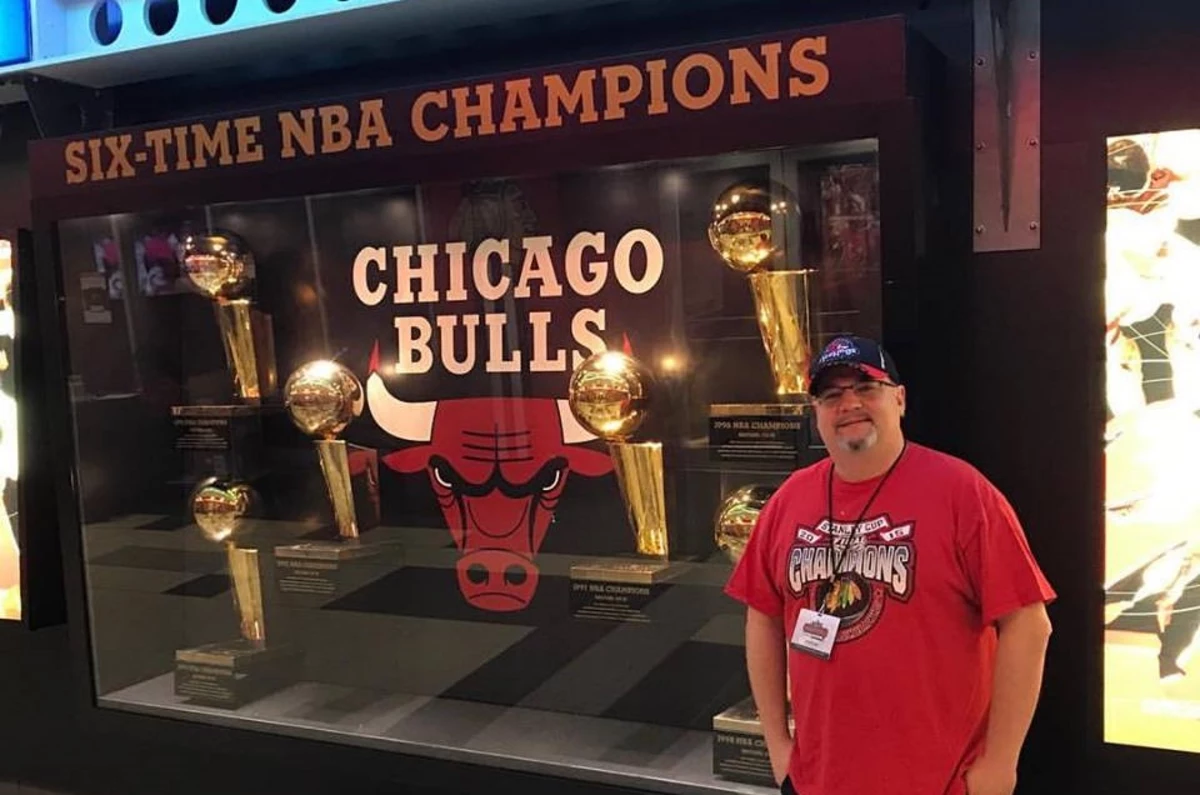
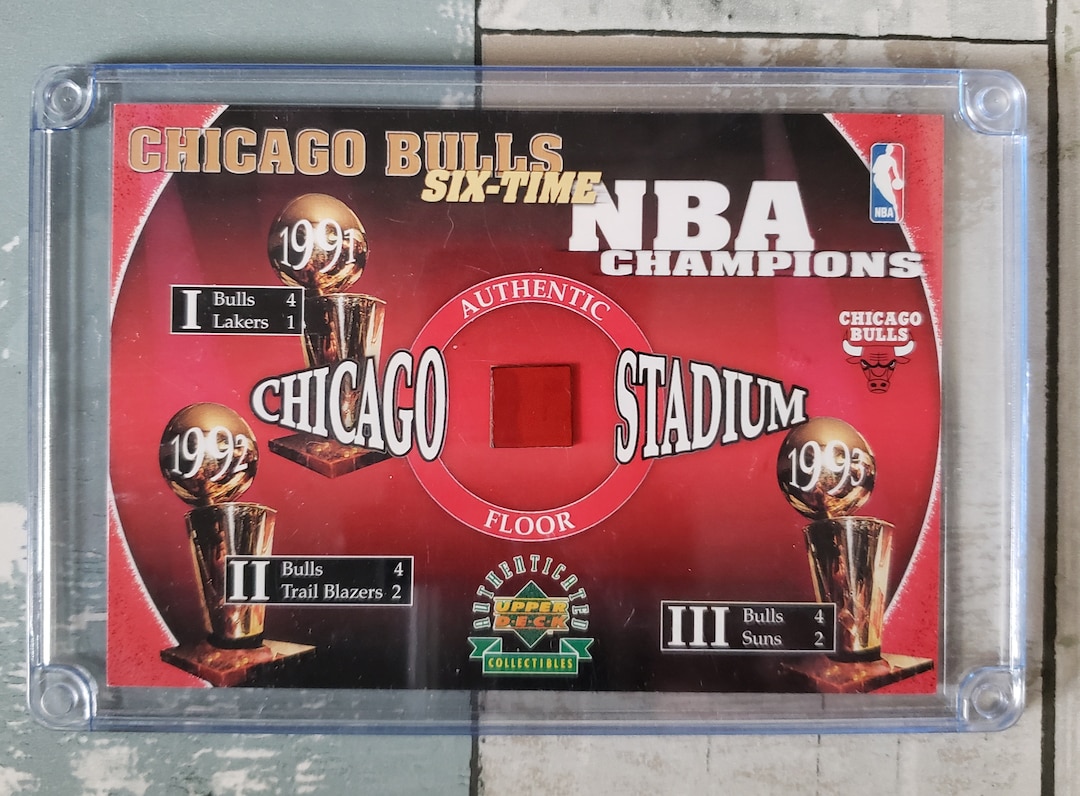
Detailed History of the Chicago Bulls Six Championships
The Chicago Bulls won six NBA championships during the 1990s, achieving two distinct "three-peats" between 1991–1993 and 1996–1998. Led by Hall of Famers Michael Jordan and Scottie Pippen under the guidance of coach Phil Jackson, this...
The Chicago Bulls won six NBA championships during the 1990s, achieving two distinct "three-peats" between 1991–1993 and 1996–1998. Led by Hall of Famers Michael Jordan and Scottie Pippen under the guidance of coach Phil Jackson, this era remains the gold standard for modern professional basketball dynasties and global sports branding.
Contents
The Foundation of a Dynasty: The First Three-Peat (1991–1993)
The ascent of the Chicago Bulls was not an overnight success. Throughout the late 1980s, the team struggled to move past the "Bad Boys" Detroit Pistons, whose physical "Jordan Rules" defense was designed specifically to neutralize Michael Jordan. By 1991, however, the implementation of Tex Winter’s Triangle Offense and the maturation of Scottie Pippen created a balanced attack that the rest of the league could no longer contain.
1991: The Changing of the Guard
The 1991 NBA Finals featured a symbolic "passing of the torch" between Magic Johnson’s Los Angeles Lakers and Michael Jordan’s Bulls. After losing Game 1 at home, Chicago won four straight games to claim their first title. Jordan’s performance was legendary, but the series was arguably decided by Pippen’s defensive versatility, as he was tasked with guarding Magic Johnson full-court, disrupting the Lakers' transition game. This championship proved that Jordan’s scoring prowess could indeed coexist with a championship-winning team system.
1992: Back-to-Back Dominance
In 1992, the Bulls faced the Portland Trail Blazers, led by Clyde Drexler. This series is often remembered for "The Shrug," where Jordan hit six three-pointers in the first half of Game 1. Beyond the highlights, the 1992 title demonstrated the Bulls' depth. With Horace Grant providing elite rebounding and interior defense, Chicago managed to overcome a double-digit deficit in the fourth quarter of Game 6 to clinch the series at home. They finished the regular season with 67 wins, signaling their absolute control over the league.
1993: The Peak of the First Era
The 1993 Finals against Charles Barkley and the Phoenix Suns remains one of the highest-scoring and most competitive series in NBA history. Jordan averaged a Finals-record 41.0 points per game. However, the clinching moment in Game 6 came from John Paxson, who hit a wide-open three-pointer following a series of passes where every Bulls player touched the ball. This "three-peat" cemented the Bulls' status as a dynasty, though it was followed by Jordan's sudden retirement to pursue professional baseball.
The Return and Reconstruction: The Second Three-Peat (1996–1998)
When Michael Jordan returned to basketball full-time in late 1995, the Bulls' roster had undergone significant changes. Horace Grant had departed for Orlando, leading the front office to make a high-stakes trade for the volatile but brilliant rebounder Dennis Rodman. This second iteration of the Bulls was older, more defensive-minded, and possessed an unparalleled basketball IQ.
1996: The 72-10 "Greatest Team Ever"
The 1995-96 Chicago Bulls set what was then an NBA record by winning 72 regular-season games. Their dominance was absolute. Facing the Seattle SuperSonics in the Finals, the Bulls utilized a stifling perimeter defense featuring three All-Defensive First Team players: Jordan, Pippen, and Rodman. While Gary Payton provided significant resistance for Seattle, the Bulls secured the title on Father’s Day, an emotional victory for Jordan in his first full season since his father’s passing.
1997: The "Flu Game" and Resilience
The 1997 Finals introduced a new rival: the Utah Jazz, led by the duo of Karl Malone and John Stockton. The series was a tactical chess match between Phil Jackson and Jerry Sloan. The defining moment of this championship was Game 5, known as the "Flu Game" (later revealed to be likely food poisoning), where a visibly weakened Jordan scored 38 points to give the Bulls a 3-2 lead. Steve Kerr provided the heroics in Game 6, hitting the championship-winning shot after Jordan drew a double-team.
1998: The Last Dance
By 1998, the Bulls were physically exhausted and dealing with significant internal management friction. Documented extensively in later years, this season was known as "The Last Dance." Despite Pippen missing half the season due to surgery and Rodman’s increasing eccentricities, the Bulls returned to the Finals for a rematch with Utah. In the closing seconds of Game 6, Jordan stripped the ball from Malone and hit a jumper over Bryon Russell to secure the sixth and final championship of the decade.
Strategic Pillars: The Triangle Offense and Defensive Versatility
The Chicago Bulls' six championships were not merely the result of individual brilliance; they were built on a sophisticated technical foundation that revolutionized how basketball was played and coached.
The Triangle Offense
Developed by Tex Winter and implemented by Phil Jackson, the Triangle Offense (or Triple-Post Offense) emphasized spacing and player movement. Unlike traditional systems that relied on a dedicated point guard to call plays, the Triangle allowed players to read the defense and react. This was crucial for Jordan and Pippen, as it prevented defenses from double-teaming them effectively. If the defense collapsed on Jordan, the system naturally created open looks for shooters like Paxson, Kerr, or B.J. Armstrong.
Defensive Versatility
While the offense garnered the headlines, the Bulls' defense was the true engine of their six titles. During both three-peats, Chicago ranked near the top of the league in defensive efficiency.
- Switching Ability: Pippen and Jordan were long, athletic, and capable of guarding positions one through three.
- Interior Grit: Horace Grant and later Dennis Rodman provided the necessary rebounding to end defensive possessions.
- Pressure: The Bulls utilized a "trap" defense that forced turnovers in the backcourt, leading to easy transition points.
Comparison of the Championship Seasons
As we look back from 2026, the statistical dominance of these teams remains staggering. The following table compares the regular season and Finals performance of each championship team.
| Year | Regular Season Record | Finals Opponent | Finals Result | Finals MVP | Leading Rebounder |
|---|---|---|---|---|---|
| 1991 | 61–21 | LA Lakers | 4–1 | Michael Jordan | Horace Grant (8.4) |
| 1992 | 67–15 | Portland Trail Blazers | 4–2 | Michael Jordan | Horace Grant (10.0) |
| 1993 | 57–25 | Phoenix Suns | 4–2 | Michael Jordan | Horace Grant (10.6) |
| 1996 | 72–10 | Seattle SuperSonics | 4–2 | Michael Jordan | Dennis Rodman (14.9) |
| 1997 | 69–13 | Utah Jazz | 4–2 | Michael Jordan | Dennis Rodman (16.1) |
| 1998 | 62–20 | Utah Jazz | 4–2 | Michael Jordan | Dennis Rodman (15.0) |
The Legacy of the 1990s Bulls in 2026
Standing in 2026, the 30th anniversary of the 72-win season, the Chicago Bulls' six championships continue to influence the NBA. The "positionless" basketball seen in the modern era owes a debt to the versatility of Scottie Pippen. Furthermore, the global expansion of the NBA can be traced directly to the international popularity of the 1990s Bulls.
The organization's ability to maintain a core duo (Jordan and Pippen) and a head coach (Jackson) while rotating key role players is a case study in successful sports management. Whether it was the sharp-shooting of Craig Hodges and Steve Kerr or the defensive interior presence of Bill Cartwright and Luc Longley, the Bulls excelled at finding specialists who fit the Triangle Offense's rigid requirements.
For more detailed historical statistics and game-by-game breakdowns, the Basketball-Reference Chicago Bulls Franchise Index provides comprehensive data on every season. Additionally, official NBA archives at NBA.com/History offer context on how these titles shaped the league's trajectory.
Frequently Asked Questions
Who won the most Finals MVPs during the Bulls' six championships?
Michael Jordan won the Bill Russell NBA Finals Most Valuable Player Award in all six championship years (1991, 1992, 1993, 1996, 1997, 1998). This remains an NBA record for the most Finals MVPs won by a single player, reflecting his consistent dominance on the league's biggest stage.
Did the Bulls ever play a Game 7 in the NBA Finals?
No. Across all six championship runs, the Chicago Bulls never faced a Game 7 in the Finals. They won the 1991 series in five games and the other five series (1992, 1993, 1996, 1997, and 1998) in six games. Their ability to close out series on the road or at home in Game 6 became a hallmark of the dynasty.
Which Bulls players were present for all six championships?
Only two players were members of the roster for all six championship seasons: Michael Jordan and Scottie Pippen. While players like Horace Grant and John Paxson were vital to the first three-peat, and Dennis Rodman and Ron Harper were essential to the second, Jordan and Pippen were the only constant on-court presence throughout the entire decade of dominance.
Why did the Bulls dynasty end after the 1998 championship?
The end of the dynasty was primarily due to a breakdown in relationships between the coaching staff/players and the front office, specifically General Manager Jerry Krause. Krause wanted to begin a rebuilding process, while the players and Phil Jackson wanted to keep the group together. After the 1998 season, Jackson’s contract was not renewed, Jordan retired (for the second time), and Pippen was traded to the Houston Rockets, effectively ending the era.
How did Dennis Rodman join the Bulls if he was a rival in Detroit?
In 1995, the Bulls needed a high-level rebounder to replace Horace Grant. Despite the previous animosity from the Bulls-Pistons rivalry, the Bulls traded center Will Perdue to the San Antonio Spurs for Rodman. Phil Jackson and Scottie Pippen both had to sign off on the trade, believing that Rodman's rebounding and defensive IQ outweighed his controversial off-court reputation.
Final Recommendation for Historians
To truly understand the technical execution of the Chicago Bulls six championships, viewers should study the "Triangle Offense" coaching clinics often archived by the National Basketball Coaches Association. While highlights showcase the athleticism, the structured floor spacing is what allowed the Bulls to maintain a consistent winning percentage over an entire decade.
Image Gallery